













Beauty brands set to conquer the 2026 FIFA World Cup From glitter patches to fan-themed skincare kits, the World Cup is becoming the new playing field for global beauty
For a long time, beauty and football moved in parallel orbits. On one side was the world of serums, glossy campaigns, and ten-step Korean skincare routines. On the other was the world of sweat-soaked jerseys, heart-stopping extra time, and beers spilled during a decisive penalty kick. Then something changed. Football stopped being just a sport and became one of the most powerful cultural platforms on the planet, and beauty brands realized that ignoring it was no longer an option. After all, the FIFA World Cup 2026 is not just a tournament. It is an event capable of catalyzing attention, identity, and desire on a global scale. A place where fashion, music, social media, and entertainment converge, turning every match into a pop-cultural phenomenon. And wherever there is a cultural conversation worth owning, the beauty industry inevitably follows. So, while 48 national teams prepare to compete for the trophy for the first time across three countries simultaneously (the United States, Canada, and Mexico) another game is being played far from the pitch. A game made up of glitter patches inspired by national flags, eye patches designed to be worn after a night spent in front of the TV, and skincare kits created to survive ninety minutes of emotional stress. Because in 2026, supporting a national team is no longer enough. You have to wear it, photograph it, post it, and ideally integrate it into your beauty routine. The result is that the most interesting merchandise of this World Cup may not be a jersey at all. And beauty, for the first time, is no longer asking permission to enter football, it is simply occupying a space that contemporary culture has already assigned to it.
@fazitbeauty The easiest hair patch yet! #worldcup #glitterfreckles #hairpatch #teamusa #ussoccer American Nights MC4D Remix - MC4D
From face paint to face patches: football fandom enters the beauty era
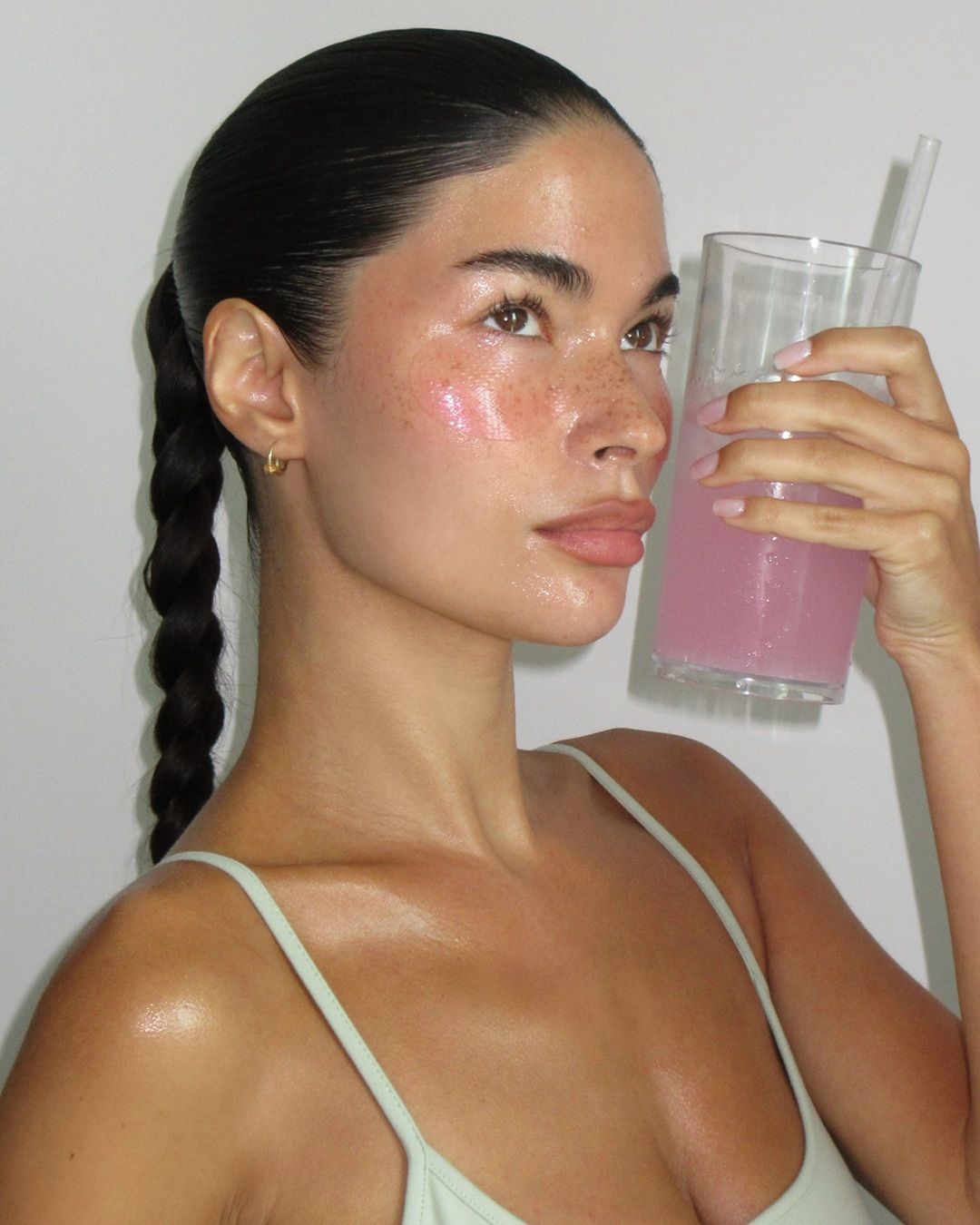
For decades, the aesthetic language of football was limited to flags painted on cheeks and tricolor wigs purchased outside stadiums. The FIFA World Cup 2026 tells a different story, one in which fandom operates through the same codes that govern TikTok, Coachella, and the creator economy. Fazit, the brand that went viral in the United States thanks to its glitter patches beloved by Taylor Swift, understood this perfectly. For the tournament, it launched Soccer Speckles, a collection of adhesive freckles dedicated to some of the most-followed national teams, including Argentina, Brazil, Mexico, Canada, England, Spain, and Portugal. Alongside the patches came the US Soccer Sunset Strips for eyebrows, the US Soccer Starlet Strands for hair, and a range of Soccer Crest and Soccer Stripes designs that transform a fan’s face into a Gen Z version of traditional stadium body paint. The difference? It is no longer about demonstrating belonging. It is about making it shareable.
Skincare discovers football (and vice versa)
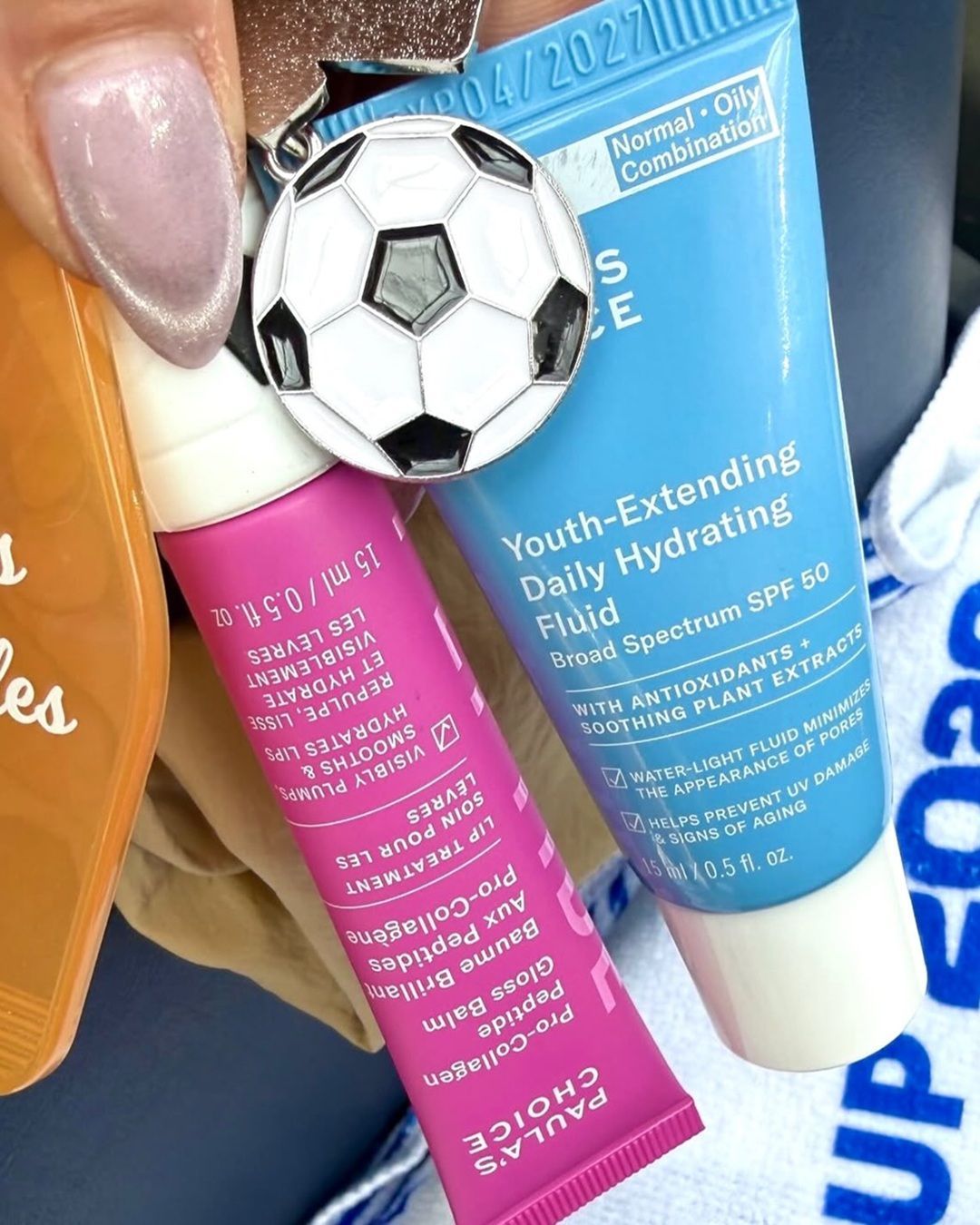
If Fazit represents the phenomenon’s most playful side, Paula’s Choice brings skincare directly into the world of sport. Its official partnership with FIFA (the brand serves as the Official Skincare Sponsor of the FIFA World Cup 2026 and the FIFA Women’s World Cup 2027) is not built around the traditional rhetoric of beauty, but around performance. Through the campaign Proud Supporter of Your Skin and the short film The Beautiful Game, the brand has drawn a parallel between athletic preparation and skincare. Skin is no longer presented as a surface to be corrected, but as a living organ that faces pressure, sun exposure, travel, stress, and climate changes in much the same way an athlete faces competition. The idea is that a good skincare routine functions like invisible training, built on consistency, adaptation, prevention, and recovery. To accompany the partnership, Paula’s Choice also introduced the Starting Lineup kit, a sort of first-team lineup for skincare, featuring the iconic 2% BHA Liquid Exfoliant, the Peptide Booster, and an SPF 50 fluid sunscreen. Patchology has also embraced the moment with its Official FIFA World Cup 2026 Team USA Eye Patches, turning post-match recovery into a beauty ritual. Because in 2026, even dark circles caused by football binge-watching can be considered a market category.
From the scent of victory to scratch-and-sniff trading cards
Unilever, with its portfolio of more than thirty brands, has decided to rewrite football memorabilia by transforming the tournament into a storytelling platform focused on personal care, wellness, and identity. Dove accompanied the World Cup with its Palo Santo & Sage collection, while Dove Men+Care developed campaigns such as Take Care Of Your Skin Like You Take Care Of The Game, dedicated to protecting skin during endless days spent in the sun, traveling, and watching matches. Axe, meanwhile, chose a decidedly more playful route. In addition to limited-edition fragrances such as Marshmallow Smoke, White Vetiver, and Indigo Haze, the brand collaborated with Panini to create scratch-and-sniff scented trading cards. The result is a blend of football nostalgia and sensory marketing, where trading cards become fragrance and fragrance becomes collectible.
The real match is cultural
Amid commemorative soaps, glitter patches, skincare kits, and limited-edition fragrances, it would be easy to dismiss all of this as just another marketing exercise. In reality, the phenomenon reveals something more interesting. Brands such as Dr. Squatch, which launched the Golden Glory soap inspired by the atmosphere of the World Cup, and Vichy, which appointed midfielder Vitinha as global ambassador for its Dercos line, are tapping into a transformation that is already underway. Football is no longer merely a sporting container. It is a cultural platform that absorbs and reinterprets languages from fashion, wellness, music, and beauty. For this reason, the question is not why beauty brands are investing in the FIFA World Cup 2026. The real question is how it took them so long to get there. Because if football remains the world’s most-watched game, beauty has become one of the ways that world is narrated, photographed, and shared. And in 2026, judging by face patches, scented trading cards, and perfectly curated fan kits, the boundary between fandom and beauty culture has never been thinner.