





















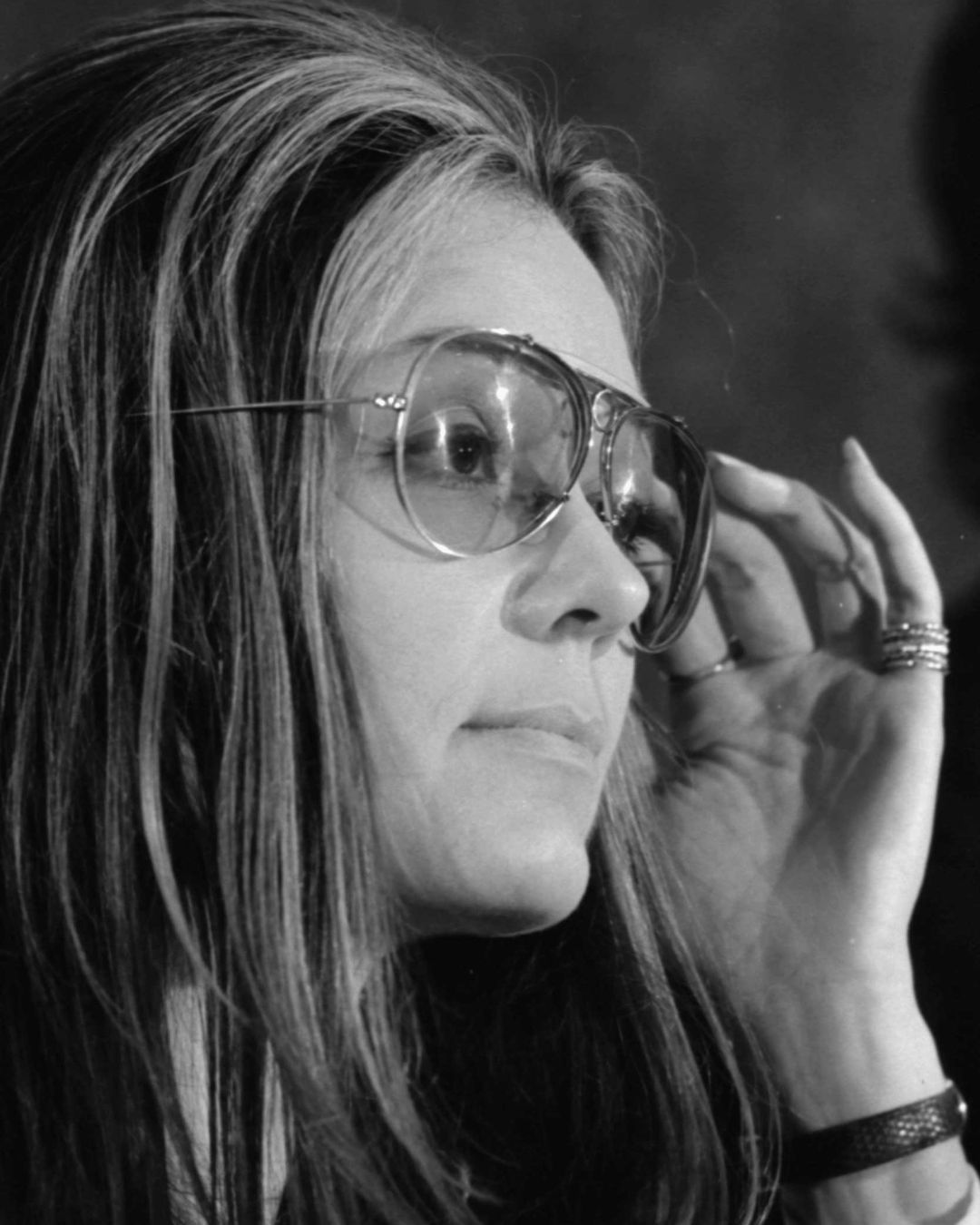
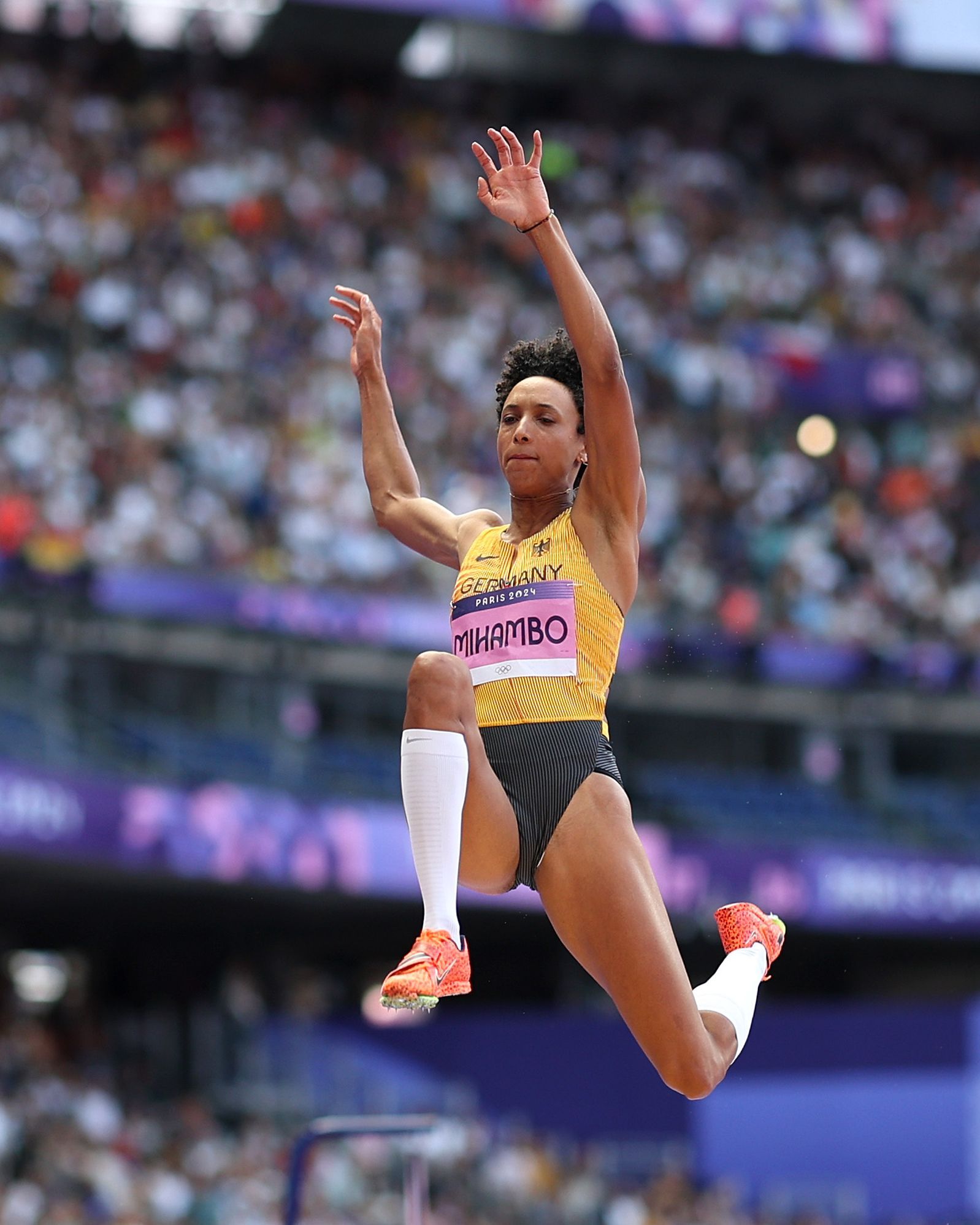
The new guidelines aimed to stop sexualised camera shots in women's athletics
"Get out of here! We already know what you'll publish in the next issue: you'll show my ass." Those were the words of sprinter Marie-José Pérec in 1992, the day after winning Olympic gold in Barcelona, addressing the editor of L'Équipe. A year earlier, the French newspaper had covered her World Championship triumph with a single photograph taken from behind, one that put her body rather than her sporting achievement at the centre of the story. It was one of the first occasions in which an athlete publicly denounced a way of portraying women's sport that remains common—if not systemic—to this day.
Nel 1991, a Tokyo, Marie-José Pérec diventò la prima medaglia d'oro francese nell’atletica (400m).
— Andrea Lamperti (@a__lampe) July 22, 2026
Questa l'unica sua foto comparsa sul numero successivo de L'Equipe.
"Mi dissero che avevo un bel culo, e che era meglio pubblicare quello."
pic.twitter.com/eu2B9osiYt
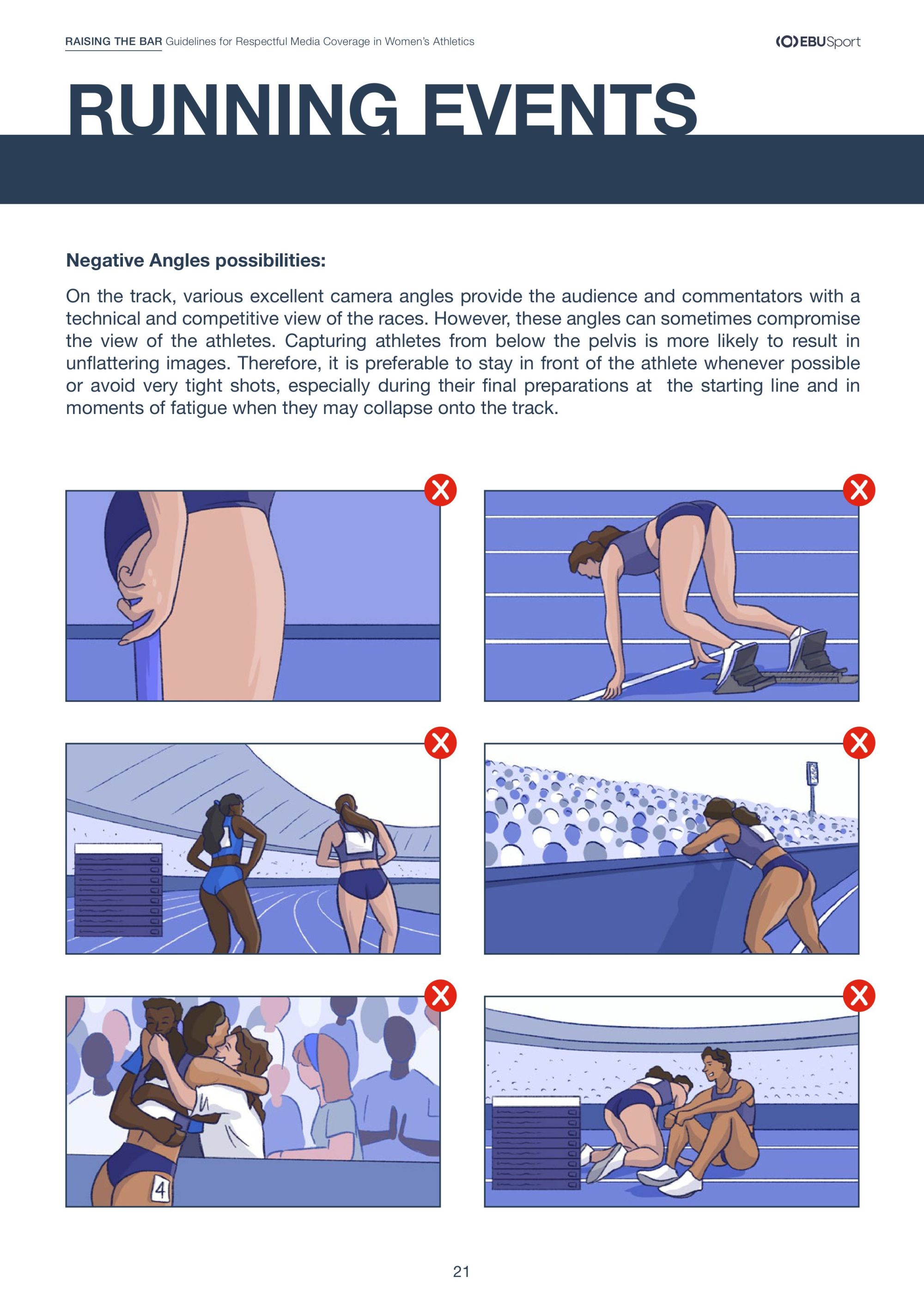
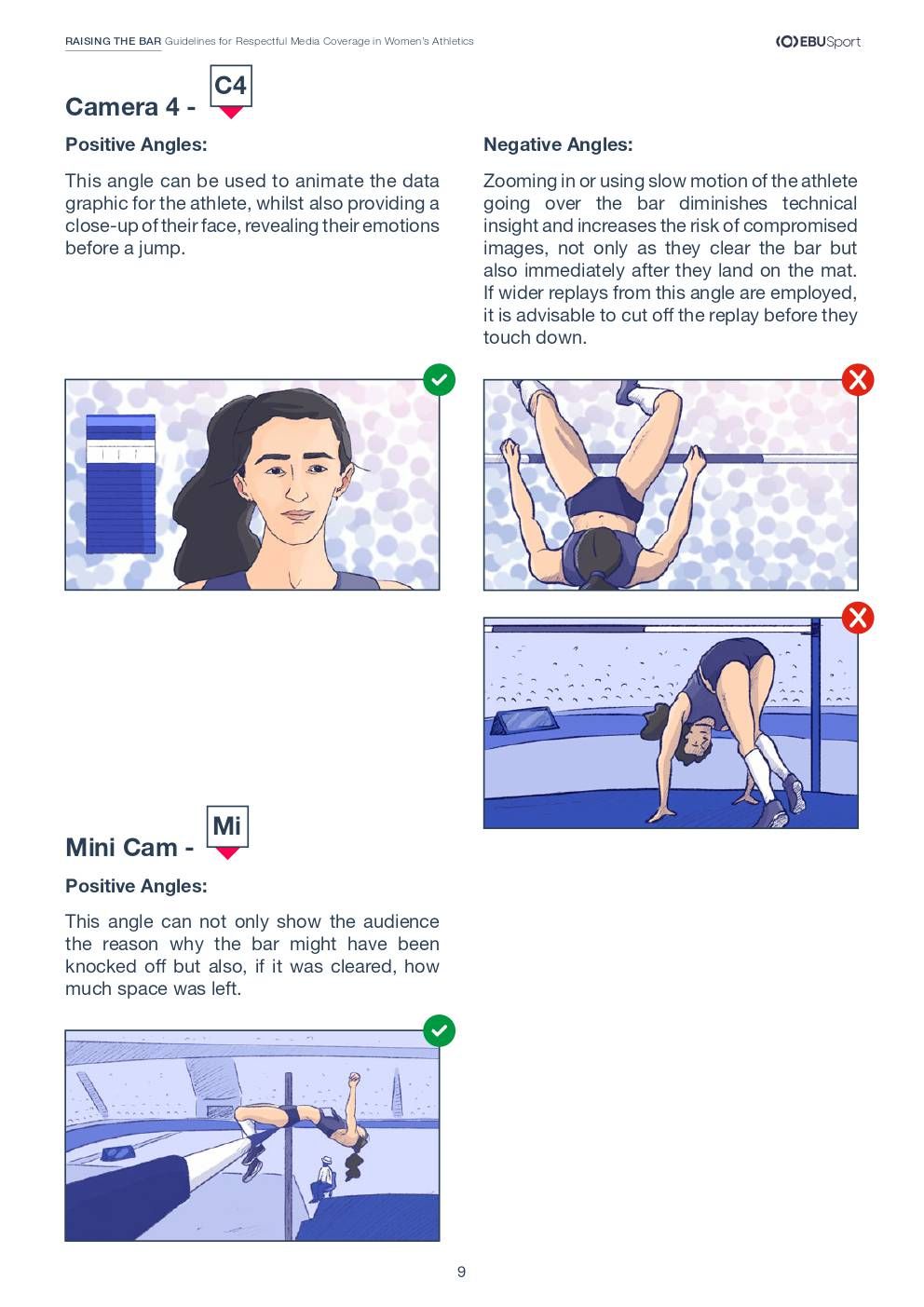
There are, after all, camera angles that anyone who has watched a track and field event on television will immediately recognize. The close-up of a sprinter's backside as she settles into the starting blocks, for instance. Or the camera placed beneath the high jump or pole vault bar, framing an athlete's legs—often in slow motion. These perspectives add very little to the understanding of the competition or the technical execution, yet they have long been embedded in the visual language of athletics, and sport more broadly.
Ahead of the 2026 European Athletics Championships, the EBU (European Broadcasting Union) decided to address the issue by publishing a document titled "Raising the Bar", encouraging directors, camera operators and broadcasters to rethink the way female athletes are filmed and portrayed. It is not a rulebook, nor does it introduce bans or sanctions. Instead, it aims to open a conversation about a responsibility that extends beyond television direction itself. The document calls for listening to the athletes affected by these practices, understanding which images genuinely serve to tell the story of their performances, and which instead contribute to the sexualization of their bodies.
What is Raising the Bar?
The document's full title is "Raising the Bar: Guidelines for Respectful Media Coverage in Women's Athletics". It was developed by the EBU in collaboration with European Athletics, three Olympic athletes and a number of television production professionals. The European Athletics Championships in Birmingham, beginning on August 10, will be the first major event to put these new ethical and editorial standards into practice.
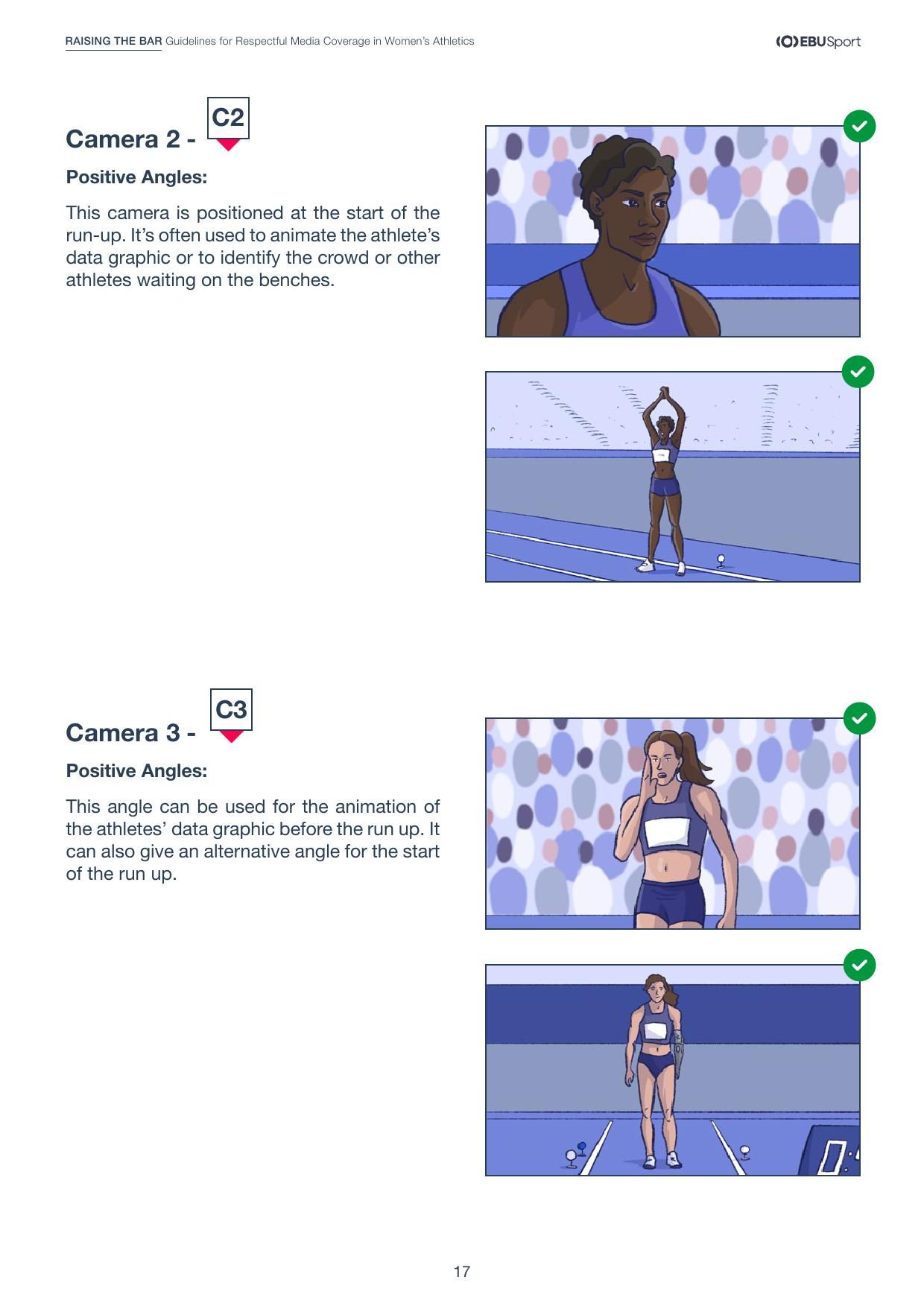
The introduction makes two points clear. First, despite athletics being one of the most visually compelling sports in the world, the document is not intended to limit the creative freedom of directors or broadcasters, and fully acknowledges the challenges faced by television crews. Its focus lies elsewhere: many of the shots that make athletes feel uncomfortable can simply be avoided without diminishing the storytelling value of the broadcast. Through dozens of real-life examples, Raising the Bar analyses camera positioning across every athletics discipline. It discourages low-angle close-ups, excessively tight framing and unnecessary slow-motion replays, while recommending greater care during particularly sensitive moments—for example, when an athlete collapses after crossing the finish line in exhaustion or is otherwise in a visibly vulnerable condition. The result is a 23-page operational handbook (available here) featuring illustrations based on real broadcast footage, comparing recommended camera angles with those that carry a "high probability of producing sexualized images."
Why athletes helped shape the new guidelines
To develop the guidelines, the EBU consulted three international athletes: British pole vaulter Holly Bradshaw, Serbian long jumper Ivana Španović, and former Croatian high jump champion Blanka Vlašić. Raising the Bar is therefore not the result of a top-down decision made by executives and broadcasters, but rather of listening to the voices of those who have experienced these camera angles firsthand.
Bradshaw recalls "receiving deeply unpleasant comments on social media" and "seeing videos of myself and other athletes online that had been edited using television footage", slowed down and repurposed as voyeuristic content. The consequences, she explains, extend well beyond social media and affect both athletes' personal lives and professional careers. "Too often cameras rely on extremely tight zooms and super slow-motion replays of athletes in compromising positions," she says. "Many athletes, myself included, have found ourselves focusing more on where the cameras were than on our own performance." According to Ivana Španović, "certain camera angles, combined with gender stereotypes, create discomfort for athletes and become avoidable distractions during competition. The way sporting events are broadcast can have serious long-term consequences for female athletes' mental health."
EBU Sport Executive Director Glen Killane explains that the choice of images "helps shape public perception" and "can reinforce harmful stereotypes." "The sexualisation of female athletes through camera selection, prolonged focus on their bodies and low-angle shots that capture revealing images is a serious concern in sports broadcasting," he says. Blanka Vlašić adds that the responsibility extends beyond camera operators alone, involving "everyone who contributes to the television broadcast, including commentators."
A new approach to broadcasting women's sport
Addressing the sexualisation of female athletes—and reducing the opportunities for audiences to consume this kind of imagery—means protecting their dignity and professionalism, shielding them from unacceptable content and waves of abusive interactions, while laying the foundations for a new level of awareness and a more coherent way of telling women's sport. Killane and Vlašić are right when they argue that every editorial decision contributes to shaping how female athletes are perceived. Every broadcast, every camera angle, every newspaper photograph and every digital post determines what deserves the viewer's attention. And it is on social media—precisely because of its social nature—that these images are most often turned into voyeuristic content. The pattern is now familiar: publish images that can easily be sexualised, then leave it to users to do the rest, shifting the conversation away from sport itself. The rewards, in terms of engagement and visibility, are obvious.
The conversation, of course, runs far deeper than athletics alone or the camera angles used during live broadcasts. Nor is it a new issue within track and field, a sport that has long been shaped by the broader debate surrounding the exposure of women's bodies. Back in 2022, the Swiss Athletics Federation had already published recommendations aimed at photographers and broadcasters to limit the use of potentially sexualising imagery during sporting events. It was an important first step—limited in scope, yet significant in recognising a problem that is not only media-related, but deeply cultural. Today, the EBU is attempting to bring that conversation to a continental scale.
The EBU's new guidelines will not eliminate every risk, nor are they likely to change decades of broadcasting habits overnight. After all, determining exactly when a camera angle becomes sexualising will never be an exact science: it depends on context, intention and, above all, on the sensitivity of those both behind and in front of the camera. Yet Raising the Bar introduces something genuinely important. It acknowledges the cultural weight of visual language in sport, recognises the discrimination that certain forms of representation can reinforce, and reminds us that female athletes should never be portrayed as images to be consumed. The opportunity to start this conversation is here. We should not let it pass.
