

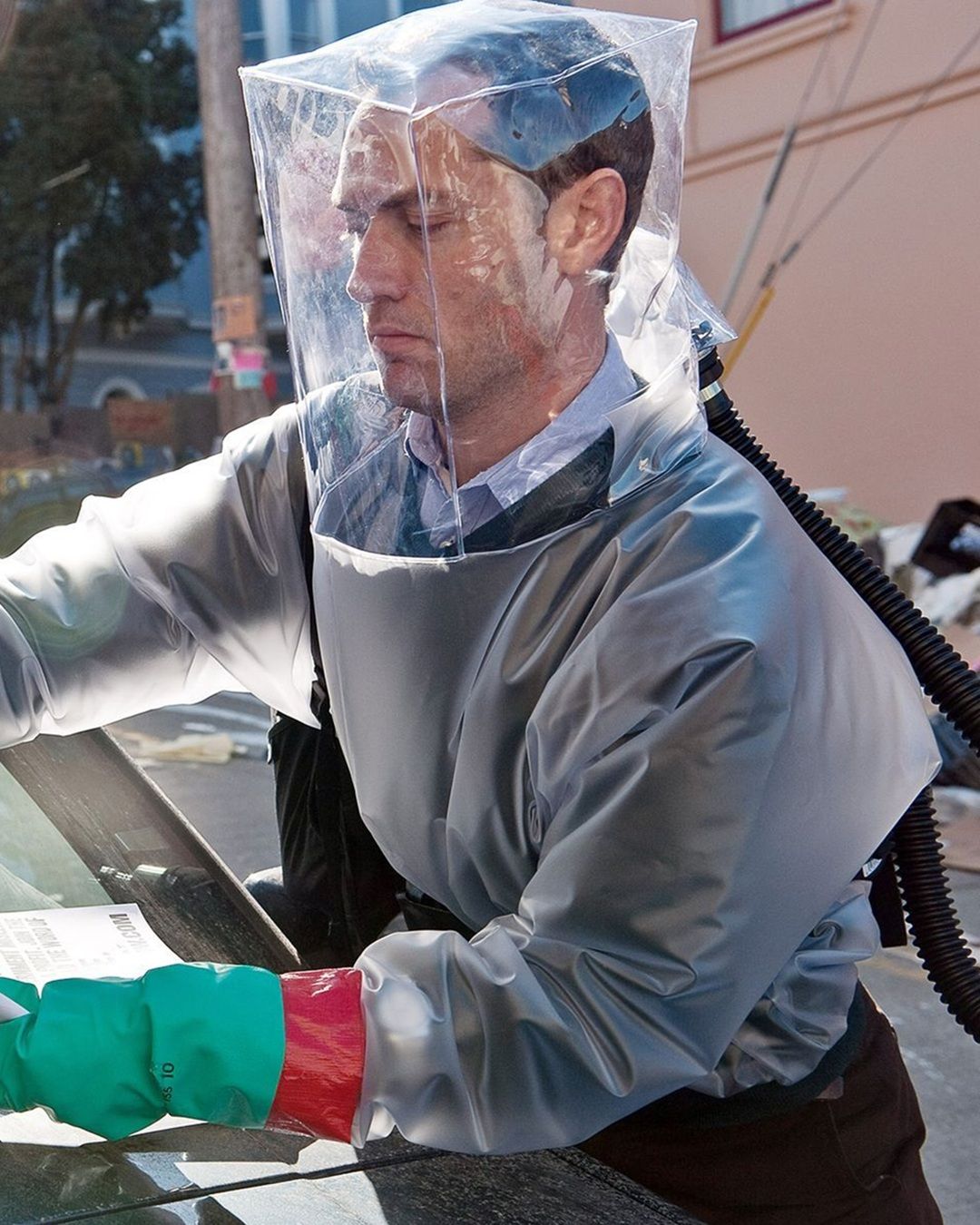
We don't even trust water anymore The purity economy is transforming beauty routines into a quest for control over everything we can’t see
Before TikTok, taking a shower was pretty straightforward. We got in, got out, and tried to figure out how to tame our hair. In 2026, if the latest wellness trends are anything to go by, we now have to worry about the water too. Not just temperature, pressure, or how long we leave a hair mask on, but what might actually be lurking in it. Because your shampoo might be top-tier and your conditioner flawless, but what happens when the water is packed with mineral buildup and unwanted extras we definitely didn't invite to the party? The beauty routine is expanding far beyond the bathroom mirror. It’s no longer just about what we apply topically, but everything we come into contact with daily, from tap water to indoor air. The shower filter now sits comfortably alongside haircare, the air purifier doubles as living room decor, and the promise of a deeper sense of wellness reaches, in its most extreme iterations, all the way to our bloodstream. Welcome to the new purity economy: an industry that taps into genuine environmental anxieties and translates them into consumer products, smart devices, and high-maintenance self-care rituals.
The purity economy in beauty, explained
Environmental contaminants, rising panic over microplastics, PFAS (the notorious forever chemicals), and air pollution are real issues that have gained massive visibility in recent years. Unsurprisingly, social platforms have become fertile ground for solutions aimed at purifying tap water, pushing shower filters out of the plumbing aisle and straight into the realm of coveted beauty essentials. Among the brands capitalizing on this shift is Hello Klean. The British label built its entire identity around hard water and its toll on hair and the scalp, rebranding a domestic plumbing headache into a core haircare concern. Starting with shower filters, the brand has since expanded into shampoos and body washes formulated to break down mineral deposits. The payoff? $14.7 million in revenue in 2025, a projected $27 million for 2026, and BRITA, a legacy titan in water filtration, on board as an investor. Hello Klean co-founder and CMO Karlee Zhang unpacked the strategy to Vogue: decode the technical jargon of filtration for a beauty-conscious audience, package hardware as an aspirational lifestyle object, and align environmental maintenance with the aesthetic codes of luxury skincare. The ultimate takeaway? Our beauty routine no longer starts on our skin, but in the surrounding environment that touches it.
Shower filters and air purifiers: purification becomes a status symbol
Just as water can leave mineral residue on hair and scalp, indoor air carries particulate matter and volatile compounds generated by everyday habits like cooking or lighting scented candles. The home has effectively become another perimeter to monitor. It’s no coincidence, as Vogue notes, that brands like Sans have expanded their product line from air purifiers to drinking water and personal hygiene filtration systems. Meanwhile, Dyson has spent years mastering the intersection of technology, design, and indoor air quality, turning functional appliances into sculptural living room centerpieces that look nothing like clinical machinery. Sensors, live indicators, and smart interfaces make the invisible suddenly tangible, delivering a reassuring sense of control that blends seamlessly into the visual landscape of contemporary wellness. Purification, in short, needs to perform, but it also has to look good sitting next to the sofa. Home wellness is morphing into a personal domestic infrastructure of replacement filters, data dashboards, and hardware upgrades. For companies tapping into the purity business, the commercial upside is clear: the transaction doesn’t stop at the initial device, transforming instead into a continuous cycle of scheduled maintenance, replacement cartridges, consumables, and companion treatments.
The detox routine reaches the bloodstream
Pushing the promise of purification even further is subtractive medicine, which skips adding vitamins, supplements, or actives in favor of stripping away what shouldn't be there in the first place. Case in point: plasma filtration therapies. In London, Clarify Clinics turned heads with the Clari Procedure, a treatment utilizing apheresis paired with an adsorption column to filter blood plasma, billed as a way to lower levels of PFAS and microplastics in the blood. The Washington Post covered the practice in October 2025, highlighting widespread medical skepticism regarding its clinical value, actual health outcomes, and whether these procedures can truly clear contaminants embedded deep within organs and tissues. To be clear, apheresis is a legitimate medical procedure routinely used in hospitals for specific pathologies. But its clinical reality does not mean it doubles as an effective preventative therapy for healthy individuals, nor that siphoning off select particles yields long-term wellness benefits. Rigorous trials, clinical risk assessments, and peer-reviewed longitudinal data remain glaringly absent.
Absolute purity does not exist
The purity economy reflects a quintessentially modern paradox: the more hyper-aware we become of surrounding environmental toxins, the more commercial solutions crop up to sell us safety. Every new product promises to eliminate a threat, while the next one is already waiting in our algorithm. That doesn't make filters and tech useless, but it does mean separating proven technology from unsubstantiated marketing hype, especially when the word detox migrates from the showerhead straight into the bloodstream. The human body isn't a fish tank to be flushed and refilled with fresh water, and genuine wellbeing can't be reduced to an endless checkout loop of replacement filters, air sensors, and four-figure procedures. We can certainly opt for tools tailored to real needs and stay informed about water and air quality, but an ever-expanding beauty routine will never be a substitute for environmental regulations and systemic policies designed to curb pollution at the source. Tomorrow’s clean girl might well have a brand-new filter, an ultra-precise air monitor, and an extracorporeal cleanse on her wish list. But before adding yet another step to the routine, she - and the rest of us -might want to ask: is this truly solving an existing problem, or did we just learn to stress over something we didn't even know we were supposed to fear?
What to read next

Charlotte Tilbury's new Hollywood Holiday Wonderland: all the goodies to mark for these holidays
The 2026 holiday collection has the right ingredients to give a bit of magic
#ChangeTheCompliment: the Dove e Parole O_Stiles initiative that invites us to change the way we compliment little girls
We are not only 'beautiful', but creative, courageous, intelligent and much more, we just don't hear it very often
Is mycotherapy the new wellness ritual?
Medicinal mushrooms are said to improve everything from concentration to sleep. However, not everything that comes from the forest is miraculous