

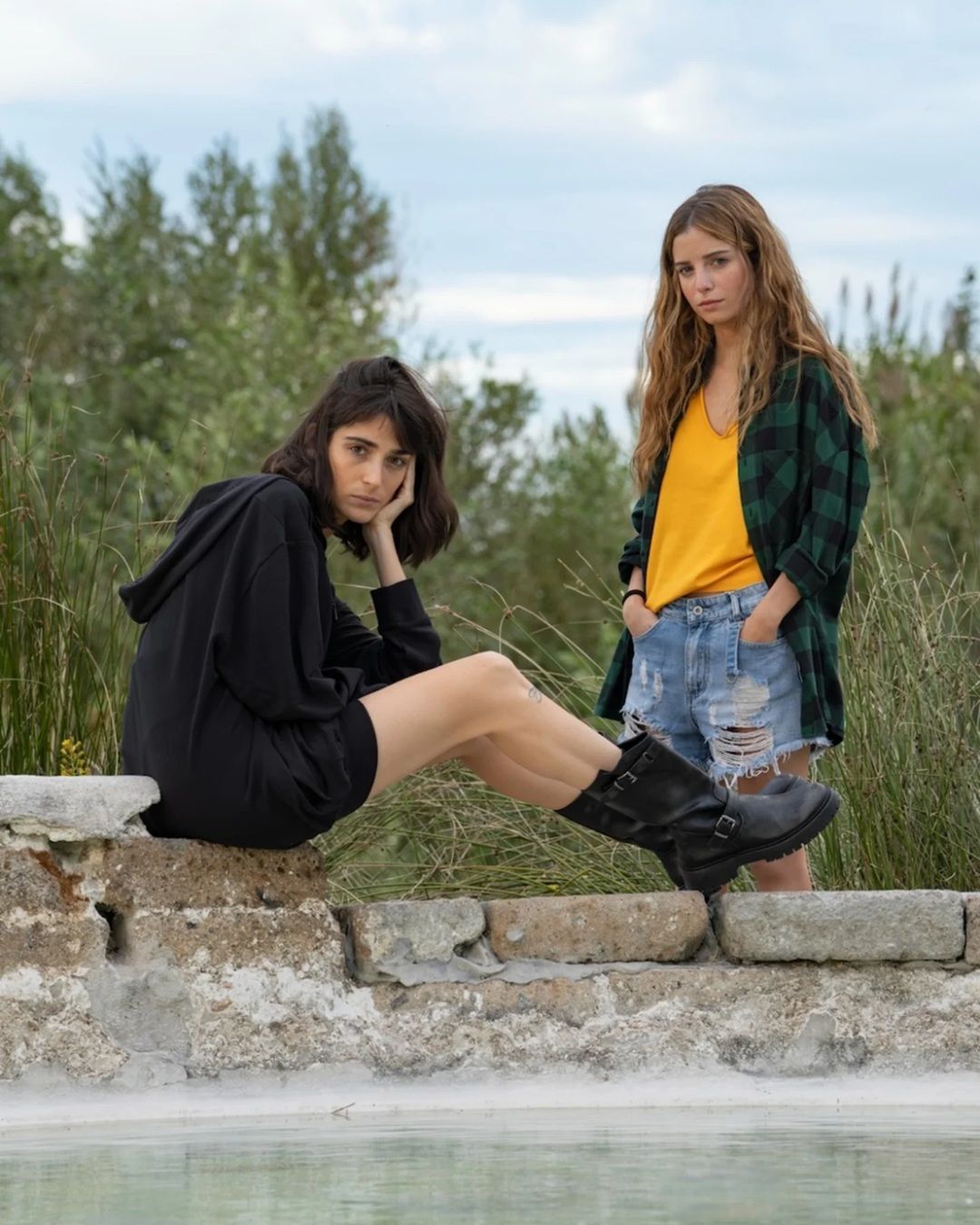
Il profilo dell’altra and Giorni felici: two stories about female characters, two wasted opportunities One is directed by Francesco Bruni, the other by Susanna Nicchiarelli. Both were presented at the Rome Film Festival
They may have been just two films, but Il profilo dell’altra and Giorni felici, both premiered at the Rome Film Festival, have spotlighted an issue plaguing not just Italian cinema, but entire generations. The former draws inspiration from the eponymous 2022 novel by Irene Graziosi (born in '91) and is directed and adapted by Francesco Bruni (born in '61). The latter is based on the 2021 graphic novel by Zuzu, a comic artist and illustrator born in '96, scripted this time around by the film's own director, Susanna Nicchiarelli (born in '75). Right from the premise, you can already spot the underlying issue.
Il profilo dell'altra and Giorni felici: two similar films, shared flaws included
In both cases, the stories brought to the screen carry two distinct hallmarks. The first is gender. Being women, complete with their instincts and societal expectations, is an element fundamentally tied to the narrative and its implications. The second is generational. Both films feature a roaring, youthful turmoil that ultimately gets domesticated by handing the reins to directors from an entirely different generation than the original authors. This choice dilutes the stories, hollows out their core, and dampens how the protagonists' anxieties and rebellious impulses unravel. Obviously, this isn't about playing the ageism card. Nor are we suggesting a director must be the exact same age as their characters or have lived firsthand through the precise eras they depict. Yet in projects like Il profilo dell’altra and Giorni felici, this generational divide heavily impacts the storytelling. This is especially true for Il profilo dell’altra, which tackles the profession of a content creator, arguably for the first time in Italian cinema without turning it into a sketch comedy routine, only to slip into tired clichés that betray a subtle bias on Bruni’s part.
"Il profilo dell’altra" and creator economy clichés in the film expected in theaters in February 2027
Starring Pilar Fogliati and Ginevra Francesconi, the film charts the personal and professional encounter between two polar-opposite women: on one side, an author with only one published book to her name, working as a waitress and paralyzed by trauma, who ends up ghostwriting and curating the public persona of a young influencer. Antonia (Fogliati), going by Anto-logica on Instagram, is thirty; Cecilia (Francesconi) is eighteen. It’s an intersection of two disparate worlds primed to cross-pollinate, yet the film traps its leads in an isolated bubble on a flat arc where they neither transform nor evolve.
"Giorni felici" and adolescent turmoil
In Giorni felici, the focus shifts to Claudia, played by Carlotta Gamba. Ever since childhood, the protagonist shape-shifts in response to her emotions. Excitement, rage, desire, and terror unsettle her to the point of literal physical mutation, sprouting fangs, fur along her arms, and claws instead of nails. Revealing herself in her winged form is a privilege reserved for a select few who truly know her. In front of anyone else, she feels ashamed to show her true self; yet only by learning not to hide and instead embracing her essence can she finally unlock her full power.
Two missed opportunities for Italian cinema
While Gamba successfully captures Claudia’s edginess, portraying her with raw confusion and anxiety, the flat direction and script ultimately cage her performance. It shouldn't be this way. These films ought to channel the restlessness of that in-between age, where one is old enough to feel everything deeply, yet hasn't truly crossed the threshold into adulthood. But none of that translates to the audience. It begs the question: why didn't two projects so specific, deeply rooted in identity, and charged with precise emotional weight find directors and screenwriters whose lived experience aligned with the inner worlds of these characters? Creators who could translate those voices onto the screen with the grit and raw freshness these narratives deserved. Rather than one, this marks a double missed opportunity, passing up the chance to spotlight younger filmmakers whose sensibility would have brought much-needed vitality to the Italian film landscape.
What to read next

"Se domani non torno" is a very useful film, and that's enough
Inspired by Giulia Cecchettin's story and soon in cinemas