






























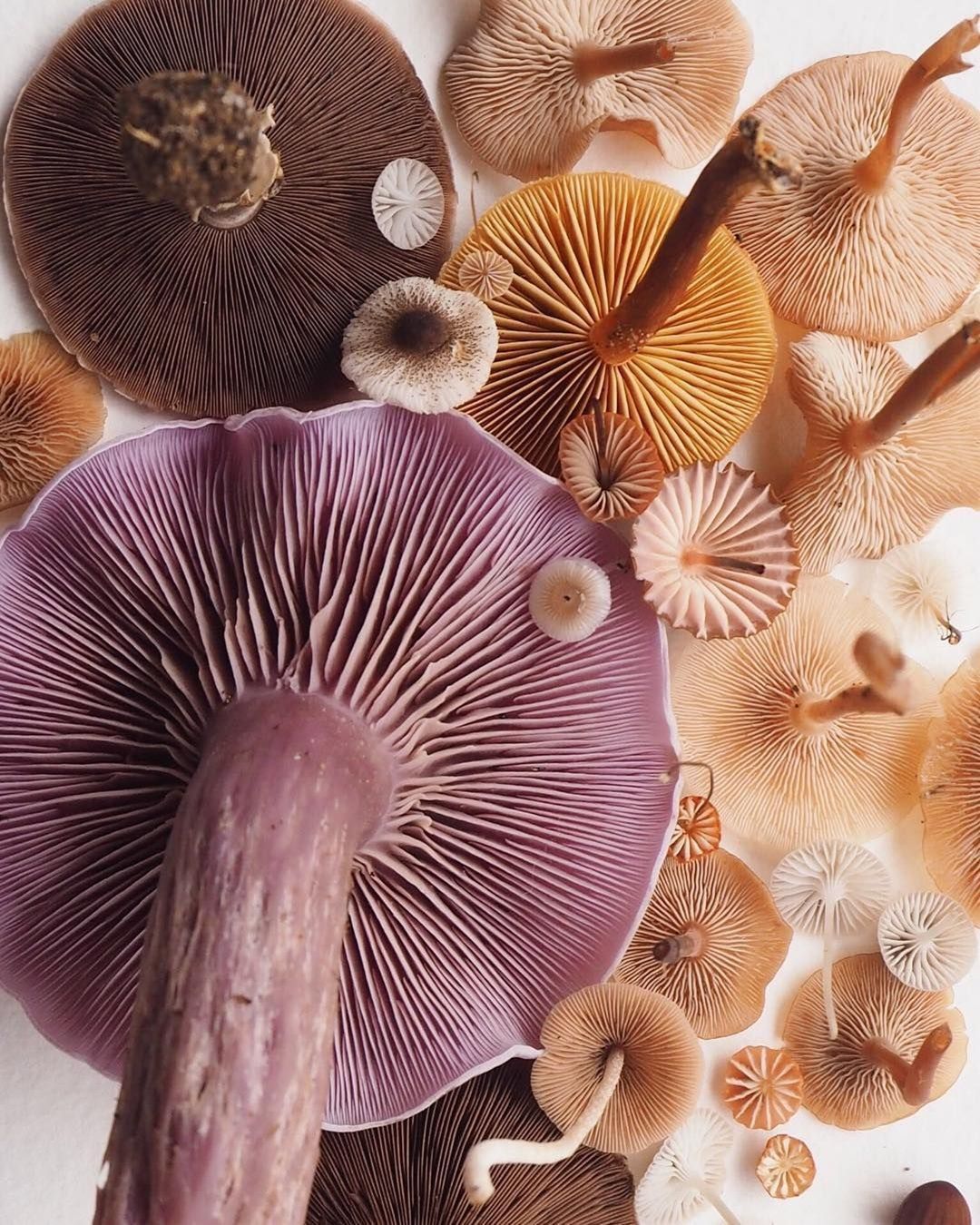
Is mycotherapy the new wellness ritual? Medicinal mushrooms are said to improve everything from concentration to sleep. However, not everything that comes from the forest is miraculous
Wellness was no longer enough for us. After turning matcha into a ritual, the microbiome into a cocktail-party conversation topic, and sleep into a performance to monitor every morning, we clearly needed another frontier to optimize. Enter mushrooms. Not the risotto kind, obviously. The protagonists of this new season are medicinal mushrooms, the ones that end up in capsules, powders, extracts and even coffee, promising energy, focus, relaxation, immunity and overall wellbeing. The name that brings it all together is mycotherapy, a practice that uses mushrooms or their extracts for health and wellness purposes and has its roots in traditional Asian medicine. Reishi, Lion’s Mane, Cordyceps, Chaga and Turkey Tail sound like characters from a fantasy bestiary, but they actually belong to a world that is becoming increasingly present in our daily routines. They are being studied for bioactive compounds such as beta-glucans, polysaccharides and terpenes. Reishi is mainly associated with stress and sleep; Lion’s Mane has become the mushroom of choice for anyone living with too many tabs open, because of its potential role in memory, focus and cognitive function; Cordyceps is associated with energy and physical performance, while Chaga is being studied for its antioxidant properties. It all sounds very promising. But between an interesting molecule, a preliminary study and a promise printed on a package, there is still quite a lot of forest to explore.
French Mush, from the forest floor to our daily routine
It is in this space, somewhere between tradition, research and the new aesthetics of wellness, that French Mush operates. The French brand was founded in October 2023 by Antoine Alibert, Audrey Smolak and Mattia Landro. Its mission is to take medicinal mushrooms, until recently confined to herbalists’ shops, research settings and distant traditions, and bring them into our everyday lives. The principle is simple: if we now have a routine for everything, why shouldn’t we have one based on mushrooms, too? The brand offers capsules and powders, including Lion’s Mane capsules, Mental Energy with Lion’s Mane and Cordyceps, a five-mushroom complex, and Boost and Cacao Boost formulas. A small menu for choosing, depending on the day, which version of ourselves we would like to enhance. French Mush also emphasizes European sourcing, AB organic certification, traceability and its extraction method. According to the company, ultrasonic extraction can increase the bioavailability of the extracts to as much as 92%. These details matter when it comes to mushroom-based supplements, because the name on the package only tells part of the story. The species, the part used, the concentration, the extraction method, the origin and the actual quantity all matter. In other words, it is not enough for the package to say “Lion’s Mane.” We need to know which Lion’s Mane, in what form and in what quantity. Apparently, even mushrooms have their own couture version.
@frenchmush Connais-tu la mycothérapie ? Dis-nous en commentaire si tu as déjà consommé des champignons médicinaux ! #mycothérapie #adaptogènes #bienetre #naturel #santé #champignons #médicinaux #champignonsmédicinaux #phytotherapie #champignonsadaptogenes #adaptogene #naturopathie #stress #immunité #énergie #naturopathie #sain #nature #france #frenchmush #mushroom #fyp #pourtoipage Shadow - Chromatics
Mushroom coffee and the mushroom you drink
The moment mushrooms definitively left the forest and entered wellness culture was probably when they found their way into coffee. Mushroom coffee has become the format that best captures this transformation. Reishi, Lion’s Mane and Cordyceps now appear in coffee, cocoa, snacks, shots and powders, while functional mushrooms become part of a daily life determined to optimize practically everything. There is a mushroom for focus, one for energy and one for relaxation. Lion’s Mane, studied for compounds such as erinacines and hericenones, is the favorite of nootropic culture; Cordyceps belongs to anyone who would like to turn breakfast into a pre-workout; Reishi is for the calm girl who has already put her phone on night mode by 9 p.m. Once again, we take something that grows slowly, turn it into a beige powder and then ask it to make us more energetic, focused and, ideally, better by 9 a.m. Research, however, moves at a pace that is considerably less Instagram-friendly. Studies on medicinal mushrooms are interesting and in some cases have produced promising results, but they often involve small sample sizes, are preliminary or do not allow their findings to be easily generalized to the wider population. And, above all, the extract used in a study is not necessarily the one we find in our latte. Dose, species, cultivation, the part of the mushroom used and extraction method can all significantly change the outcome.
Natural does not automatically mean miraculous
Mushrooms have something ancient and almost mysterious about them. They grow in the dark, have been used for centuries in traditional medicine and are now being repackaged as perfectly stacked capsules and powders to dissolve into milk. It is the perfect paradox for contemporary wellness, which is constantly looking for solutions that seem gentler than pharmaceuticals and smarter than simply “feeling good.” But “natural” is not synonymous with “harmless,” just as “studied” does not automatically mean “proven.” Research on medicinal mushrooms exists and is in some cases genuinely interesting, but the quality of the evidence varies considerably. The case of Turkey Tail is emblematic. Some of its compounds have been studied as supportive treatments in oncology, particularly in Japan and other Asian countries. This, however, does not mean that the mushroom is a cure for cancer. The difference between a promising substance and an effective treatment is not a linguistic technicality: it is the difference between a hypothesis and evidence. The same applies to the rest of the mushroom world. Perhaps, then, the smartest thing to do before choosing a medicinal mushroom supplement is to learn how to read the label, understand what we are actually buying and, above all, stop asking a mushroom to solve, on its own, what we have spent years making complicated. Mycotherapy could become an interesting frontier in wellness, with the global functional mushroom market estimated to grow from $8 billion in 2020 to $19.3 billion by 2030. But for now, before assigning it superhero powers, it might be better to let it spend a little more time in the forest.