














The only problem With Olivia Rodrigo is us From the kinderwhore aesthetic of the riot grrrl movement to the visuals of Tumblr aesthetics: why the debate around Olivia Rodrigo’s outfit in Barcelona says more about us than it does about her
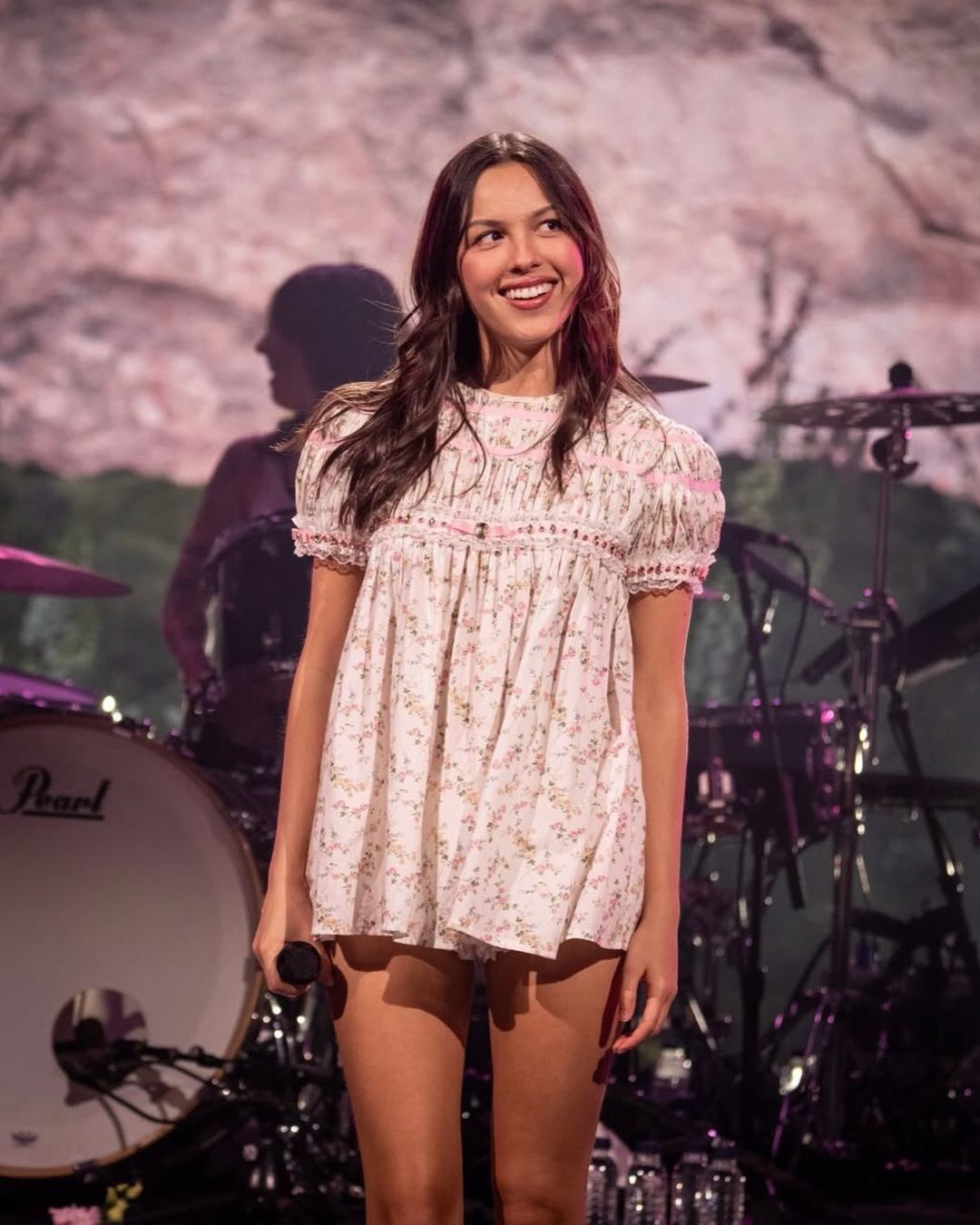
Artists who belong to the punk genre rarely aspire to be seen as childlike objects of sexual desire. Their moodboards do not feature Nabokov’s Lolita: they are usually angry women pushing back against the system, wanting anything but to cater to its fantasies. Unfortunately, as we’ve seen in recent days, those fantasies can spiral into unnecessary controversies. Following her performance at Spotify’s Billions Club, Olivia Rodrigo was accused of improperly sexualizing childlike clothing: “She’s wearing doll clothes,” wrote one user on X in a post that reached 21 million views. “Why doesn’t she dress like an adult woman?” added another. Some brought up Epstein. Others used the word “diaper.” These people perhaps do not know what the kinderwhore trend is, nor the history behind the so-called babydoll dress.
The evolution of Olivia Rodrigo’s signature style
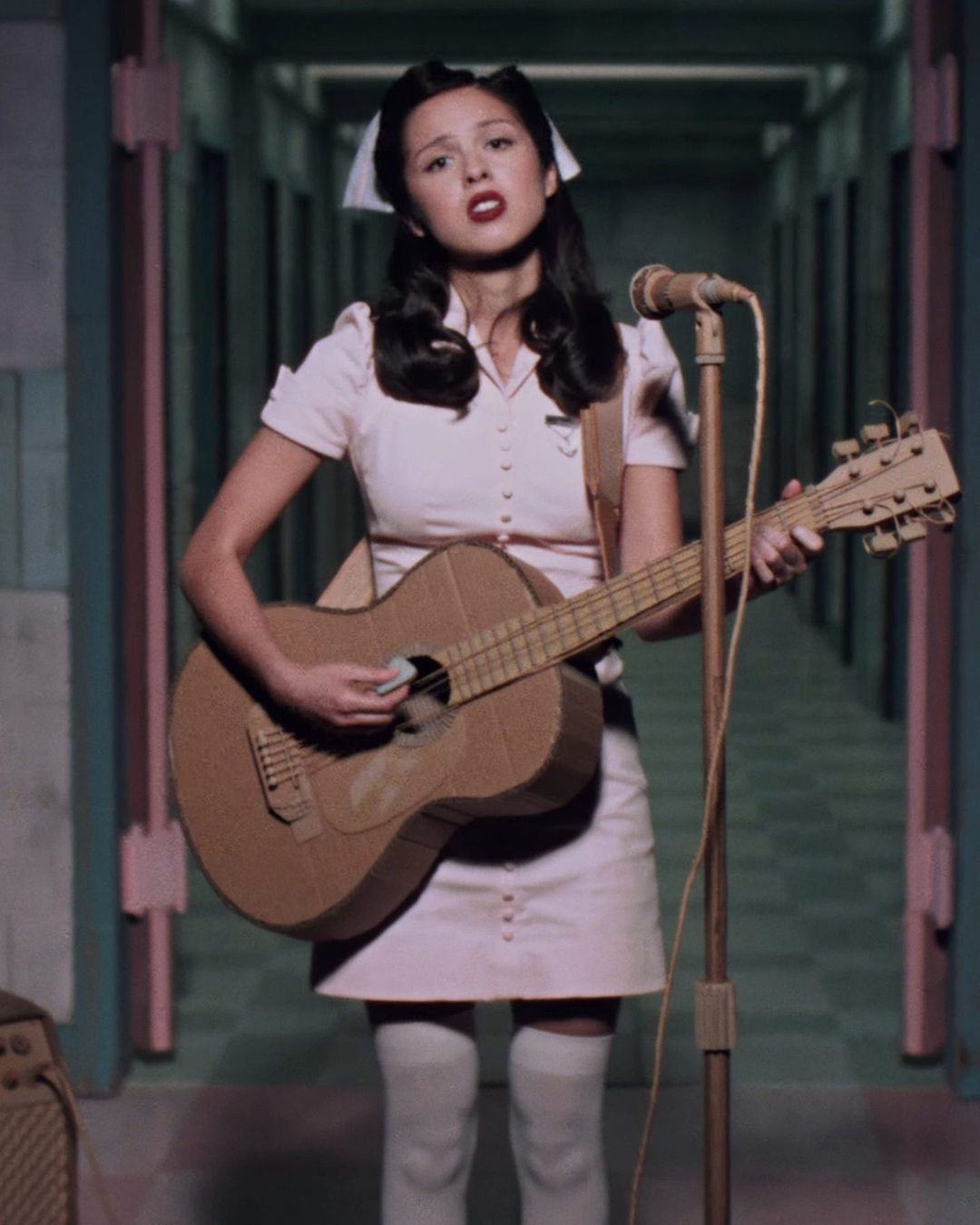
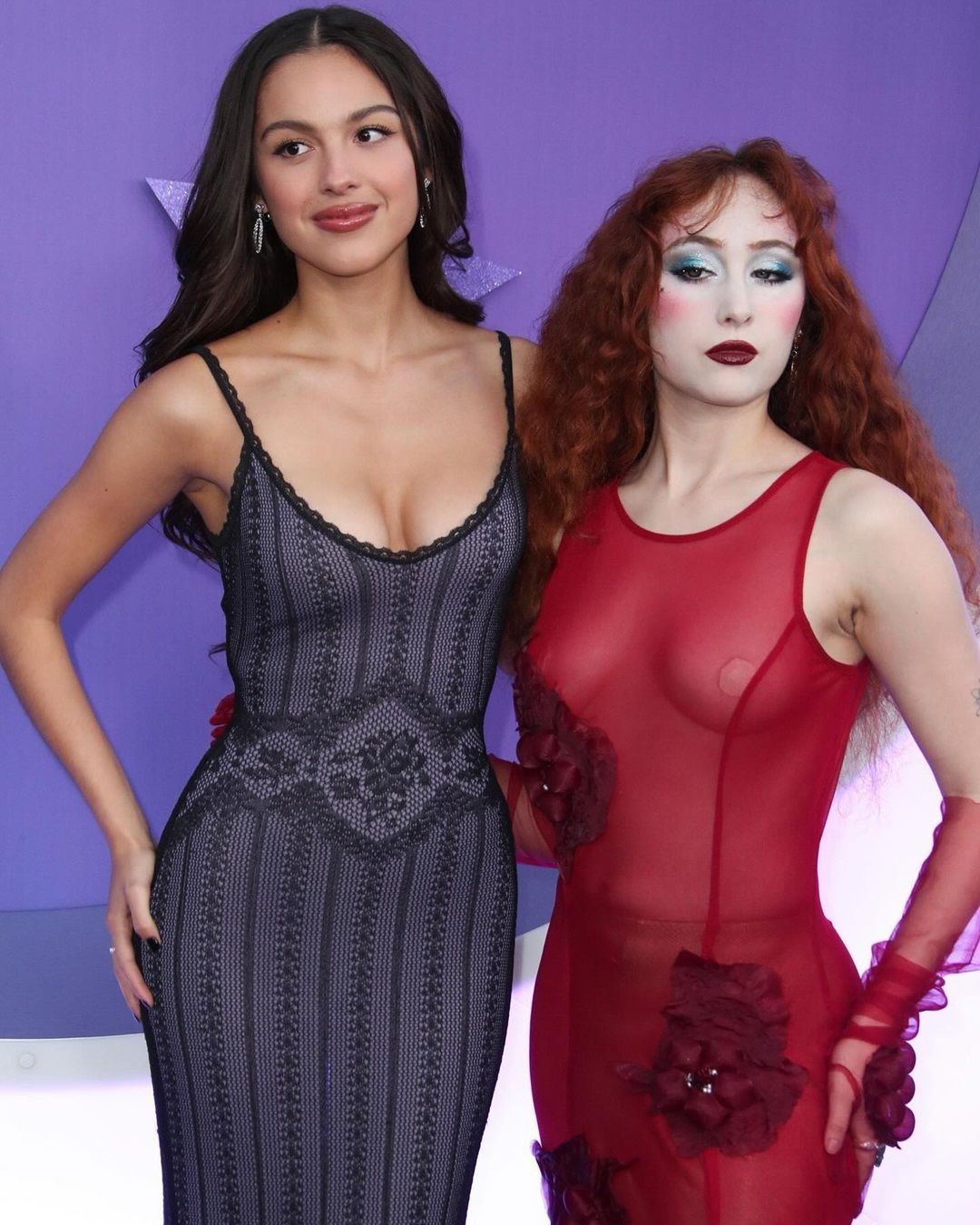
The outfit at the center of the controversy is a minidress by the French brand Generation78, featuring a floral print, puff sleeves, and crystal embellishments around the neckline, paired with ruffled shorts and knee-high combat boots. For the release of her new album, you seem pretty sad for a girl so in love, Olivia Rodrigo’s signature style has been reinterpreted through a 1960s-inspired lens, as seen in the pink dress with a Peter Pan collar worn on the album cover. Yet there is nothing surprising about this choice. Every artist builds a visual aesthetic that aligns with the music they are about to release: Taylor Swift moved from cardigans to the sequined glamour of the Eras Tour; Billie Eilish evolved from oversized streetwear to the Marilyn Monroe-inspired dresses of Happier Than Ever. It is worth remembering that Olivia Rodrigo has built her artistic image around a deliberately girlish aesthetic since her debut in 2021. Her stylists, sisters Chloe and Chenelle Delgadillo, both passionate about vintage fashion, drew inspiration from the archives of Miu Miu and Marc Jacobs to craft a style that is feminine, playful, relaxed, and slightly disheveled. Much like her music, it speaks to a distinctly female sensibility and to an audience that sees itself reflected in those clothes and in the image of the uninhibited young guitarist.
@losthollywoodvintage The baby doll dress! Where did it originate? Why the uproar and the history of the dress from the 1900s. #oliviarodrigo #thebabydolldress #fashionstatement #rebelion #vintageshopowner original sound - Aubrey Cooke
The history of the babydoll dress
The term “babydoll dress” did not originally refer to children’s clothing at all, but rather to women’s lingerie and sleepwear. It was Sylvia Pedlar who responded to the fabric rationing of World War II by shortening traditional nightgowns to knee length, creating the fresh and modern silhouette we recognize today. Only in 1956, with the release of Tennessee Williams’ film Baby Doll, did the term become associated with the flowing nightdress worn by the protagonist. Ironically, the label was never appreciated by its creator, though that is another story. Popularized by icons such as Jane Birkin, Twiggy and Brigitte Bardot, the garment took on a political meaning in the 1990s. Before finding fame with Hole and Babes in Toyland respectively, Courtney Love and Kat Bjelland shared a wardrobe made up of babydoll dresses, Peter Pan collars, ripped fishnet tights, and smeared lipstick. Melody Maker journalist Everett True coined the term “kinderwhore” in 1993, combining the German word for “child” with the English word “whore.” The term is not free of uncomfortable implications: as fashion scholar Malcolm Bernard wrote, the look represented “a form of inversion” that merged two identities already devalued by society, the little girl and the prostitute, proposing “a radical and confrontational model of femininity.”
How Riot Grrrl reclaimed feminine aesthetics
As reported by Dazed, in a 1994 interview with Rolling Stone, Courtney Love clearly explained that the kinderwhore fashion aesthetic was never intended to appear seductive or conventionally sexy, but rather ironic. In the hands of the riot grrrl movement, the babydoll became a mockery of the forced innocence imposed on women and a reclaiming of female sexuality as something belonging to women themselves. Removed from the domestic sphere and thrust aggressively onto the stage, the hyper-fragility associated with babydoll dresses became stained by the sexual violence permeating the lyrics of the era. Between the late 2000s and early 2010s, the babydoll aesthetic migrated onto Tumblr, paired with chokers and lace tights, becoming the visual language of an entire generation of alternative online communities. “I love the idea of the babydoll dress,” Rodrigo told Vogue. “I remember seeing photos as a kid of Courtney Love and Kat Bjelland in these riot grrrl punk bands wearing babydoll dresses with total confidence.”
@oldloserinbrooklyn Olivia Rodrigo, babydoll dresses and morality policing via fashion. #oliviarodrigo #babydolldress #fashiontrends original sound - Mandy Lee
Why the Olivia Rodrigo debate reflects collective anxiety
This entire controversy can be interpreted in two ways. On one hand, the logic of online critics, the idea that a dress with puff sleeves and a short hemline automatically evokes inappropriate fantasies, is the same logic that has been used for centuries to police women’s bodies. A similar attitude emerges whenever highly feminine clothing is reduced to the tradwife aesthetic. As if a garment itself had the power to determine someone else’s behavior. On the other hand, as Harper’s Bazaar points out, policing Olivia Rodrigo’s self-representation seems to reflect a broader attempt to cope with feelings of helplessness in the face of sexual crimes that so often go unpunished. Fear surrounding sexual violence has become so unresolved that it transforms into panic at the slightest visual trigger: a Peter Pan collar, a short skirt, an aesthetic vaguely associated with childhood worn by a young woman. This is not moral outrage; it is collective anxiety that can no longer distinguish between a criminal and a twenty-three-year-old singer dressing for her fans. Perhaps we should ask ourselves why it has become so difficult to separate the two, and what it says about us that we cannot. The answer, however, will not be found in Olivia Rodrigo’s wardrobe.