












Almost every neighborhood in Milan has its own beauty identity Had you thought about it?
Milan is the Italian province with the highest number of hair salons and beauty centers. In 2014, as reported by the Chamber of Commerce, there were 6,762, roughly one for every twenty residents. In 2020, according to Eurostat, this record was confirmed. Milan also ranks second in terms of foreign-owned hair salons and beauty centers, mainly run by entrepreneurs from China, Switzerland, and Morocco.
The beauty landscape across Milan’s neighborhoods
The Milanese data is hardly surprising. Anyone who has ever walked through the city knows that each neighborhood flourishes with its own identity, shaped by - and shaping - the people who live there. For example, near my area in San Siro, Egyptian men’s barbershops are thriving, while nail salons are still a relatively new presence. The opposite is likely true in Chinatown, where there has been a noticeable rise in beauty centers, including Korean ones, driven by the growing K-beauty trend. So-called “old-school” or bourgeois neighborhoods are still filled with traditional salons, while newer areas undergoing redefinition and redevelopment are beginning to show clear signs of change, with the arrival of franchises and high-end chains.
The case of East Milan (and we really mean far east)
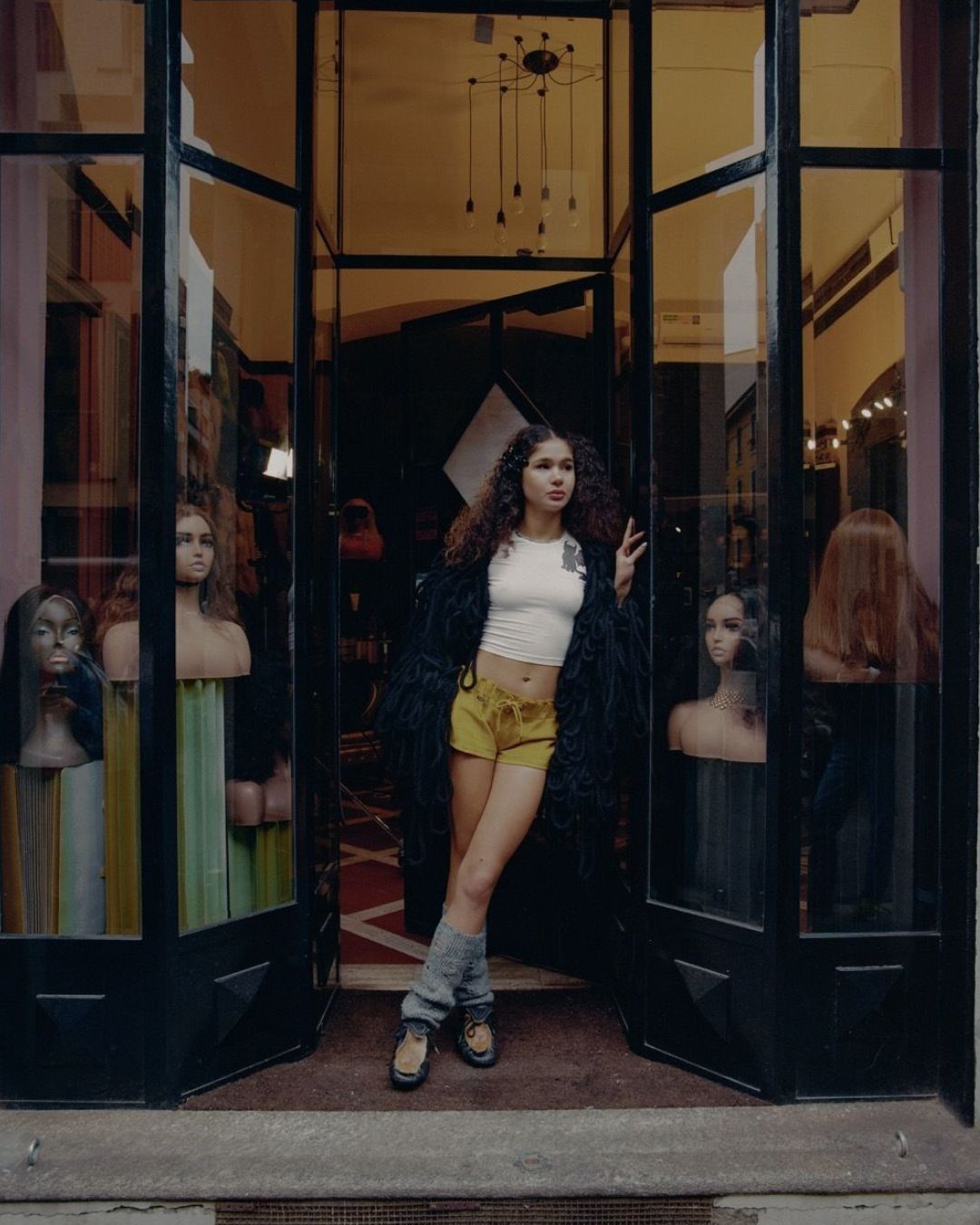
Another example? The outer area around Porta Venezia, including Via Padova, where there is a strong concentration of barbershops and salons specializing in extensions, wigs, installations, and Afro hair care in general. We know this well, we even built a digital cover story around Lorenzza in this context just a few months ago. In an increasingly open and multicultural neighborhood, it is only natural that beauty salons reflect this transformation. The result is spaces like Helen Studio on Via Panfilo Castaldi, which specializes in braids, coloring, women’s cuts, as well as eyebrow shaping and facial treatments. Or Kumba Extension, as the name suggests, a salon focused on extensions located at Via Giovanni Paisiello 7.
This, after all, is also intersectionality and integration. We have already discussed immigrant entrepreneurship, and this is yet another example. In Italy, and especially in its most European city, the beauty industry expands and evolves, listening to its users while reshaping neighborhoods and reflecting their history and composition. It is a reminder that beauty, in its broadest sense, is also society, community, and the everyday visual culture of a place. Whether in Milan or elsewhere, the essence remains the same.