

We all had a hallway crush How the “hallway crush” became one of the most relatable Gen Z and Millennial experiences in pop culture
Whether it was middle school or high school, there’s one canon event that unites us all: meeting our hallway crush. Until a few days ago, I wouldn’t have known how to name it, but once again TikTok introduced a new neologism hiding entire thematic worlds to explore. A walk through the school corridors, a break in the courtyard with friends, and suddenly time stops. He somehow starts walking in slow motion like in one of your favorite romance movies, and that’s it, you’re done for. Shyness, however, reigns supreme, especially because a senior student would hardly ever notice a freshman (or at least that’s what we kept telling ourselves). You may never speak to them, you might never even learn their name, but every time you cross paths in the hallway, you can’t help but notice them. You end up idealizing a complete stranger and remembering them even 20 years later. Well, that is the exact definition of a hallway crush.
@ailanisvideogalerie Sie trauert ihm immer noch hinter #fyp #foru #realtalk #relatable #hallwaycrush #nostalgia #oldermen #lifeisgood original sound - Lal Music Group
When did the term hallway crush originate?
The earliest definitions uploaded to Urban Dictionary date back to the mid-2000s. It was described as “having a crush on someone you see every day in the hallway or at school, but with whom you don’t share any classes and have never exchanged a word; you have no way of communicating or you try and fail.” The charm of the school hallway crush was precisely the mystery behind it, a Sherlock Holmes-style investigation where your best friend played the role of Watson. Back in the 1990s, the only way to discover something about your secret crush was bribing one of their classmates or sneaking a look at the paper attendance register during recess. In the early 2010s, shyness found an unexpected ally: digital anonymity. Amateur detectives suddenly had cutting-edge tools called Ask.fm and, shortly after, Tellonym. These platforms essentially became the “information desks” of middle schools and high schools. Even though there was now a way to communicate, the emotional distance remained unchanged. People exposed themselves without ever truly revealing their faces; conversations happened indirectly on public message boards, fueling the castle of idealization that made the phenomenon so memorable and, at times, heartbreaking. Today, some of that magic has faded because of how incredibly easy it is to map out anyone’s existence online. In today’s social media culture, anonymity has almost become an exception, although phenomena like Instagram “spotted” pages, where users anonymously submit sightings or compliments to people casually encountered in specific places, still continue to survive.
The hallway crush in pop culture
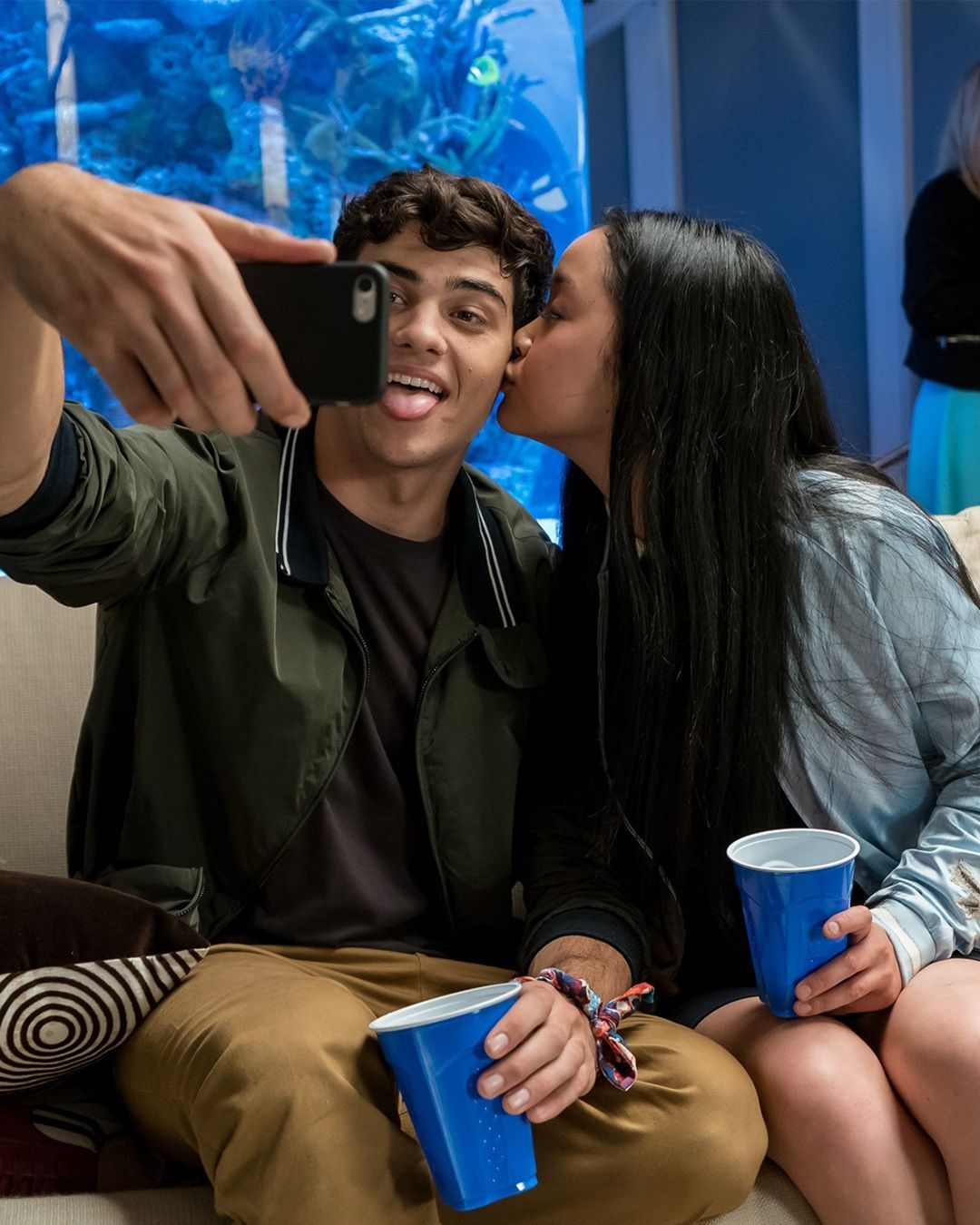
Between 2010 and 2015, the aesthetic of the secret crush and the school hallway romance became a cornerstone of teenage blogs. Today, alongside “enemies to lovers,” it is one of the most beloved narrative tropes in literature, movies, and TV series screenwriting. Of course, this device is usually introduced at the beginning of the story to create tension, but eventually the protagonists find a way to talk to each other, even if awkwardly. A perfect example is Netflix’s famous movie series To All the Boys I’ve Loved Before. Before the letters are sent, several of Lara Jean’s crushes are exactly that: hallway crushes or boys she admires from afar while idealizing them. The movie visually captures these moments perfectly, especially when Lara Jean sees Peter Kavinsky walking through the hallways in slow motion, surrounded by an aura of unattainable perfection. And then there are cult TV series. Dean and Rory in Gilmore Girls fully embody this concept. Dean was the “new guy” watching Rory from afar in the halls of Stars Hollow High, studying her movements and the books she read, while Rory experienced that mix of intimidation and curiosity typical of someone who locks eyes with a magnetic stranger between classes. Narratively, the trope works because the viewer identifies with the protagonist’s anxiety and the comedic “failures” caused by countless awkward attempts at communication. Scrolling through TikTok today, you can find endless tutorials explaining how to break the ice and escape the “no-contact” limbo. There’s even an entire WikiHow page dedicated to it. Some people suggest using psychology and sensory memory: wearing bright colors like red to stand out in a crowd, choosing a signature vanilla perfume to become unforgettable, and mastering the art of double eye contact in the hallways. The recommended strategy is a mix of mystery and boldness: give a fleeting compliment, ask a random question about the class schedule, and then disappear immediately afterward, leaving the other person wondering. On the other hand, some people preferred to preserve the myth of anonymity, allowing the hallway crush phenomenon to remain an untouchable, almost ghostlike figure destined to exist only in memory. What do you think? Do you still remember your hallway crush?