

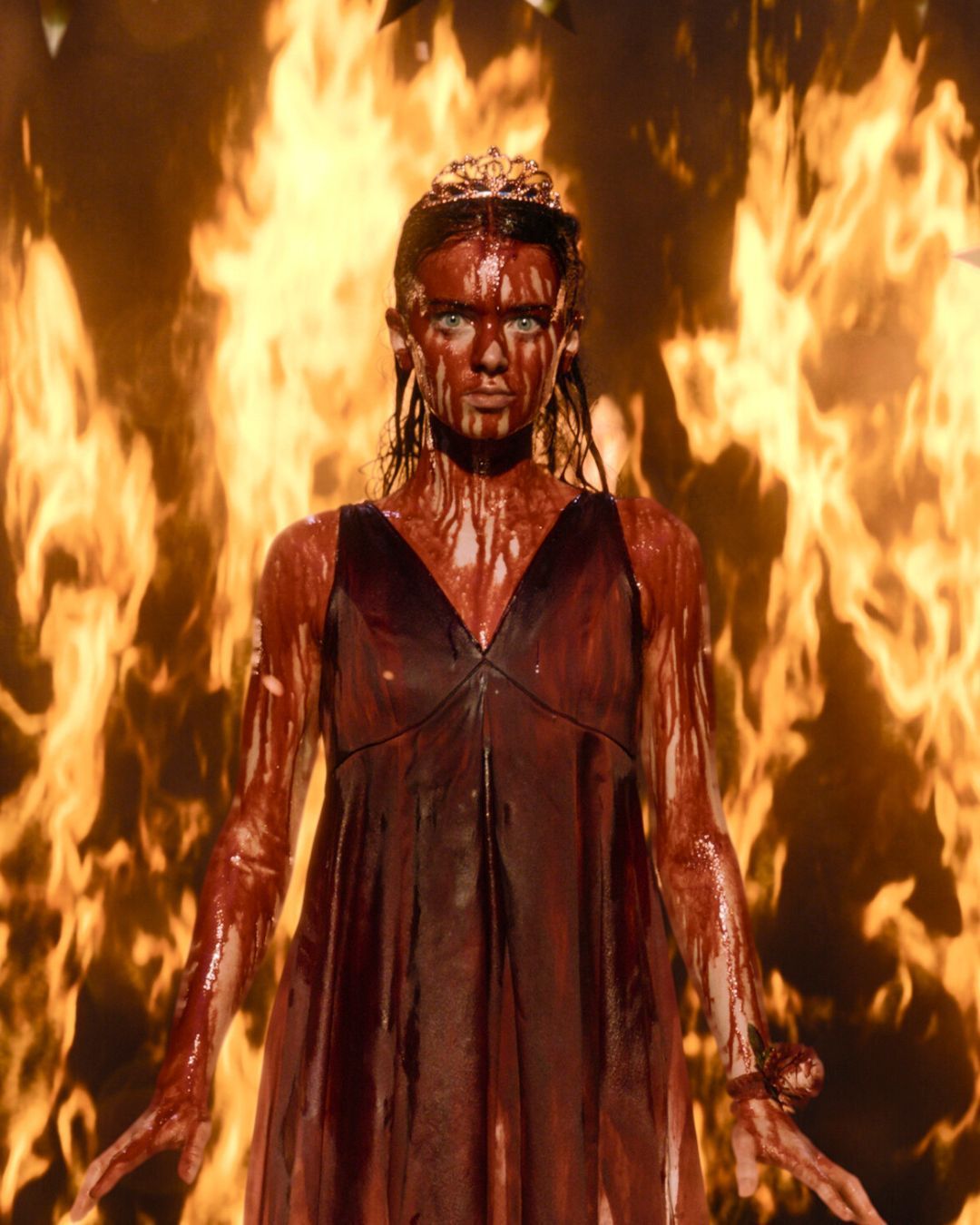
The TV series about Carrie is very different from the movie and the book Everyone online is talking about it, but is it really worth it?
The TV series Carrie, based on the novel by Stephen King, is available in eight episodes on Prime Video, and the debate over adaptations continues. Before him Wuthering Heights, a work by Emily Brontë brought back under the eyes and taste of screenwriter and director Emerald Fennell. Now, it's Mike Flanagan's turn. The show is in fact moving away from both its literary version and the 1976 film version directed by Brian De Palma, of which there are also a sequel and two remakes. We are faced with a contemporary variant that meets the style of a horror author capable of offering some of the best serial opportunities in the genre.
Mike Flanagan meets Stephen King, again
The universes of King and Flanagan had already met, in fact there were Gerald's Game, Doctor Sleep and The Life of Chuck. Carrie, for its part, is such an important and powerful title that it must and can be a catalyst for the vision and signature of both, which in fact becomes one thanks to the admirable source material created by the writer, on which the audiovisual creator has put his hands. Let's see how.
All the news in the series: from the setting to Carrie's trauma
The first major change made by the new Carrie was at the time: the story of the protagonist takes place today. Metal detectors greet students at the entrance of the school and social media are perfect for being despicable and mean hiding behind anonymity. Carrie White's traumas are also modified: the young woman's father does not die when she is not yet born, but during her adolescence, giving an unprecedented meaning to her imprisonment, to the unfolding of her story and to her relationship with her mother Margaret. An overprotective parent exactly like in the novel and then in the film, but who strips slightly of those Christian legacies to protect his daughter no longer from evil or sin, but from a nature that Carrie cannot hide and from a power that disconnects her from the so-called “normal” world.
The religious theme and the ancestral bond with a powerful and hidden feminine
Prayer and the search for religious repentance remain, but Carrie's strength and her telekinetic ability have a legacy that in the series is more ancestral, primitive and hereditary than it has ever been. A bond that connects the protagonist to all the women accused and discriminated against for their abilities, who instead of being admired wanted to submit, contain, bend. It is with the story of a woman who is different every time and who has performed incredible actions that some episodes open up, outlining an imaginary made of a powerful but opposed femininity, with gifts that were considered curses for which it was necessary to suppress them, even burn them. It is about a female community that the new Carrie talks about and how we arrived at the young resident of Maine who in intentions, although speaking of something else, recalls recent works such as the beautiful documentary Witches of 2024 directed by Elizabeth Sankey.
The awareness of a heroine of the present
“I exist” is what the show wants the protagonist to say, giving her the value that until then others seemed to want to deny her, to the point of canceling her. Bullying, malice and youthful hardships are spread on the various characters to collect a basin of anguish that is transformed into psychological and physical violence, which has led to the explosion of the young woman. An explosion that coincides with a very precise demand and that makes Carrie a protagonist who draws from her past, on the page and on the cinema, to communicate with the present, using new codes. Known but different: faithful to herself, but even more to the world she speaks to today.
What to read next

Revenge of Blondes in Romances
How the authors decided to give the Golden Boys a second chance
Italian cinema has not yet learned not to be melodramatic, especially when it comes to women
And 'The Spiral' is the proof, unfortunately