

Has beauty run out of ideas? Between patches that are all the same and products that promise revolutions, do we still know how to recognize innovation?
There is one thing that happens to me more and more often when I open a beauty press release: I read the name of the product, I look at the packaging, I arrive at the description and I have the feeling that I have already seen it. Same thing when I open social media. A serum that promises brighter skin, a lip treatment that hydrates and plumps up, yet another hydrogel mask that should work wonders. The colors change, the testimonials, some ingredients and above all the way in which it is told. The product, on the other hand, sometimes seems to come from a conversation we've already had. And yet we continue to be attracted by news. Beauty is a sector that also thrives on desire, discovery and experimentation, and it would be hypocritical to pretend that we don't like to try something new. The point is another: if every product is presented as a revolution, how can we recognize when a revolution is actually coming?
When everything is innovative, nothing seems new: beauty innovation today
In recent years we have become accustomed to a beauty calendar that knows no breaks. Every season has its main ingredients, every week its viral product and each platform its way of convincing us that we are missing something. First we had to have a Korean skincare of ten steps, then we learned to reduce them, then came skin cycling, skin flooding, peptides, barrier formulas and multifunction products. It's not like these categories are all useless. Some have brought concrete improvements, others have simply found a more interesting way to tell familiar gestures and ingredients. Then there is a rather amusing paradox: while we pursue originality, the dupe market continues to show us how much we want products that look like something we already know. We want the innovative formula, but also the accessible alternative to that formula. We are looking for the product never seen before and at the same time the one that reproduces the result of our favorite. Maybe we're not so obsessed with the novelty itself. Above all, we like the idea of having found something better.
@estetistacinica Fenty, Glow Recipe, Wonder Bath e stava quasi per farlo anche Huda che ha ritirato il suo lancio. Questi brand sono usciti nello stesso periodo con gli stessi patch occhi forse a causa di un fornitore che ha venduto a tutti lo stesso prodotto. Questa notizia mi ha fa sorgere una domanda: Quando scegliete un prodotto beauty cercate un’innovazione nella formulazione supportata da test di efficacia o un prodotto che non abbia nulla di nuovo ma che sia wow e instagrammabile? Parliamone nei commenti #hudabeauty #eyepatches #fenty #glowrecipe audio originale - Estetistacinica
The case of eye patches that seem to have all come from the same laboratory
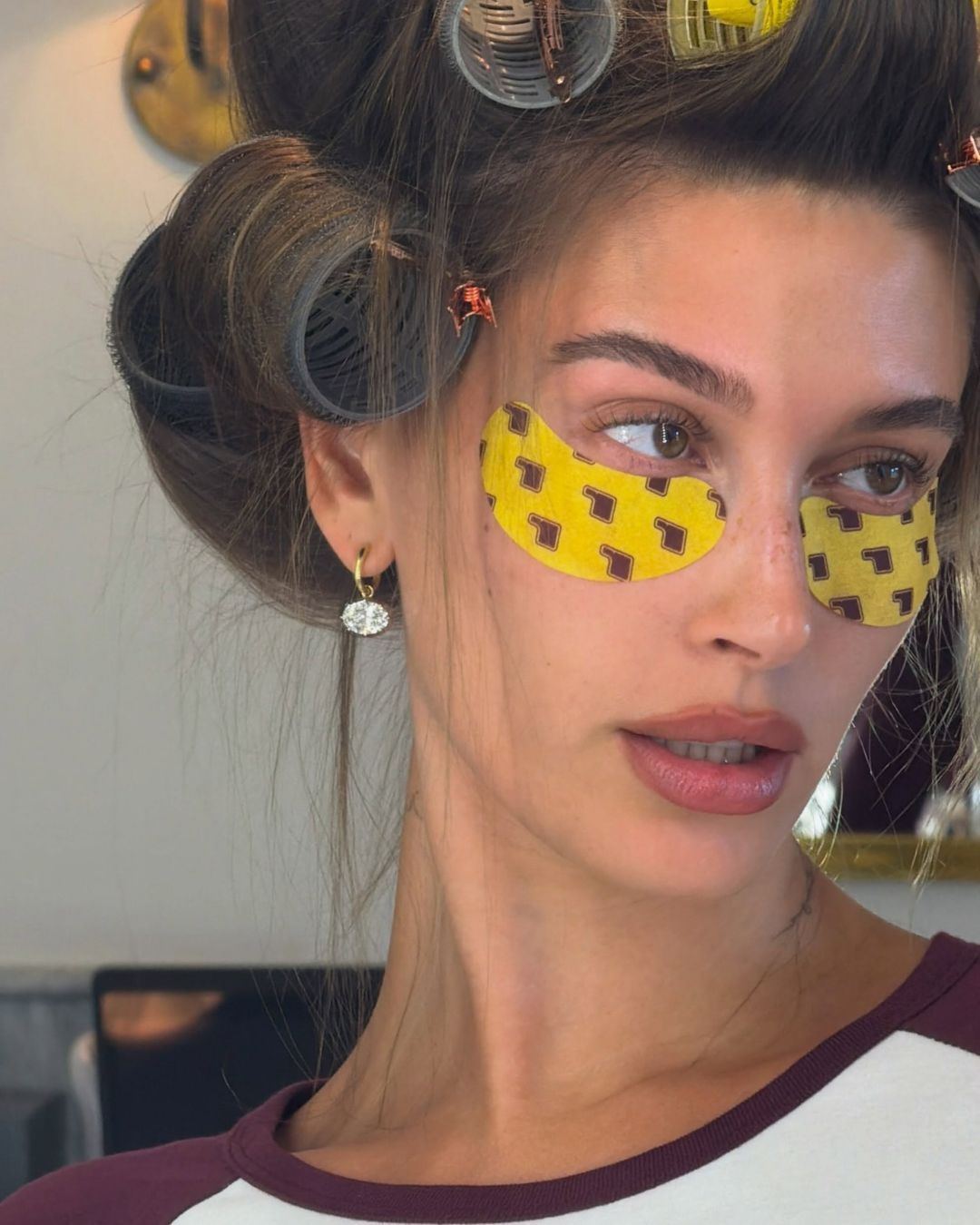
In September, beauty had its little moment as a comedy of misconceptions. Fenty Skin, Glow Recipe and Huda Beauty presented, at close range, hydrogel eye patches with a very special delivery system: a cylindrical package that, by rotating, allows you to obtain a sort of slice of product ready to be applied under the eyes. The resemblance between the packages was so evident that what has been renamed Eye Patch Gate exploded on social media. To make the story even more interesting, it emerged that the packaging mechanism came from the same South Korean manufacturer, while the product formulas could be different. The funniest part is that, instead of ignoring the situation, brands ended up participating in the conversation, turning a potential embarrassment into a moment of collective entertainment. Meme aside, the case tells something larger about the functioning of the cosmetics industry. An innovation can come from packaging, from a shared technology, from a laboratory that works for different companies. Not everything has to be invented from scratch, and not everything that looks like it is necessarily a copy. The problem comes when the promise of exclusivity becomes more important than what really distinguishes one product from the others.
The packaging chimera
And here perhaps we should ask ourselves a question too: if two products have almost identical packages but different formulas, are we really able to evaluate them without being influenced by what we see? Because beauty can also be bought with the eyes, of course. Beautiful packaging can make us want a product even before we have read the INCI, just as a particular texture can convince us that the formula is more advanced. Being amazing to look at and being innovative to use aren't necessarily the same thing.
@lavickybeauty full face con le ultime novità di @rhode skin le nuove minisize dei blush sono troppo cute
Innovation doesn't have to make noise
Some of the most interesting beauty innovations aren't necessarily those that go viral. There is an important difference between inventing something and improving something that already exists. An ingredient does not necessarily have to be new to be effective, just as a formula can represent progress even when it contains active ingredients that we have known for years. Sometimes it's the combination that makes the difference, other times the stability, the sensoriality, the ease of application or the possibility of using a product with greater continuity. It's not even certain that we're all looking for the same thing. There are those who want to experiment with every new cosmetic technology and those who would be delighted to find a cream that does not irritate the skin, does not cost a fortune and is not reformulated every six months.
A focus on improvement, instead of innovation
We should stop considering innovation solely as a race to come first. Beauty still has a lot of room for improvement, especially when it comes to meeting needs that for years have remained on the margins of the market. The question, then, should not only be what we have never seen before, but for whom a product has been designed and what problem it can solve better than those that already exist. And then there is yet another possibility, perhaps the least interesting for algorithms, but the most reassuring for those who buy: that a product doesn't have to be revolutionary to be good. We can love a mascara because it doesn't smudge, a cream because we like the way it leaves the skin, a lipstick because it has exactly the color we were looking for. Without having to give each purchase the task of changing our lives.
Beauty is not running out of ideas, it just needs to change the type of story
Beauty is probably not running out of ideas. He is going through a moment in which telling something as new has become almost as important as making it really different. And we, in the meantime, have learned to recognize much more things than the industry imagines. We will continue to want products, to try them, to fall in love with a package and maybe to buy yet another lip balm even though we already have enough for the next three winters. However, we can begin to make a distinction. The next time a product promises to revolutionize our beauty routine, perhaps we could simply ask it to improve it. That would already be wonderful news.