


































The political geography of Pride Month in Italy From Rome to Milan, but not only
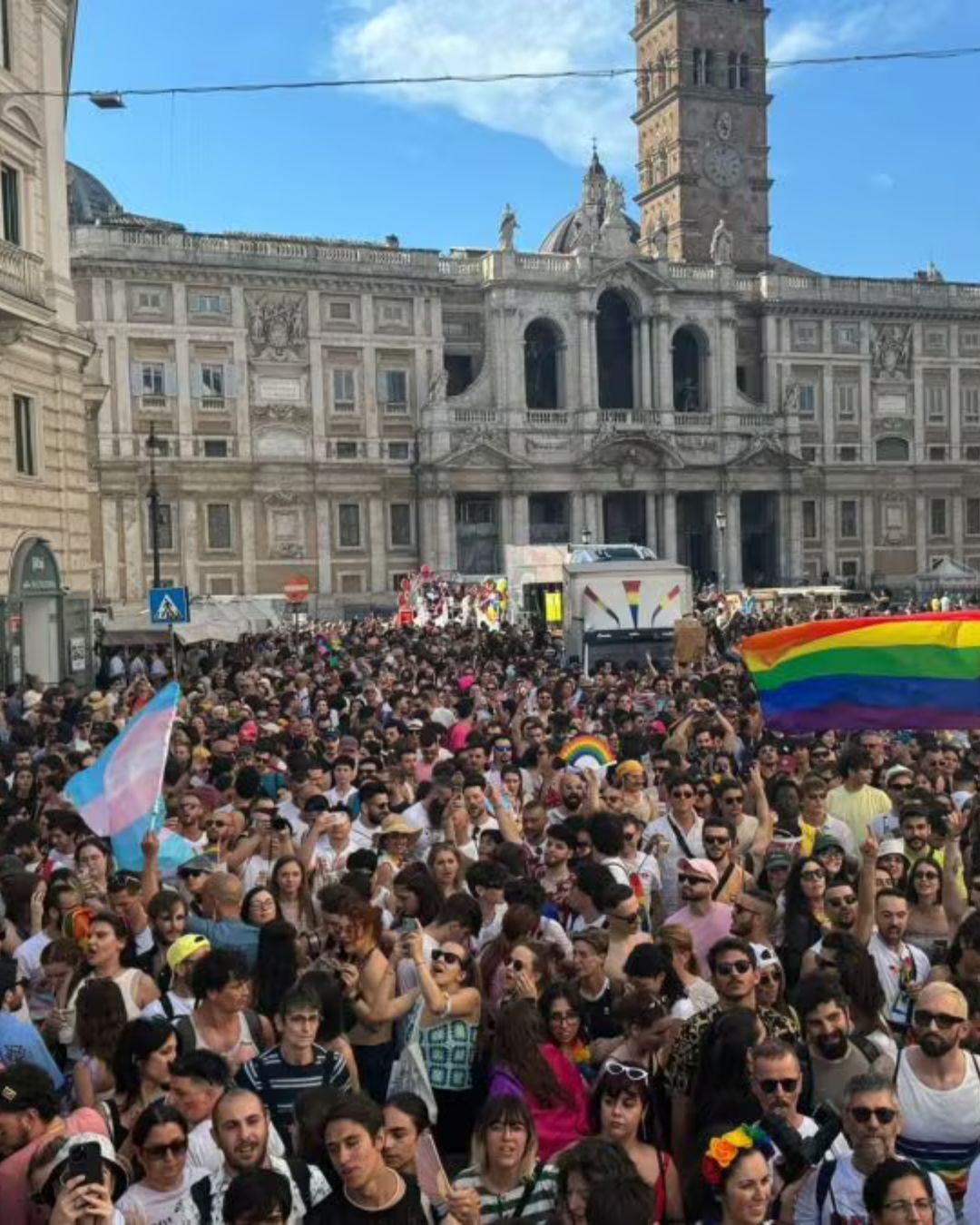
June is the month that more than any other represents a widespread cultural and political season, a fragmented yet coherent calendar that stretches across both large and small cities under the name of Onda Pride. There is no single central event, but rather a constellation of events that draws a map of the country shaped by claims and demands that are still too rarely discussed. The Pride, today, is both celebration and political infrastructure: a form of presence in urban space that combines visibility, protest, strong cultural production and legitimation.
The 2026 Pride calendar: a widespread network of cities
In 2026, the Italian Pride Month is concentrated mainly between June and early July, with events spread across the entire territory:
June 6: Turin Pride, Tuscia Pride (Viterbo), Taranto Pride, Monterotondo Pride
June 13–14: Bologna Pride, Bari Pride, Liguria Pride (Genoa), Tuscany Pride (Grosseto)
June 20: Rome Pride, Palermo Pride, Treviso Pride
June 27: Milan Pride, Naples Pride, Verona Pride, Catania Pride, Sardinia Pride (Cagliari)
By avoiding a single symbolic capital and building a network of coordinated local mobilisations, greater accessibility and democratization is achieved across different local contexts. Today, there is an effort to bring Pride into increasingly remote territories, highlighting the importance of opening up an ever more shared public discourse.
Rome Pride: between the Constitution and political language
The 2026 Rome Pride, scheduled for June 20, is one of the most significant moments of the month not only in scale but also in its explicitly political framing. This year’s theme, The Republic belongs to those who inhabit it, connects the event to constitutional principles of equality and citizenship, at a time when the debate on civil rights is increasingly polarised. The event’s political document clearly states: Pride as a space of democratic conflict and the defence of rights as non-negotiable goods.
In this context comes the authoritative voice of Mario Colamarino, spokesperson for Rome Pride and president of the “Mario Mieli” Homosexual Culture Circle, who describes the meaning of the event: "On June 20, Rome Pride will take place, now in its 32nd edition. This Pride is deeply political and one of the most important in recent years, at a time when Italy ranks among the lowest countries in Europe for LGBTQIA+ rights. The chosen slogan, The Republic belongs to those who inhabit it, affirms a fundamental principle: the LGBTQIA+ community is part of this country as well, since the birth of the Republic 80 years ago. We state it once again: we are here and we are not leaving. The Republic belongs to those who inhabit it, and we inhabit it. These days will be accompanied by numerous events leading up to Pride, culminating on June 20, the day of the main parade". A statement that clearly summarises the dual nature of contemporary Pride: on one hand symbolic and inclusive language, on the other a clearly political act within the public sphere.
Pride as a cultural space (not just a parade)
In recent years, the Italian Pride Month has expanded beyond street demonstrations. In cities such as Rome and Milan, structured cultural programmes have emerged: talks, performances, festivals, art exhibitions and public debates. In Rome, for instance, the Pride Croisette programme transforms locations such as the Baths of Caracalla into hybrid spaces between culture and activism, featuring artists, writers and figures from the Italian public scene. Pride thus becomes a cultural device: it produces narratives, languages and visibility that do not end with the day of the parade.
Inclusion and conflict
Alongside its festive and cultural dimension, Pride remains shaped by increasingly explicit political tensions. It is precisely this tension that makes Pride a complex cultural phenomenon: not a simple identity celebration, but a political laboratory in which the boundaries of citizenship are constantly being redefined. We will be there.
What to read next
Why Disability Pride Month still matters
A steadily growing international movement that deserves to be included
T Party II brings together more than 100 people in Milan
For a conversation about identity, courage, fear and community