












































Will savory scents be the new gourmand fragrances? From sugar to umami, the fragrance industry enters the savory era
For a while, it seemed that every new fragrance wanted to be eaten. The beauty industry was going through its own pastry-shop era, with vanilla, whipped cream, candied cherries, butter cookies, creamy pistachios, and marshmallows occupying store shelves, TikTok feeds, and half the internet’s wishlists. The more a perfume resembled a dessert, the more destined it seemed to go viral. It was a form of escapism perfectly aligned with the historical moment. During the years of the pandemic and economic uncertainty, gourmand fragrances offered immediate comfort. They were reassuring, nostalgic, and childlike in the best possible sense. Just a few sprays were enough to become the olfactory version of a soft blanket or a homemade dessert. Over time, however, that almost compulsive sweetness began to reveal its limitations. The same desire that had made gourmand perfumes irresistible started searching for new stimuli. Fashion was abandoning the polished aesthetic of quiet luxury to rediscover raw textures, natural materials, and an idea of luxury that felt less perfect and more lived-in. At the same time, the food world shifted its focus away from cupcakes and rainbow cakes toward fermentation, urban gardens, seasonal ingredients, and a new fascination with all things plant-based.
@ed.fragrancestylist Brit Summer Veggies. Fresh from the British vegetable patch. #BritVeggies #UniquelyYou #JoMaloneLondon #MyJoMaloneLondon #JustBecause Nanotech - 时代环球娱乐
From the bakery to the greenhouse: the new savory fragrances
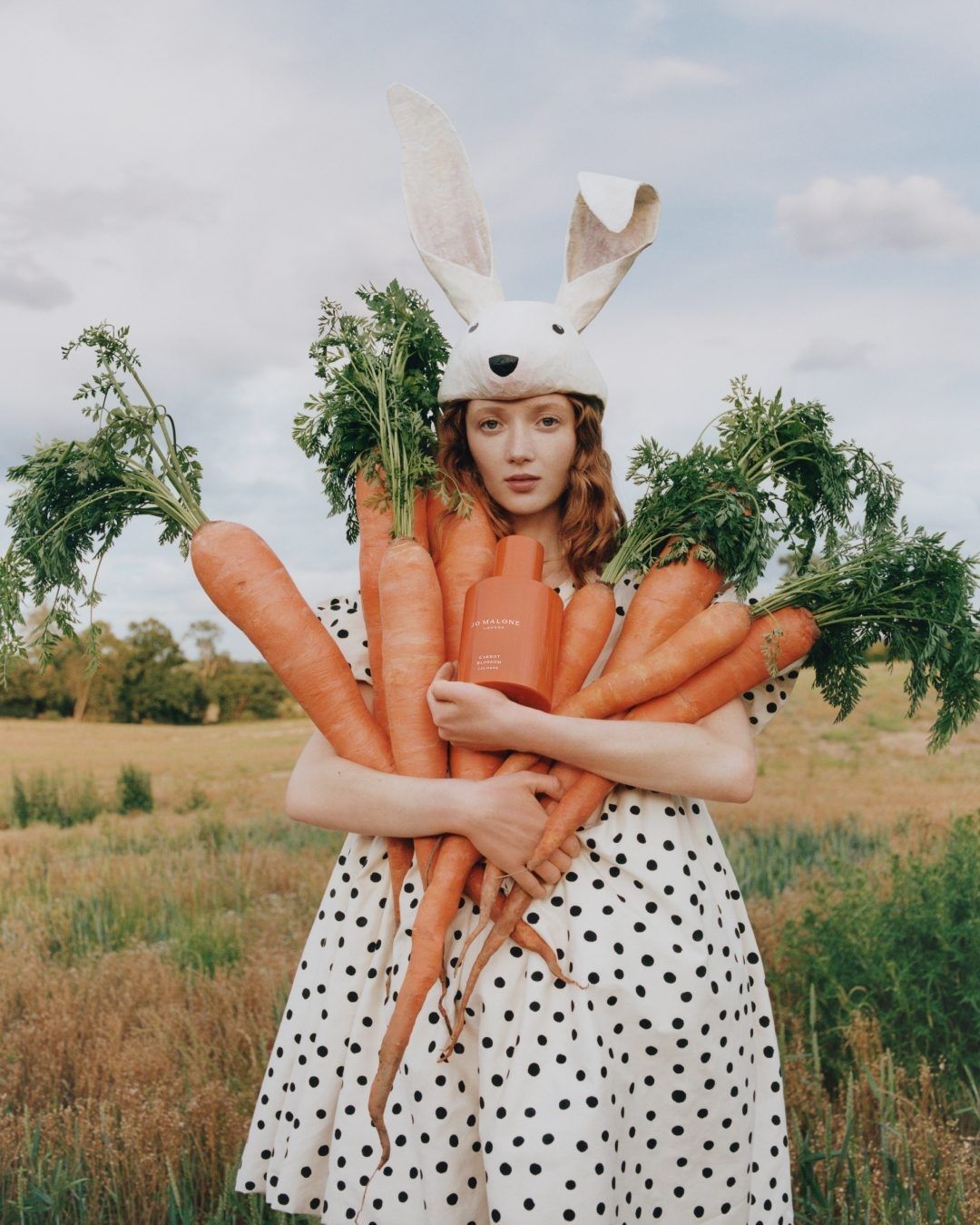
Perfumery has also started to change scenery. Not toward a new form of sweetness, but toward something entirely different: tomato leaves, carrots, rice, basil, sesame, seaweed, and ingredients that until recently seemed more suited to a grocery list than an olfactory pyramid. The imagery has changed along with the notes. Instead of the brightly lit display window of an American bakery, we find a sun-drenched greenhouse in the late afternoon. In place of cotton candy come damp soil, aromatic herbs, and leaves crushed between the fingers. It is a sensuality that is less indulgent and more tactile, finding beauty in imperfection and naturalness. The new Veggies Collection by Jo Malone London perfectly captures this transition. Scarlet Beetroot, Carrot Blossom, and Velvety Butternut sound as though they belong on the menu of a farm-to-table restaurant rather than in a fragrance house. At the same time, brands such as Elorea build fragrances around Korean fermentation with Jang, D’Annam transforms a Vietnamese breakfast into scent with Pho Breakfast, while Tsu Lange Yor imagines coastal gardens populated by cucumber, coriander, and green leaves in Pool. What initially may have seemed like a creative exercise or a provocation is increasingly taking the shape of a genuine fragrance trend, one that replaces dessert with the harvest and pastry shops with vegetable gardens.
@hauntedmorgan Tried some savory perfumes inspired by all the savory snack girls on TikTok featuring @d.grayi - artisan perfume, #pearfatparfum @alie k. - pearfat , @Versatile Paris #indieperfume #nicheperfume #savory #gourmand #luckyscent Chopin Nocturne Op72-No1(994146) - Satoru Saito
What is a savory fragrance, really?
We are used to associating the term gourmand with sugar and perfumes that smell like cookies, cupcakes, warm milk, or dessert creams. Yet the word has never referred exclusively to sweetness. It has always been about food, pleasure, and appetite. This is where the new generation of gourmand fragrances emerges. Instead of vanilla, we find tomato leaf, basil, olives, toasted sesame, grains, truffle, carrot seeds, pepper, coriander, and even accords inspired by fermented soy sauce. The result is not fragrances that smell like leftovers from a three-day-old lunch, but compositions that are more multifaceted, sophisticated, and surprisingly elegant. Their appeal lies in their ambiguity. They feel familiar without being immediately recognizable. They remind you of something, but you cannot immediately identify what it is. Many of the most interesting perfume launches of recent years operate precisely within this gray area. Eyes Closed by Byredo uses carrot, ginger, and cardamom to create a dry, spicy sensuality. Aqua Media Cologne Forte by Maison Francis Kurkdjian explores herbaceous and aromatic nuances. Bois Pacifique by Tom Ford combines a traditional woody structure with an almost culinary dimension made of spices and ingredients that evoke landscapes rather than desserts. More than scents, they are indulgent atmospheres
From vanilla to tomato
Every olfactory era has its fetish ingredient. Vanilla dominated much of the 2010s. Cherry had its moment as the absolute star. Pistachio became the official flavor of Beauty TikTok, turning into one of the most requested notes of the past two years. Now, incredibly, it is the tomato’s turn, or rather, its leaf. Among all the raw materials emerging in contemporary fragrance conversations, tomato leaf is probably the one that best tells the story of the shift from sweet to vegetal. Green, aromatic, moist, and slightly earthy, it possesses something that many gourmand fragrances have gradually lost: the ability to surprise. Its success also reflects a broader shift in how luxury creates desirability. In the 2000s, prestige often coincided with the exotic, with oud, rare spices, and flowers sourced from distant places. Today, luxury seems increasingly interested in elevating the ordinary into an experience. A well-grown tomato, a freshly harvested carrot, or a bunch of basil become objects of fascination just as much as a rare ingredient. From The Garden by Maison Margiela, Pluck! by Jorum Studio, and Pomodoro by Oneiros demonstrate that this is no longer an isolated experiment. It is an emerging aesthetic. The same applies to basil, rosemary, sage, coriander, and all those notes that evoke summer gardens and the Mediterranean aesthetic endlessly saved on Pinterest.
@oceans4mybaby this is sooo perfect for the grassy & herbaceous perfume lovers out there mmm i want pho now mentioned: pho breakfast by @d'Annam #fyp #foru #nichefragrance #perfumetok #fragrance #perfume #dannam #2000s original sound - n 3^°7 !
The umami fragrance era has just begun
The real revolution, however, may come from umami, the fifth taste. For years, perfumery explored sweet, floral, and woody territories. Now it is beginning to venture into areas that until recently seemed unimaginable: fermentation, seaweed, mushrooms, olives, roasted teas, rice, and ingredients typical of East Asian cuisines. Behind this evolution lies more than a desire to surprise. In a historical moment characterized by overstimulation and aesthetics saturated with sugar, these fragrances offer a different kind of comfort. Quieter, less childlike, and more aligned with contemporary ideas of well-being and authenticity. Jang by Elorea, Virēre by Aesop, and Salt by Perfumer H are particularly interesting for this reason. They do not attempt to reproduce a specific food. Instead, they seek to translate a cultural imaginary, a ritual, or a collective memory into perfume. It is the same mechanism that transformed coffee, tobacco, and leather into established olfactory categories. The difference is that this time, the territory waiting to be explored is far larger. The possibilities are endless and sometimes lead to unusual results, such as La Foncedalle by Versatile Paris, whose base notes include grass, beer, sage, chicken, butter, and musk, or Polish Potatoes by Bohoboco, which evokes the atmosphere of Polish markets.
Garden Gourmand, Savory Botanical, and Salty Fragrances
More than a beauty trend, the rise of savory fragrances appears to be the natural extension of a cultural sensitivity already visible elsewhere: the obsession with urban gardens, the popularity of garden-core aesthetics, the return of aromatic herbs in contemporary cuisine, and the fascination with local, seasonal, and imperfect ingredients. Perfumery is simply following the same trajectory. Where the previous decade sought comfort in sugar, today it seeks comfort in nature. Where there was once a pastry shop, there is now a vegetable garden. Where there was once a cupcake, there is now a sun-warmed tomato leaf. And if gourmand fragrances told the story of the era of excess, the new savory perfumes may tell the story of the era of materiality. Greener, more vegetal, and stranger. But also far more interesting.