










































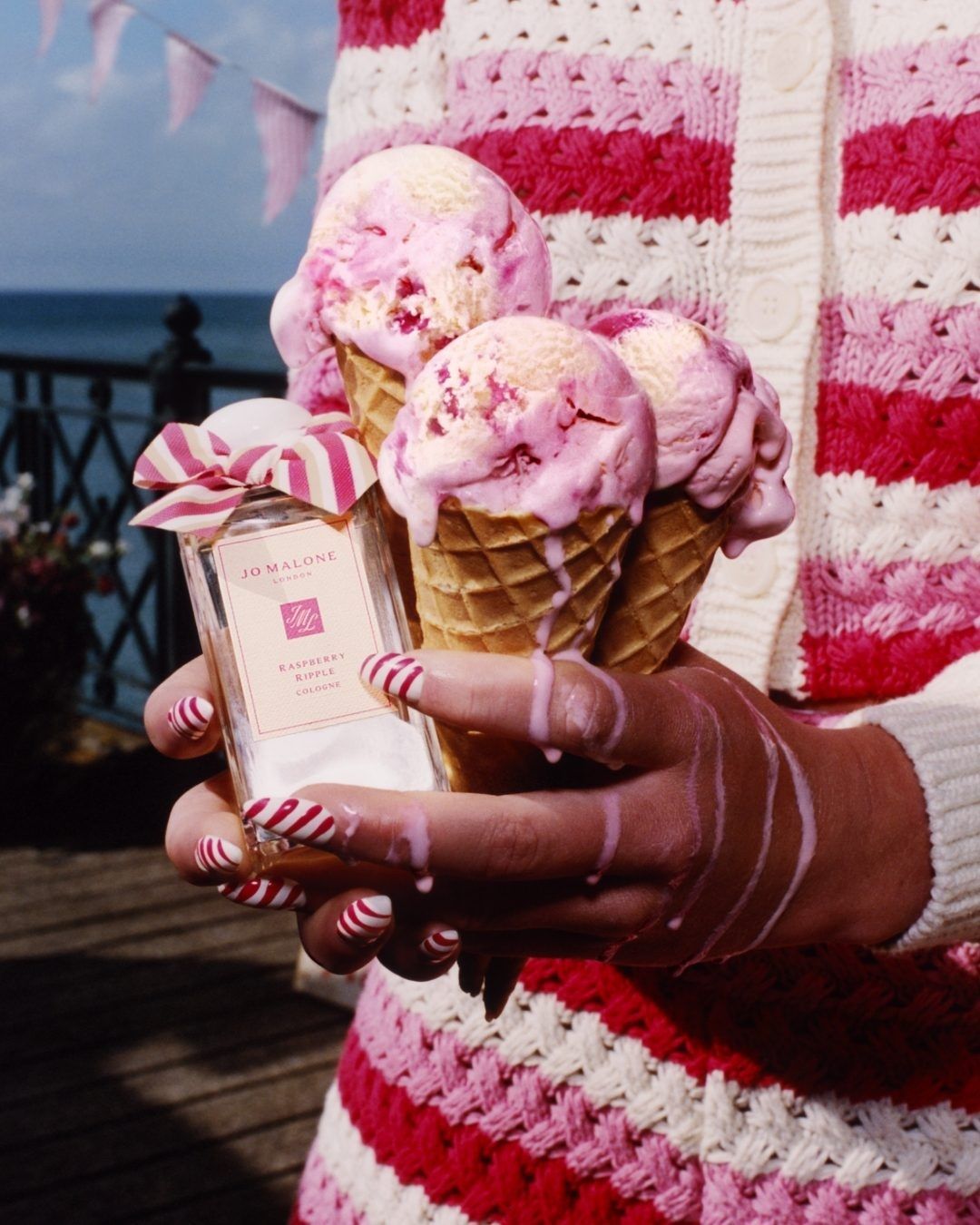
Jo Malone London turns Pinterest into a digital perfumer thanks to AI The new Scent Scanner analyzes images, colors, and mood boards to suggest personalized fragrances
Choosing a perfume online has always been one of the great paradoxes of beauty e-commerce. We can buy a sofa without ever sitting on it, book a vacation without having seen the destination in person, and even fall in love through apps. Yet purchasing a fragrance without smelling it on our skin still feels like a gamble. It is precisely from this contradiction that Scent Scanner was born, the new AI-powered perfume scanner launched by Jo Malone London in collaboration with Pinterest. Available in the United States and France, the system allows users to connect one of their Pinterest boards and let the algorithm do the rest. No quizzes or keywords are required. The technology analyzes images, color palettes, textures, landscapes, objects, and aesthetic references, transforming them into personalized fragrance recommendations.
From words to images
The real innovation behind Scent Scanner lies in its approach. Until now, AI tools for fragrance discovery have typically asked users to describe the scent they were looking for. Jo Malone London’s new project, however, starts from what people save and curate online. As Aude Gandon, Chief Digital and Marketing Officer of The Estée Lauder Companies, explained, personalization in beauty has long been based on what consumers say about themselves, whereas today the challenge is understanding what they already love. Over the years, Pinterest has become a kind of visual archive of contemporary desires, where a house in Provence, a minimalist table setting, a fog-shrouded landscape, or a butter-colored outfit can reveal tastes and aspirations before they are ever put into words. The AI-powered perfume scanner interprets exactly these signals. If a board is dominated by English gardens, natural fabrics, and golden light, it will suggest fragrances that align with that imagery. If, on the other hand, brutalist architecture and urban atmospheres prevail, the olfactory direction will be completely different. The goal is not to guess a perfume, but to build an entire sensory universe around scent.
Beauty enters the era of predictive taste
More than a technological innovation, Scent Scanner reflects a broader cultural shift. Today, we communicate who we are through images, mood boards, and saved collections far more than we do through words. Jo Malone London and Pinterest have simply transformed this habit into a discovery tool. The result feels like something out of a Black Mirror episode written by someone obsessed with niche fragrances: you save photos of linen sheets, English gardens, and breakfasts on a terrace, and the algorithm concludes that you probably want to smell like fig, peony, or white tea. And given the global boom in the luxury fragrance market, it might even be right. Because in 2026, perfume is no longer chosen solely with the nose. More and more often, it is chosen through aesthetics.