












































Guide on how to care for piercings the right way What to do and what not to do for top-notch aftercare
Getting a new piercing is always a good idea, at least until it’s time to take care of it. Because while making the hole takes just a few seconds, healing requires much more time and dedication. A piercing is, essentially, a small wound and, to avoid irritation, infections or scarring that takes longer than expected, it is essential to follow a proper aftercare routine. Between advice, myths and misconceptions that continue to circulate, here is everything you need to know to help your piercing heal correctly.
A guide on how to take care of piercings properly
Hands off the piercing
Anyone who says they have never touched their freshly made piercing to check if everything was okay is lying. It is almost an automatic reflex, but it is actually one of the habits that can slow down the healing process. Whether it is a classic lobe piercing, a cartilage helix or a more demanding piercing such as a navel or nose piercing, every area of the body has different healing times and needs. According to the Association of Professional Piercers, a piercing can look healed on the outside while the skin inside is still completing its repair process. This is why it is important to continue taking care of it even when it no longer feels irritated. The urge to touch it and check on it from time to time is completely normal, but the best thing to do is always the same: leave it alone. And if you have always heard that you should rotate the jewellery every day to prevent it from "sticking", know that this is one of the most common myths. Constantly moving it can actually irritate the skin and create tiny traumas while it is trying to heal.
How to clean a piercing
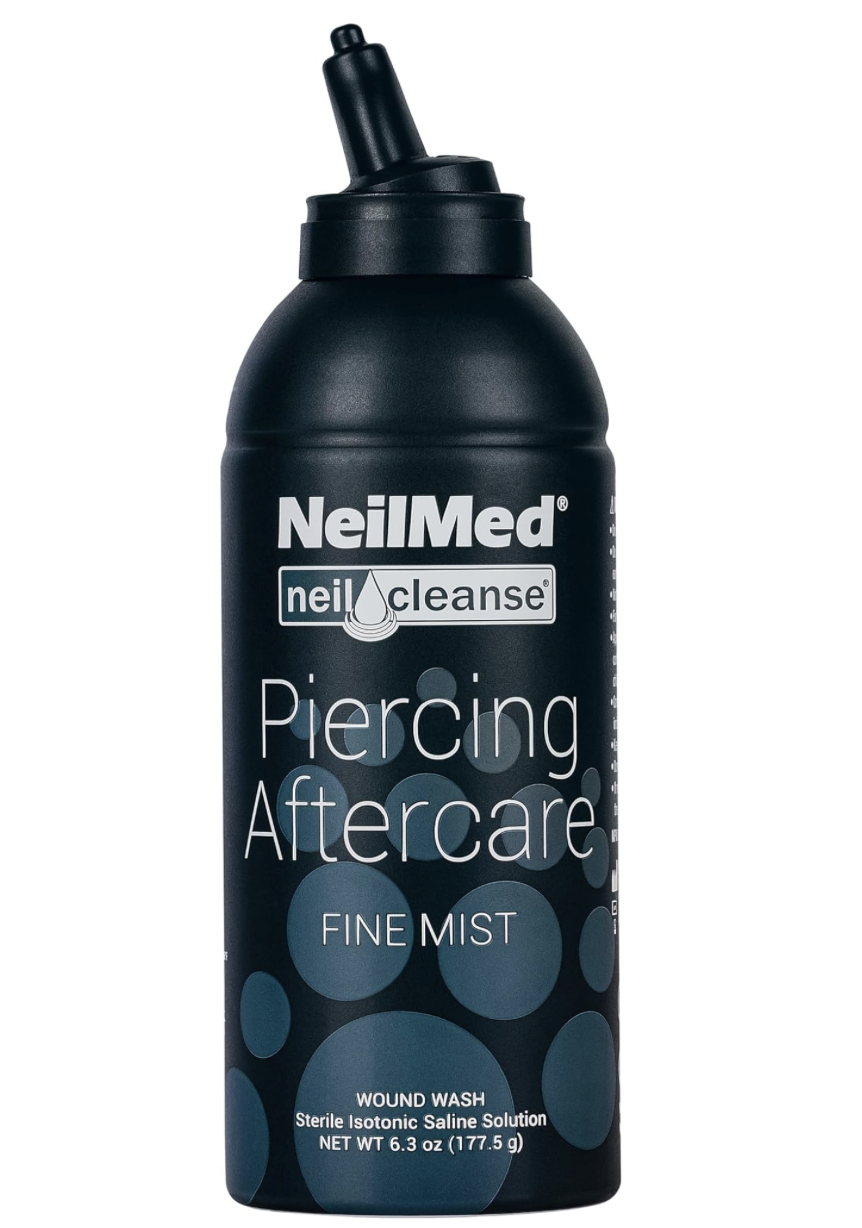
When it comes to taking care of a piercing, many people think that the more you clean it, the better. The reality is actually the opposite: the skin does not need to be overwhelmed with endless steps, but simply supported during its natural healing process. The key is to be gentle: no excessive rubbing, harsh products or anything that could further irritate the area. For daily cleaning, the most recommended option is generally a sterile saline solution, which helps keep the piercing clean without interfering with the skin’s natural repair process. It is best to forget classic DIY remedies instead: alcohol, hydrogen peroxide and cleansers that are not specifically designed for piercings, such as those intended for the face or body.
What to avoid when taking care of a piercing
Many irritations are not caused by poor piercing care, but by small everyday habits that we often do not even notice. First of all, sleeping on a freshly made piercing, using headphones or earphones without cleaning them regularly, or allowing products such as shampoo, conditioner and perfume to come into contact with the area. And then let’s debunk another major myth passed down through generations: seawater is not a miracle cure for piercings. In fact, bacteria and impurities found in the water can increase the risk of irritation. During the first month, it is therefore better to avoid swimming in the sea and pools, but if it happens, simply rinse the area gently with clean water or sterile saline solution and let it dry. Another very common mistake is being too eager to change the jewellery. You should wait for the healing time recommended by your piercer and, whenever possible, have it changed by them.
What to read next

Miu Miu's commercial boom is coming to a halt
The rest of the Prada Group, however, is holding up well

Liu Jo presents “The Gigi Hadid Edit”
The project that transforms selection into an identity gesture