





























José Manuel Albesa is the new CEO of Puig For the first time in twenty years, someone from outside the family will lead the Spanish group
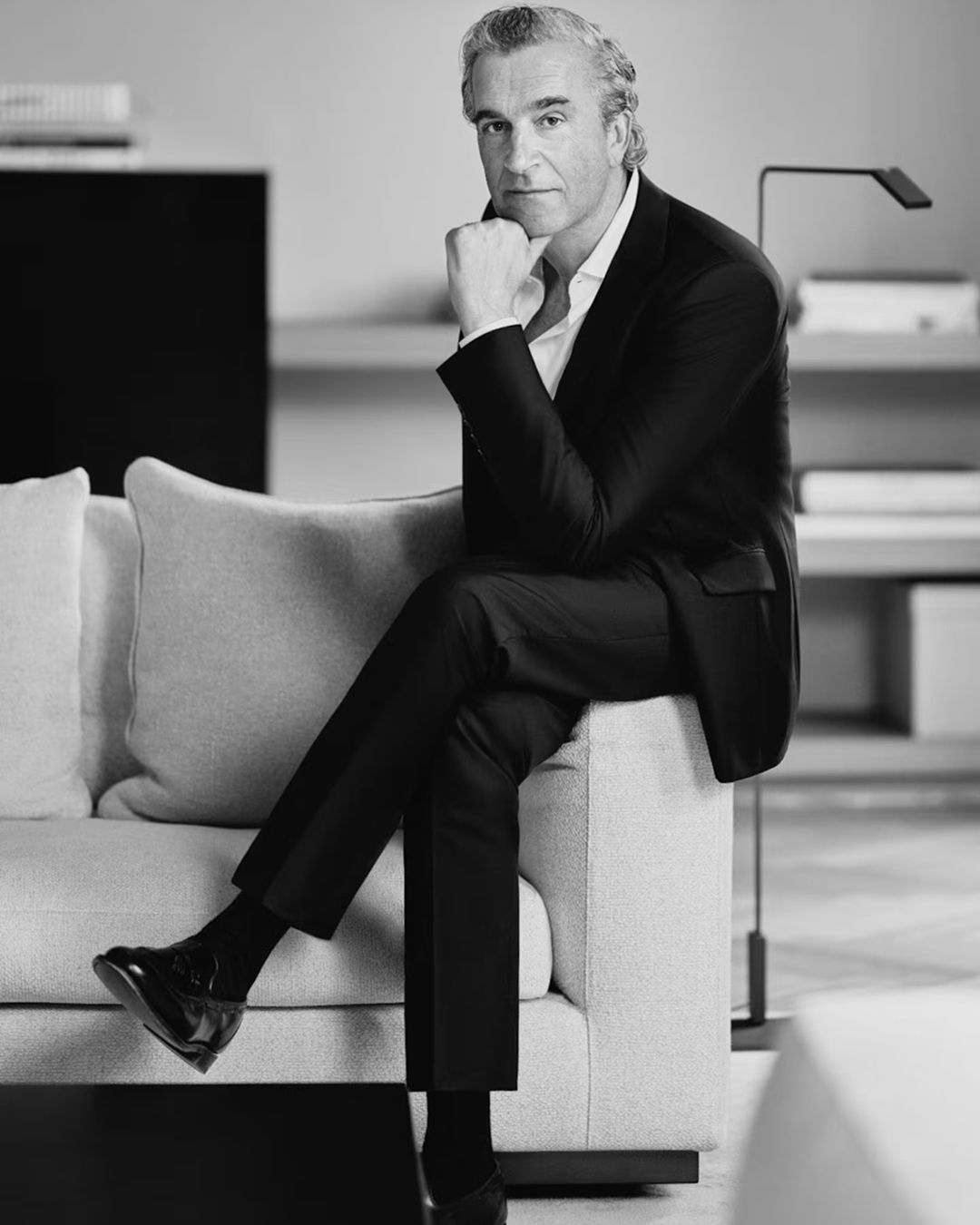
There is always a moment, in family sagas, when the baton stops being passed from hand to hand like a genetic heirloom and suddenly becomes a choice. No longer destiny, but governance. That is exactly what is happening at Puig, where José Manuel Albesa has just been appointed as the new CEO. A decision that does not shout discontinuity, but practices it with surgical precision. The point is not only who replaces whom. The point is how the map of power is being redrawn. Marc Puig leaves the operational role but does not exit the scene. He remains at the symbolic helm as executive chairman. The official narrative speaks of natural evolution, of planning to strengthen the company’s leadership. All true. But the news, announced through a composed press release, also marks the definitive transformation of Puig from a family business into a fully institutional organism, capable of separating ownership, management, and identity without imploding.
The (soft) end of dynastic capitalism
Puig’s story is not different from that of many other European companies. Founded in 1914, it grew as an industrial dynasty, went public in 2024 with a market capitalization of $14.8 billion, and consolidated in 2025 with revenues exceeding $5.7 billion. These numbers tell the story of a transformation from a family enterprise into a global premium beauty machine. In this context, the separation of roles between CEO and executive chairman means aligning with the best practices of listed companies, that invisible etiquette that governs credibility in the markets. “This is an exciting moment in Puig’s evolution, built on strong foundations and sustained growth, laying the groundwork for the next phase of our development. With this important announcement, Puig’s Board of Directors opens a new chapter in corporate governance.” Marc Puig says it clearly, without rhetoric, emphasizing that this is not a last-minute decision. It is a succession plan built over years, with a long shortlist of internal and external candidates. Translated: the family remains, but it ceases to be the only option. And here a broader interpretation emerges. It is not only Puig that is changing its skin, it is the very model of the European family business that is evolving toward a more fluid form, where control is separated from management.
Albesa, the outsider who comes from within
The first striking detail is also the most easily misunderstood. Yes, Albesa is the first CEO not belonging to the family since the early 2000s. But calling him an outsider is almost a semantic provocation because, in some ways, he is the most “internal” figure possible. He has been with the company since 1998, has built a large part of the group’s recent trajectory, and has navigated phases of expansion, sector crises, and strategic redefinitions. In his twenty-seven years at the company, he has grown across marketing, brand building, and global operations, eventually becoming deputy CEO and head of the Beauty and Fashion division, establishing himself as the silent architect of international expansion. In short, an outsider who knows every corridor. He does not come from outside to “change everything,” nor does he bring a narrative of disruption. His strength lies precisely in the opposite: embodying credible operational continuity, but with the freedom of not being bound to genealogy. He is the kind of manager who knows the culture from within but can reinterpret it without having to defend it by birthright; who preserves brand identity without renouncing professionalization. A rare balance between memory and market, and therefore a valuable one.
Albesa: the CEO as a creative director (of numbers)
If we had to imagine José Manuel Albesa as a pop archetype, he would not be the classic Excel-sheet CEO with monotone tones. Rather, a creative director disguised as a manager, someone who speaks about agility, creativity, and entrepreneurial spirit as if launching a campaign, not an industrial plan. And it is no coincidence. In recent years, Albesa has played a central role in building a portfolio that is a rich yet coherent constellation of aesthetic identities, including brands such as Carolina Herrera, Jean Paul Gaultier, Byredo, Charlotte Tilbury and the hyper-premium skincare of Dr. Barbara Sturm. His strategy? Each brand must remain itself, but within an overall design. But that is not all. It is necessary to strengthen what already works, without becoming complacent. Organic growth, yes, but profitable growth. Albesa makes this clear in his first message as CEO, also stressing the importance of combining creativity, agility, and entrepreneurial spirit: “Organic growth is very important for us, and we must achieve it profitably. The world is changing. We have been very successful in the past, but we must continue to be so in the future. Therefore, renewing this winning formula is a fundamental priority.” Recent numbers support him and describe a group in expansion, with performance exceeding expectations. Albesa inherits a system that works, but precisely for this reason must avoid the trap of endlessly replicating a winning formula until it is emptied of meaning. His emphasis on organic growth and profitability indicates a clear direction: not to expand at any cost, but to do so while maintaining quality, desirability, and, above all, margins.
Continuity as strategy
In the new structure, the division of roles is crystal clear. Albesa handles operations, while Marc Puig carves out the role of “custodian” (not a random word) of corporate values and orchestrator of mergers and acquisitions strategy. On one side, execution; on the other, vision. But it is also a form of elegant control, where the family remains present in key decision-making nodes without occupying center stage in everyday operations. Puig, therefore, does not break with its past, it reorganizes it. Albesa is not the man of radical change, but of controlled evolution. He is tasked with proving that a group can become increasingly global without losing recognizability, increasingly large without losing precision. In the lexicon of luxury, this is the ultimate challenge: not simply to grow, but to grow while remaining coherent. Not just to expand, but to do so without dispersing. And in this delicate balance, between discipline and intuition, the future of Puig is being played out. A future that, at least for now, bears the measured face of José Manuel Albesa and the long, still very present shadow of Marc Puig.