




































The impact of the war on beauty packaging Amid geopolitical upheavals, commodity crises, and new sustainable illusions, cosmetic packaging is entering a new era of complexity
In the world of beauty, packaging has always represented more than just a simple container. It is a visual language, a promise of effectiveness, a declaration of values. Yet today it reveals itself above all for what it has always been, but rarely acknowledged: a fragile node in a global network. War, particularly the conflict between the United States, Israel, and Iran, has disrupted that silent balance that once allowed the system to function without apparent friction. The result is that beauty packaging is no longer a marginal or sector-specific issue, but a prism through which the entire industry can be understood. Before the conflict, the supply chain relied on an invisible choreography of available oil, fluid shipping routes, reliable suppliers, and predictable timelines. Today, every element of this choreography is under pressure. The blockade of the Strait of Hormuz has turned distant geography into a daily variable for cosmetic producers. In this way, the most tangible side of globalization has made it clear, even to non-experts, that even the most refined anti-aging serum depends on unstable geopolitical balances.
The domino effect: oil, plastic, and rising costs
Plastic, the dominant material in cosmetic packaging, is directly linked to oil. When crude prices rise, the entire system comes under strain. In recent months, the prices of polypropylene and polyethylene, essential for bottles, caps, and tubes, have surged dramatically, bringing the sector back to levels of instability not seen since the pandemic. As reported by BoF, Jason Wong, founder of the packaging company Paking Duck, had predicted this, describing a reality in which previous prices “no longer exist,” marking a clear break with the past. This scenario has a deep impact on packaging costs, which are no longer just about industrial optimization, but about brands’ ability to maintain sustainable margins. As Michael Greenberg, CEO of The Plastics Exchange, points out in BoF, the impact spreads slowly but inevitably across the entire production chain. In the end, someone pays, and that someone is often the brand or the final consumer.
Supply chain under pressure: delays, logistics, and new strategies
The crisis does not only concern materials but also logistics, meaning the movement of goods. Trade routes are lengthening, containers are scarce, and delivery times are becoming increasingly unpredictable. What once took eight weeks may now take fourteen. The entire system becomes slower, more uncertain, and more expensive. Companies operating in this unstable environment are trying to anticipate problems rather than simply solve them. They respond through supplier diversification, alternative routes, and even air freight for urgent needs. These strategies, already seen during the pandemic, are now more urgent and costly, making planning significantly more complex. Simone Dominici, CEO of Kiko Milano, told Reuters about a “perfect storm” in which rising energy costs, delays, and cautious consumers are converging in a precarious balance. For example, Dominici estimates that his company will face additional logistics costs of approximately 1.5 million euros ($1.7 million) over the course of the year. In this context, the beauty supply chain crisis takes on a structural dimension rather than a temporary one.
The paradox of plastic
Despite all these challenges, plastic continues to dominate the sector because its combination of characteristics makes it difficult to replace. It best meets the functional needs of cosmetic packaging, protecting delicate formulas and ensuring durability. It is lightweight, resistant, versatile, and above all, it used to be cheap. The increase in petrochemical resin costs highlights how its central role is now also a vulnerability, undermining an economic model based on accessibility. The problem is that alternatives such as recycled plastic are often more expensive than virgin plastic. This keeps alive a system that everyone claims to want to overcome, yet few can truly abandon. As urgency grows to reduce environmental impact, economic conditions push in the opposite direction. The issue of plastic packaging sustainability becomes a paradoxical tension between ideals and reality, between storytelling and industrial constraints.
The illusion of aluminum and the myth of “green”
In recent years, aluminum has been celebrated as a sustainable packaging alternative. Infinitely recyclable, aesthetically premium, perfect for “clean” brands. However, the war has affected this sector as well. The Middle East is one of the world’s main aluminum producers, and attacks on key facilities have driven prices to their highest levels in four years. The result? Even “green” becomes expensive and unstable. Moreover, many aluminum packages still contain plastic components to ensure stability and preservation. The concept of sustainable beauty packaging therefore proves to be more complex and less linear than often portrayed. Some startups are exploring new solutions, focusing on biomaterials derived from organic waste. Compostable and bio-based solutions promise to reduce dependence on oil and introduce more circular models. However, the issue of scale remains: limited production, insufficient infrastructure, and uncertain consumer behavior. In this context, sustainability is not an intrinsic property of a material but the result of a complex system that includes collection, disposal, and usage habits. Without this integration, even the most promising innovations risk remaining marginal.
Toward a new paradigm
The current crisis brings with it a fundamental awareness: there is no perfect material. Not plastic, not aluminum, not compostables. Every solution has advantages and limitations, and none can solve the system’s complexity on its own. The future of cosmetic packaging will therefore be played on a different level: not the search for the ideal material, but the creation of integrated systems. This includes refillable packaging, mono-material design, efficient recycling infrastructures, and resilient supply chains. True innovation will lie in the ability to connect materials, processes, and behaviors, a systemic rather than purely technological approach that will require investment, collaboration, and time.
The changing consumer
Another effect of the crisis is a shift in consumer behavior. While sustainability was a key driver in recent years, there is now a return to more pragmatic criteria. Price, effectiveness, and accessibility are once again at the forefront, while ethical choices become secondary. This shift is not necessarily a step backward, but a response to a more difficult economic context. Brands are aware of this. They know that being “plastic-free” is no longer enough to convince consumers. The product must work, and it must be accessible. This dynamic redefines the role of beauty packaging. Aesthetics and ethics must now coexist with economic reality. In short, war has done what crises often do: it has accelerated ongoing processes and exposed structural weaknesses. It has made visible the interdependencies, fragilities, and contradictions of a sector once considered stable. Today, packaging is no longer just a container, but a field of tension between economics, sustainability, and geopolitics. And perhaps, for the first time, the beauty industry is forced to confront an uncomfortable question: how sustainable is beauty, when the world around it is not?
What to read next

Charlotte Tilbury's new Hollywood Holiday Wonderland: all the goodies to mark for these holidays
The 2026 holiday collection has the right ingredients to give a bit of magic

#ChangeTheCompliment: the Dove e Parole O_Stiles initiative that invites us to change the way we compliment little girls
We are not only 'beautiful', but creative, courageous, intelligent and much more, we just don't hear it very often
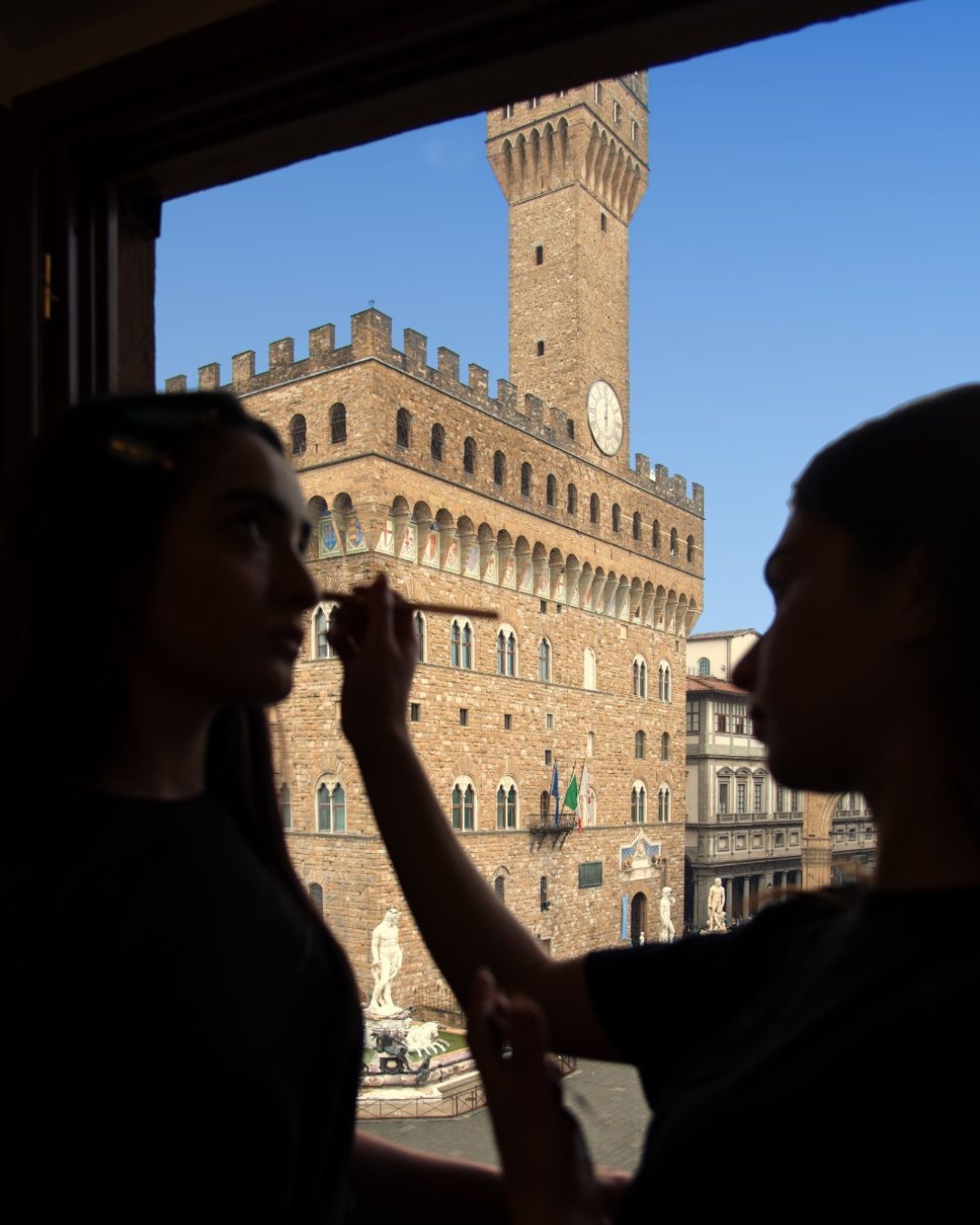
Vanessa Icareg will hold an Editorial Make-Up Masterclass in Florence
And it will reveal the secrets behind the editorial looks created for the runways (and not only)