









































Do exams really never end? Here's what the cards say about June Three arcana to help navigate fears, possibilities, and futures yet to be written
Venditti sang about the night before exams, and everyone knows that June has always been a decisive month when you're nineteen and in your final year of high school. People constantly tell you that your graduation exam is important, that it will shape your life forever, but in reality, no one tells you that it's just one exam among many, and that it doesn't really prepare you for the world outside (or at least, not very much). Whether you leave high school with the minimum passing grade or with top honors, what truly matters is knowing what you're going to do next. Very few people have a clear idea of their future by the time they reach graduation. I've noticed this more and more over the years, both among my peers and younger students. I myself wanted to study history and ended up studying communication, making that decision after graduation and within the span of a single summer. That afterward can make you anxious and disoriented. You find yourself wondering whether the choice you've made is actually the right one. It's at that moment that you have to decide whether it's time to follow your dreams or whether it's better to take a more "secure" path and postpone what you truly want to a supposedly more "stable" time in the future. And perhaps that's exactly why June is such a tarot month: it confronts us with questions that have no single correct answer. The cards can't tell you how to tackle your written exams or save you from the summer exam session, but they can offer a different perspective on what you're feeling now that you're in the eye of the storm. Because the truth is that exams don't end with graduation: they change shape, they change name, but their essence remains the same. That's why I asked the deck to help us out, if only to untangle the knot of thoughts swirling around in our heads.
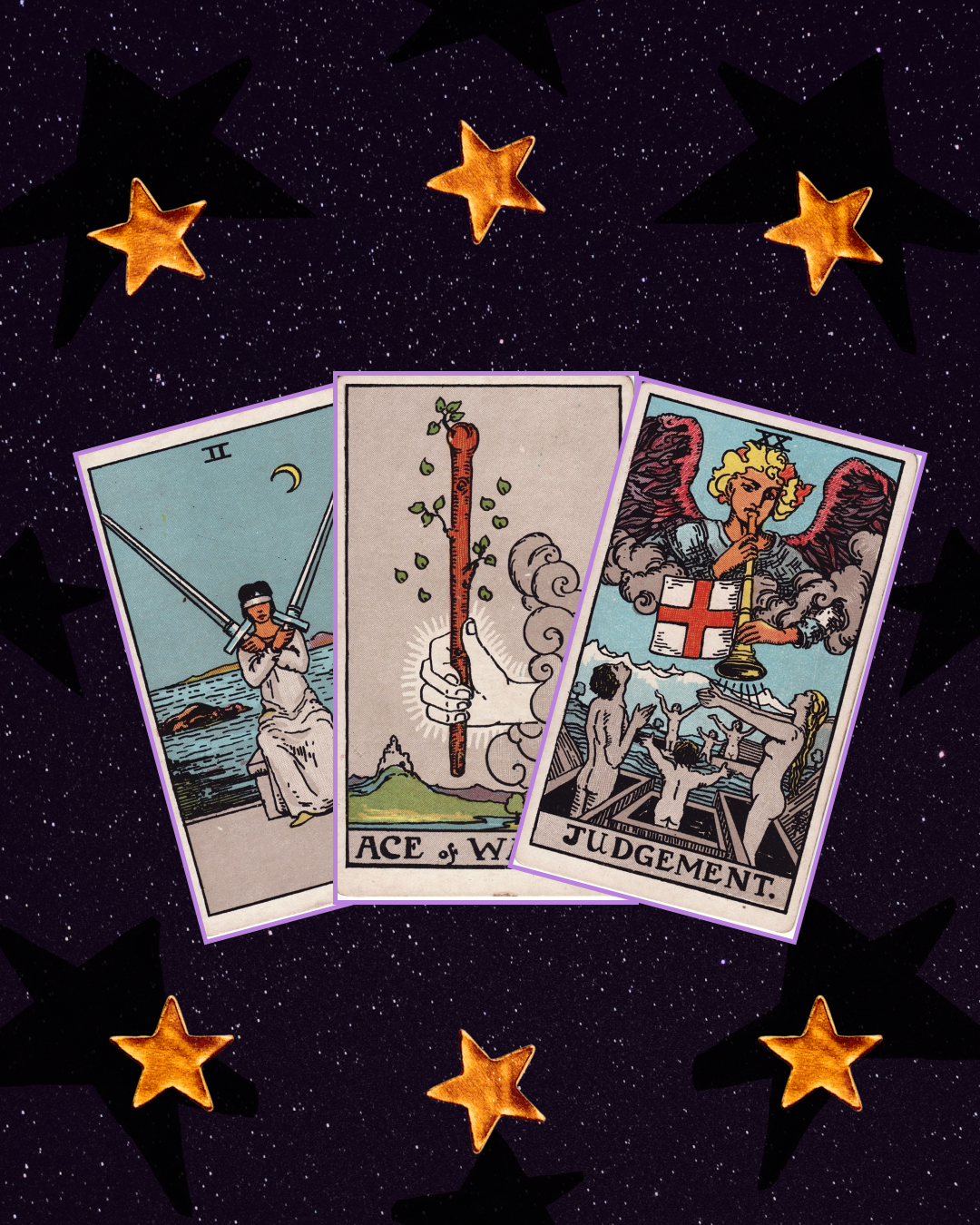
June's Tarot Cards
Judgement — The Italian literature teacher
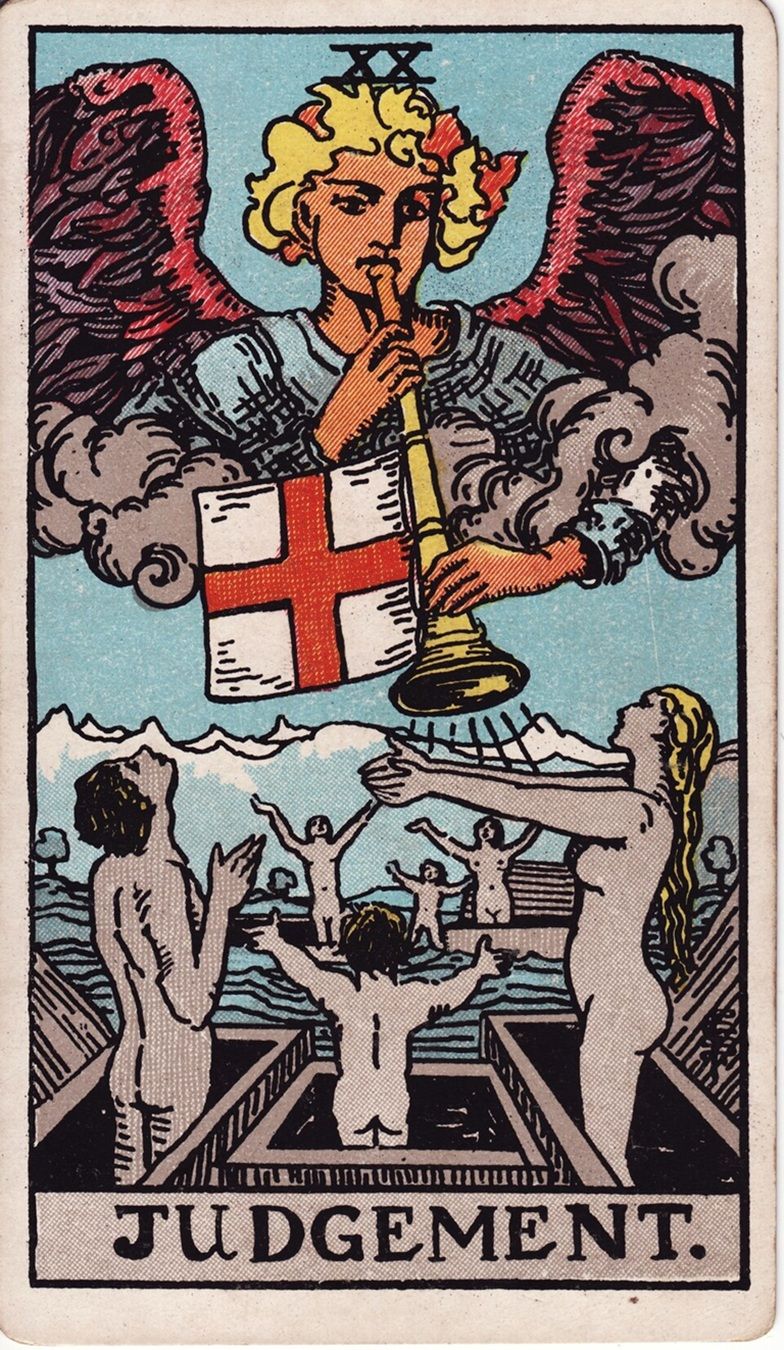
There is a precise moment during graduation exams when you stop speaking to the examination board and start speaking to yourself. It often happens during the oral literature exam, while you're trying to explain something you thought you already understood (like The Rain in the Pinewood or The Infinite), only to realize that your answer is actually about you as well. The Italian teacher was always the one who asked you to truly put yourself on the line, whether in essays or oral exams, and Judgement works in exactly the same way. If you've chosen this card, June places you in front of a decision that keeps resurfacing even when you try to ignore it. It may concern your future, your studies, your career, or something much more personal, even something as simple as an argument with your best friend. Judgement does not ask for certainty; it asks for a willingness to listen to what has been trying to speak to you for a long time. The most difficult examination board is not the one sitting across the table asking you about Manzoni or Foscolo; it's the voice inside you that is waiting to be taken seriously.
Two of Swords — The mathematics teacher
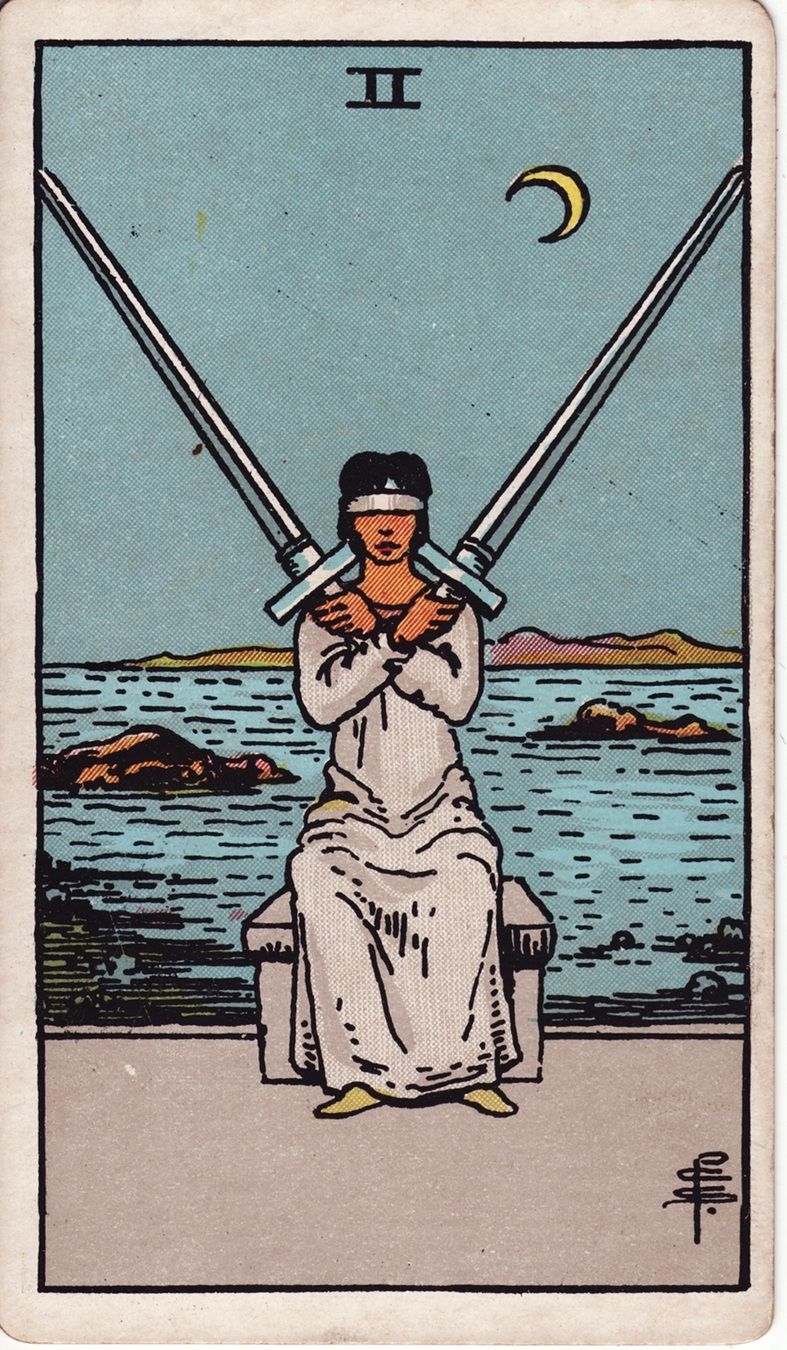
The mathematics teacher was always the one who insisted on the process, on showing your reasoning no matter what, proving that you had worked through the problem and attempted to solve the equation. The correct answer alone was never enough: she wanted to understand where you had gotten stuck. The figure depicted on the Two of Swords is usually blindfolded and holds two crossed swords in front of her chest. Behind her, rocks emerging from the water suggest that the situation is stormy and therefore more complicated than it appears. Sometimes we remain still not because we don't know what to do, but because choosing means giving something up, and as long as we remain motionless, every possibility stays open. The problem is that sooner or later, standing still becomes just as much of a choice as moving forward. If you've chosen this card, June invites you to look at the options you already know with greater honesty and a more open mind, perhaps after taking a break. Not because the answer is simple, we all know mathematics is never simple, but because continuing to postpone it requires far more energy than it seems.
Ace of Wands — The philosophy teacher
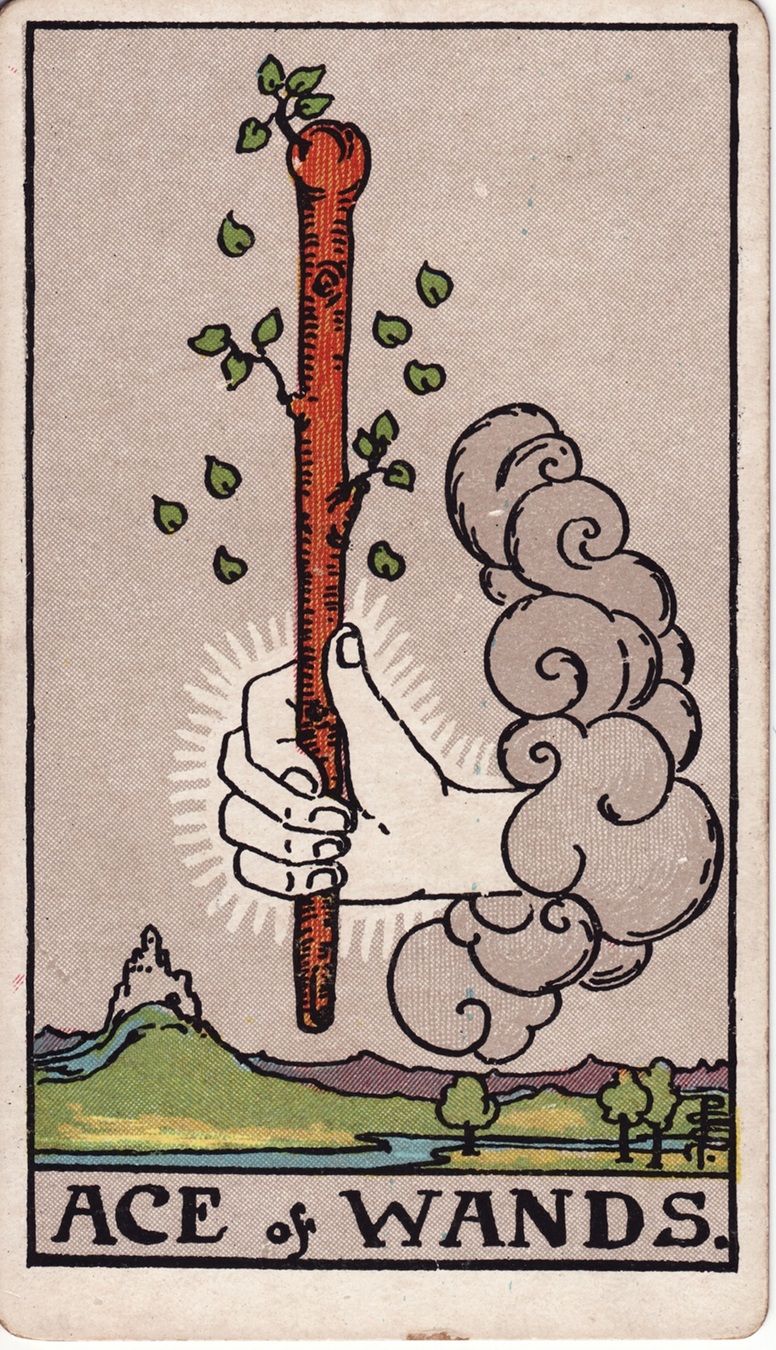
The philosophy teacher was the one who asked the hardest questions just when you thought the exam was over, because they wanted to see where your reasoning would take you. Some questions served precisely that purpose: not to close a discussion, but to open a new one and encourage you to keep pushing beyond your limits. The Ace of Wands carries the same energy. It depicts a hand emerging from above, holding a branch whose leaves grow in every direction without a defined shape. It is the card of beginnings, of everything that still exists as potential before becoming a project, a decision, or a path to follow. Without offering certainty, it suggests that something has already begun to move. In a month like this, when it seems as though everyone else has already decided what to do with their future, the Ace of Wands reminds you not to confuse clarity with value. Not having a plan yet does not mean you're behind. If you've chosen this card, trust what sparks your curiosity, excites you, or keeps returning to your thoughts. Some paths can only be recognized after you've walked them for a while, and not knowing where they lead yet does not mean they aren't worth taking.
