


































Exhibitions to see in March 2026 in Italy From Rothko's abstract art, through the history of Tarot cards, to Jenny Saville's large portraits
March is that month when Italy takes off its coat but not yet its desire to go out. The days grow longer, the light shifts in tone, and weekends become the perfect excuse to slip into a museum before a slow lunch or a aimless stroll. The calendar of exhibitions to visit in Italy this March is rich and varied, full of beautiful reasons to get moving, to cross cities we already love with a different gaze. From the Renaissance entering into dialogue with modern American art, to tarot cards transforming from aristocratic pastime into pop imagery, to the Baroque returning to surprise us and contemporary painting placing the body back at the center, art takes us by the hand, leads us inside, and leaves something with us. You don’t need to be an expert, just curious. An exhibition can become the reason to board a train, to discover a palace we’ve never visited, to return to a city with renewed energy.
Exhibitions to see in Italy in March 2026
Mark Rothko - Florence
From March 14 to August 23, 2026, the Fondazione Palazzo Strozzi in Florence shines a spotlight on one of the most imposing Italian retrospectives dedicated to Mark Rothko. Not a simple anthology, but a curatorial project that places his painting in tension with the legacy of the Renaissance. Curated by Christopher Rothko and Elena Geuna, the exhibition builds an intense dialogue between the artist’s vast fields of color and the austere architecture of Palazzo Strozzi, extending also to the Museo di San Marco and the vestibule of the Biblioteca Medicea Laurenziana. The result is a visual short circuit in which classical measure meets the emotional absolute of color. The chronological path moves from the 1930s and 1940s, still infused with figuration and suggestions of Expressionism and Surrealism, to the mature season of abstract canvases, where the celebrated color fields become perceptual thresholds. One of the unmissable exhibitions of 2026 for those who want to understand how the twentieth century rewrote the very concept of vision and to experience the moment when abstract painting becomes almost a physical experience.
Title: Rothko in Florence
When: March 14 – August 23, 2026
Where: Fondazione Palazzo Strozzi, Florence
Tarots - Bergamo
In Bergamo, until June 2, 2026, tarot cards shed their new age aura and return to what they have always been: complex, layered, powerful cultural devices. Curated by Paolo Plebani, the exhibition reunites after more than a century the 74 cards of the legendary Colleoni deck, now divided between the Accademia Carrara, the Morgan Library & Museum, and a private collection. An event that alone would justify the trip. Yet the project goes beyond philological celebration to recount seven centuries of history, from the fifteenth-century courts of northern Italy, where tarot was born as aristocratic entertainment, to its transformation into a divinatory tool in the eighteenth century. The itinerary weaves together art, technique, economy, and imagination, reaching the twentieth century, when Surrealism rediscovered the symbolic power of the cards. On display are works by Victor Brauner, Leonora Carrington, Niki de Saint Phalle, and Irving Penn, demonstrating how deeply the tarot universe has fueled contemporary creativity. The perfect choice for those who love crossovers between iconography, esotericism, and visual culture.
Title: Tarot. The Origins, the Cards, the Fortune
When: Until June 2, 2026
Where: Accademia Carrara, Bergamo
Baroque - Forlì
With Baroque. The Grand Theater of Ideas, Forlì presents around two hundred works and constructs a narrative that begins in seventeenth-century Rome, political, spiritual, and visual laboratory of modernity, and extends well into the twentieth century. Not just an exhibition on the Italian Seicento, but an investigation into how that aesthetic of excess, movement, and controlled emotion continued to resurface over the centuries. In close dialogue appear great names such as Gian Lorenzo Bernini, Francesco Borromini, Guercino, Peter Paul Rubens, and Guido Reni. Rome is the center of gravity, but the path expands across Europe, showing how the Baroque language adapted to the continent’s political and religious shifts. The most intriguing turn comes when the exhibition leaps forward, creating a daring bridge between the seventeenth and twentieth centuries, linking artists such as Francis Bacon, Giorgio de Chirico, Lucio Fontana, and Umberto Boccioni. In this way, the Baroque is reread as a matrix of modern unrest, not a decorative era, but a laboratory of radical ideas about body, faith, power, and representation. Forlì thus becomes a privileged observatory for understanding how the seventeenth century ignited the fuse of visual modernity.
Title: Baroque. The Grand Theater of Ideas
When: Until June 28, 2026
Where: Museo San Domenico, Forlì
Van Dyck - Genoa
The Palazzo Ducale in Genoa hosts the largest retrospective on Van Dyck of the past twenty-five years. Sixty works, ten thematic sections, outstanding loans from the Louvre, the National Gallery, and the Prado—impressive numbers, but it is the vision that makes the difference. Van Dyck is presented as a European artist ante litteram, capable of absorbing and reinventing languages across Flanders, Italy, and England. The Genoese period (1621–1627) emerges as a crucial node, as does his London experience at the court of Charles I. Not only the great portraitist who codified the image of power, but also a sacred, theatrical, and intensely expressive painter. Visitors will encounter monumental canvases and scenes charged with pathos, presented with almost cinematic direction. And once the artworks have been admired, one can wander through Genoa’s alleyways to end the day with a relaxed dinner, savoring delicious local dishes.
Title: Van Dyck the European. The Journey of a Genius from Antwerp to Genoa and London
When: March 20 – July 19, 2026
Where: Palazzo Ducale, Genoa
Jenny Saville - Venice
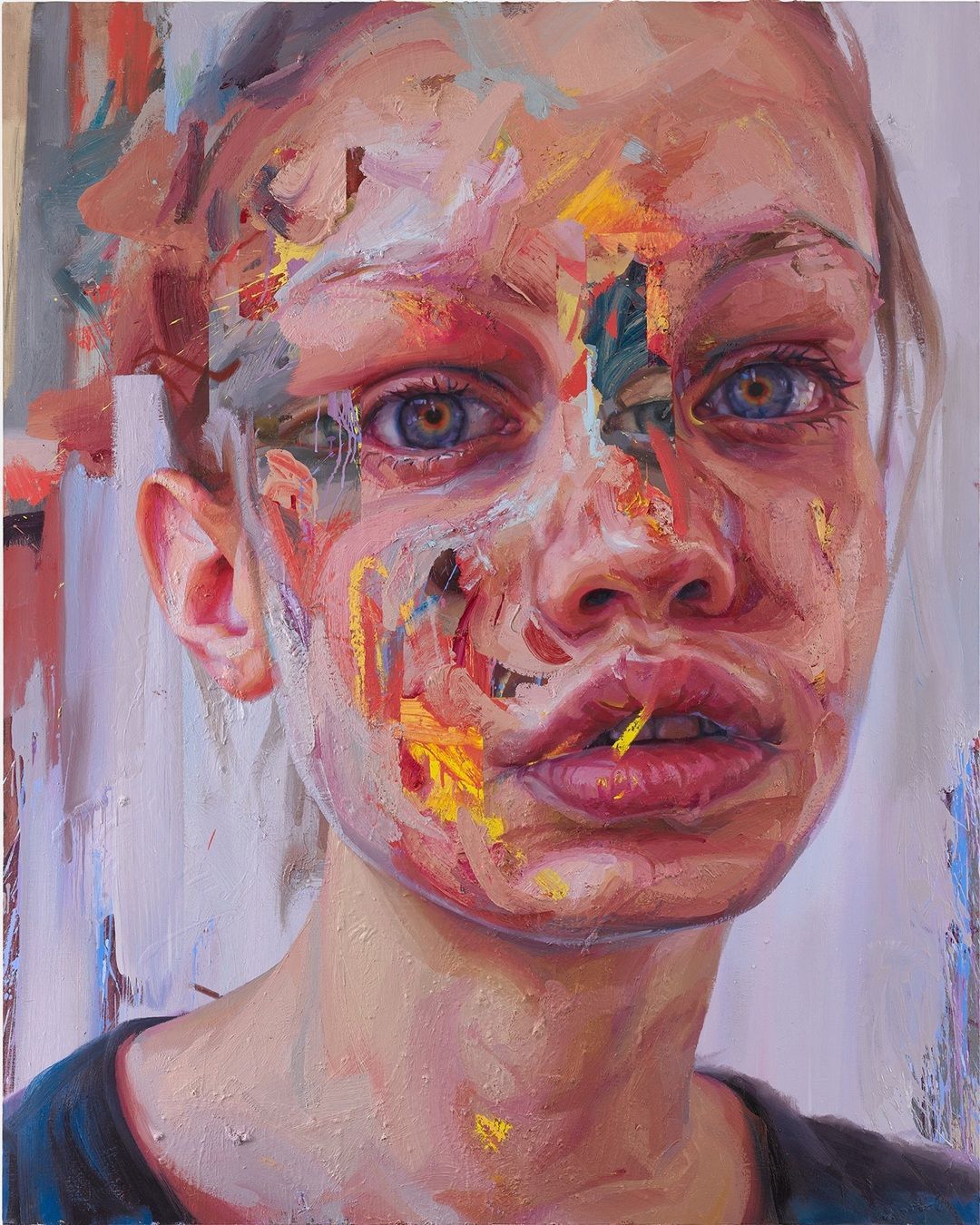
On March 28, Ca’ Pesaro in Venice inaugurates the first major Venetian exhibition dedicated to Jenny Saville. In conjunction with the Art Biennale, painting once again becomes body, flesh, matter. Around thirty paintings retrace more than thirty years of research, from the 1990s to today. Her monumental canvases dialogue with the Venetian tradition, long obsessed with color and the sensuality of the painted surface. Often associated with the Young British Artists, Saville brought contemporary figurative painting back to the center of debate, questioning how society constructs and judges the body. The exhibition concludes with new works conceived for Venice, almost a declared homage to the city. An ideal show for those seeking a direct confrontation between past and present, memory and living flesh.
Title: Jenny Saville at Ca' Pesaro
When: March 28 – November 22, 2026
Where: Ca’ Pesaro, Venice
Bernini and the Barberini - Rome
The exhibition Bernini and the Barberini, hosted at the Gallerie Nazionali di Arte Antica at Palazzo Barberini, reconstructs the relationship between the artist and the powerful dynasty that, with the election of Pope Urban VIII, transformed Rome into a spectacular construction site. Through paintings, sculptures, documents, and comparisons with contemporary masters, the exhibition explores commissions, projects, and dynamics of power, highlighting how the Barberini family supported and directed the artist’s career, helping to shape the very face of Baroque Rome. The result? Bernini becomes the symbol of a season in which art, faith, and politics were one grand spectacle. And Rome, once again, confirms itself as the perfect stage for that theater of ideas ignited by the seventeenth century, which continues, centuries later, to speak to us with surprising relevance.
Title: Bernini and the Barberini
When: Until June 14, 2026
Where: Palazzo Barberini, Rome
Ettore Sottsass - Pistoia
The title is already a declaration of poetics: I Am an Architect. The protagonist is Ettore Sottsass, a key figure in twentieth-century Italian design, a radical and lucid interpreter of the contradictions of progress. The exhibition rereads a crucial thirty-year period, from the postwar era to the early 1970s, through the archive entrusted by the architect to CSAC and documents from the Archivio Museo Bitossi and the Centro Studi Poltronova. It tells the story of a thought that moves through ceramics, graphics, architecture, and industry, with pivotal moments such as the collaboration with Olivetti and the experience with Poltronova. Here radical design is not decoration but social critique. Calculators, typewriters, office systems become political objects, charged with color and utopian tension. Sottsass dismantles the idea of neutral functionalism and proposes a new humanism of design. Design lovers, mark your calendars, you have until the end of July.
Title: I Am an Architect. Ettore Sottsass in Pistoia
When: March 7 – July 26, 2026
Where: Palazzo Buontalenti, Pistoia
Zehra Doğan - Termoli
At the MACTE – Museum of Contemporary Art in Termoli, until May 16, 2026, art becomes an act of resistance. I, Witness retraces the fundamental stages of Zehra Doğan’s research, artist, activist, and Kurdish journalist now living in exile in Berlin. Painting, drawing, video, photography, graphic novels, tapestries, and installations compose a path that crosses before, during, and after imprisonment. Convicted for her journalistic work and for an artwork documenting the destruction of Nusaybin, Doğan transformed prison into a visual laboratory. Political contemporary art here is not slogan but vital necessity. The female figure, vulnerable and archetypal, between child and serpent goddess, becomes the symbolic core of a narrative intertwining biography and collective history. Among the works is also the clandestine graphic novel created in prison using improvised materials. One of those exhibitions you do not leave unchanged.
Title: I, Witness: Zehra Doğan
When: Until May 16, 2026
Where: MACTE, Museum of Contemporary Art, Termoli
Symbolism – Parma
Destination: Mamiano di Traversetolo, near Parma. Here, from March 14 to June 28, 2026, the Villa dei Capolavori, home of the Fondazione Magnani-Rocca, hosts one of the largest reconstructions dedicated to Italian Symbolism. Over 140 works recount the most visionary season between the nineteenth and twentieth centuries, in dialogue with European experiences such as Arnold Böcklin, Edward Burne-Jones, and Max Klingerr. The exhibition carefully distinguishes those who consciously developed a Symbolist lexicon from those who merely touched its iconography. On display are Giovanni Segantini, Giuseppe Pellizza da Volpedo, Gaetano Previati, and many other protagonists of an Italian path to mystery. Nature as living organism, unsettling myth, landscape as mental space, and the ambivalent female figure characterize Symbolism in Italy, restoring theoretical depth and dark fascination to a movement too often read as minor.
Title: Symbolism in Italy. Origins and Developments of a New Aesthetic 1883–1915
When: March 14 – June 28, 2026
Where: Fondazione Magnani-Rocca, Mamiano di Traversetolo, Parma
Art in Sicily between the Nineteenth and Twentieth Centuries – Syracuse
Just over a month left (until April 12, 2026) to see Sciatuzzu miu, an exhibition spanning two centuries of Sicilian art between the nineteenth and twentieth centuries, staging the visceral bond between artist and island. From the poetic nineteenth-century atmospheres of Antonino Leto and Francesco Lojacono to the modernity of Renato Guttuso, Carla Accardi, and Piero Guccione, the path shows how light, landscape, and memory become an identity grammar. The twentieth century opens to experimentation, from the Gruppo di Scicli to the experience of Forma 1, intertwining abstraction and engagement. The result is a narrative in which Sicily is not backdrop but active subject, a creative force breathing within the works. A journey into the soul of the island, suspended between reality and vision, which can be paired with the discovery of the beauties of the city of Syracuse.
Title: Visions of Art in Sicily between the Nineteenth and Twentieth Centuries. Sciatuzzu miu
When: Until April 12, 2026
Where: Castello Maniace, Ortigia, Syracuse