
































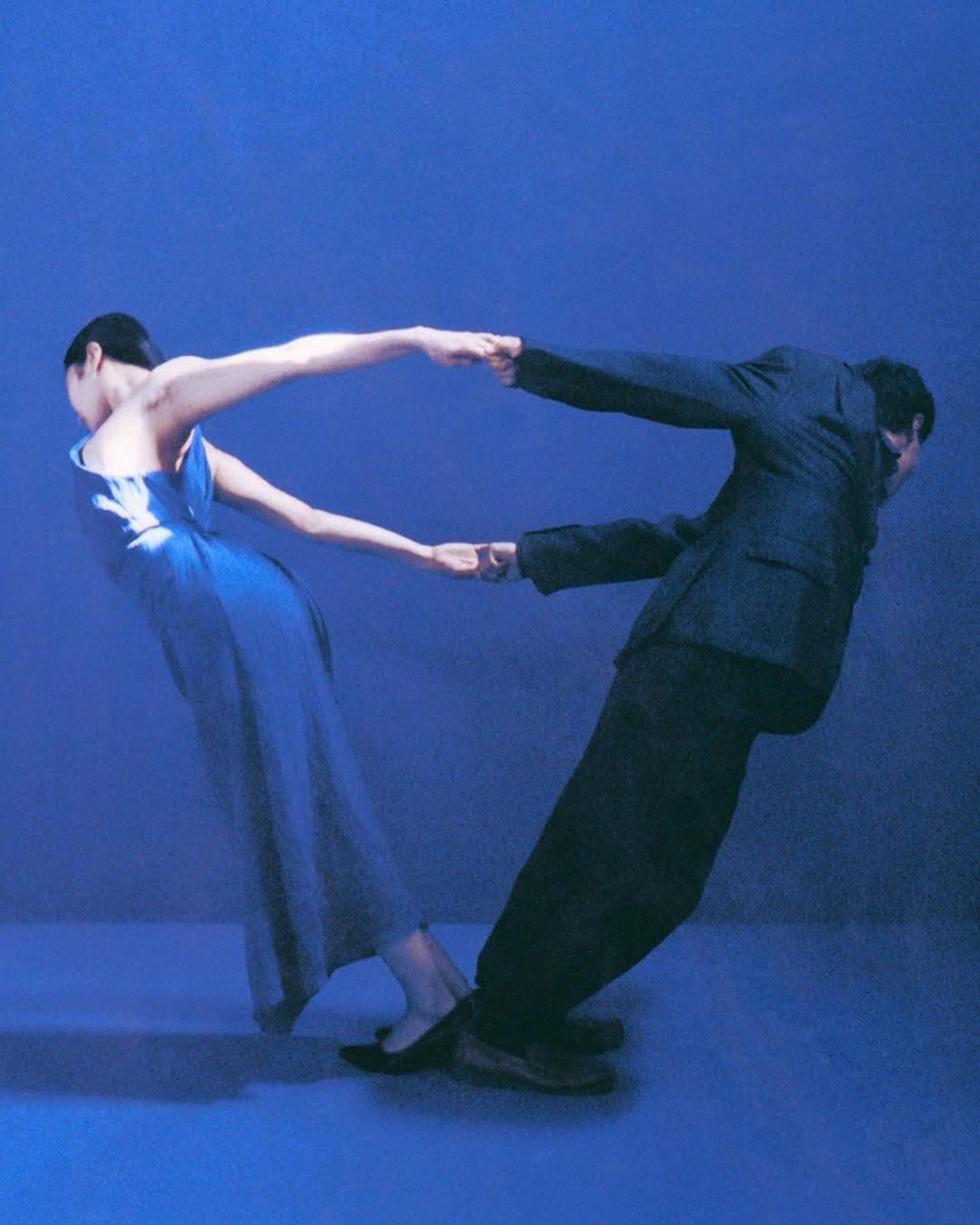
Choosing fatigue Friction-maxxing as an attempt to recover thought, attention, and relationships
Okay, I’ll say it right away, so we can get it out of the way: I’m old. Not in the performative, slightly whiny “back in my day everything was better” sense, but in the anthropological sense of “I’ve lived long enough to remember when life wasn’t designed to be seamless.” Every era has its charm and its traps, its grace and its background noise. There is no golden age, only different configurations of struggle. But yes, I had the privilege of growing up before technological convenience became a religion, with push notifications as sacraments. I grew up without the Internet, without smartphones, without apps, without food delivery, without next-day shopping as if Bezos were Santa Claus with an algorithm instead of elves.
Life before fluidity
I rode my bike to school, immersed in the thick fog of the Po Valley. And that alone was an unsolicited exercise in resilience. If I needed help with my Greek homework, there was no ChatGPT. I had to physically go to the library in the neighboring town, look for a book, hope it was there, discover it wasn’t, and adapt to whatever I could find. If I wanted to see a friend, I actually saw her. I met her at school, rang her doorbell, called her landline. I spoke to a real person, with a real voice, with that social awkwardness we would now probably classify as psychological violence. None of us called it “friction.” It was just life.
@simply_nikkib_ Time to stop overdosing convenience #friction #inconvenience original sound - SimplyNikkiB
When the facilities arrived (slowly, like everything else)
Then the facilities arrived. As they always do in small towns: slowly, belatedly, when elsewhere they were already becoming obsolete. The first desktop computer entered my home in my final year of high school, without internet (a farsighted family choice or educational sabotage? We’ll never know). And from there, like everyone else, I adapted. The world accelerates even if you’re not ready. So today I buy things that arrive in a day on Amazon, I scroll Instagram while watching Netflix, I work remotely. I don’t use Uber or Just Eat, not out of snobbery, but because I live immersed in the Italian countryside, where even the concept of a taxi feels like an urban legend.
Why I don’t demonize technology (and why I don’t idolize it)
With shaky health and energy that must be managed like a scarce resource, I’m sincerely grateful for any technology that makes my life easier. I don’t miss friction. I don’t long for struggle for its own sake. I don’t dream of complicating my daily life just to feel morally superior. Convenience, when it’s needed, is a blessing. And yet, some people think this constant fluidity carries a hidden cost. That eliminating every effort isn’t making us freer, but more fragile. That something, in the systematic removal of inconvenience, is getting lost along the way. And it’s from this vague but persistent feeling that the need to talk about friction-maxxing arises.
@miriam_tinny I know I know, it’s *yet another* term and yes our parents would lose their minds at how we have to codify “embracing” friction aka living but alas…here we are. Genuinely it’s just not our faults!!!! These platforms created addictions and now we are desperately trying to come afloat, so idk I have a lot of sympathy for us. Let’s find friction?! #thecut #friction #tech #easy #inconvenience original sound - Miriam
What friction-maxxing really is
The term friction-maxxing was coined by Kathryn Jezer-Morton in an article for The Cut, and it refers to a practice as simple as it is counterintuitive: deliberately choosing what is harder, more uncomfortable, slower, in a world that constantly offers us shortcuts. Not out of masochism, not out of nostalgia, not to return to the austere life of our grandparents. But to build tolerance for inconvenience, to step outside the comfort zone, to reclaim a deeper engagement with life. Reading a challenging book instead of scrolling Instagram. Cooking from scratch instead of ordering from an app. Writing a text with your own brain instead of delegating it to artificial intelligence. Talking to a person instead of avoiding them through an interface. Doing something knowing it will be done poorly, slowly, imperfectly. Friction-maxxing is not about going back to 1850 (no one is asking you to churn your own butter, relax). It’s about choosing texture over speed. It’s about feeling the friction of thought, of the body, of relationships. It’s a rejection of automatism, an acceptance that life has a certain graininess, and that this isn’t a bug, but a feature, a structural condition of human experience.
Why everyone is talking about friction in 2026
We live in a culture obsessed with optimization. Apps for food, apps for dating, apps that tell us where our friends are, bots that write our emails, flirt with our crushes, think for us, decide for us. Everything is designed to be simple, fluid, instantaneous. But when simplicity becomes the norm, friction becomes intolerable. The slightest obstacle feels like an anomaly. Boredom like a system error. Effort like a personal failure. Silence something to be filled immediately. So we find ourselves hyper-efficient and deeply restless, incredibly fast and strangely empty. The problem? When we eliminate every form of friction, we also eliminate fundamental parts of being human: attention, critical thinking, creativity, judgment, real relationships.
@tylerdonohuee okay yall this challenge is already so WHIMSICAL!! this whole interaction made me so happy #humanconnection #challenge #frictionmaxxing #talktostrangers #whimsy The Winner Is - DeVotchKa & Mychael Danna
Convenience, but at what cost?
For over a decade, convenience has been the dominant promise of consumer culture. Uber instead of walking. Amazon instead of browsing physical stores. ChatGPT instead of thinking. All legitimate, all useful, until it becomes automatic, compulsive, total. According to this logic, reading is boring. Talking is embarrassing. Moving is tiring. Thinking is hard. Interacting with strangers is risky. Better to eliminate it all. Better to retreat into digital rooms padded with predictive algorithms. The result is not happiness, but a form of emotional infantilization, as the article in The Cut suggests. Adults who react to the slightest friction like children having their iPads taken away. Research on attention is merciless. Our average capacity to concentrate on screens has drastically declined over the past twenty years. Studies from Columbia University show that when we know we can look something up online at any moment, our brains stop storing the information. We don’t remember the content; we only remember where to find it. Essentially, we are brains in bookmark mode. Friction-maxxing emerges as a response to this dulling-down. Not an anti-technology crusade, but an attempt to answer an uncomfortable question: who are we when we give up the friction of thinking?
@ashi.branding Day 6 of 20 | Friction-Maxxing is going to take over in 2026. Here’s how to execute it. #marketingideas #digitalmarketing #marketingstrategy #creativedirector #genz original sound - Ashi | Branding + Business
Returning to uneven ground
As Ludwig Wittgenstein wrote, without friction we cannot walk. On smooth ice everything is ideal, but no one gets anywhere. Returning to uneven ground is not regression; it is necessity. In a culture that constantly invites us to escape, friction-maxxing is not an invitation to suffer, but to stay. To tolerate that light discomfort that doesn’t destroy us, but shapes us. To discover that beyond the initial irritation, there is often something that looks a lot like pleasure. Maybe less convenience does not mean less happiness. Maybe it means a happiness that is less immediate, less anesthetized, less automatic. A happiness that requires presence, attention, participation. I don’t know if I’ll turn 2026 into a permanent manifesto of friction-maxxing. In fact, I seriously doubt it. And you certainly won’t see me soon giving up what makes a harsh and troubled daily life bearable. I only know that the idea of choosing, every now and then, the less comfortable road doesn’t seem so unreasonable. Not because the past was better, but because the present risks becoming too aseptic and monotonous to be interesting enough to get me out of bed tomorrow, and the day after that.
