








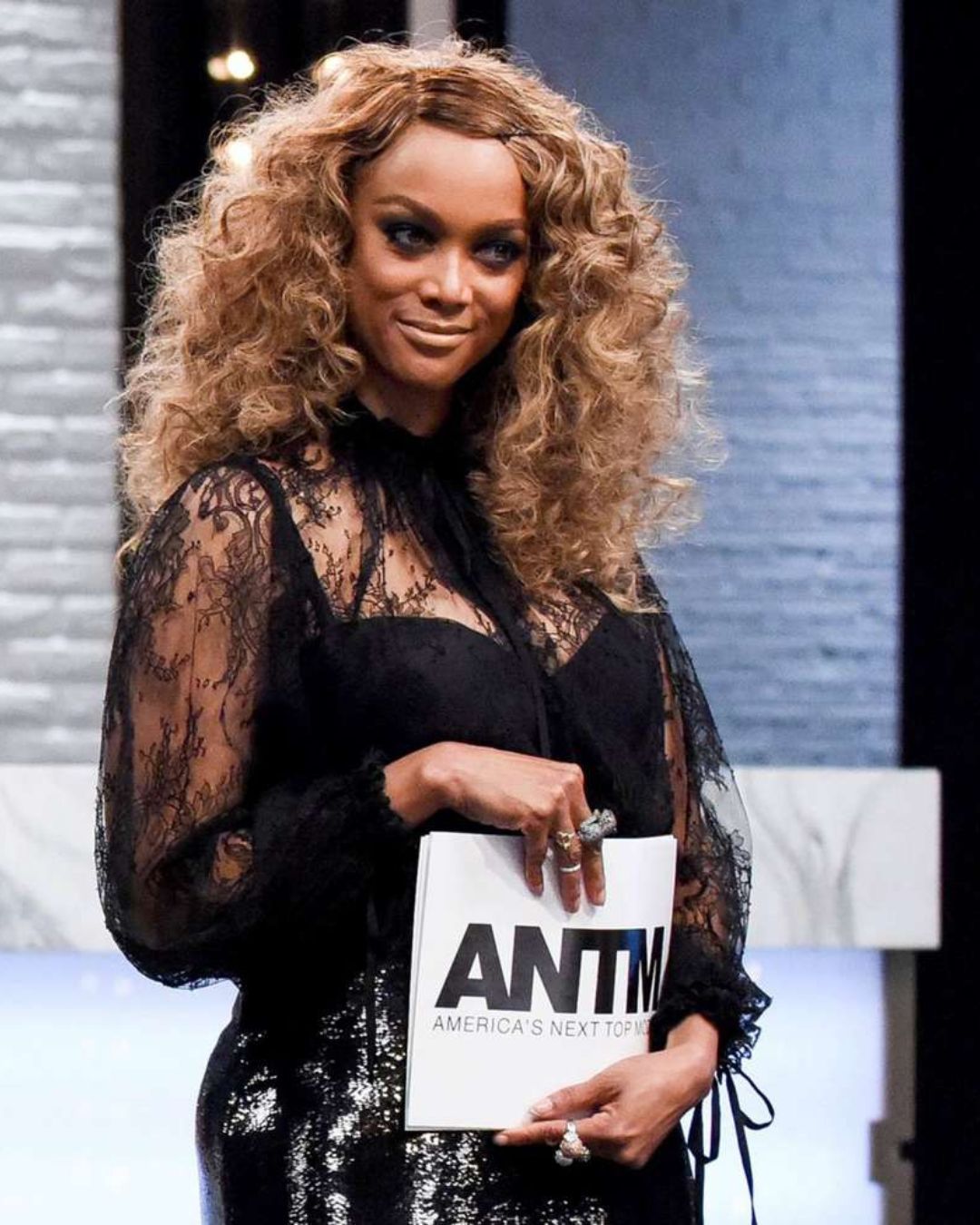
America's Next Top Model, in hindsight, is chilling The behind-the-scenes of the reality show on Netflix with a three-part docuseries
During the Covid-19 pandemic, many people watched or rewatched America’s Next Top Model. Those who were already familiar with it refreshed their memory with details they might not have remembered, especially the controversial ones, while generations discovering the cultural phenomenon for the first time immediately flocked to social media to point out everything wrong with the show. It was essentially 2002, the echoes of the heroin chic fashion era were still present, and expecting TV to be an up-to-date platform on topics like body image and representation was a fantasy no producer could have indulged in, even in their wildest dreams. Yet, in reality, this was precisely Tyra Banks’s intention: to create a space for women of all sizes and ethnicities to see themselves, feel seen, and understand their beauty.
Tyra Banks, America’s Next Top Model, and the goal of representing all bodies
The top model, who became an entrepreneur over time, knew this well. As a model in an era when Black women were paid less and rarely appeared on covers, Tyra’s desire was to break the rigid codes the fashion industry had made exclusive and narrow, opening up a vision of freedom and diversity that could embrace every face, skin, and body type. But where she saw potential, networks saw profit, and everything that happened to the show, driving America’s Next Top Model through constant transformations (often for the worse), was dictated by the rules of television, which, if not fiercer, is certainly as voracious as the fashion industry. What Reality Check: The Truth About America’s Next Top Model, the three-episode Netflix docuseries, shows is how TV is a machine where one believes they can change things when, in reality, one usually ends up playing its game, featuring Tyra Banks alongside judges Jay Manuel, Miss J, photographer Nigel Barker, and some former contestants.
@adriannecurryrhode Netflix Top Model documentary didnt pay the girls a dime! #americasnexttopmodel #Netflix #topmodel #realitytv original sound - Adrianne Curry
From dream to TV reality: the evolution of the format
Starting as a springboard to allow many young women to realize their dreams, America’s Next Top Model quickly evolved from an open door for good into a reality show aimed at ratings. This leads to a broader reflection on the television ill-education faced by early contestants and viewers, unprepared for the impact participating in a show would have. America’s Next Top Model was the first step in a TV landscape that learned to read tricks, storylines, and what the cathode tube needed. Feeding the beast remains rule number one in television today (applicable to social media as well). How could it not have been for shows gradually discovering the power of reality, even if manipulated? And, speaking of reality, how could it not reflect the era it was depicting?
@mexiigal Did ya'll watch it? #tyrabanks #antm #netflixdocumentary #americasnexttopmodel #fyp @Netflix оригинальный звук - berkeley
Historical and cultural context
What must be done, and what those who actively participated in the show during its TV dominance also do, is contextualize the historical, social, and cultural period they were in. Rudeness and bad taste are obvious from a modern perspective, making it hard to understand how a photoshoot could change contestants’ ethnicity or portray them as victims of violent crimes. Or how a girl who was unconscious due to alcohol ended up having sex on camera; or promoting thinness ideals that were supposed to be challenged but were not restrained by the judges’ sharp tongues. Between good intentions and the episodes lies an abyss that only time has allowed us to reflect upon, questioning how it was possible to broadcast such sensitive content and controversial choices, but remembering it was perfectly normal for the times as reality shows were making their leap.
Learning from past mistakes for a better future
Therefore, let’s start from this last premise: that yesterday’s mistakes should not be repeated today, even if a complete eradication and rethinking of the fashion field seems unlikely, no less difficult to achieve in society. Even Tyra Banks, in front of a camera - always filtered from reality - wants to make sure it is continuously pointed out where mistakes were made in the past so we can do better in the future, especially since she has in mind - and this is big news - to bring about a twenty-fifth season.
@jillbadlotto Keenyah talking about her experience on that America’s Next Top Model documentary was so heartbreaking and according to Tyra Banks, the show is returning for a cycle 25 #ANTM #Americasnexttopmodel #realitytv #Netflix #tyrabanks original sound - Jill Badlotto
Reality Check: the Netflix docuseries and the search for truth
What is most curious to observe, while empathizing with former contestants and, alongside them, judges whose relationship with Tyra had at some point become strained, is how Reality Check: The Truth About America’s Next Top Model selects characters, builds stories around them, and conducts its investigation to make it as dark and dramatic as possible. And here lies the catch. The docuseries makes the same mistake (or nearly so) as the reality show it examines, choosing specific storylines and pursuing them for its own gain: attracting the highest possible audience. Perhaps the product is the clearest example of how television continuously feeds itself, in an endless loop of malice and ambiguity.
