




"I'll tell you all my escapes" Interview with Angelica Bove
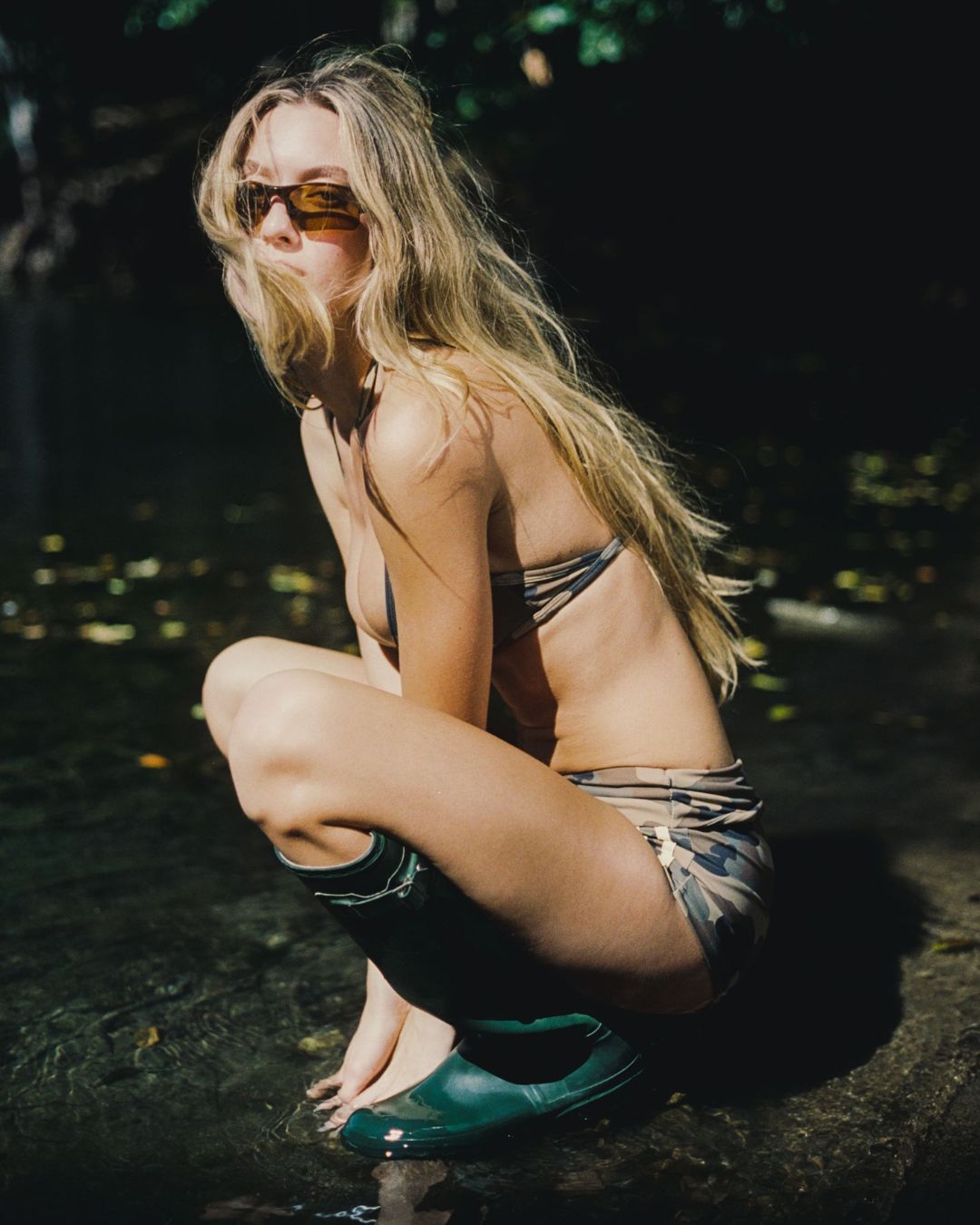
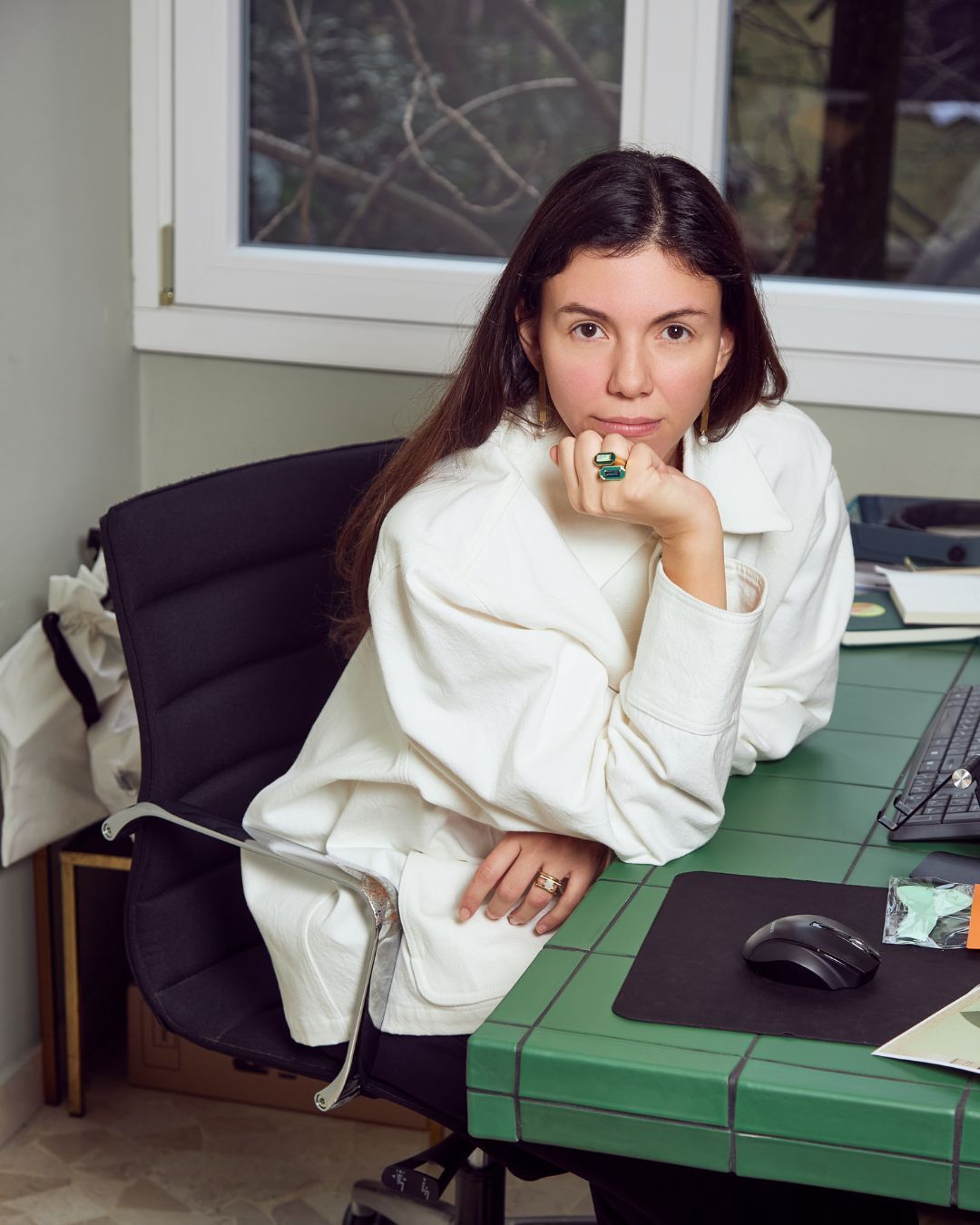
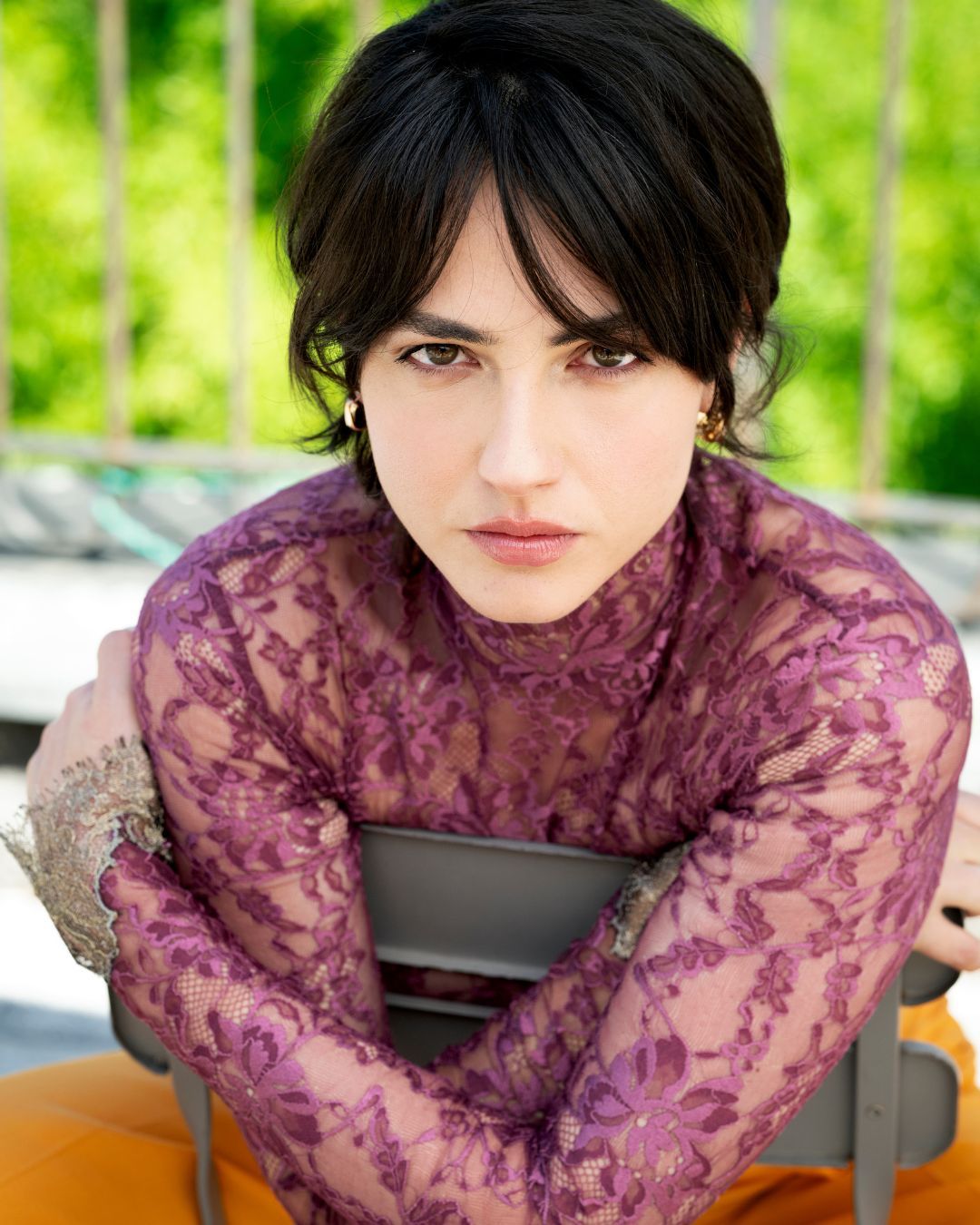
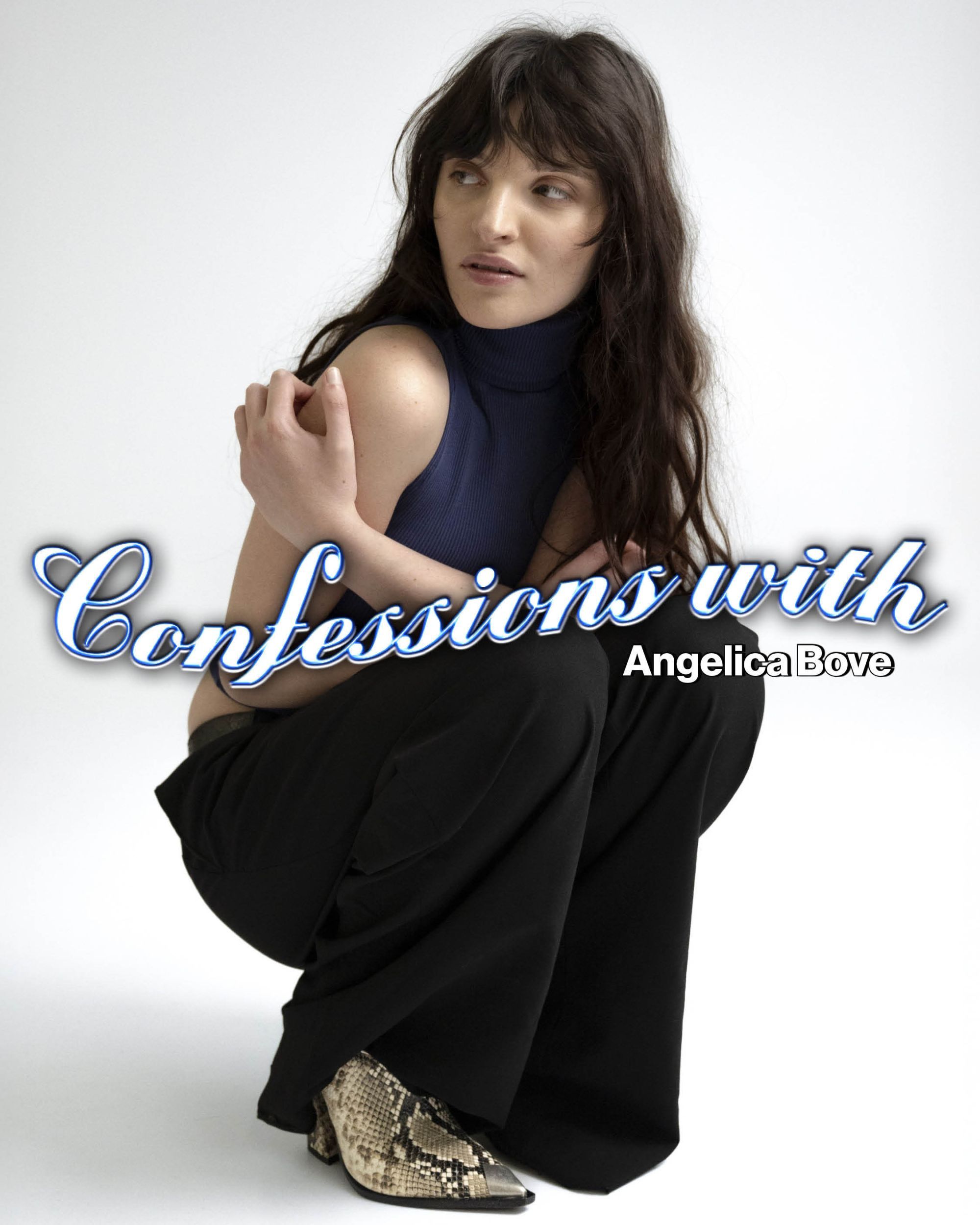
Even though Angelica Bove describes herself as “just an ordinary 22-year-old girl,” you understand at first glance that this isn’t quite true. Not because “coolness” is something measurable, of course. But on the eve of her experience at Sanremo Giovani, Angelica radiates a bright, confident energy, the kind that is determined and positive, never irritating, but rather intriguing to observe and to understand more deeply. We tried to do just that by chatting with her about her future, her music, and her inspirations and intentions.
Interview with Angelica Bove, star of Sanremo Giovani 2026
Angelica gets straight to the point, to what truly matters to her: “My album just came out, it’s called Tana. It’s about refuge, about my way of isolating myself as a form of self-defense. I allow myself a lot of emotional depth, but I’m also self-ironic,” she explains, then continues: “The album captures a period of my life during which I went through a personal journey. I asked myself so many questions and found just as many answers. It’s a project I strongly wanted. I had a very strong need to build an autobiographical project.” Because Tana is not just a refuge, it’s also a story: “It tells about my flaws, my escapes, my approach to life. People may like it or not; what I hope is that they recognize themselves in this approach, so that I can find my own people too.”
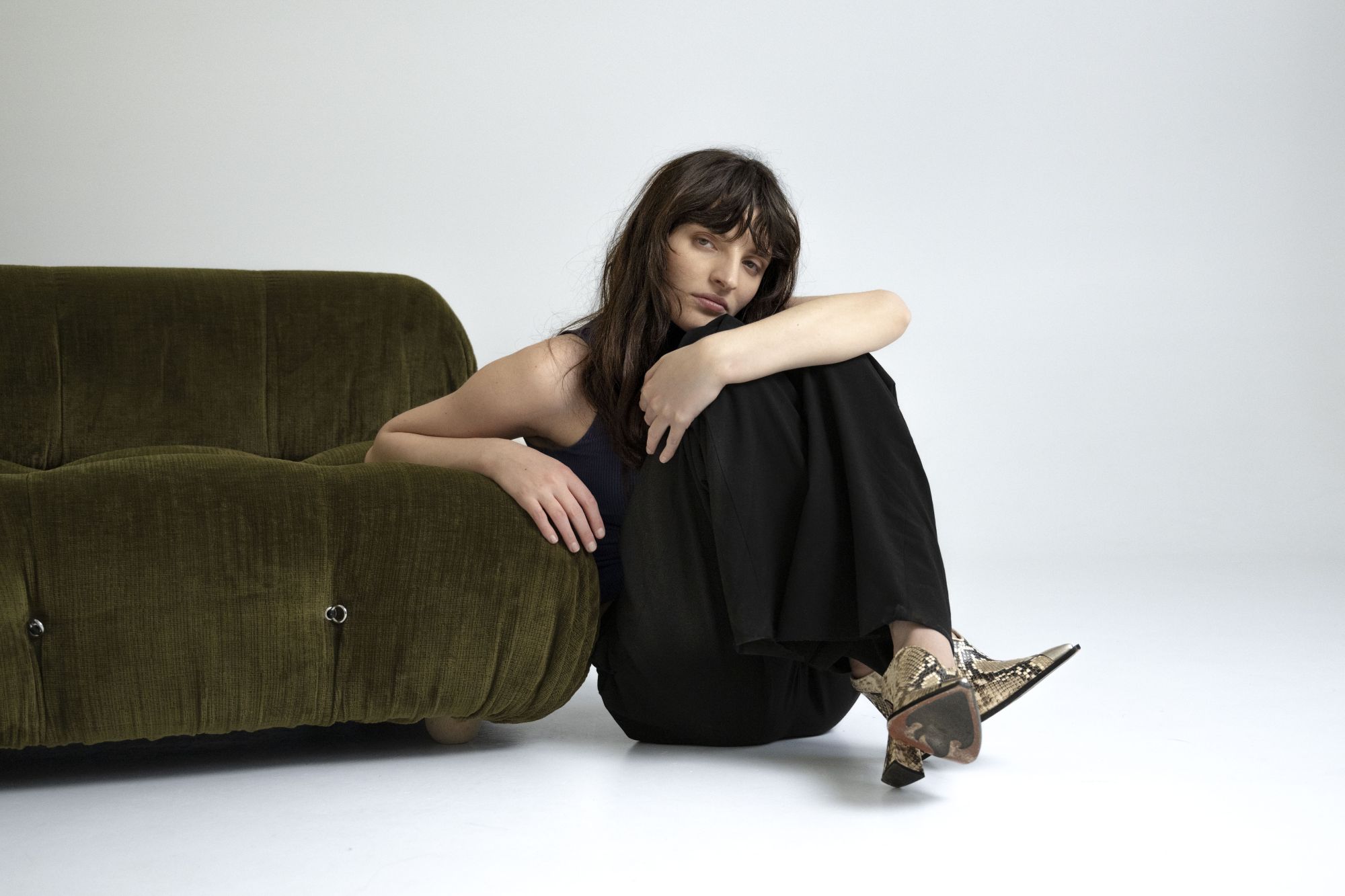
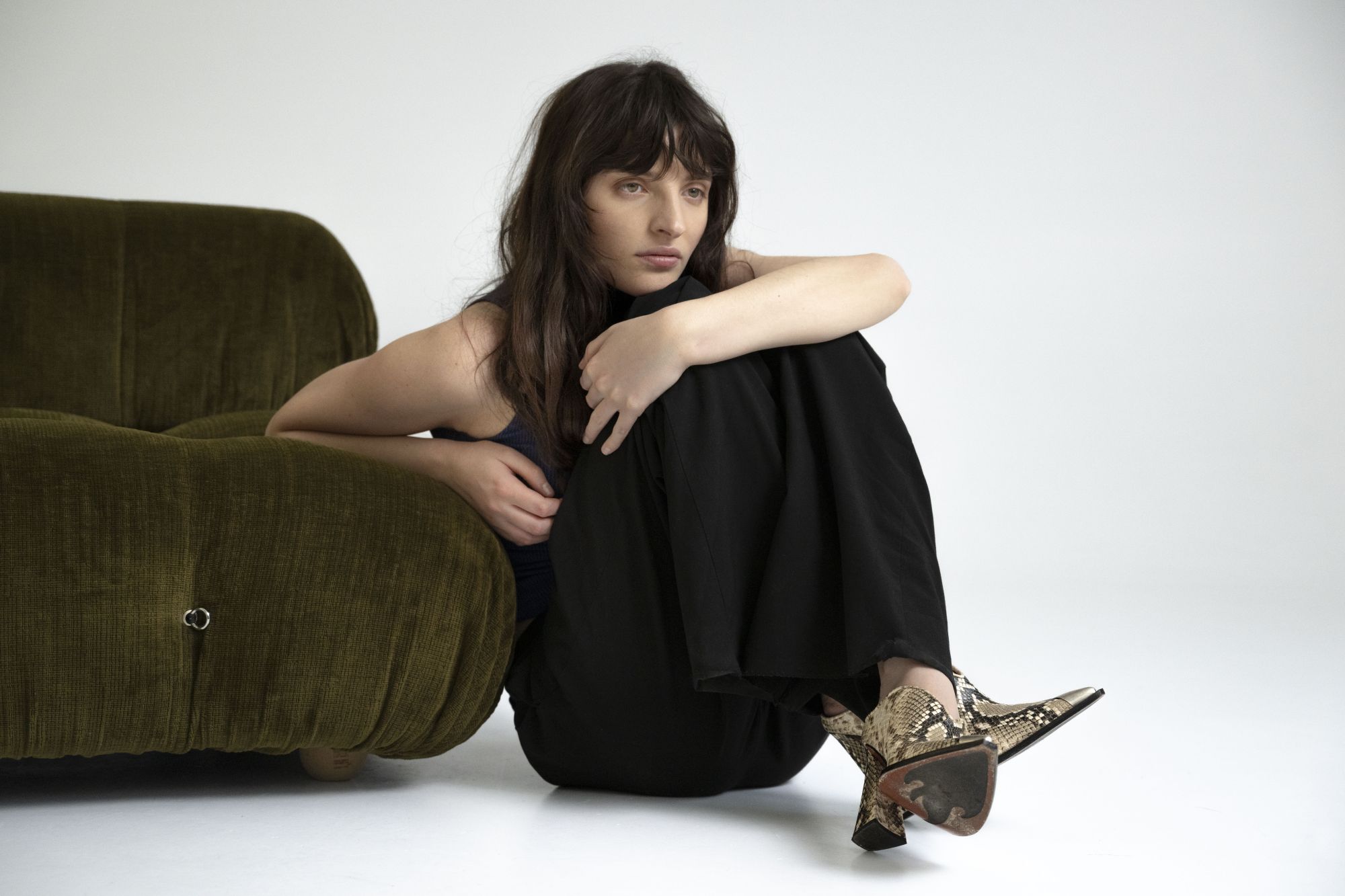
Angelica Bove didn’t work on Tana alone. “It’s the result of a meeting between me, artistic director Federico Nardelli, and Matteo Alieno, my best friend but also the main songwriter of the album. For me, the Tana can also be a person. I tend to humanize places, to see people as safe places. I look for refuge, I look for calm because I’m chaotic.” Inside Tana, alongside Angelica’s life and perspective, there is also the song Mattone, which from the title alone suggests taking up a certain space, a material and measurable space. “This song tells the story of a decisive part of my life, of an event that marked a before and after. After the ‘brick’ there was a phase of adapting to pain, to discomfort. I found myself fighting monsters bigger than me, while at the same time having to adapt to the outside world, which wasn’t moving at my pace and didn’t necessarily have to understand what I was going through.” There is also an orchestral version of the track, strongly desired: “Orchestral versions are probably my favorites, in general. An orchestra is something unique, and I love played music. It was a way of showing the song how much I care about it, and I think it gave it added value.”
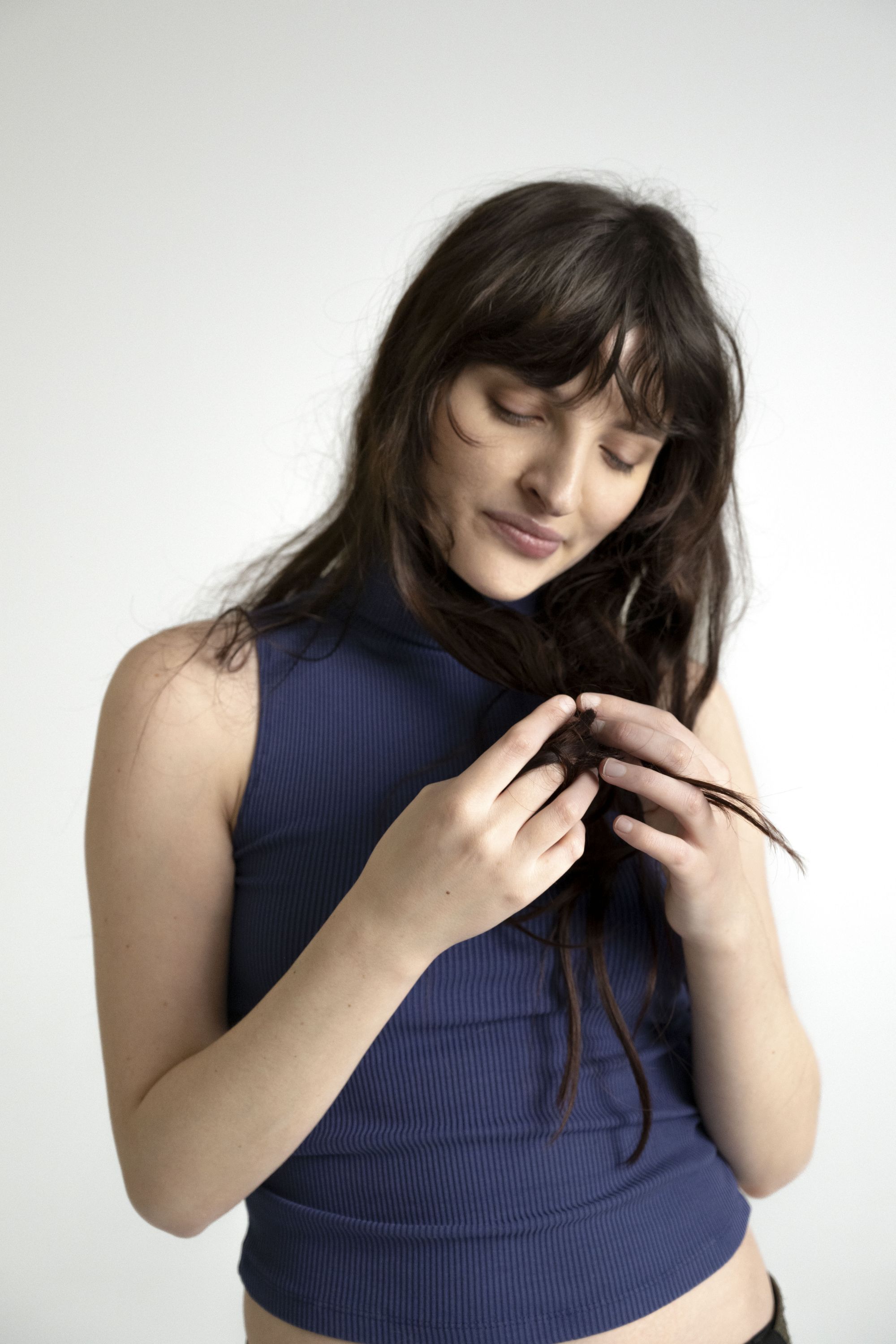
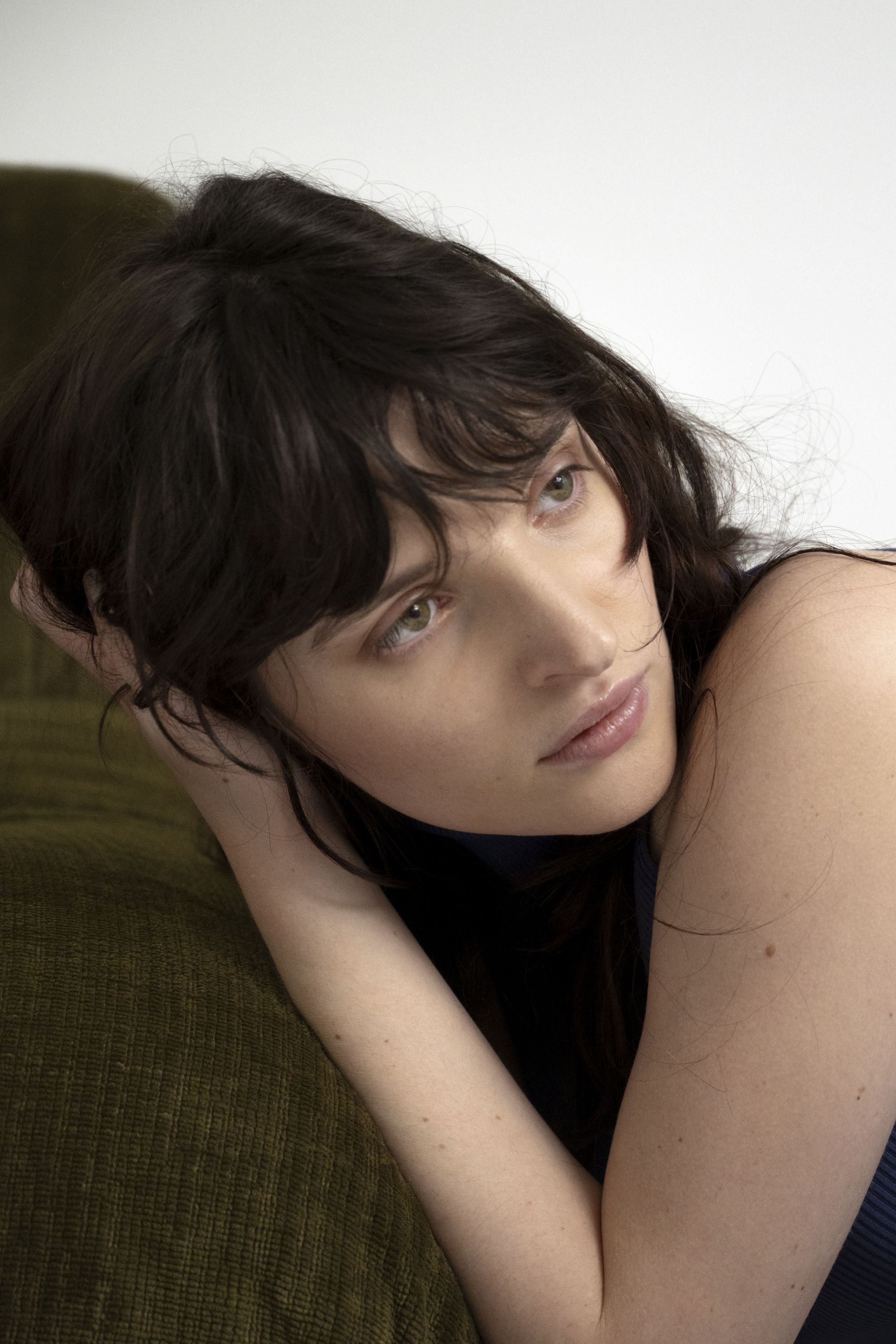
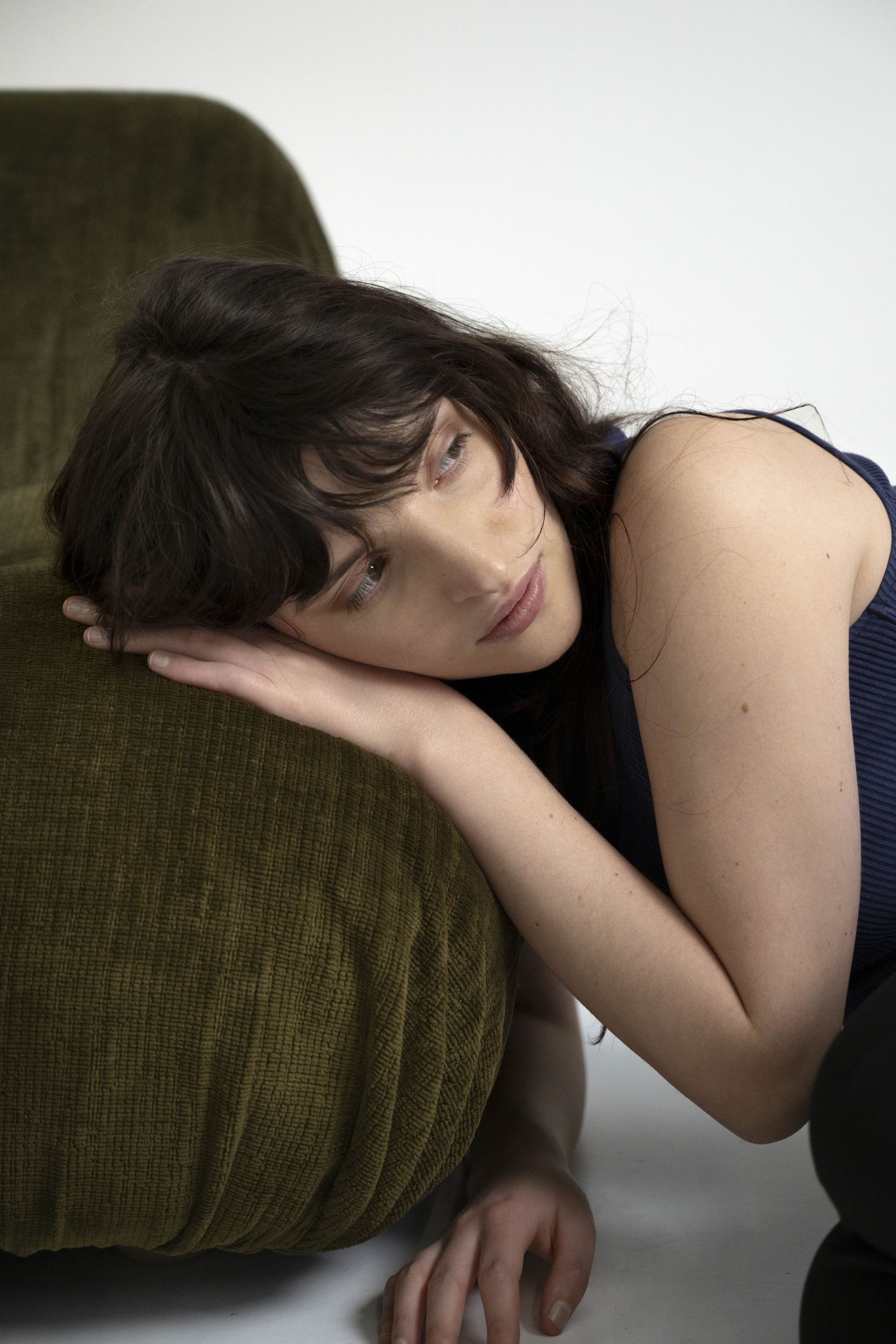
So there is a strong need to show herself and to share, without fear: “I try to be spontaneous, to bring out my thoughts and my character, whether people like it or not. When you are yourself, you make a kind of natural selection. By filtering, the right people stay by your side. I’m not afraid of sharing, neither in life nor in my project, which is connected to this approach.” The same goes for social media: “Social media are nothing more than a game. I use them lightly, I use them for work, I use them to get inspiration. Visual input is very good for me. For the visuals of this album I walked around with the demos in my ears, looking for ideas in my mind and also on social media. If used well they are functional, you just have to avoid being consumed by them. Doomscrolling happens, but it’s more toxic than therapeutic. It happens, what matters is being aware and finding a balance.”
We continue talking about screens, but move from the smartphone to the television screen. Here too, Angelica has clear ideas about how to relate to the medium that has given her so much. “Inevitably, the TV screen creates a layer between you and the person watching. Before singing on TV I used to sing in the bathtub, so I felt this immediately. I felt I had to break the fourth wall. I had the urgency to express myself, I needed to break through the camera, to step inside it. It’s difficult, because the more you think about it, the more seriously you take it, the worse you experience it. At the beginning it was like that; now I think I’ve adapted, I behave as if the camera doesn’t exist. In the end, the person watching you at home is a human being.”
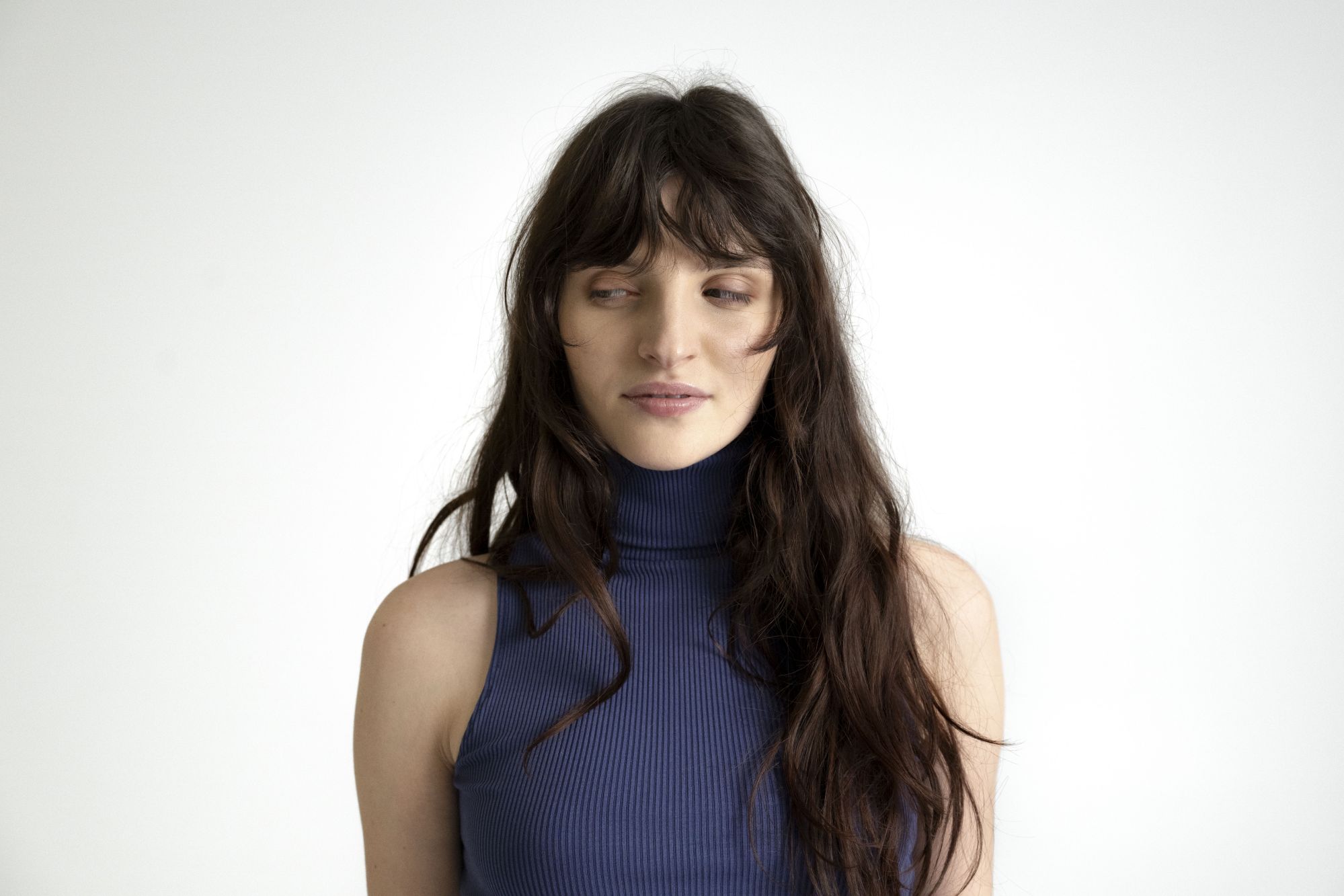
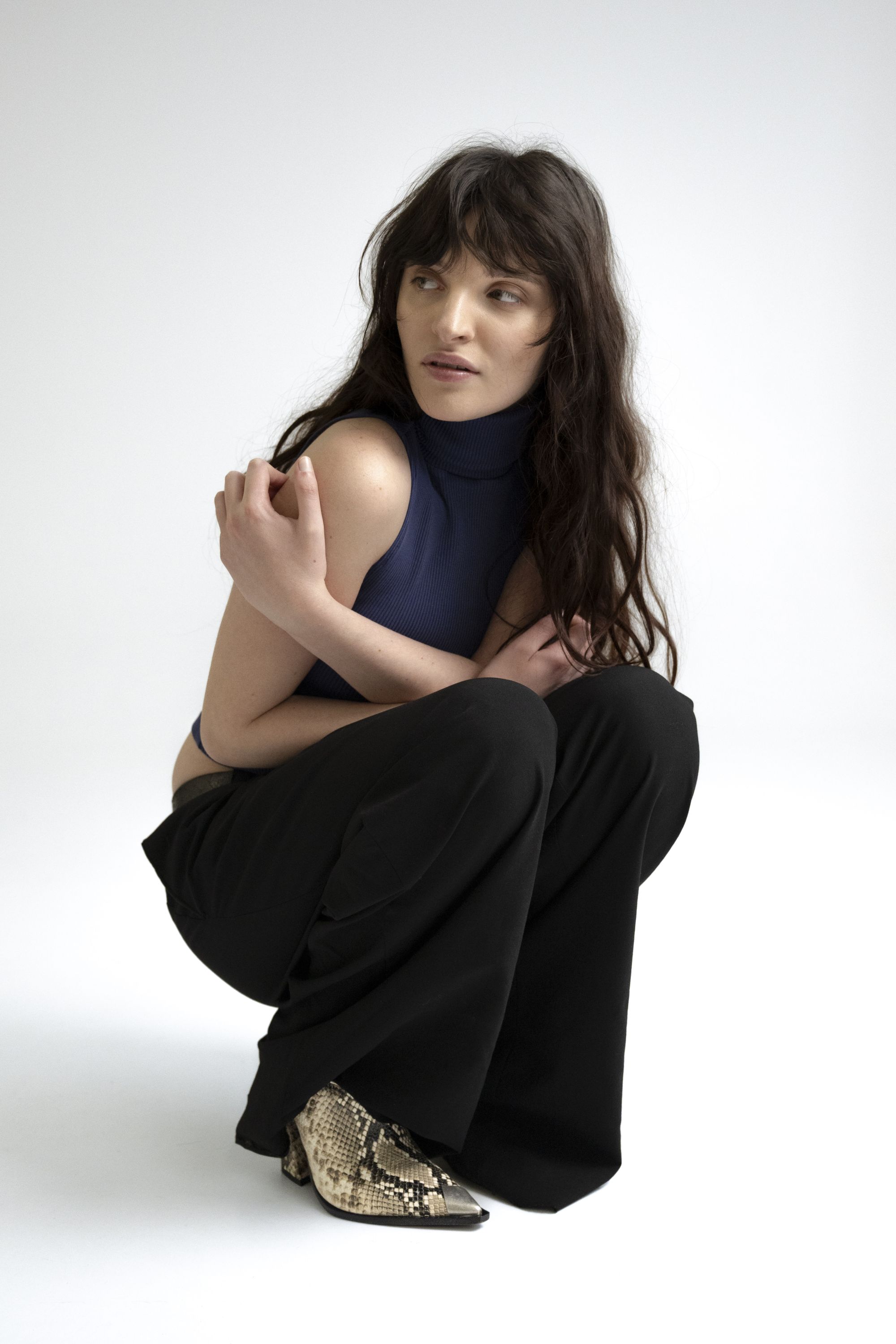
A strong beginning, then - from the bathtub to television - but the journey was longer than that, and she tells us herself: “I didn’t come from institutional paths, I never studied music. I was thinking about doing interior design. Then at a certain point I decided to make a video, without makeup, badly dressed. It went viral. I went on a trip to America. The idea that people, even though I was singing in another language, even though I hadn’t explained my story in the video, understood what I carried inside made me realize how important the tool was, something not to be underestimated.” Telling your story without overthinking it, telling it out of necessity but without over-explaining, even on the Ariston stage: “If I thought about what I want to convey at Sanremo, everything would become artificial,” she says firmly. “I don’t rehearse; my interpretation depends on how I live in the days before the performance. I don’t have any expectations, because I can’t predict it. I want to find my people.” Instinct guides her, and letting yourself be guided by instinct is also her advice for artists who would like to follow her path, without stressing too much. We close with two musical questions. We ask her - in a world where anything is possible - who she would collaborate with, and she has no doubts: “Lucio Dalla.”
What to read next
The most pop Halloween couple costumes there are for Halloween 2026
Everything becomes a costume in the spooky season of the year

Everything that happened at Sephoria 2026
The event organized by Sephora to celebrate the beauty world