








































Farewell to Christian Astuguevieille, the nose behind Comme des Garçons' anti-perfumes Thirty years of experimentation, art, and conceptual fragrances that have changed the way we smell the world
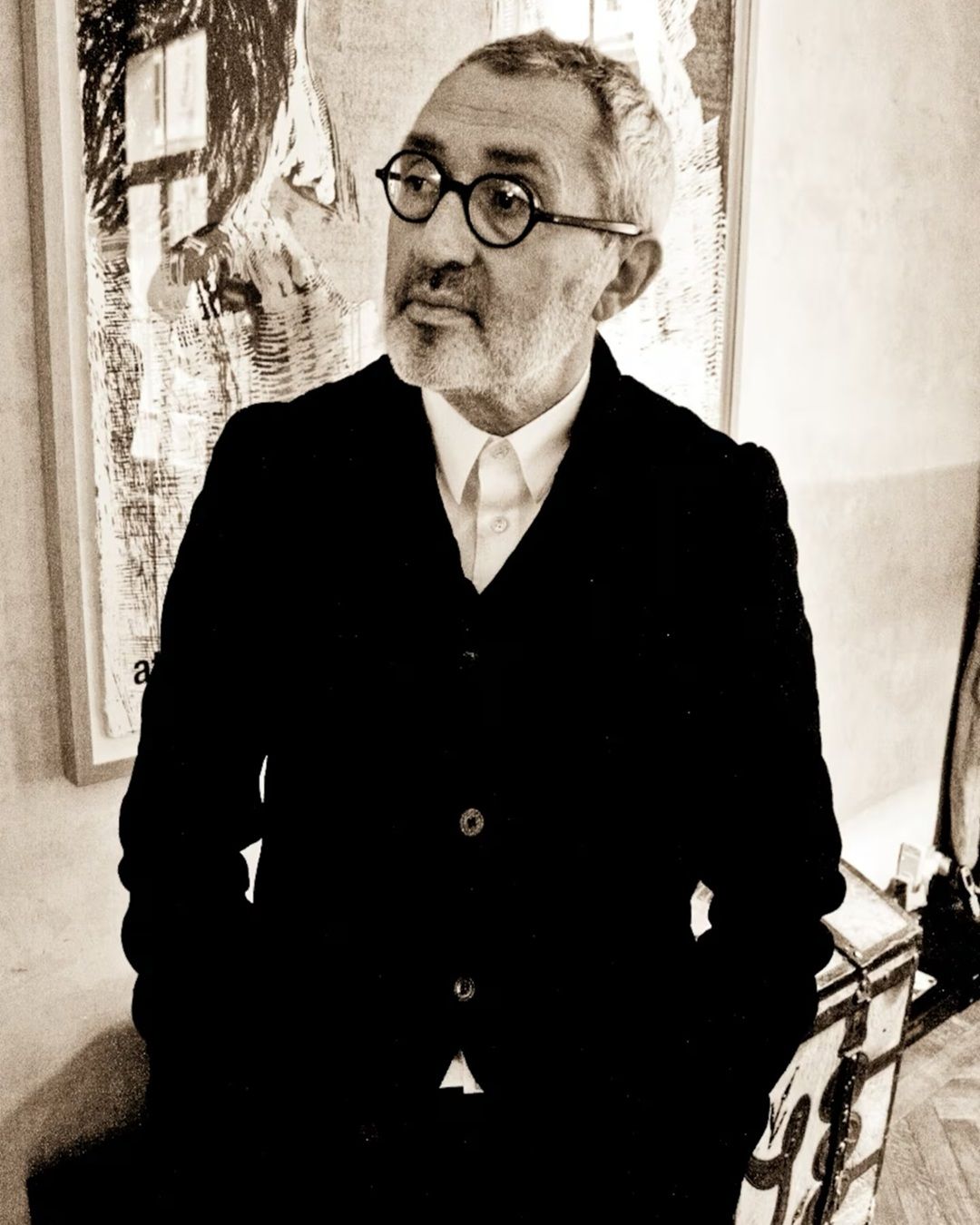
Anyone who has worn a fragrance capable of evoking warm toner, freshly poured concrete, or a tuberose treated like sculptural matter should say thank you to Christian Astuguevieille, creative director of fragrances at Comme des Garçons, who passed away on February 13 at the age of 79. His legacy is not measured in bottles sold or duty-free bestsellers, but in a true mutation of our olfactory alphabet. He taught the contemporary nose to tolerate, desire, even seek what it once would have rejected. Where others built perfumes like shelters, comfortable, polished, predictable, he opened cracks, letting in industrial air, mineral dust, deliberately dissonant notes. Astuguevieille did not simply create fragrances; he reformulated the very idea of what a smell can be, and above all what it can do to the person who wears it. His compositions did not ask for approval, but attention; they did not promise immediate seduction, but a perceptual short circuit. Wearing them meant crossing a mental landscape, often jagged, sometimes disorienting, always memorable. With his passing, we lose not only a visionary creative director, but one of the invisible architects of the contemporary way we “sense” the world, someone who transformed perfume from ornament into experience, from accessory into language.
The inventor of anti-perfumes
If there were one word to summarize his work, it would probably be “friction.” He called his creations anti-perfumes, and the term was not a marketing provocation but a methodological statement. The goal was not to produce harmonious beauty, but to sabotage the very idea of olfactory beauty. His compositions were built like invisible sculptures, shaped through synthetic molecules pushed to excess, industrial accords, olfactory materials treated like plastic matter to be deformed, compressed, destabilized. They did not evoke blooming gardens or gourmand notes, but the concrete, often rough, reality of modern life. Think warm toner, concrete, metal, kerosene, Marseille soap, sunscreen, liturgical incense, dust on a blazing light bulb. This radical gesture redefined contemporary artistic perfumery. It proved that a smell does not have to be pleasing to be meaningful. It must, rather, activate. Disturb. Ignite. Long before science confirmed it, he understood that smells perceived as unpleasant function as extraordinarily powerful emotional detonators. They stimulate memory, desire, even excitement. Pleasure and disgust are not opposites, but the same energy changing direction. In this sense, his work anticipated what we would now call a radical psychology of smell, precisely the one celebrated in today’s digital culture of conceptual perfumery.
The decisive encounter
The meeting that changed his career? In the early 1990s at the Comme des Garçons office in Tokyo. Christian Astuguevieille was looking for recommendations on the city’s most interesting venues when Rei Kawakubo, who already knew his work as an artist and his rope furniture, proposed that he create an installation for her Tokyo store. During the opening, they talked about perfume (Astuguevieille had learned the art of fragrance from Molinard) and recognized each other as kindred spirits, both allergic to the norm. Thus the idea of collaboration was born. In 1994, the house’s first fragrance took shape, simply called Comme des Garçons, a radical composition enclosed in a pebble-shaped bottle designed by the fashion designer. Not a mere object, but a three-dimensional manifesto. The horizontal bottle seemed worn smooth by the sea of time, and the fragrance broke with everything the 1990s considered desirable. It was the beginning of a project that would exceed one hundred creations, transforming perfume into contemporary olfactory art.
The birth of a language
The collaboration between Astuguevieille and Kawakubo functioned like a micro-avant-garde. No market research, no approval testing, no concessions to mainstream taste. The idea was to create what did not yet exist. His training in major historic houses such as Rochas, Molinard and Nina Ricci had taught him the craft, but also the limits of tradition. With Comme des Garçons he decided to overturn them all. Guiding his research was a simple conviction: everyday life is already full of powerful smells, you just have to listen to them. So he created compositions that evoke overheated photocopiers, laundry drying in the wind, freshly poured concrete. The result is a body of conceptual perfumes such as Amazingreen, Concrete, or Wonderoud, as well as Odeur 53, the first fragrance ever assembled entirely from synthetic molecules replicating “the smell of laundry dried in the wind, small celluloid dolls, the freshness of oxygen.”
His legacy to contemporary niche perfumery
Today the niche fragrance industry is a structural economic force. In 2025 it definitively ceased to be a marginal territory, becoming one of the main engines of independent beauty. Data shows sales growing 46.3% year over year, more than four times faster than brands controlled by major conglomerates. This boom did not arise from nowhere. It is the result of decades of sensory education, of audiences trained to desire the unexpected, of noses accustomed to seeking difference rather than reassurance. In other words, it is also the result of Astuguevieille’s work. He made discomfort desirable. His death does not merely close an extraordinary career. It marks the end of a season in which perfume learned to think about itself. What remains is a legacy made not only of fragrances, but of possibilities, the idea that a smell can be philosophy, artistic gesture, perceptual experiment. That beauty can include friction, imperfection, even unease.