






Flow state has become a meme on TikTok The concept is viral on social media, but it also has a serious scientific foundation: that's what it's all about
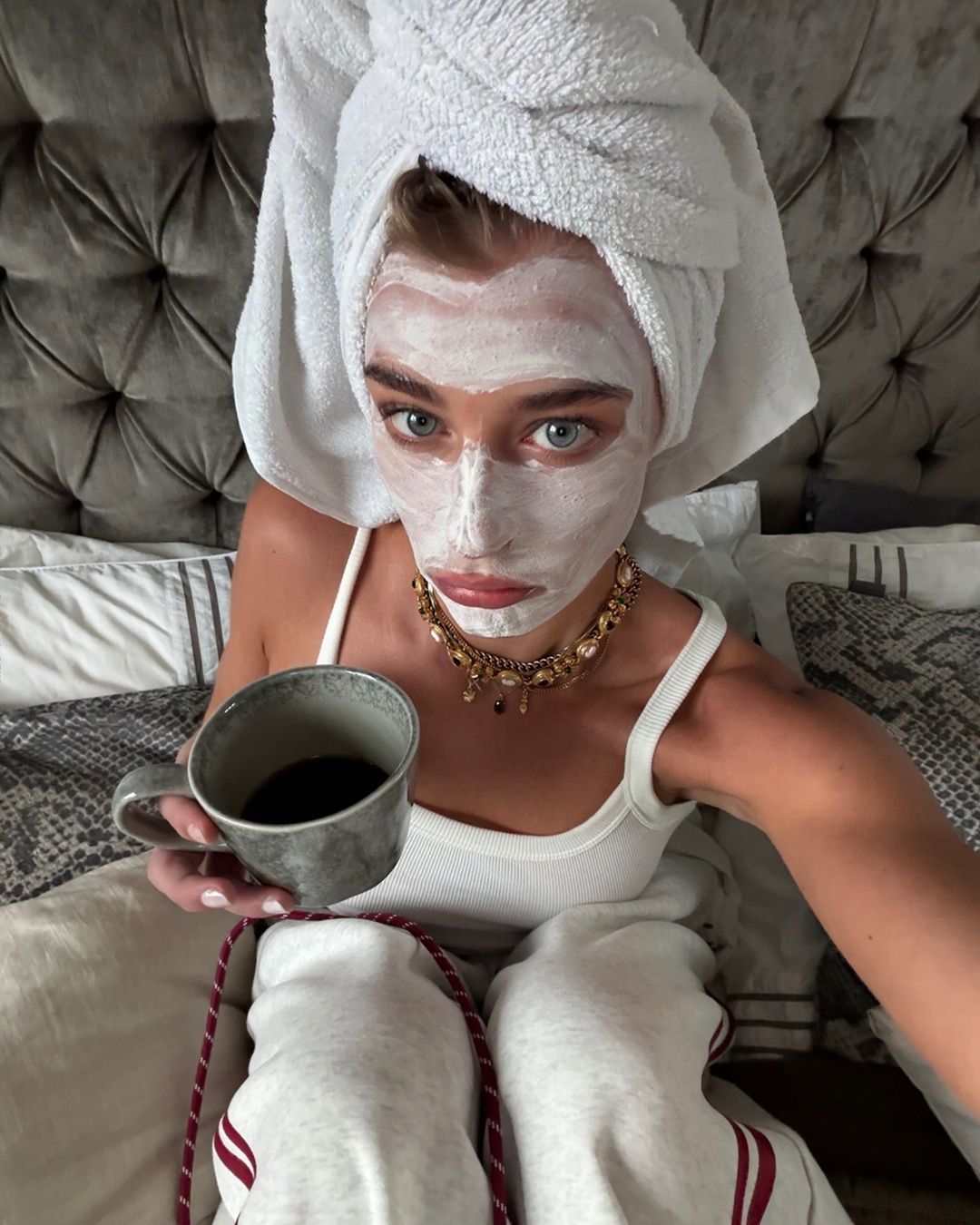
Clean sheets and freshly washed hair, a face mask and a cup of herbal tea: I’m in my flow. A state some say they reach while skiing on freshly groomed snow, others while heading to the airport or crocheting in front of a TV series. Where does all this happen? Obviously on TikTok. In recent months, the flow state has made its way into the platform’s trends, borrowing a term from psychological vocabulary and reshaping it as slang to describe immersion, comfort, and momentary focus. But what happens when a scientifically grounded concept enters the accelerated cycle of digital trends? And more importantly: does its virality help spread awareness, or does it risk trivializing the conversation around mental health?
The language of TikTok: trivialization or democratization?
It’s not the first time TikTok has reworked complex terms into pop language. Concepts like boundaries, dopamine detox or burnout have gradually been aestheticized, simplified, and made shareable in short video format. The flow state follows the same trajectory: it begins as a structured psychological theory and ends up describing a generic sense of well-being. This semantic shift allows for a double reading: on one hand, the democratization of psychological language makes concepts once confined to academic and scientific fields more accessible; on the other, their transformation into memes risks flattening the complexity of mental experience, reducing it to a label easily performed online.
The scientific theory behind the flow state
Yet beyond the trend, the flow state has precise scientific foundations. Introduced in the 1990s by psychologist Mihaly Csikszentmihalyi, it describes a state of deep concentration in which skills and challenge are perfectly balanced, generating total engagement in the activity being performed. Although the results of electroencephalographic experiments remain somewhat contradictory, scientists agree that during flow, focus, cognitive clarity, and an altered perception of time increase. In other words, it’s not simply about “feeling good,” but about a specific mental mode characterized by absolute presence, immersion, and mastery.
Giovanni Franzoni’s flow state
It’s no surprise that, outside the framework of TikTok doomscrolling, Giovanni Franzoni, silver medalist in downhill skiing at the Milan-Cortina 2026 Olympics, has also spoken about the flow state. In an Instagram post, the skier described how during the competition he entered that state of flow, a condition of total cognitive isolation that separated him from everything else, including the passage of time and external stimuli. A testimony that restores the concept to its original dimension, far removed from the simplifications often associated with virality.
Surviving in the age of distraction
So the question remains: does everything that lands on TikTok risk being simplified and emptied of its meaning? In reality, what often takes place is more of a redefinition of cultural meaning. In the platform’s language, flow no longer necessarily coincides with extreme performance or productivity, but rather with micro-moments of presence: cooking without your phone, working with music on loop, dedicating yourself to a repetitive gesture. A broader reinterpretation that reflects a precise generational need: reclaiming focus in an ecosystem dominated by constant distraction. How can we do it? Practices that help us reach this state include eliminating digital interruptions, choosing activities with a level of difficulty suited to our skills, creating focus rituals, and working in set time blocks. Flow, in fact, rarely activates in conditions of multitasking or hyperstimulation - two characteristics we could define as structural features of the contemporary digital environment. Paradoxically, the platform that makes it go viral is also the one that most hinders the conditions necessary to achieve it.
And perhaps it is precisely this contradiction that explains the success of the trend. In a context marked by constant notifications, information overload, and fragmented attention, talking about the flow state becomes a form of collective aspiration: the desire to be fully present in one’s own life, even if only for a few minutes. More than a performance goal, flow emerges as a mental balancing strategy, capable of reducing chaos and restoring a sense of self-control. Even if only for a few minutes.
What to read next
Raye is the protagonist of Zalando's most ambitious cultural project ever
It's called Access All Areas (AAA) and it will take place on April 25 in Berlin
"Se domani non torno" is a very useful film, and that's enough
Inspired by Giulia Cecchettin's story and soon in cinemas