

















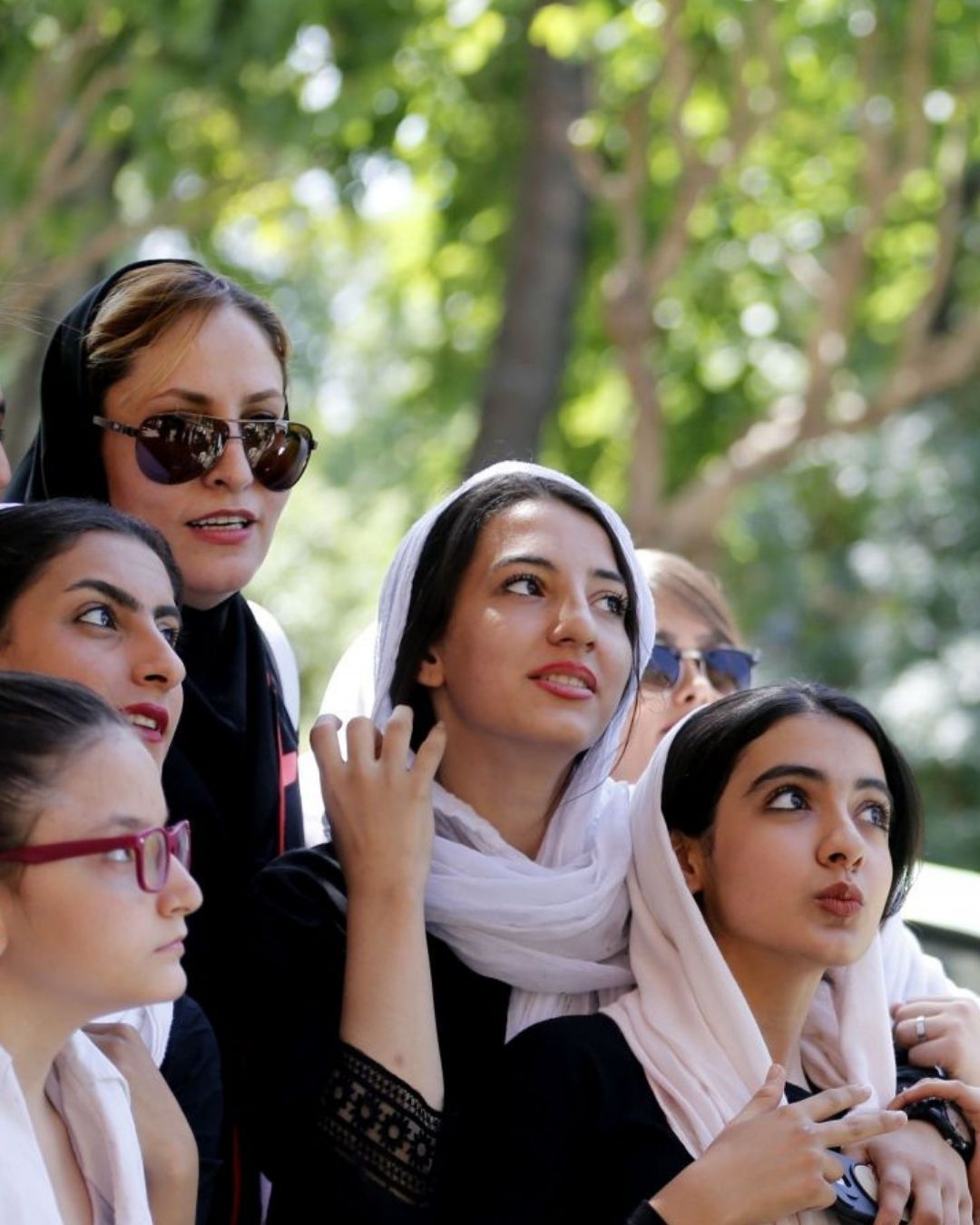
Iranian women have always been there A look at the past to understand the present
What is happening in Iran today is the result of decades of repression that women have never accepted. After 1979, the so-called Islamic Revolution moved swiftly on one specific front: erasing the freedoms women had gained in previous decades. In a short time, women were expelled from the judiciary, barred from legal studies, excluded from competitive sports. The veil became mandatory. This was not a spontaneous cultural shift, but a deliberate political choice. Khomeini and the new religious elite had understood one essential thing: controlling women meant disciplining society as a whole. The female body was turned into a symbolic border between obedience and deviance, loyalty and betrayal. Since then, whenever the regime wavers, the response is always the same: further restricting women’s freedom. Not only in terms of clothing, but also freedom of movement, relationships, marriage, divorce, voice, and presence in public space. The mandatory veil is the most visible symbol, but beneath it lies a legal and cultural framework that reduces women to subjects under permanent guardianship.
Iran and women, yesterday and today: a crucial contradiction
Iran, however, embodies a deep contradiction. Iranian women are among the most educated in the region, they dominate universities, work, and support families and entire sectors of the economy. But this has happened in spite of the system, not because of it. A woman can be highly qualified and at the same time be unable to travel without her husband’s permission, lose custody of her children, inherit half of what a man does, or be stopped in the street for a strand of hair.
The Mahsa Amini case and the regime’s response: controlling women’s bodies means controlling society
With the killing of Mahsa Amini in 2022, something definitively cracked. That death was recognized as possible, everyday, plausible. The Woman, Life, Freedom movement was not a temporary outburst, but a breaking point: for the first time, the protest challenged the very pillar of the Islamic Republic, the idea that social order is built on the control of women’s bodies. The regime’s response was brutal: arrests, torture, death sentences, intimidation. With particular ferocity against the youngest. The names Nika Shakami, Sarina Esmailzadeh, Setareh Tajik, Hasti Narouie are not exceptions. They are warnings. Messages aimed at a generation that has stopped being afraid.
The voices of the revolution in the words of Shiva Boroumand and the role of the United States
We spoke about this with Shiva Boroumand, an Iranian citizen and activist in the Woman, Life, Freedom movement. “The movement was born from women and for women’s rights. After a short time, men also joined the protest: that’s why many of the victims were very young boys. But women have always been there. And even today, the symbol of the uprising remains female: the image of a woman smoking, burning power, has become a global icon,” she explains. “This is an international feminist force that has existed for years and must not be opportunistically tied to Israel or the United States. My main concern is precisely this: that Israel and the US might use the figure of the former Shah’s son as a pretext to regain control over Iran. But this cannot and must not become an excuse to look away while civilians are being killed and fighting for freedom.”
Iranian civil society is fighting and organizing, but receives no support
Boroumand also provides a broader context, deeply rooted in the past: “From the very beginning after the Islamic Revolution, protest movements in Iran have often started with women. Women who, over the years, have been killed repeatedly for resisting. There are countless activists and, at the same time, strong male support that consciously chooses to step back to make space for those with fewer rights: women. Despite censorship of cinema, social media, and public life, Iranian civil society remains alive, organized, and present. Today, the international community is leaving us alone.”
What to read next
The most pop Halloween couple costumes there are for Halloween 2026
Everything becomes a costume in the spooky season of the year
Love of your life, a guide on how to learn to (re) love yourself
The protagonist is Margaret Qualley and the film is available on Prime Video
5 witchy romances to fall in love with in October 2026
Charming witches, talking cats and toads just in time for Halloween