

What will 2026 be like? Forecasts amid social changes and new trends
After years of brain rot and content designed to make us react rather than think, we have reached a point of saturation. Not a temporary drop in attention, but something more radical: a threshold of rejection. The feed no longer entertains us, it drains us. For over a decade, time spent on social media has grown relentlessly: an average of 90 minutes per day in 2012, 143 minutes in 2024. Today, for the first time, the curve bends. Time begins to decline, and forecasts point to a sharp drop in 2026. 2026 will not be the year of romantic disconnection, nor a return to analog life. It will be the year of the social exit: the gradual abandonment of a model of sociality based on constant exposure, identity performance, and compulsive consumption. Every cultural cycle has its breaking point. This is how a new status code is born: media literacy. In the next cycle, it will no longer be cool to seem everywhere and always reactive. It will be cool to appear clear-minded and capable of argumentation. Cultural competence becomes a social signal, less flashy than luxury, harder to imitate.
Social exit and new cultural trends: what to expect from 2026
Substack, podcasts, and the return of ritual
The success of Substack should be read exactly in this light. Not as a platform, but as a symptom. In 2025 it raises $100 million to scale toward 50 million paying subscribers. But what it really buys is not technology, it’s a different relationship with time. Substack, like podcasts or long-form YouTube, does not thrive on fast consumption. It thrives on continuity. It asks for appointments and rituality, and it doesn’t promise virality, it promises relationship.
@kalijograff I’m only doing it if you’re doing it though. #fyp #newyearsresolution There She Goes - CYRIL & MOONLGHT & The La's
The return of pen and paper
In 2026, we will witness the implementation and reinvention of what is called “journaling”: not just a diary to write about thoughts, goals, difficulties, and fears, but also a place of refuge among memories and tenderness. Writing by hand, doodling in pencil, attaching photographs and stickers, do you remember? I barely do. And that’s precisely the point: it will be one of the guilty pleasures of 2026, suspended between hobby and mental health.
Reading becomes social (and glamorous)
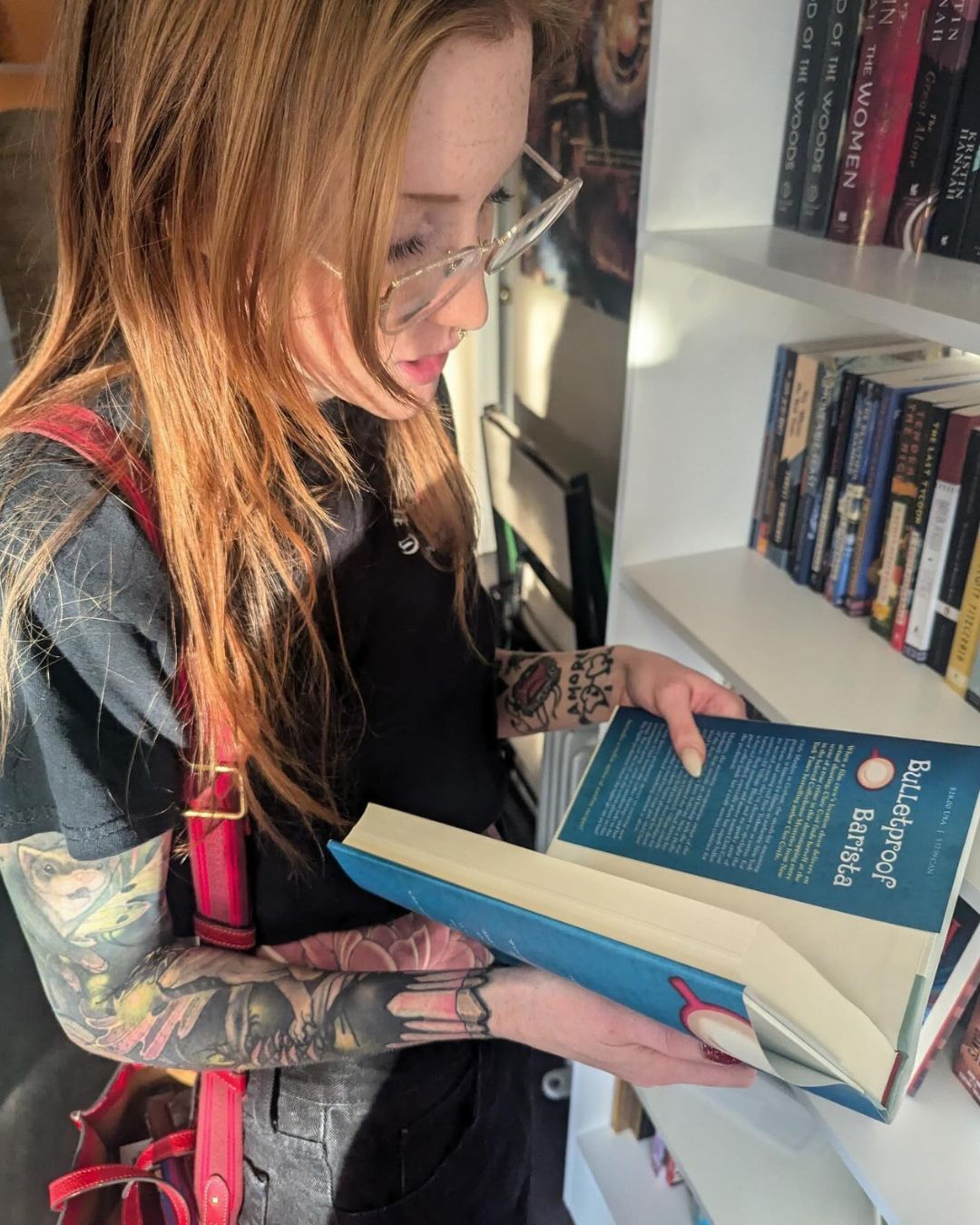
In this context, another cultural trend explodes: the return of reading as a collective gesture. Book clubs become the new social device for thought. Not closed, dusty clubs, but pop, aestheticized book clubs. Because they respond to a precise need: turning a solitary act into a shared experience. Reading together to speak better together. When Dua Lipa interviews Margaret Atwood for her book club, it’s not an editorial operation. It’s a powerful cultural signal: intellectualism enters pop culture as an aspirational element. In a world where everyone comments on everything, the book remains one of the last objects that allows depth without appearing outdated.
@rosieoko 2026: The age of Analog What analog swap would you be most tempted toward, let me know in the comments This year we have slowly seen the rise of nostagia and a clear craving for community from in person look alike contests the most recent seeing hundreds of people showing up for a 5 min cigarette break, to the switch from iphone photos to the old digital cameras you used as a teen as well as the viral analogue bag and yes the irony of that doesnt escape me lol people are redefing their relationships with technology, and its clear they are yearnign for real llife comunity. Old I pod are getting more expensive, so if you want one try find your old one and save money, as the generation who grew up online are slowly relasing that we dont really own anything, instead we have countless subscriptions that, which mean with a few missed payments or a forgotten password, we can lose years of our audio visual collections. and the concept of a digital dark age suddenlt becomes alot more personal. along with social media becoming an increasingly divisive space, what was once an escape from reality and a way to find a community and friendship has become the space many of us are trying to escape. so in 2026 we are going to see people moving towards analog hobbies, like scrap booking or even crochet, to CD players instead of apps and cinema trips instead of streaming. #analog #2026trends #offline #digitaldetox original sound - rosieoko
Culture as lifestyle, not ornament
This movement connects to a broader trend spanning fashion, design, art, and communication: culture stops being decorative and becomes an operational lifestyle. It is no longer something you “consume” to appear cultured. It’s something that filters your choices, your language, your relationships. Saying “this is where I stand,” within a certain cultural imaginary, becomes more meaningful than saying “this is what I own.” It’s no coincidence that the most attentive brands are entering this space: Miu Miu with its literary club, Shopify with its own Substack, museums transforming reading into social capital, selling not products, but symbolic belonging.
Cultural niches as a response to the masses
At the same time, the mass audience fragments. Large, undifferentiated publics lose relevance. Niches grow. Those who manage to build a cultural niche today build a community that is more loyal, more participatory, and more monetizable tomorrow. Because AI can generate content, but it cannot generate belonging.
Destinations beyond the ordinary
2026 will be the year we discover new destinations outside traditional tourist circuits. Overtourism, like hyper-presence on social media, has made the desire for authentic exploration even more urgent. Changing scenery without feeling compelled to post it will create a profound social and cultural shift.
@curatedbykaylaco sorry, I don’t make the rules #niche #2026fashion #2026 original sound - Renji
2026: the year of awareness
All these signals converge on one keyword: friction. 2026 will not be the year of simplification, but of choice. We won’t consume less content overall, we’ll consume less useless content. The new prestige won’t be saying “I’ve seen it,” but saying “I’ve thought about it.” The social exit will not be a silent abandonment. It will be a cultural repositioning. Those who today invest in media literacy, intellectualism, newsletters, podcasts, and communities are not chasing a trend, they are building the symbolic infrastructure of the next decade.
What to read next
All the full moons of 2026
What does this new year full of beautiful lunar moments have in store for us?

The network of patients fighting endometriosis
Training, schools and early diagnosis: the association's budget for Volunteer Day.