










































A guide to Houses in astrology To read your birth chart in an even more complete way
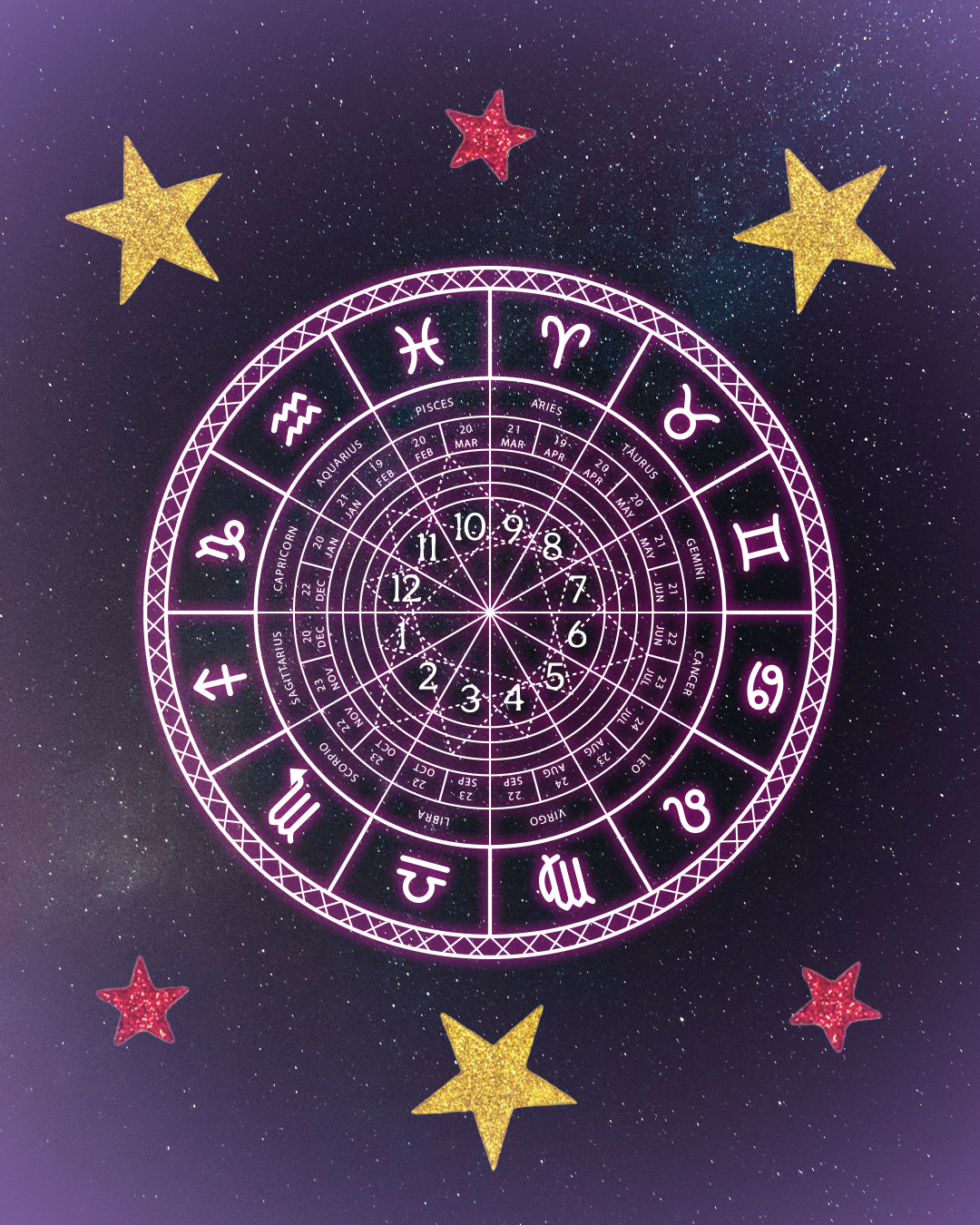
You know when you look for a website or download an app to discover your birth astrological chart? The information you get in return is often a lot, and not always easy to interpret. For instance, next to the pairing of planets and zodiac signs (I have Venus in Scorpio, what about you?) there’s usually a little number. That number indicates the house where the planet and sign were located at the time of your birth, and it also has a very specific meaning.
Astrological houses: meanings and effects
House I
The first house begins with the Ascendant line, the point of the zodiac that intersects the eastern horizon at the time of our birth. It’s therefore the zodiac sign that was rising at that exact moment. The Ascendant is the starting point of a birth chart and expresses our instinct, our primary experience, and the most immediate manifestations of who we are, such as physical appearance, behavior, autonomy, and the way we express ourselves in the world.
House II
The second house, on the other hand, deals with possession and property. Essentially, how we relate to these themes. That’s why it’s called the House of Money. Depending on the planet and sign found here, it’s possible to infer something about our financial situation, or better yet, our ability (or desire) to generate profit. It reveals how we occupy space, how we recognize our own value and that of others, and the way we appreciate and use our resources.
House III
The third house represents our immediate social world: family, siblings, neighbors, and close acquaintances. It explores our ability to manage this network of small, everyday relationships. It’s the house of communication and intellect, but also of conflict and accidents. It reflects the ideals we seek in a partner, our relationship with our parents, and our vulnerabilities.
House IV
The fourth house has a more philosophical nature. It’s linked to beginnings and endings: our roots, the environment in which we were born and raised, and how it has inevitably shaped us. It’s connected to traditions and heritage. It describes how we interact with all of this, as well as our relationship with our homeland. On the other hand, it also speaks of old age. In essence, it symbolizes our inner life from birth to death.
House V
Moving from the fourth to the fifth house, the focus shifts to creativity, desire, pleasure, leisure, sexuality, excess, and procreation. For this reason, it’s known as the House of Love of romance, passion, and children. It shows how we experience love, especially in its lighter, less committed form.
House VI
The sixth house brings us back to the everyday and domestic sphere. It governs how we deal with the ordinary things of life, like work, routines, even pets. Known as the House of Work, it reflects our personal effort, discipline, and sense of duty toward practical goals. It also relates to our relationship with our body, including how we dress.
House VII
After the ascending phase, the seventh house opens the descending phase. It corresponds to the west and to sunset, and concerns our relationship with everything outside ourselves, the encounter between individuality and others. How do we choose a partner? How do we handle relationships and marriage contracts?
House VIII
If the seventh house shows how we relate to the outside world, the eighth house reveals how we deal with loss. It represents separation, distance, escape, aspiration, and the will for change and transformation. It shows whether we tend to cling to the past or can let go and move forward positively. Separation here is meant broadly, it even encompasses death, our own and that of those close to us.
House IX
Here comes an expansion of horizons. The ninth house, also called the House of the Distant, symbolizes our contact with faraway places and foreign people. It represents journeys of the body and the mind: faith, religion, philosophy, and social ideals. It reflects our aspirations, our drive to go beyond the everyday, and our worldview.
House X
We’ve reached the peak. The tenth house, the highest point in the birth chart, represents our autonomy and independence throughout life. It’s associated with social and professional success, personal growth, and public recognition. Will we achieve prominence? Fulfillment? The answer may lie here. It’s also the House of Power and Ambition.
House XI
We can better understand the eleventh house by considering that it’s opposite the fifth. While the fifth governs excess and pleasure, the eleventh is the domain of moderation, sincere judgment, tolerance, and open-mindedness. Known as the House of Friendships, it represents shared ideals, hopes, and mutual support. It speaks of wishing well to others and also of managing disappointment.
House XII
And finally, the twelfth - the House of Vast Horizons - is about facing destiny and everything that comes with it. How do we handle our weaknesses? The challenges life inevitably throws at us? How do we deal with temptation? It’s also called the House of the Sublime, representing what goes beyond the ordinary, what rejects limits. It’s connected to sacrifice, but also to inner growth, introspection, and fate. It’s the house of past lives, solitude, and everything that tests us.
What does it mean if some houses are missing in our birth chart?
Now that we better understand what those numbers next to the planets in our birth chart mean, a natural question arises: what happens if some of them don’t appear or, in other words, if a house has no planets? There’s no need to worry. It simply means that there are no planets focusing their energy directly there, but the house still exists and functions, just not in a dominant way in our life or personal growth.
