






























Girls on fire: why female rebellion still shakes power Interview with Valeria Parrella and Fernanda Alfieri on the occasion of the Sarzana Festival of the Mind
On the occasion of the Sarzana Festival of the Mind, which takes place from 4 to 6 September 2026, the meeting Girls on Fire will be staged on Saturday, September 5 at 15:00 in Piazza Matteotti. Two exceptional voices will face each other: Fernanda Alfieri, historian of the modern age at the University of Bologna and an expert in the history of the body and sexuality, and Valeria Parrella, famous author (Strega finalist with Almarina and Mondello Prize with La Fortuna) who printed the novel La ragazzina for Feltrinelli in 2026. The starting point? The four fires of the past to be illuminated with the light of literary invention: the body as a limit and semblant; permission; truth; fire and water. We intercepted the two protagonists to take stock of social expectations, rebellion and why indomitable girls continue to scare those in power.
The interview with Fernanda Alfieri and Valeria Parrella on the eve of their speech at the Sarzana Festival of the Mind
How can you make a girl between the Middle Ages and the Renaissance speak by leaving her authentic voice, without reducing it to a simple symbol or a modern-day heroine?
Fernanda Alfieri: The pacts must be clear immediately, the intentions declared. What do we want to know about her? From what point do we observe it today? What traces of that girl do we have? History as a discipline teaches us that we can never hear his authentic voice. There is always a filter between us and them, and we must take note of this. But we can call together as many voices as possible, as many sources as available, to get an idea of his world. We must not stop looking for his voice.
Valeria Parrella: I use the voice of literature, in the sense that I write novels. So I can make up any voice. For Giovanna I chose Joan of Arc. I chose the voice of an ordinary girl, then of the girl that was me. And the voice of the girls who are in our mothers, in our grandmothers. The girls' voices. In fact, the book is called La ragazzina, which is also the translation of the filly. But it's also the voice of a young girl.
Between cloister and marriage, the female body in the past was an object to be disciplined. Today do we still ask girls for the same docility or have we just changed the shape of the cage?
Fernanda Alfieri: For about fifty years now, many barriers have fallen: women can break an unwanted marriage, the cloister is not an imposed road. There are tools to choose a pregnancy and not suffer it. Sexual violence is no longer a crime against morals, but against the person. But cages have many forms, and the bars are rooted in a widespread, everyday, common culture, for which society has not taken lucid and full responsibility.
Valeria Parrella: I would have liked to answer this question differently, but unfortunately for some time the Government has been thinking of passing a law to penalize minors between 14 and 18 years old, so clearly we still want to burn them all at the stake. Nothing has changed.
One of your 'four fires' is the subject of permission. In the era of girl power, how much does the choice to “discard to the side” and reject the expectations of others really cost today?
Fernanda Alfieri: Are we sure that an era of girl power has begun? Where? For whom?
Valeria Parrella: I recently spoke with a very good reader, Carol Di Tommaso, the director of Mamma Non Mamma, a very beautiful film about motherhood born in a marriage between two lesbians. She told me: “This book taught me that I don't have to ask permission to be the way I am.” So it already seems like basic permission to me, doesn't it? Which, on the other hand, is not required of men.
Female youth is a no-man's land, where everyone has a plan for you but yourself. What is fierce, immutable and salvific about being a 'girl', yesterday like today?
Fernanda Alfieri: For centuries, if we look at the European area, communities have given a paradoxical importance to the girl. From childhood, families plan their fate: they prepare a good marriage, which benefits everyone (not necessarily her, and not necessarily by consulting her). They find a safe place to keep her virtue and honor, in prayer (even in this case, not necessarily an ideal place for her, and not necessarily consulting her when choosing). The third way is considered to be full of pitfalls, not only because the girl is considered fragile and at the mercy of herself, and because a widespread legal culture does not give her full capacity, but also because in some way the community fears her. What if she is destabilized by her strength? If his behavior brings disorder, seduces, messes up? After all, this is an attribution of power, in the name of subtraction.
Valeria Parrella: In my novel, I show a scene that is historically attested: when Joan of Arc enters the room of what will be the future king of France and he is not found on the throne, but on a side bench. It is a scene that was later indicated in the hagiography as a sign that she had understood who the king really was, at a time when there was not even an image on the coins, in which the faces could not be known. She comes and goes straight. I created a scene in which, later, the king drives everyone out of the room and starts to cry, and I say: this is why they gave her a throne, they dressed her as a boy, even though they knew that this would lead to excommunication. Because indomitable little girls, if they reach a king, make him cry.
What to read next

Liu Jo feat. Elodie through the popstar's words
“This second drop is designed to be experienced daily with the same energy with which I live a live show.”

“The dress is not only an expression of self, but an element capable of telling stories”
Interview with Cecilia Molardi, the designer who transforms every collection into a story to wear
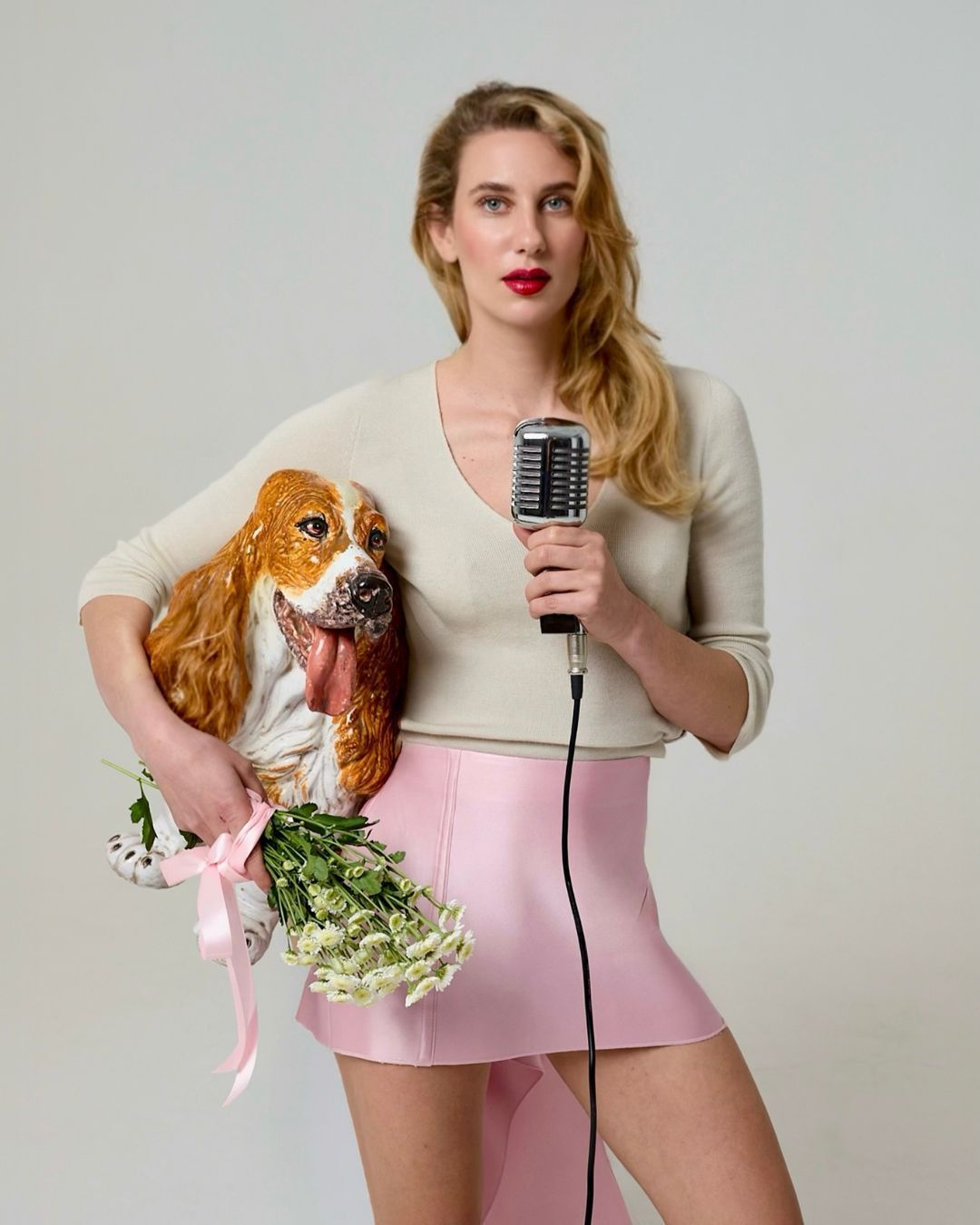
“This show is going to be very real. Perhaps more than the others”
Interview with Giada Biaggi, an all-rounder comedian author soon in the theater with a new show