































Exhibitions to see in Italy in July 2026 The cultural stops to add to your summer itinerary
Summer has arrived. Cities empty out, people compulsively check apps for Sardinia’s tides and flights to Porto, social feeds fill up with filtered sunsets, and the brain officially switches into granita mode. Yet for those who would rather trade the beach umbrella (and the usual summer book) for a generous dose of contemporary art, photography, painting, and reflections on the present, Italy offers a surprisingly rich exhibition calendar. July speaks of memory and personal archives, fluid identities and temporary homes, industrial landscapes transformed into visual poetry, and bodies that become political instruments. There is room for the corrosive irony of Erwin Wurm, the revolutionary color photography of Harry Gruyaert, and the radical works of Miriam Cahn, but also for lesser-known artists who deserve every bit of attention they can get. From Trieste to Gibellina, passing through Milan, Turin, Venice, Rovereto, Bologna, Lecce, and Rome, here are the exhibitions worth adding to your agenda before summer turns into nothing more than a succession of brunches and weekend getaways.
Exhibitions to see in Italy in July 2026
Ila Bêka - Trieste
Some people keep their photographs neatly organized in albums; others, like Ila Bêka, spend forty years collecting images until they build an archive of nearly 300,000 photographs. FOTONI, hosted at Magazzino delle Idee in Trieste, emerges from this almost dizzying accumulation and represents the first major opportunity to enter the most personal dimension of the Friulian artist and filmmaker’s practice. Internationally known for his cinematic work developed alongside Louise Lemoine, Bêka has always explored the relationship between people, spaces, and architecture. Here, however, the focus shifts to the very act of looking. The exhibition features more than three hundred images selected from a vast archive built day after day through travels, encounters, movements, and seemingly insignificant moments. The title refers to the particles of light that make vision possible, but there is nothing coldly scientific about the exhibition. On the contrary, it functions as an open diary. It is precisely this freedom that makes FOTONI the ideal exhibition for anyone who loves observing the world through its smallest details.
Title: FOTONI
When: Until October 11, 2026
Where: Magazzino delle Idee, Trieste
Davide Stucchi - Milan
Is home really the place where we can be ourselves? Or, in an era of endless moves and impossible rents, has it become a constantly rewritten stage set? With Temporary Rooms, presented in the Impluvium space of Triennale Milano, Davide Stucchi, whose work has always moved between contemporary art, design, and material culture, turns dwelling into a months-long performance. The artist constructs a sort of temporary apartment enclosed by construction-site fencing, as though a renovation were never meant to end. Each room appears according to a precise schedule, and throughout the summer the project moves through different configurations, as if the home itself were a living organism. Everyday objects are dismantled, reassembled, stripped of their original function, and inserted into new narratives. A lamp, a chair, or a furnishing element suddenly ceases to be what it seemed. In July, the exhibition enters the phase dedicated to the bedroom, following previous chapters focused on the bathroom and living room, continuing the process of mutation that makes every visit different from the last. The result is a subtle yet highly relevant reflection on contemporary precarity.
Title: Davide Stucchi. Temporary Rooms
When: Until October 4, 2026
Where: Triennale Milano, Milan
Harry Gruyaert - Turin
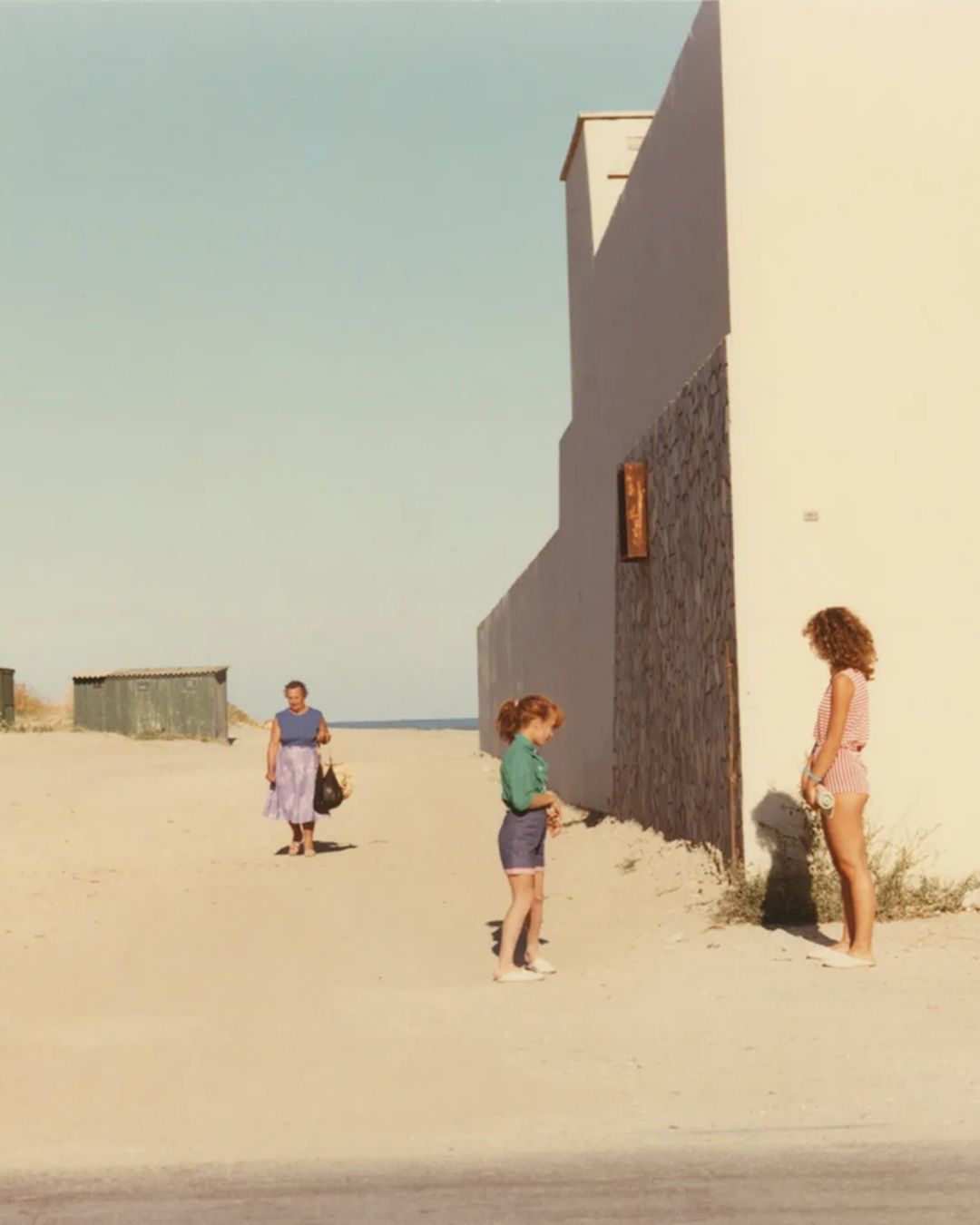
Today we are so accustomed to the hyper-saturated imagery of social media that it is difficult to remember how revolutionary the use of color in photography was during the 1970s. Yet Harry Gruyaert was one of the artists who contributed more than anyone else to transforming it into a true expressive language. The major retrospective hosted by CAMERA Torino retraces more than half a century of his career through images from his travels across Europe, Africa, the Middle East, India, and the United States. A member of Magnum Photos since 1982, Gruyaert has always used color not merely as a descriptive element but as narrative material. His photographs do not necessarily tell a story; they create an atmosphere. A red wall crossed by a solitary figure, an electric sky above a deserted road, a geometry of light and shadow that seems to come straight out of a film. From the celebrated TV Shots, which captured the first color television screens, to photographs taken in Morocco, India, the United States, and the Middle East, every image possesses an immediate visual power while continuing to reveal details after prolonged observation. An unmissable stop for lovers of contemporary photography.
Title: Harry Gruyaert. Retrospettiva
When: Until October 4, 2026
Where: CAMERA Torino, Turin
Bernd & Hilla Becher - Bologna
Bernd and Hilla Becher devoted their lives to photographing the same thing. Or almost. Water towers, blast furnaces, silos, mines, industrial plants, structures most of us would pass without a second glance become the undisputed protagonists of their images. The major retrospective organized by Fondazione MAST in Bologna brings together more than 350 original photographs and offers a deeper understanding of the historical significance of their work. Beginning in the 1960s, the German artists developed an extraordinarily rigorous method for cataloguing European and American industrial architecture. Frontal photographs, neutral skies, and the absence of distracting elements: everything appears governed by almost scientific precision. Yet, when viewed one after another, the images reveal something surprisingly poetic. The subtle differences between structures transform the whole into a kind of atlas of twentieth-century industrial forms. The exhibition also highlights the enormous influence the Bechers exerted on later generations, from the Düsseldorf School to many contemporary artists. This show may well change the minds of those who think industry cannot be romantic.
Titolo: Bernd & Hilla Becher. History of a Method
When: Until September 27, 2026
Where: Fondazione MAST, Bologna
Erwin Wurm - Venice
Walking into Museo Fortuny and finding giant cushions with human limbs, bodyless clothes, and sculptures that seem to have emerged from a fever dream is an experience that is not easily forgotten. With Dreamers, Erwin Wurm brings one of the most important contemporary art exhibitions of the year to Venice. Long interested in redefining the concept of sculpture, the Austrian artist uses absurdity as a philosophical tool. His celebrated One Minute Sculptures invite visitors to become the artwork itself, while his more recent works reflect on identity, consumerism, and the social construction of the individual. The dialogue with the historic interiors of Museo Fortuny adds another layer of interpretation. On one side stands the decorative and theatrical sensibility of the past; on the other, a contemporary vision that continually dismantles convention.
Title: Erwin Wurm – Dreamers
When: Until November 22, 2026
Where: Museo Fortuny, Venice
Anselmo Bucci - Rovereto
Some artists have been placed at the center of art history, while others, despite their importance, have remained at its margins. Anselmo Bucci belongs to the latter category. The major exhibition at MART Rovereto seeks to restore his rightful place through more than 150 works that tell the story of a central figure in twentieth-century European culture. Painter, engraver, illustrator, writer, and tireless traveler, Bucci lived through some of the most intense chapters of European modernity. Paris, Milan, the avant-gardes, the World Wars, and the Italian cultural debate all passed through his gaze. The works on display reveal an artist capable of engaging with modernity without sacrificing a strong stylistic independence. The MART retrospective is both an opportunity to discover Bucci and a chance to reread twentieth-century Italy from a less predictable perspective, highlighting international cultural networks that are often overlooked.
Title: Anselmo Bucci (1887–1955). The Age of the Twentieth Century Between Italy and Europe
When: Until September 27, 2026
Where: MART, Rovereto
Gianni Bertini - Lecce
At Fondazione Biscozzi Rimbaud in Lecce, a portrait emerges of an artist who made disobedience a daily practice. Gianni Bertini. Story of a Man Without a History retraces more than twenty years of research by one of the most restless artists of the postwar period. From the Gridi series of the 1940s to the experiments of Mec-Art, the exhibition highlights an extraordinary ability to anticipate themes that today seem completely familiar. Numbers, letters, photographs, advertisements, and images from mass culture progressively entered his work, creating a visual language that conversed with New Dada and Pop Art without ever fully subscribing to any label. Looking at these works today, one almost gets the impression that Bertini had already foreseen that the future of art would pass through reproduction, seriality, and media culture, eventually leading to the visual saturation that characterizes our present.
Title: Gianni Bertini. Story of a Man Without a History
When: Until September 13, 2026
Where: Fondazione Biscozzi Rimbaud ETS, Leccee
Nazar Strelyaev-Nazarko - Milan
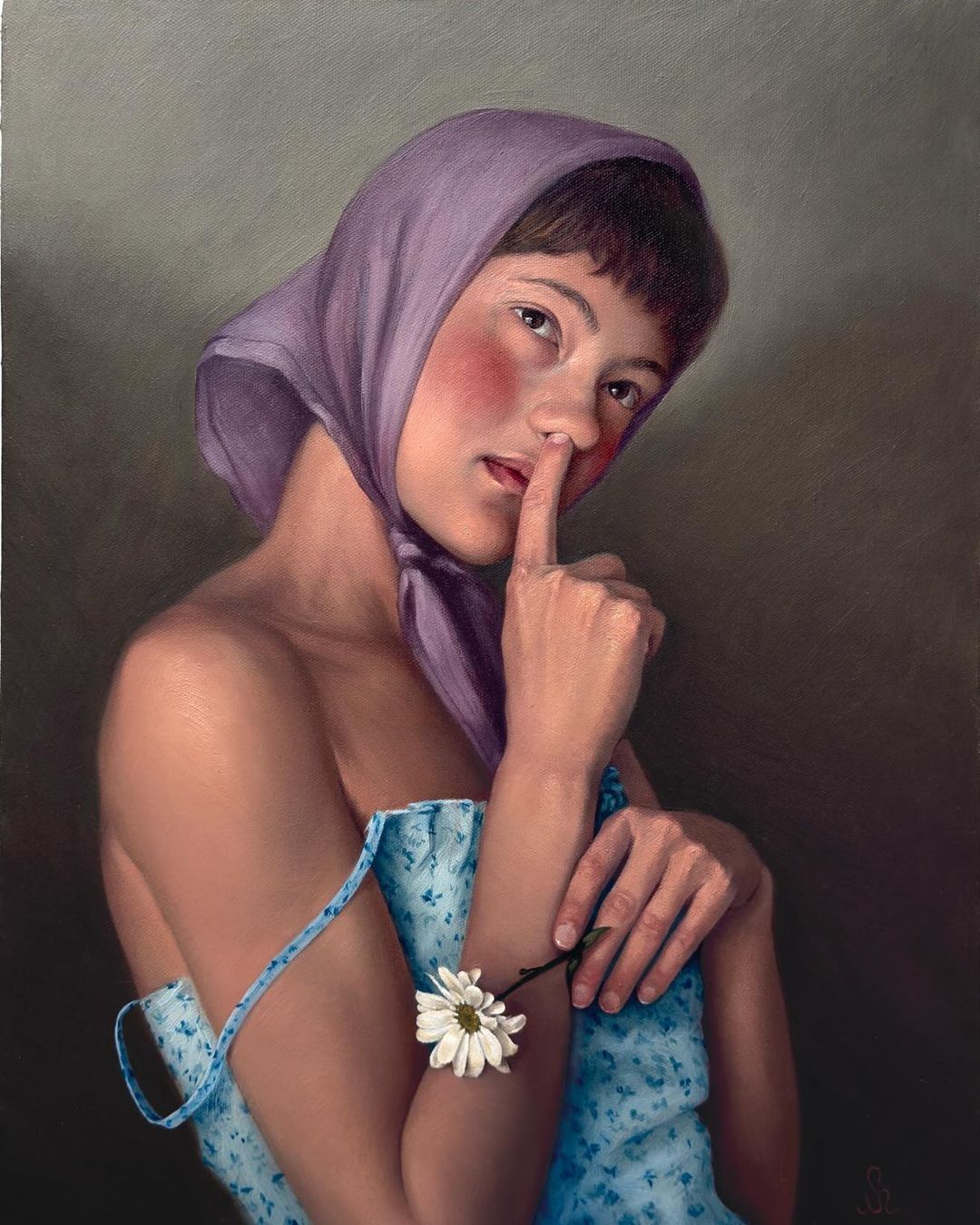
The title promises lightness. The works, however, tell a far more complex story. With The Happy Generation, Ukrainian artist Nazar Strelyaev-Nazarko brings to Ncontemporary an exhibition that addresses memory through a refined and surprisingly emotional painting practice. The protagonists of the paintings are often ordinary objects, clothes, blankets, makeshift forts built during childhood. Elements that everyone recognizes and that, precisely for this reason, trigger an immediate response. Behind the domestic dimension emerges a broader reflection on the fragility of generations raised amid major geopolitical shifts and new forms of uncertainty. Strelyaev-Nazarko’s painting possesses an almost cinematic quality, capable of transforming small scenes into universal narratives. Among Milan’s exhibitions this summer, it is one of the most intimate and, at the same time, one of the most capable of speaking to a wide audience.
Title: The Happy Generation
When: Until September 5, 2026
Where: Ncontemporary, Milan
Domestic Displacement - Gibellina
In recent years, words such as home, belonging, and rootedness have become increasingly unstable. It is therefore no surprise that many contemporary artists have begun questioning these concepts. Domestic Displacement, at the MAC in Gibellina, addresses the theme in a direct and ambitious way. The exhibition brings together fifteen international artists from diverse geographical and cultural backgrounds, including Mona Hatoum, William Kentridge, Shirin Neshat and Regina José Galindo. The works engage with migration, forced displacement, exile, and identity formation, operating through emotions, absences, and memories. There are no simple answers and no slogans. Instead, the exhibition creates a kind of emotional and political geography of contemporary life, capable of connecting individual experiences with global dynamics.
Title: Domestic Displacement
When: Until September 27, 2026
Where: MAC Museo d’Arte Contemporanea Ludovico Corrao, Gibellina
Miriam Cahn - Rome
Miriam Cahn is one of the most radical figures in contemporary European art, and this major exhibition in Rome offers a journey through more than fifty years of her practice. The exhibition includes more than one hundred works, ranging from paintings and drawings to installations and environmental pieces. The themes are those that have always defined her work: the body, desire, vulnerability, war, memory, and power relations. These subjects are approached without filters and without any intention of reassuring the viewer, emerging through a physical, urgent, and often unsettling painterly language. The celebrated room installations amplify the power of her work even further. On one side is Herumliegen, conceived in response to Russia’s invasion of Ukraine; on the other is Familienraum, dedicated to the intimate geographies of family memory. The result is an exhibition that refuses neutrality. Cahn seeks neither consolation nor critical distance. She asks viewers to look, and, above all, to allow themselves to be looked at by the images.
Title: What Looks at Me
When: Until November 11, 2026
Where: MACRO, Rome
Alessio Ramundo - Cogolo di Peio
From July 4 to September 27, 2026, the rooms of Palazzo Migazzi will open their doors to Utensili Obliati, an exhibition curated by designer Alessio Ramundo. The result of a meticulous five-year field research project, the exhibition brings together a selection of original tools from Val di Peio and Val di Sole, connected to the historic linen and wood production chains, bringing to light a heritage of objects, gestures, and knowledge that the evolution of industrial processes has progressively made invisible. The exhibition is not intended to be merely a nostalgic or ethnographic display; Utensili Obliati presents itself as an urgent and contemporary reflection on the relationship between production, memory, and territory. While industrialisation has rightfully rendered these tools obsolete, the real risk today is the disappearance of an invaluable intangible cultural heritage: a practical intelligence and embodied experience that cannot be passed down through books or archives, but only through everyday practice and repeated gestures.
Title: Utensili Obliati
When: until September 27, 2026
Where: Palazzo Migazzi, Cogolo di Peio