










Nori Studio and Elisa Pini tell us that the future (and art) is punk Interview about the Bruma project
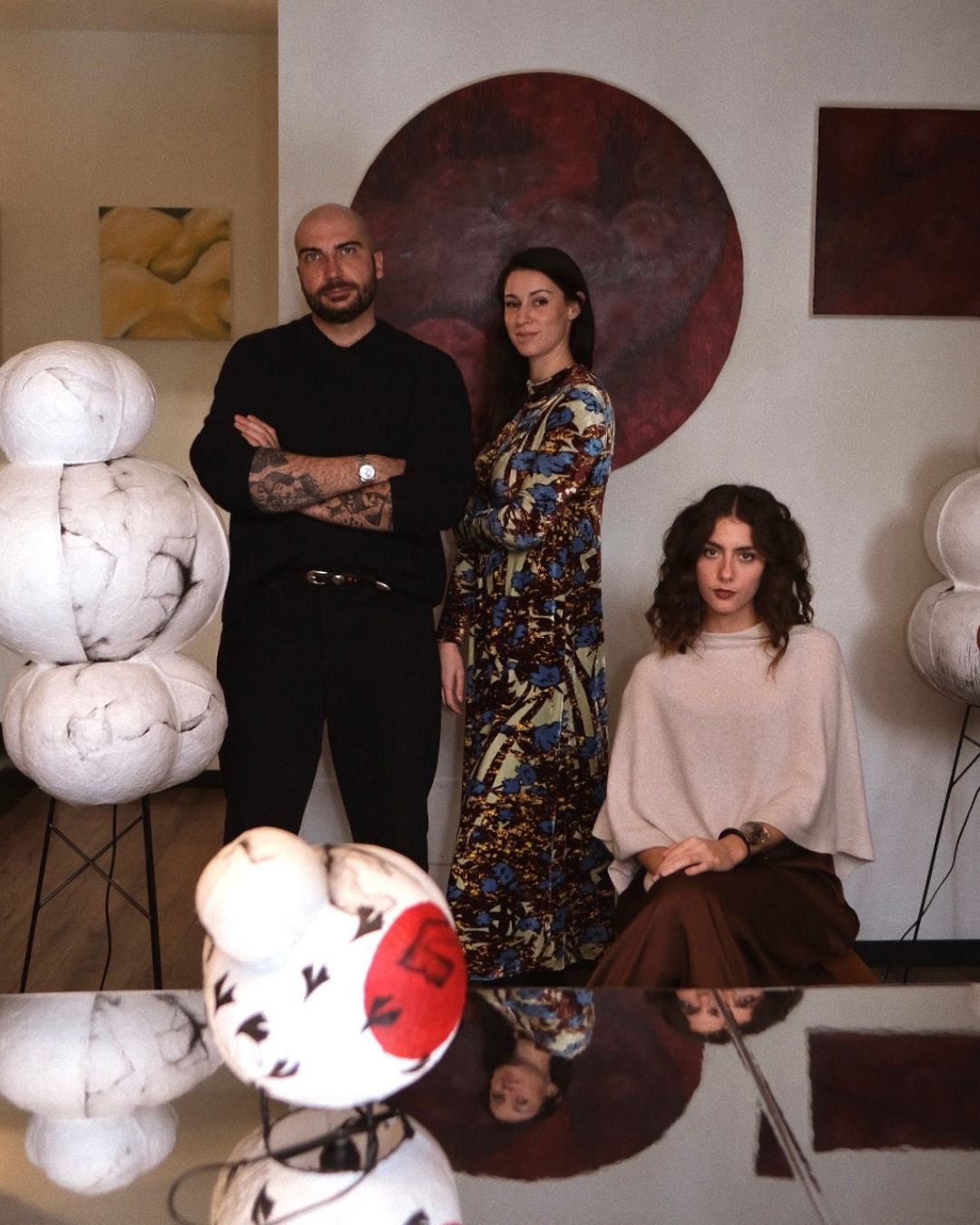
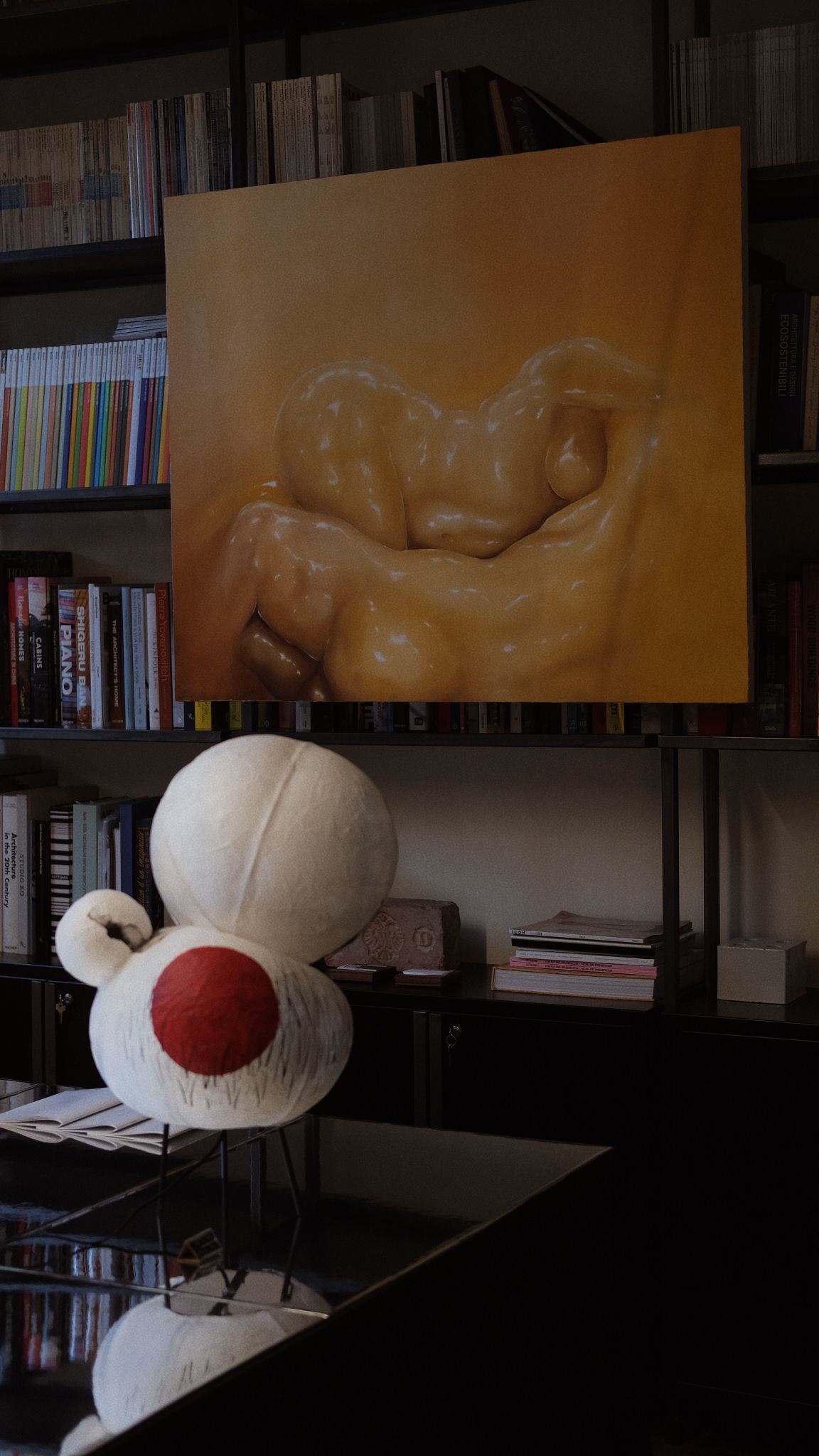
The Milan-based architecture and design studio Nori Studio is tucked away in a somewhat hidden corner of the city, inside a building that is notoriously difficult to enter and leave due to a system of doors and gates whose secrets are jealously guarded by the residents. At the entrance of the space led by Jacopo Nori and Francesca Marengo, on the occasion of the second chapter of their creative format, in which they collaborate with young artists to create new design objects born from these encounters, we are welcomed by Bruma: a creative meeting, a fluid world made of bulbs and paper, colors and bodies that are at once evanescent and material. On one side is the work of Elisa Pini, which engages with the liquid, the dissolved, the lightness of the body that stems from its own materiality, transformed into water, bubble, or vapor. On the other is Nori Studio, which through the creative workshop Alibi di Ferro produced, entirely by hand, rice paper lamps on which Elisa painted.
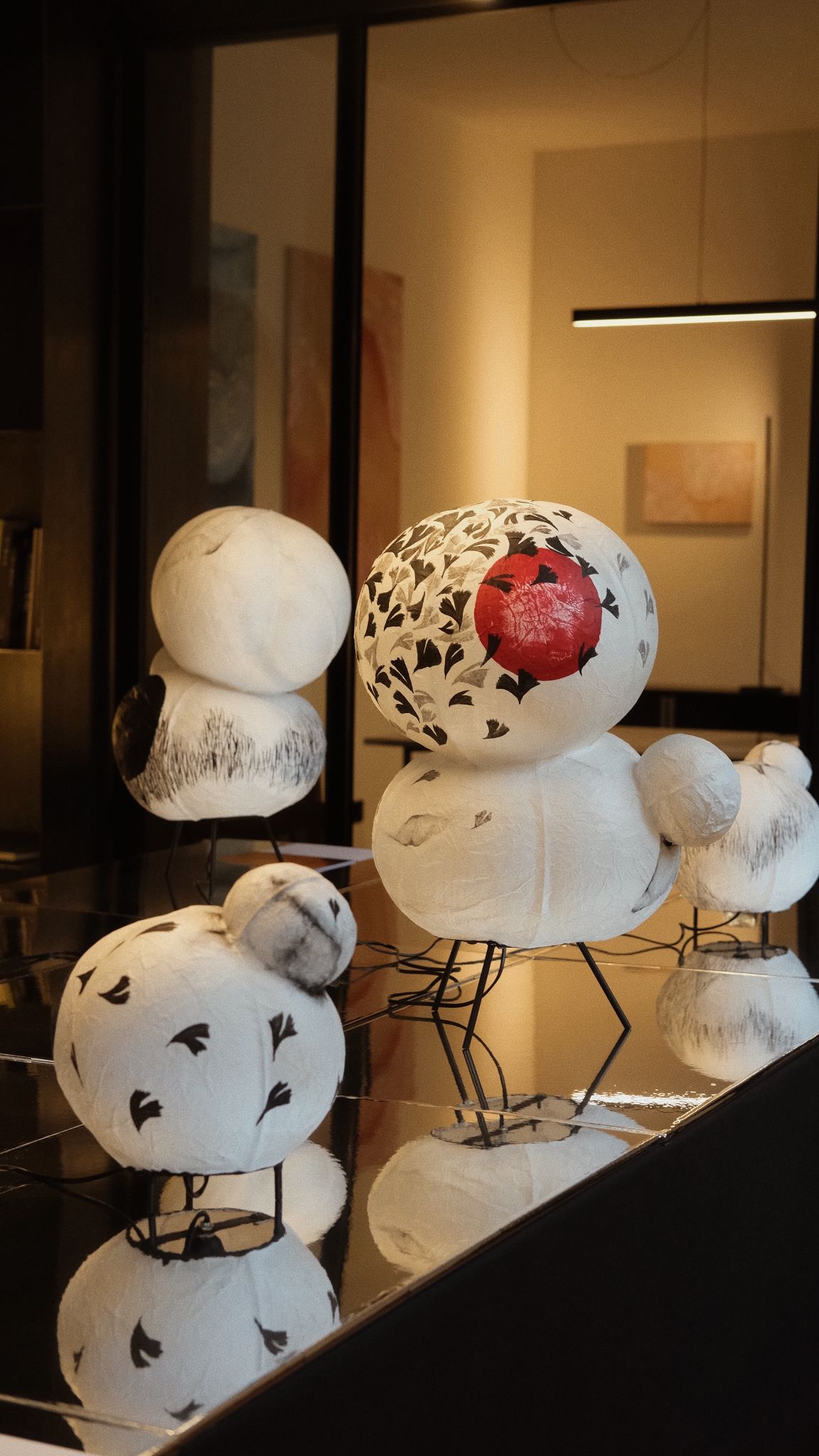
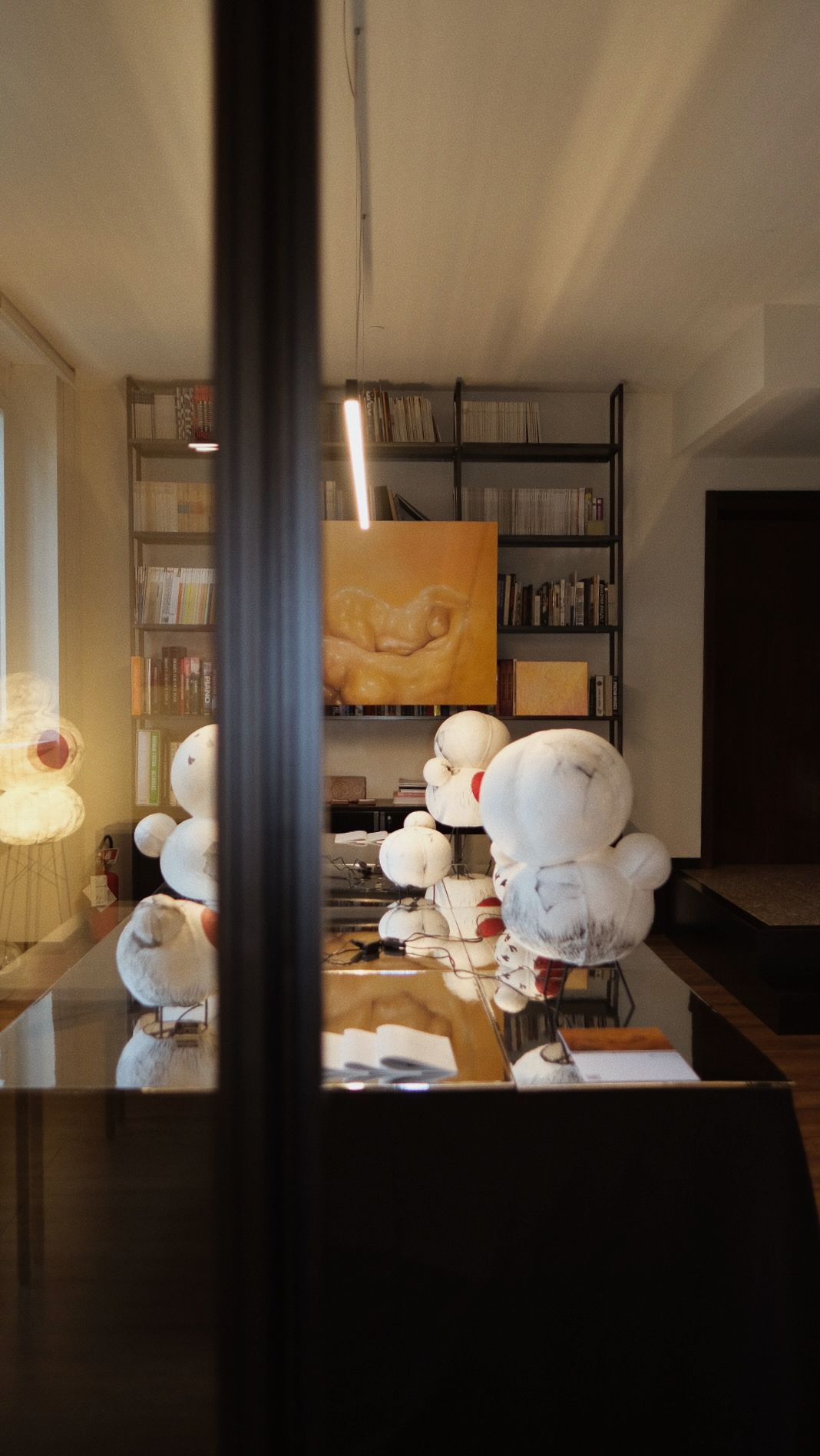
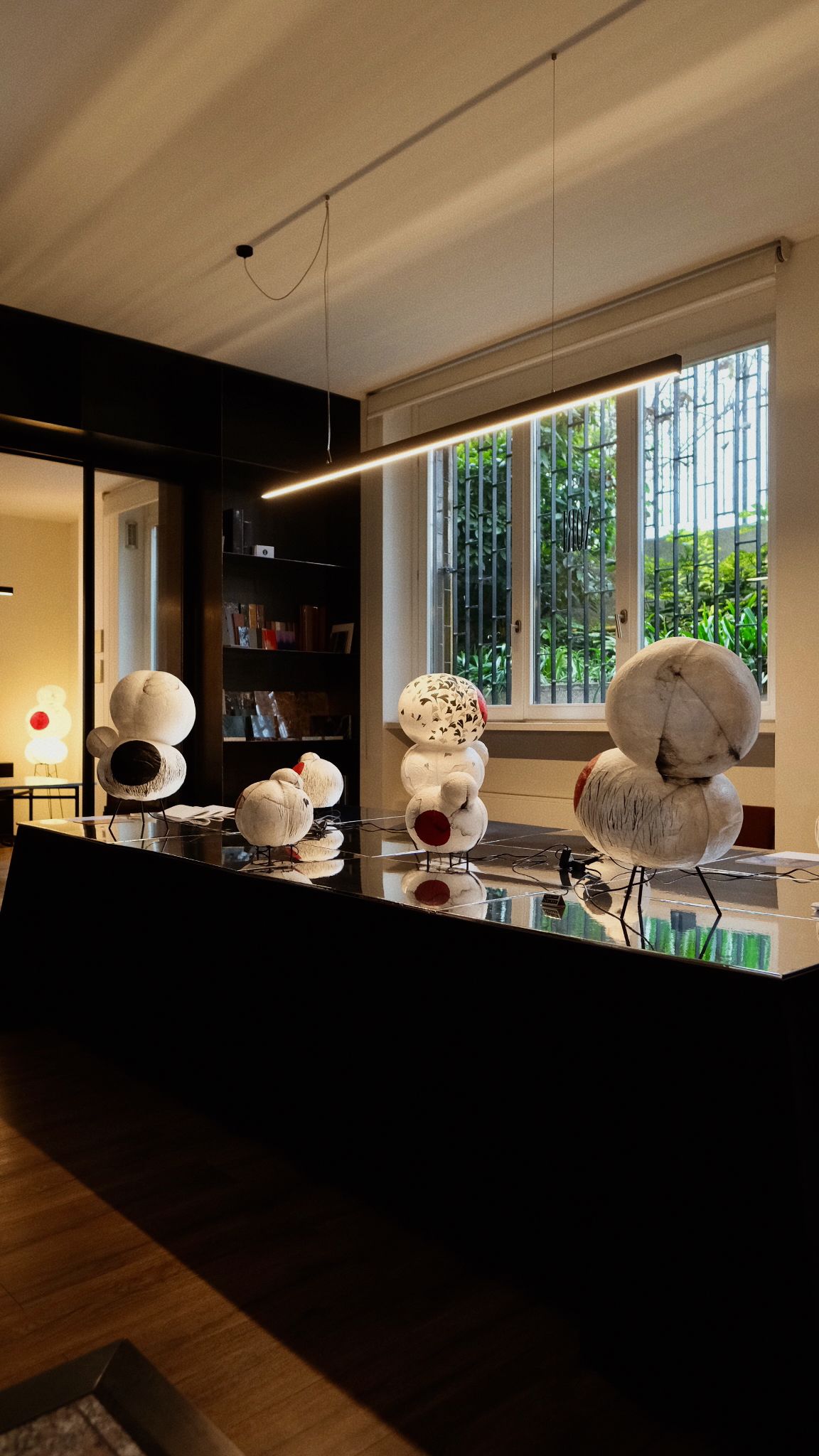
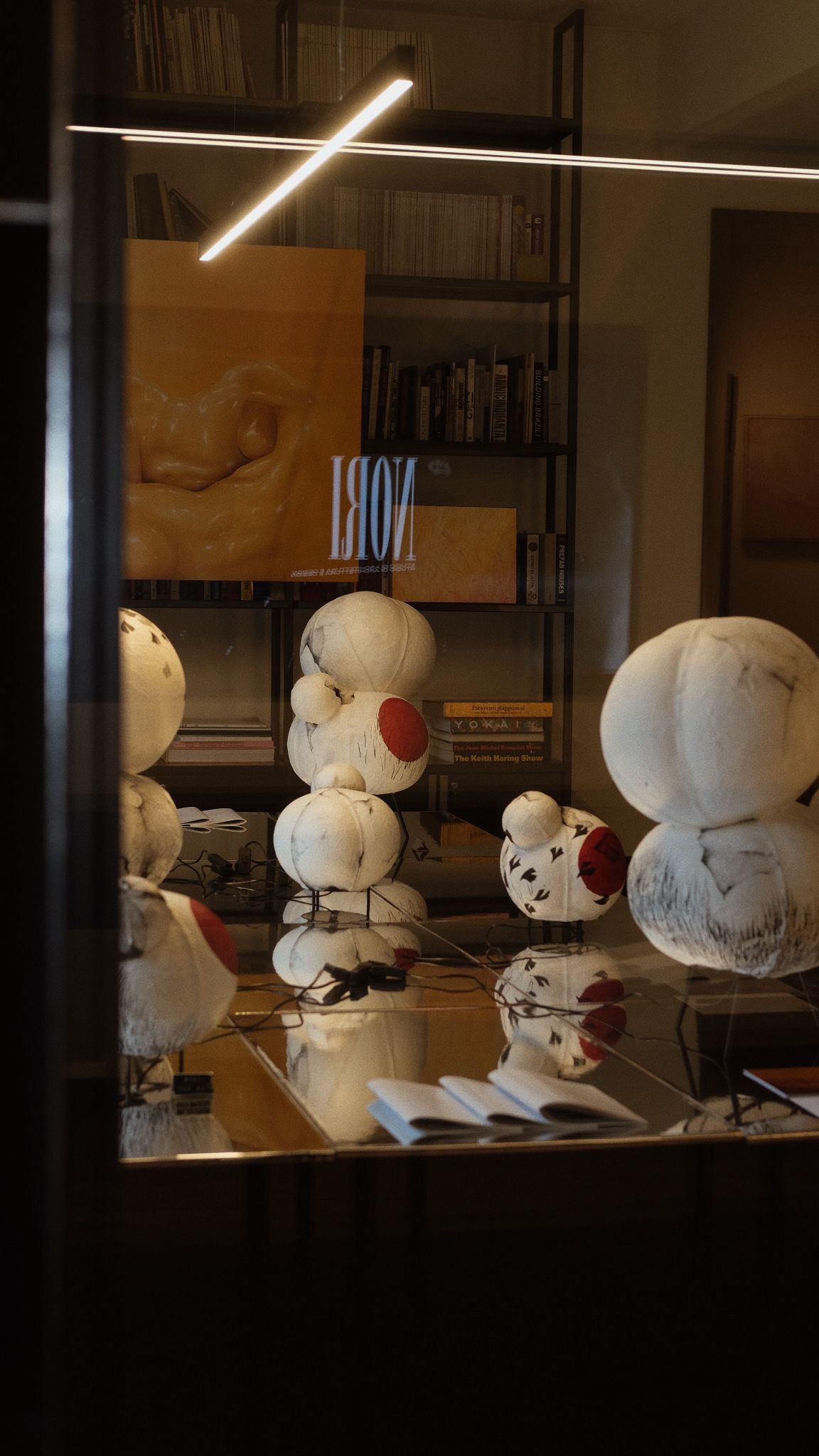
Each lamp has its own identity: no two are the same, and each one bears the traces of the hand gesture, the drying time, and the small variations that make an artisanal product authentic. A series of lamps conceived as sculptural canvases, surfaces designed to host and amplify the artist’s visual language. The result? A collection of luminous bodies that interact poetically with the space, creating soft, welcoming atmospheres.
Interview with Elisa Pini
Introduce yourself to our audience
My name is Elisa Pini, I’m 24 years old, I studied Painting at the Accademia di Belle Arti di Brera, and I currently live and work in Milan. I pursue a pictorial investigation focused on dualisms and on the evolution of the body through its fusion with the environment.
Define your artistic practice in three words
Hybrid, ethereal, immanent.
Your art explores the body in metamorphosis, often transformed into liquid, bubble, or vapor. What attracts you to this idea of fluidity and lightness?
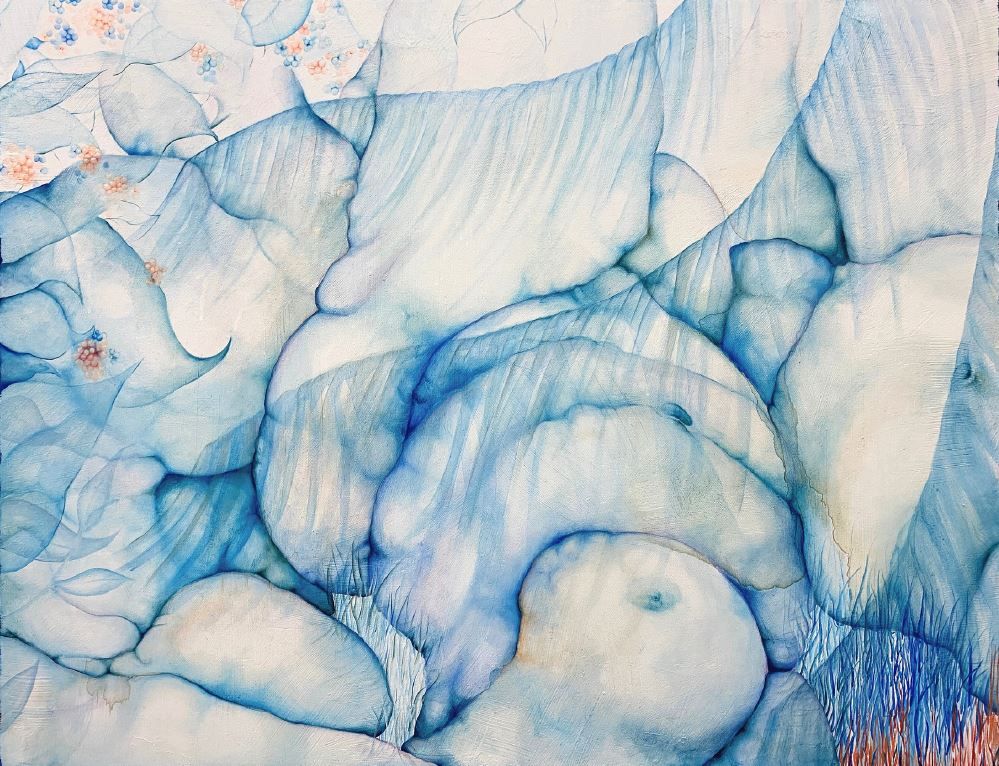
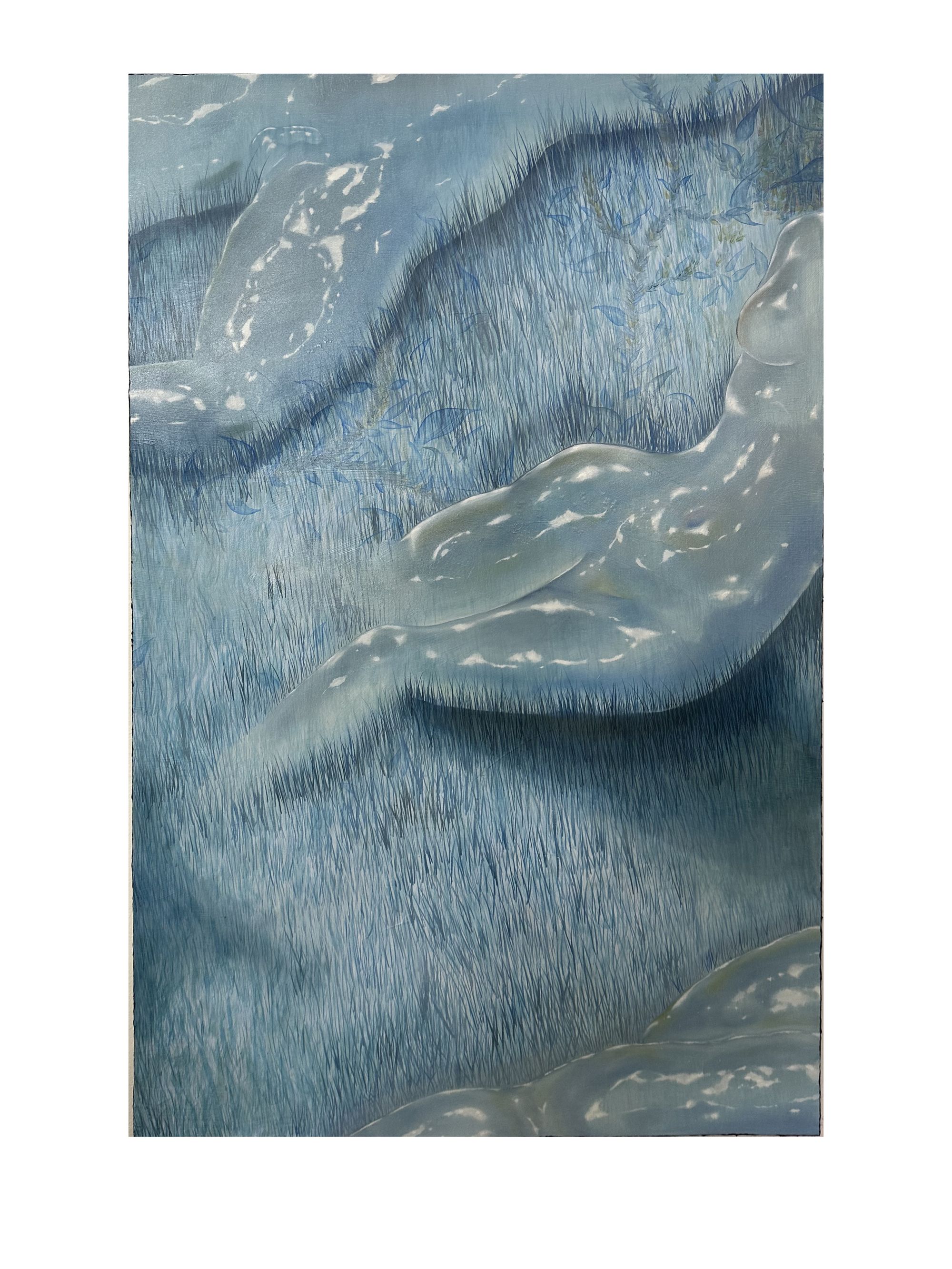
The Western vision of humankind is still tied to the Orphic idea that separates body and mind, where the body is experienced as the heavier, more cumbersome, sometimes painful element, while thought or the soul is associated with a higher dimension. I am interested in moving in the opposite direction, questioning this almost repulsive relationship with the body. Making it visually light and impalpable is a way of approaching this idea: sensitive figures, simple in their existence, yet also transparent, liquid, ethereal. They rest on a delicate aesthetic plane that I would like to offer relief, while at the same time reconnecting us to a natural dimension.

How would you define the relationship between body and space in your works?
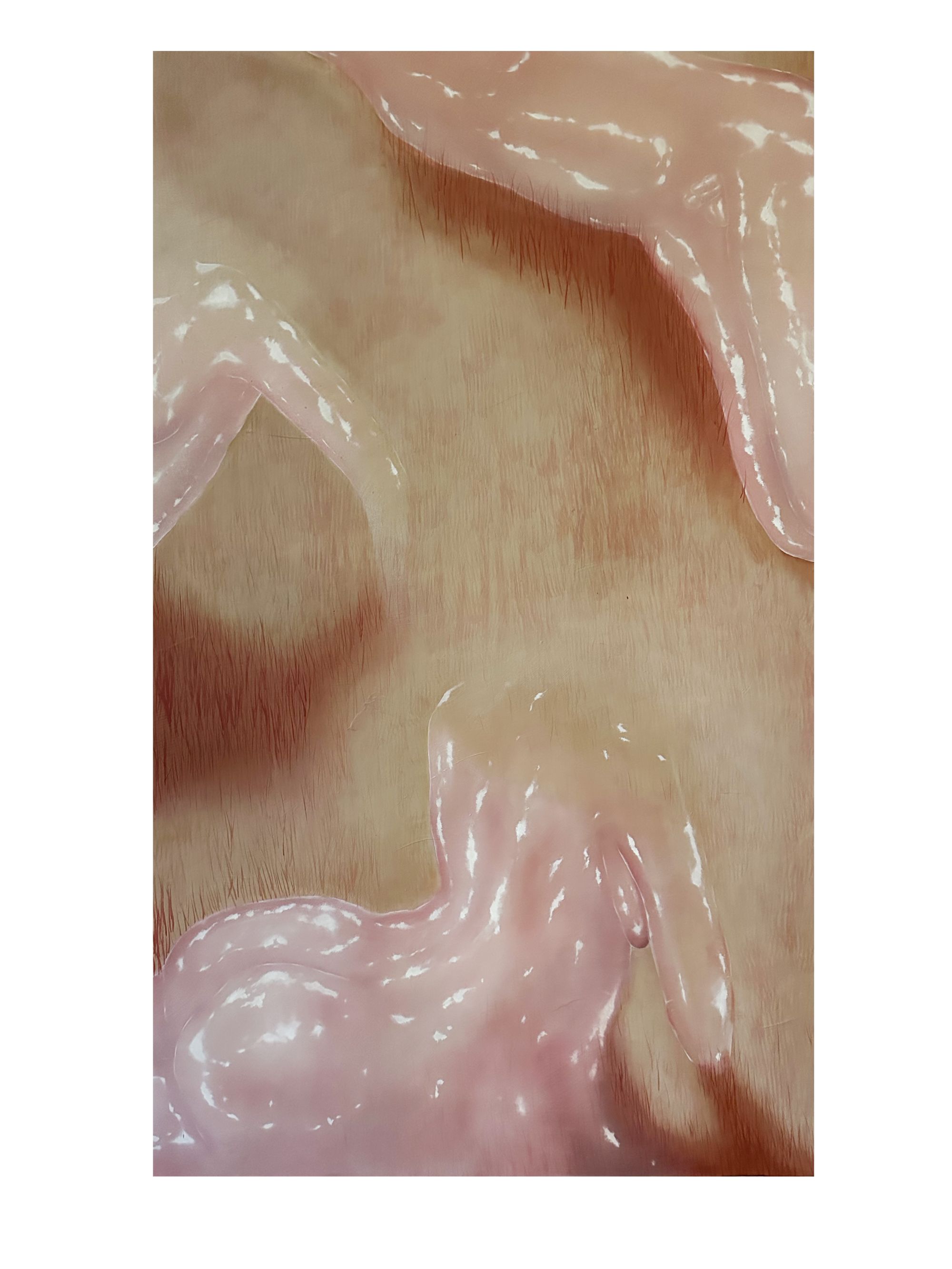
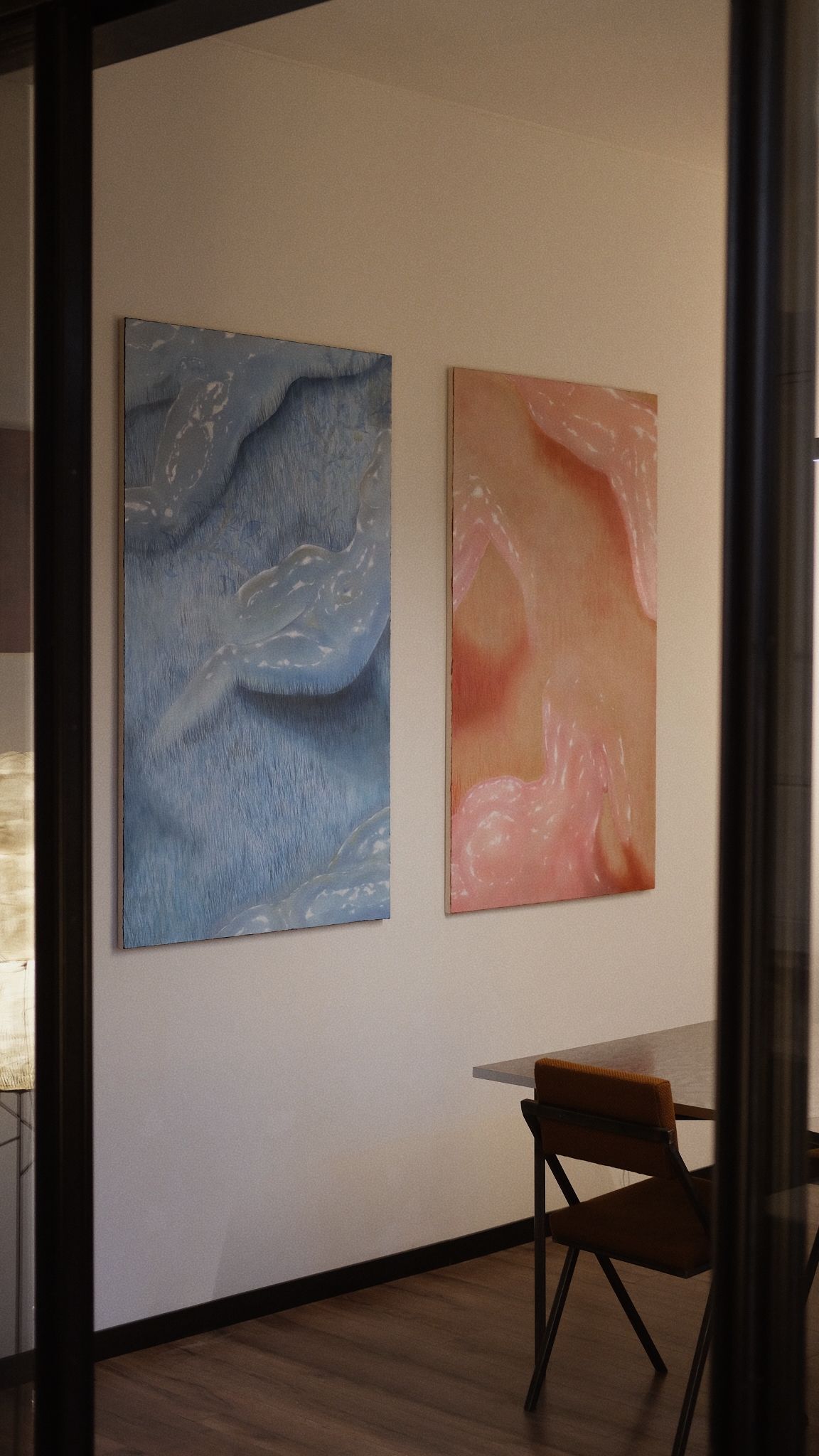
Space is always a natural, or at least neutral, space in which the body settles and begins a mutation, blending with it and starting to lose mass. I am interested in the idea of a change that happens as the viewer observes the canvas, as if it were taking place right before their eyes: the surrounding space becomes matter of the same substance as the body. At the same time, the body hybridizes with the environment, changing its state, moving from solid to liquid or gaseous, ceasing to have a clear boundary with what surrounds it and fading among the leaves, into fog or grass. It is a human form unaware of itself; it is the body that chooses to change, to evolve in this way in search of a kind of non-artificial salvation. Nature is at once a welcoming mother and a metabolism in constant motion. The symbiosis with the environment is a return to something bucolic and idyllic, but also a return to chaos, to the constant action of external agents.
The collaboration with Nori Studio brought your bodies from canvas to light, with lamps made of rice paper and iron. How did you experience the process of translating a pictorial language into a three-dimensional, functional object?
It was interesting to move into a different territory, both technically and conceptually. I am very attached to the two-dimensionality of the canvas and I try to push it to the extreme by isolating it with borders that, by separating it from the outside, create a sort of window through which to glimpse the scenes depicted. With the lamps this doesn’t happen entirely. At the base I still kept a black border, capable of creating a division between what I see as the beginning of the lamp and its upward development. At the same time, the painted forms are the same ones that make up the canvases, but on a support that already ideally recalls the morphology of a body, so that when the lights are turned on, the painted body merges with the body that is the lamp’s structure. It was challenging and fun to work on something that changes visually when turned on and off, echoing the dualisms addressed in my work, between body and mind and between body and natural element. The lamps themselves are already, in their form, a three-dimensional transposition of the pictorial side, recalling film-like, diaphanous bodies.

Each lamp is unique and carries the traces of the hand gesture. How important is craftsmanship to you in the dialogue between art and design?
It would probably have been unsuccessful to choose to work on an already existing object, rather than on a project designed specifically for this occasion after understanding the pictorial work. At the same time, art and design are divided by a very thin line, and along it we also find the replicability of the design object versus the non-replicability of the artwork, which places the lamps, in their functionality, halfway between artistic creation and design. After seeing my canvases, Jacopo and Francesca created sketches of the lamps, which were then produced artisanally. Any object, if handmade, becomes more human; the lamps are also all different in shape, which reinforces the idea of corporeality from which they originate.

Interview with Nori Studio
Nori Studio places the concept of community and collaboration at its core. How did the idea of turning each project into a shared creative ecosystem come about?
Like any designer, we too have our references, which we can call our masters: the figures of Carlo Mollino and Gio Ponti are a constant source of inspiration. Their identities cannot be confined to that of the Architect as the profession is conceived today. They were also designers, artists, artisans, photographers, and set designers. This is because in our profession it is necessary to be everything that breathes images, drawings, products, and objects. Our work as designers is never a solitary act. A winning idea is the result of a collective exchange, fueled by continuous dialogue between different disciplines. More than a method, it is a vision: creating contexts in which skills intertwine and ideas circulate freely, giving life to creative ecosystems capable of evolving over time.
The collaboration with artists like Elisa Pini allows art and design to intertwine in a very poetic way. What are the main challenges and rewards of such an integrated approach?
The greatest challenge is finding a balance between expressive freedom and functionality. The language of art is often intuitive and symbolic, while design requires rigor and concreteness. The reward comes precisely when these two worlds meet without compromise, generating objects that are not only functional but also carriers of emotions and deeper meanings. This second edition of our creative format aims to further our manifesto: creating short circuits of ideas where dissonant contexts gain credibility. The projects we create always have a strong graphic approach and do not merely represent a space; rather, there is a language that unites container and content.
How do you choose the most suitable materials and techniques to translate an artist’s visual language into a tangible product?
The choice of materials and techniques is the result of a shared discussion: ours and the artist’s. It is a creative experiment, made up of trials and outcomes. It is not a linear process that can always be applied in the same way, but something that is born together with the collaboration, which each time takes different paths.
What role do light, form, and the object itself play in Nori Studio’s narrative? How do you transform a living space into an immersive experience through design?
Light, form, and design objects, like works of art, play the same role for us. Each of them is a piece of the project with equal weight. For us, a space cannot exist without all of these elements. The immersive experience is not created by a single object, but by the atmosphere that emerges from the dialogue between elements. It is not a linear approach, but an instinctive process. We draw inspiration from the story of the place and from what it communicates to us.
Looking to the future, which values and practices do you believe are essential to keeping the communal and collaborative dimension alive in contemporary design?
Nori Studio wants to fight the disease of haste and speculation. In an era dominated by fast production and the constant chase after trends, keeping the communal dimension alive means giving time to processes, valuing human relationships, and recognizing the role of every voice involved. The design of the future will be increasingly collective, responsible, and rooted in the communities that make it possible, always open to new experimentation and new cross-pollinations. The future is punk.
What to read next

The most pop Halloween couple costumes there are for Halloween 2026
Everything becomes a costume in the spooky season of the year
Everything that happened at Sephoria 2026
The event organized by Sephora to celebrate the beauty world