














































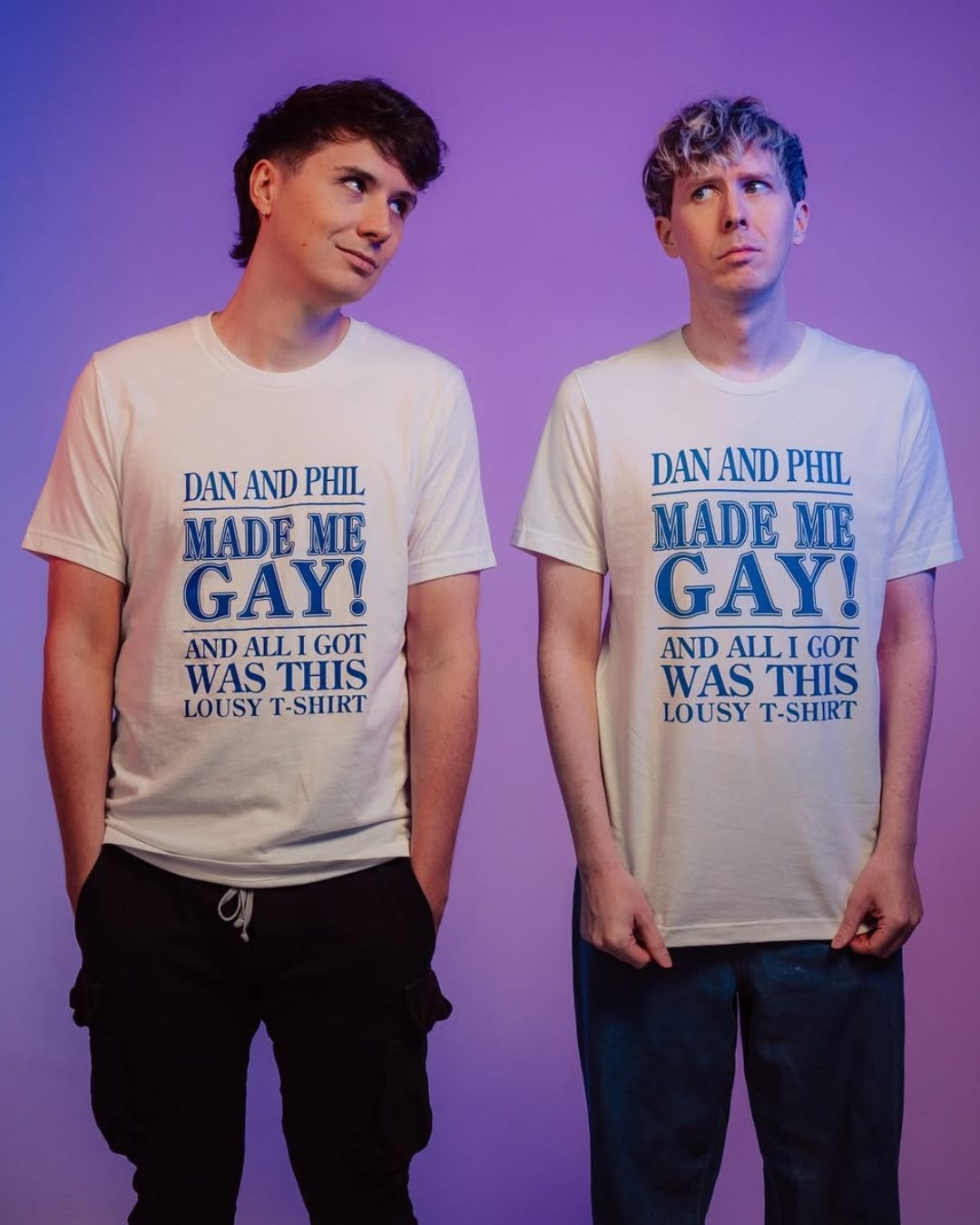
What did Dan and Phil teach us with their hard launch? A very important moment for a specific corner of the internet, but also for parasociality in general
I was doing a deep rewatch of Too Much with my partner. One of those really intense rewatches, you know? The kind where, at the end of every episode, you stop to have a debrief about the themes, about what you see of yourselves and your beginnings in the characters. A debrief that naturally turns into other conversations, that expands. In particular, the episode where Jess goes to her boss’s house for a fancy dinner and ends up doing cocaine led us to talk about drugs, exes, friends’ and relatives’ stories, divorces, and marriages. It took us two hours to get to the end. Then I picked up my phone and opened Twitter. The first thing I saw? A video of Dan and Phil confirming (and expanding on, and explaining) their romantic relationship. Yes, really.
Dan and Phil are together, now what?
In a full 46-minute video titled “Are Dan and Phil in a Relationship?”, Philip Lester (born 1987) and Daniel Howell (born 1991), longtime YouTubers active since 2006 and 2009 respectively, not only finally confirmed a ship that had literally been going on since they first met (back in 2009), but also delivered a masterclass in parasociality. From the very beginning, they hid the fact that they had gotten together right away. Even as they became business partners (beyond their various YouTube channels, the two toured the world, released books and merch, board games and apps) and moved in together, they never wanted to present themselves as anything more than two old friends with a shared passion. Because they were young, because they weren’t ready for the world’s judgment and scrutiny, but mostly because it was their business.
That, of course, didn’t stop their fans (who were, in their defense, their peers or often even younger) from speculating about their lives. These speculations, they revealed, were part of the problem. Because Dan and Phil couldn’t go out and behave normally, they felt they couldn’t have friends or let anyone into their intimate and relational sphere for fear that something might leak. Their digital lives, shown to millions online, were completely different from their real, hidden ones. The fans, however, didn’t see the difference - or didn’t want to see it - blurring the lines and demanding a kind of honesty the two simply couldn’t, and didn’t want to, give them. Understandably. Every move and interaction was measured and analyzed, and everything became too much. By 2018, they had to take a break from their shared channel, Dan and Phil Games, before returning in 2019, after their respective (and separate) coming outs as gay men.

Shipping real people and the LGBTQ+ need to see and find themselves
Cue the usual debate. Where does an “innocent” ship end and obsession begin? When does it cross from harmless fun (even if some users see shipping real people as unethical) into influencing and interfering with the lives of real people? The fact that so many LGBTQ+ people were (and are) searching for someone they can feel close to - someone to watch, support, follow - is no secret and not a problem either. Nor is it a secret that Dan and Phil were, for so many people, a source of comfort and inspiration. In 2024 (years after their peak of fame and influence), a YouGov survey asked young (16–25) British LGBTQ+ people which public figures had left “a positive impression” on them growing up, helping them feel safer and less alone. Dan and Phil ranked second and fourth, respectively. This, as lovely and important as it is, doesn’t justify obsessive or parasocial behavior, nor does it erase the boundaries the two men clearly set in their video—boundaries that show great awareness and empathy while offering us a glimpse into their private lives, but also drawing firm, respectful lines. At least now that we’ve grown up, right?
