











































Is skincare the future of Muji? How the “no-brand” philosophy could transform skincare into the new global growth engine for Japanese minimalism
In the vast atlas of contemporary retail, few brands embody a paradox as fascinating as Muji: becoming a global giant precisely by renouncing the centrality of branding itself. No logos, no loud aesthetics, no glamorous narratives. Only essential objects, designed to be “good enough,” functional and almost silent. In an era dominated by recognizable logos, aggressive storytelling and marketing strategies built for virality, Muji has prospered through the deliberate choice to subtract, simplify and make itself almost invisible. Its products, from modular containers to cotton T-shirts, from ready-made curries to notebooks, do not try to assert a spectacular identity. Instead, they aspire to dissolve into everyday life. And it is precisely from this aesthetic of discretion that the transformation of skincare into a new economic infrastructure for the brand is emerging. The question now circulating among analysts and industry observers is no longer whether Muji can truly enter the beauty market, because it already has, but whether minimalist cosmetics can become the brand’s next major pillar. In other words, is skincare destined to redefine Muji’s future? Or will it remain a secondary category, complementary but not decisive? The most recent data suggest that the answer may be far more radical.
The economics of simplicity: Muji skincare
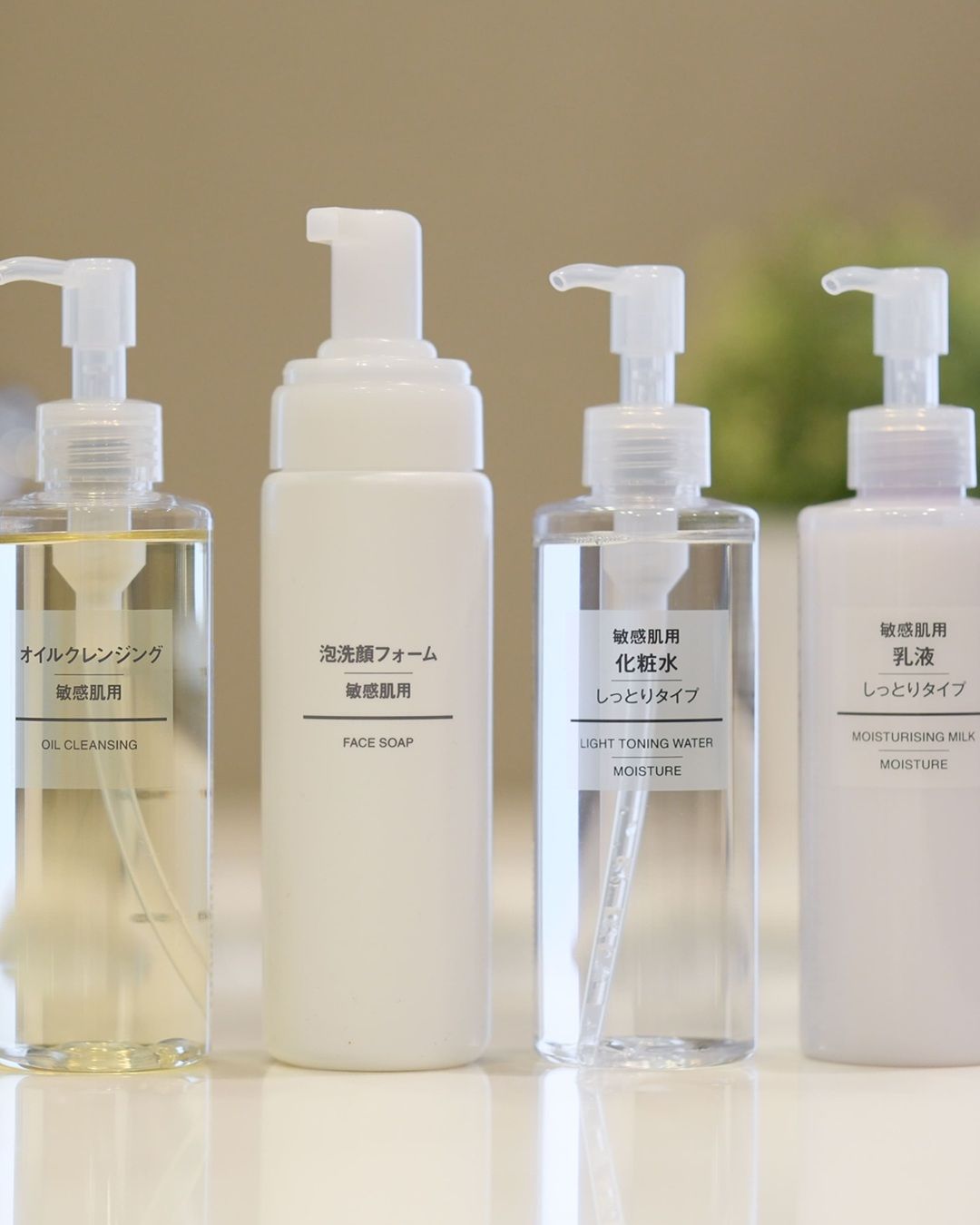
To truly understand this trajectory, one must return to the company’s original philosophy. The brand’s name itself derives from the Japanese expression Mujirushi Ryohin, meaning “no-brand quality goods.” It is a design manifesto before it is a commercial one. The idea is to reduce the superfluous, eliminate excess design, and allow function and material quality to become the real value of the product, speaking in place of marketing. This model, which made its modular storage containers, cotton pajamas and understated household objects famous, also built over time a quiet relationship of trust with consumers. Today, that same philosophy is extending with surprising coherence into skincare. Formulas are essential, ingredients easily recognizable, labels free of pseudo-scientific rhetoric, and packaging reduced to the bare minimum. Even pricing follows this logic of restraint. In Japan, many products in the skincare line sell for less than ¥3,000. In an industry where the symbolic value of the brand often outweighs the formulation itself, Muji makes an almost counterintuitive move: removing prestige as the central element of the narrative.
The numbers behind a silent growth
This philosophy of subtraction is proving economically effective. Over the past two years, the beauty and health segment has experienced remarkable growth, reaching nearly ¥100 billion in sales. This represents approximately 13% of total sales, still a minority share but significant enough to suggest a structural change in the composition of the business. In strategic terms, this means that skincare is no longer just an accessory category alongside household items or basic clothing. It is becoming a pillar of growth capable of generating traffic, loyalty, and purchase frequency.
Skincare as an everyday product
Muji’s real insight does not concern only product formulation but also the context in which those products are sold. As noted by BoF, unlike cosmetics giants such as L'Oréal, Estée Lauder or Shiseido, Muji’s skincare does not live within the almost theatrical rituals of department stores or specialized beauty retail temples. Instead, its lotions and moisturizers are placed among storage boxes, Japanese snacks and basic T-shirts. Within this hybrid retail environment, skincare loses its intimidating aura and becomes an ordinary domestic gesture. There is no ceremonial ritual, no psychological barrier, no glamorous aesthetic. Skincare simply becomes another household item. Economically, this transforms skincare into a high-frequency purchasing category capable of generating constant store traffic and stabilizing revenue compared with more expensive home goods.
A new consumer sensibility
As mentioned earlier, the success of Muji’s skincare also reflects a broader shift in global consumer behavior. In recent years, growing attention to ingredients, perceived safety and transparency has gradually eroded the symbolic power of prestige brands. The new generation of shoppers does not necessarily seek the most glamorous label; it seeks the most reliable and understandable product. In this context, Muji’s aesthetic minimalism becomes a competitive advantage. Transparent bottles, simple labels and the absence of glamorous narratives create a form of immediate credibility. The product appears sincere precisely because it does not try to appear extraordinary. This aesthetic of trust resonates particularly well with younger consumers, but also with men and new skincare users who often perceive traditional beauty counters as intimidating environments.
Asia as a strategic laboratory
The growth of the beauty category is particularly evident in Asian markets, where Muji operates the majority of its stores outside Japan. In regions such as mainland China, Hong Kong, Taiwan and South Korea, demand for the brand’s skincare products has recorded year-on-year increases of more than 30%. This international momentum fits into the broader strategy of Muji’s parent company Ryohin Keikaku, which aims to significantly expand the brand’s global presence. The company’s goal is to reach ¥1.08 trillion in revenue by 2028, with an expected operating profit of about ¥108 billion. Within this framework, skincare could become one of the most effective tools to sustain that growth, particularly because it responds to a global
The delicate balance of price and Europe as the next frontier
According to industry experts, the real strategic challenge lies in the economic model of accessible cosmetics. Selling skincare at relatively low prices inevitably implies thinner margins compared with premium products. The sustainability of the strategy will therefore depend on Muji’s ability to increase volumes, optimize production and maintain consumer trust. In other words, the success of minimalist skincare will not be determined solely by design or pricing, but by the brand’s ability to scale the model without compromising its credibility. It is a fragile balance. Low prices are a competitive advantage, but they can also become a trap if logistics costs or international regulations erode margins. For this reason, Muji is developing a more flexible production network across Asia while opening larger flagship stores capable of absorbing operational costs more efficiently. Europe will be a particularly important testing ground. After several complex years marked by downsizing and restructuring, the company is relaunching the region with a new strategy. In the heart of Paris, Muji will open a large flagship store near Rue de Rivoli, designed to replicate the Japanese retail format on a much larger scale. With around 2,000 square meters of space, the store will showcase the brand’s entire universe, including the skincare line, which could find fertile ground among European consumers increasingly attentive to natural ingredients, sustainability and accessible pricing.
The future of beauty according to Muji
Ultimately, the true secret of Muji’s success remains its identity paradox: being a mega-brand built on the absence of branding. In a landscape dominated by influencer marketing and spectacular storytelling, the Japanese company continues to grow through an almost radical form of discretion. Its products do not ask for attention, nor do they try to impress. They simply work. Applied to skincare, this philosophy produces a surprisingly transformative effect. Beauty stops being a social performance and returns to being a domestic gesture, a form of everyday body maintenance. And it is precisely this normalization of skincare, simple, accessible and free of theatricality, that could transform it into the most dynamic engine of Muji’s future growth. If home goods built the domestic universe of the brand, skincare could build something even more valuable: a daily presence in the lives of consumers. A presence that is discreet, consistent and almost invisible, exactly like the brand that created it.
What to read next

Skincare and the menstrual cycle: do we really need to change routines every week?
Is there anything scientific behind this new obsession with the menstrual calendar?

The Manual Lift RT Method is the new pre-makeup routine you need to know about
Rosalia Tuttobene's customized treatment focuses on contours, tension, and texture to create a more relaxed face that's ready for makeup
Rose PDRN is the beauty ingredient of the moment
For repairing the skin, reducing redness and boosting radiance