















































The Ordinary turns off Black Friday (and turns on good sense) This year, once again, no open stores, no online sales on the most consumerist day of the year
In a world where every serum suddenly feels essential as soon as the first discount pops up, The Ordinary does the most revolutionary thing possible: it says no. No to Black Friday, no to flash sales designed to make you buy twice as much as you need, no to the frenzy of compulsive cart-filling. A bold move from a brand built to challenge the excesses of skincare. And this year, instead of bombarding us with screaming promos and discounts, The Ordinary does what no marketing algorithm would approve: it invites us to a slow shop.
The Ordinary vs. shopping anxiety
We’re so used to the Black Friday frenzy that it almost feels like a survival tournament: timers ticking down, can’t-miss sets full of products you’ll never use, prices that seem great until you realize they were the same two months ago. Analyses show that 92% of offers were actually the same price, or even lower, at other times of the year. While the rest of the industry pushes you toward another cart stuffed with creams you don’t really need, DECIEM, the company behind brands like The Ordinary, LoOPHA, and NIOD, opts out of the game: no stores open, no online sales on the most consumer-driven day of the year.
A whole month for a more mindful purchase
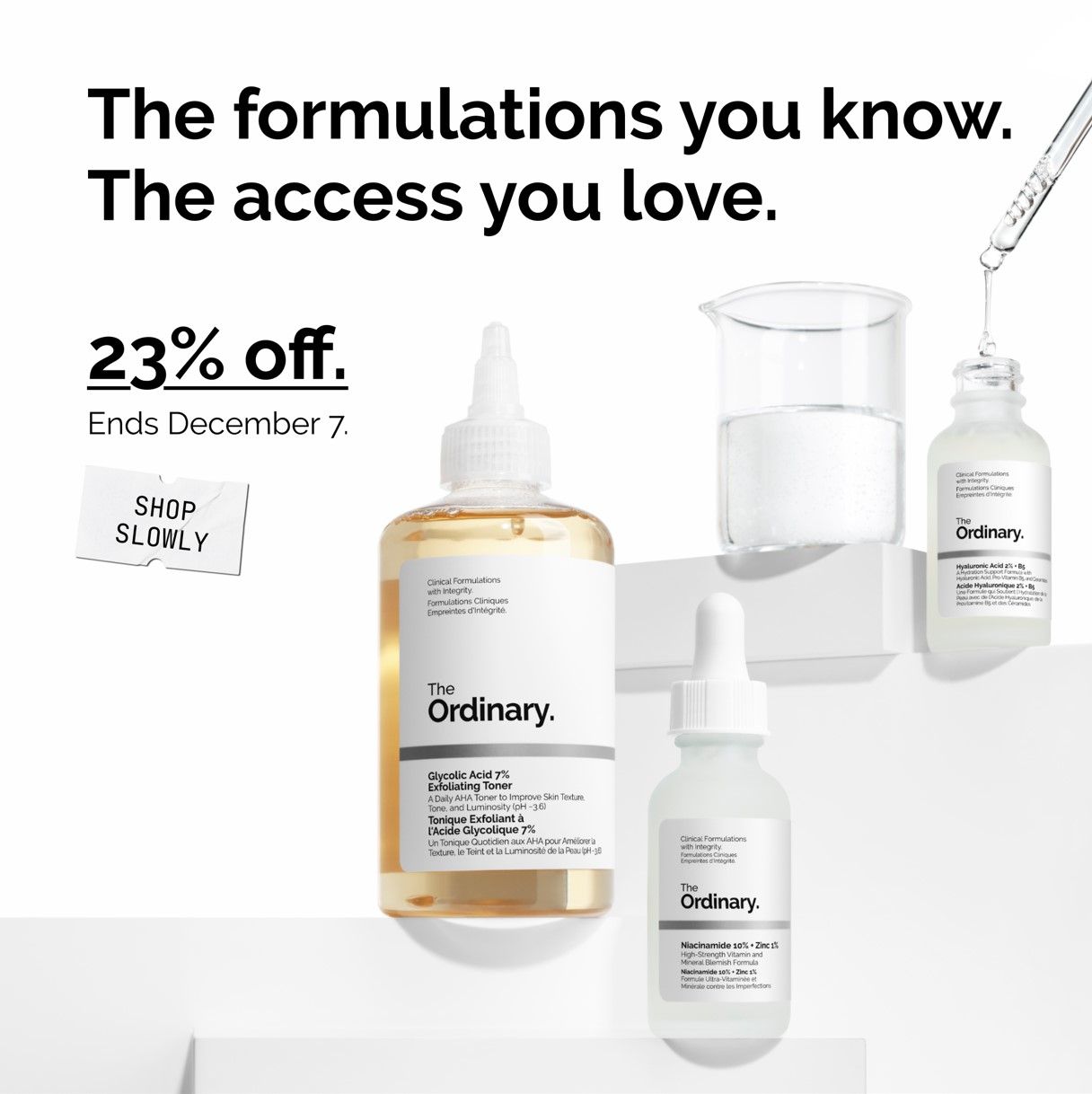
DECIEM’s philosophy emphasizes quality over quantity. That’s why, instead of typical Black Friday discounts, they’re offering a calm 23% off throughout November on The Ordinary, LoOPHA, and NIOD. Discounts started on November 1st and run until December 7th: essentially, a whole month to decide if you really need a new retinoid or if the one gathering dust in your drawer since April is more than enough.
DECIEM’s guide to misleading offers
DECIEM has created a guide to misleading offers, a sort of survival manual for Black Friday marketing. The idea is to help customers avoid falling into the usual traps that look like amazing deals. The first tip: start with an intentional cart, make a clear list of what you actually need, so you can tell if the discount is real or just the same price from two weeks ago. Then there’s shrinkflation, a long word for a short trick: you’re sold less at the same price, hoping you won’t check the labels. It’s the classic supermarket tactic, applied to skincare. The guide reminds you that paying less for less is no bargain. Another rule: urgency and pressure are not valid reasons to buy randomly. If you’re purchasing just because you’re afraid of missing the discount, you probably don’t need it. The same goes for sets: they’re cute, seemingly practical, but often include products you didn’t want and won’t use. And for limited editions that return month after month, if they come back, they aren’t really limited. The final advice: don’t be swayed by old or variable prices presented as new discounts.