

The IOC excludes transgender athletes: the decision is ideological and propagandistic Public perception vs numerical reality
The decision of the International Olympic Committee to exclude transgender women and many athletes with DSD from female competitions starting from the Los Angeles 2028 Olympics marks a watershed moment in how global sport addresses the issue of gender identity. Officially, this discriminatory act is justified as a "science-based" choice, intended to protect fairness and safety. But stopping at this reading means ignoring the political and cultural context in which this decision arises.
Number of athletes involved: data and context
Because the first fact, often removed from public debate, is extremely simple: the number of athletes involved is tiny. We are talking about a marginal presence in elite sport, which rarely affects overall results or global competitive balances, yet in recent years, this has been turned into one of the most divisive and amplified topics across the entire sports landscape.
Comment from Asia Cione
Asia Cione, vice president of Associazione Libellula APS, active since 1997 in protecting and promoting the rights of transgender and non-binary people, both Italian and foreign, supporting them in affirmation pathways and committed to combating gender-based violence and human trafficking, commented on the event: "The decision of the International Olympic Committee to exclude transgender women and many athletes with variations of sexual characteristics (DSD) from female competitions starting from the Los Angeles 2028 Olympics represents a serious step backward in terms of rights, inclusion, and recognition of subjectivities. Sport should be a space for participation, fairness, and self-determination, not a field of exclusion based on criteria that risk reinforcing stigma and discrimination. This decision particularly affects people already exposed to marginalization, fueling narratives that question the very legitimacy of their identities. We strongly call on international sports institutions to open a serious dialogue based on updated scientific evidence, human rights, and listening to the people directly involved, to build truly inclusive models that respect the complexity of bodies and experiences."
The weight of the political climate in the United States in an ideological decision
Here, the deeply ideological nature of the issue emerges. Women’s sports becomes the ground onto which broader fears and political battles are projected. The inevitable reference is the United States, where the topic of transgender people in sport has for years been at the center of electoral campaigns and media clashes. In this context, the figure of the transgender athlete has progressively been turned into a political symbol: no longer an individual with a personal trajectory, but a case useful to mobilize support. The IOC’s choice cannot be separated from this scenario. The Los Angeles Olympics will be one of the most globally media-exposed events of the next decade. Arriving there with a clear and already defined stance on such a controversial issue effectively defuses a potential communication crisis. It is a preventive move, and like all preventive moves, it serves a more political than sporting function.
The narrative of "science"
There is also a second, subtler level, which is the narrative of "science". The IOC insists that the decision is guided by scientific evidence, citing performance differences related to male puberty. But science, on these issues, is not a monolithic block. There are studies and margins of uncertainty. Choosing which data to emphasize and how to translate it into rules is always a decision that intertwines politics and values. Presenting it as inevitable serves to reinforce legitimacy, but risks simplifying a much more complex debate.
Public perception vs Numerical reality
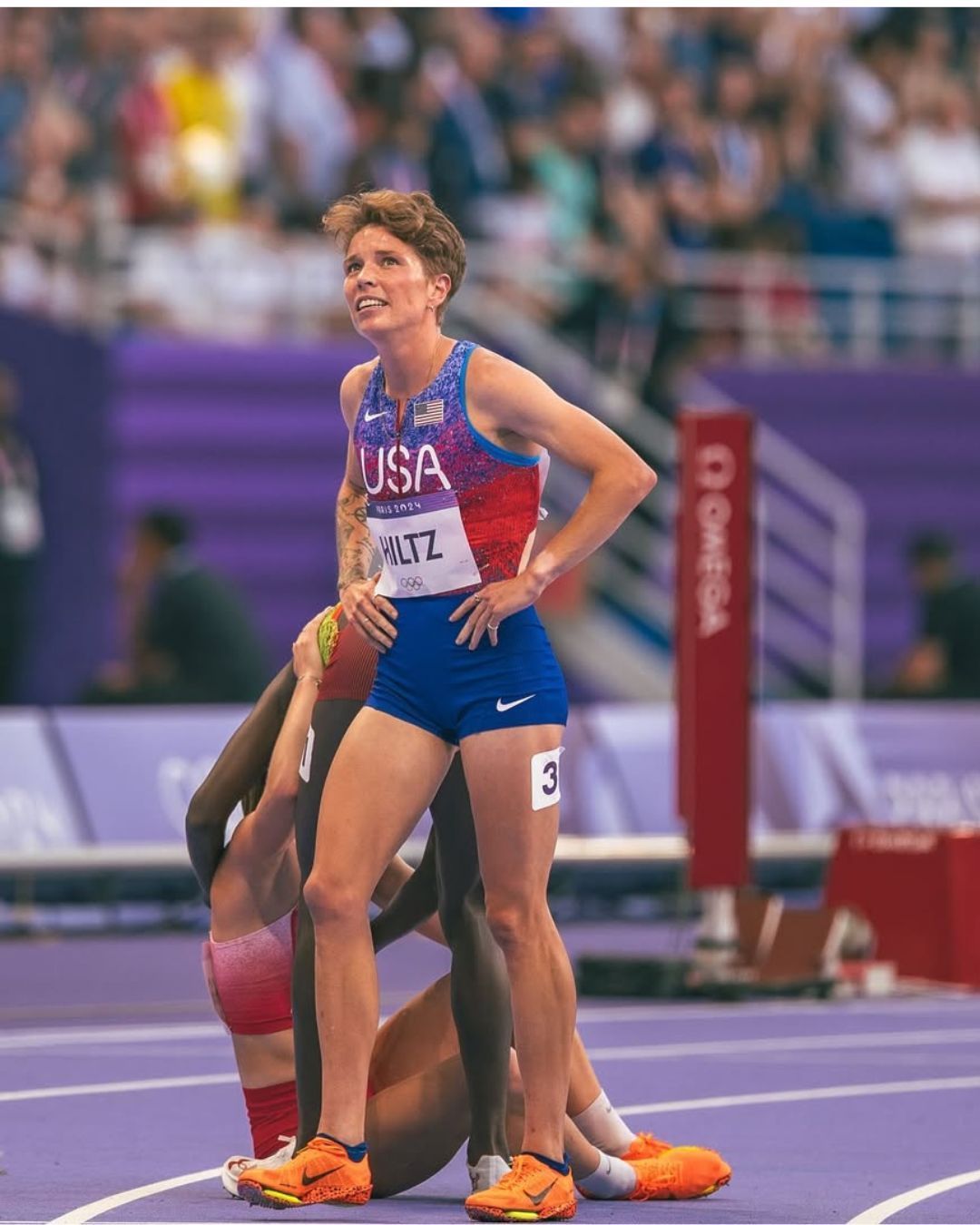
The gap between public perception and the reality of numbers is perhaps the most evident aspect of this story. This is also highlighted by Nikki Hiltz, a transgender and non-binary Olympic athlete, who has openly criticized the new line of the International Olympic Committee. "I don’t know who needs to hear this, but ZERO transgender women participated in the Paris Olympics. Only ONE transgender woman, a weightlifter, competed in Tokyo 2021 and did not win any medals. Can we stop being obsessed with trans people? And maybe start focusing time, energy, and resources on the real problems of women’s sport?"
SRY Genetic Test and biological rigidity
A similar discussion applies to the introduction of the SRY genetic test as a criterion for access to the female category. Defined as "non-invasive" and "objective", this tool actually represents a return to a rigidly biological and binary conception of the body, which the history of sport had already challenged. Sports categories are regulatory constructs, designed to balance inclusion and competition. The issue, then, is deciding how differences are translated into rules and with what consequences for the people involved. Moreover: does it really make sense to adopt such drastic measures, total exclusion and mandatory genetic screening, for a phenomenon numerically so limited? Or are we facing a disproportionate response that risks causing more harm than good? Guess my answer."