





































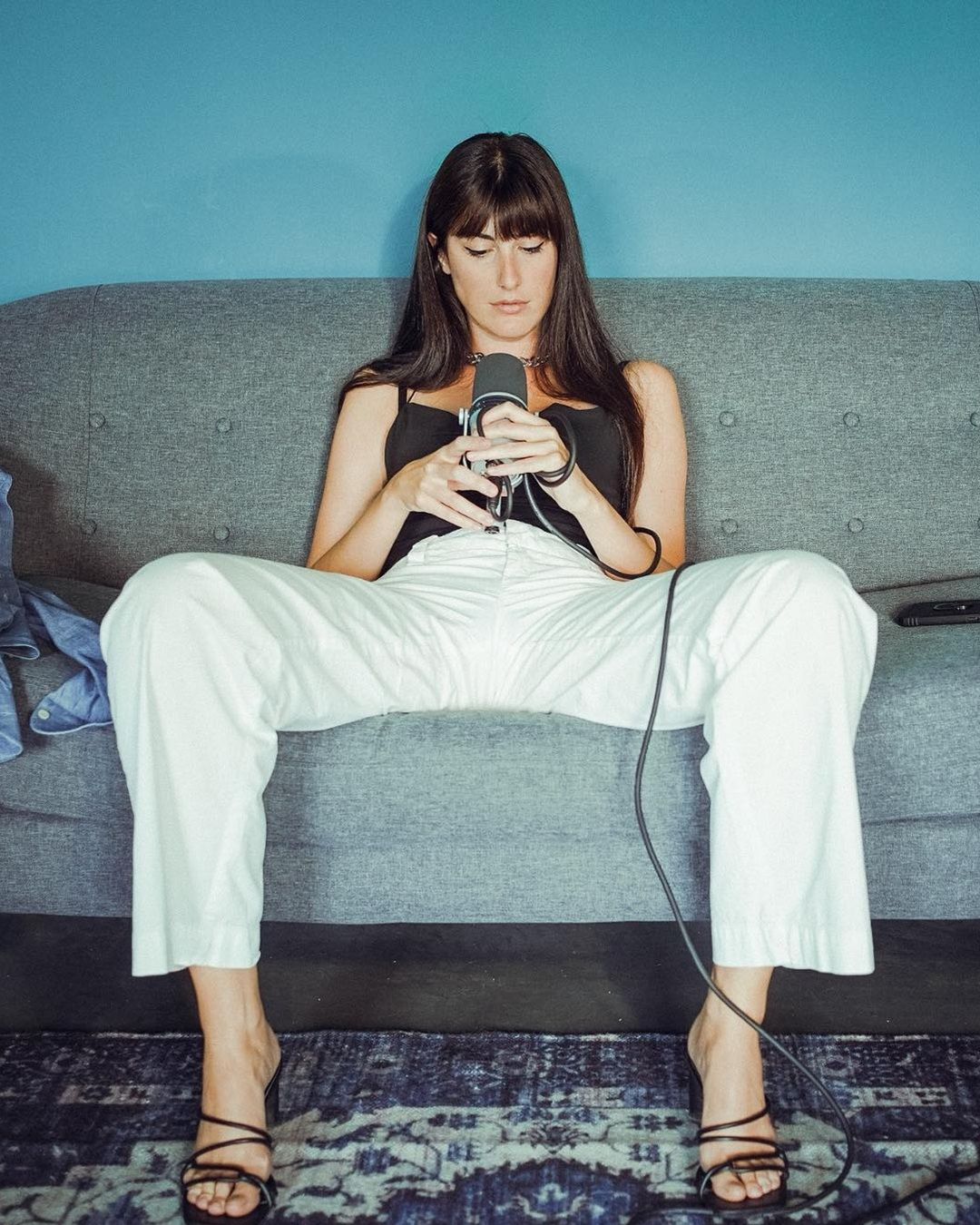
Is sex today becoming science fiction? Valeria Montebello tells us more The writer, journalist and podcaster, discussed eros and technology at the Trieste Science+Fiction festival
The very first thing we can’t avoid asking Valeria Montebello is this: after all these disastrous dates, after porn becoming increasingly pervasive in everyday life, after AI-generated girlfriends and relationships reduced to dates that people even feel the need to comment on and review, will humans still have sex? And not digital sex, not transcendental or extra-sensorial sex. Just simple, primitive, carnal sex. “Yes,” answers the writer, journalist and creator of the podcasts Il sesso degli altri (2022) and È solo sesso (2023), produced by Spotify Studios in collaboration with Chora Media, who is debuting as a novelist in 2024 with Succede di notte. Works aligned with the topics Montebello explores through her analytical and educational work on sexual themes, to the point that the book’s protagonist also hosts a podcast on similar subjects, Post Love, which ranges from the decline of romanticism to the unsolicited sending of dick pics.
Personal narrative and public discourse
“But it’s not me, it’s never me,” she says when asked how much of her own personal experience finds its way into her work. Her writing exists in a delicate space between events that may be close to her, and a necessary transformation process that allows her to depict a broader picture of the social, emotional, and sexual landscape. Something that must always be mediated through storytelling: “Why should I assume that people care about what happens to me? If I want to tell a story, it always needs a solid narrative foundation that opens it up to everyone.” That is the guiding principle Valeria Montebello is following as she works on a series still in the writing phase, inspired by Il sesso degli altri. “We’re working with some screenwriters, both for the series and other film projects. Not everything will be linked to the podcasts, and it will still take time before anything is released, that’s just how the audiovisual world works.”
@choramedia È uscito il primo episodio della terza stagione di È solo sesso, il podcast di Valeria Montebello che racconta gli orrori e le sfide delle relazioni contemporanee. Dating, relazioni, ritorni di fiamma, amori che sembrano infiniti ma durano una manciata di messaggi. Ex che tornano, red flag che scegliamo di ignorare, appuntamenti che iniziano con una speranza e finiscono con una domanda: ma perché continuo a farmi questo? Malintesi, dipendenze affettive, fantasmi digitali, illusioni romantiche: ogni volta sembra quella giusta, e ogni volta si riparte da zero. Con la convinzione che lo swipe perfetto esista davvero, che stavolta sarà diverso, che – in fondo – anche noi meritiamo la nostra scena alla Notting Hill. O forse no. Nel dubbio, meglio ascoltare la terza stagione di È solo sesso, il podcast di Chora Media che ogni settimana vi accompagna in un viaggio tragicomico dentro i disastri sentimentali della nostra epoca. Gli altri episodi di È solo sesso, uno a settimana, saranno disponibili in anteprima sull'app MyTim di Tim dal 4 settembre e su tutte le piattaforme gratuite dal 19 settembre. Attiva la campanella per ricevere una notifica all’uscita degli episodi #relazioni #Montebello #èsolosesso #dating #podcast #podcastitaliano suono originale - Chora media
Eros between flesh, code, and sex tech
Invited to the 25th edition of Trieste Science+Fiction, Montebello held the panel Eros. Between flesh, code and sex tech: new desires and intimacies, where she explored emerging sexual and emotional trends affecting people, especially Millennials. It was a chance to delve deeper into issues she has already discussed in her articles, such as her experience with Replika, a story that sounds like something out of sci-fi, yet is more real (and digital) than ever. So what is Replika exactly? A chatbot app owned by Luka Inc., created before the pandemic in 2017. It allows users to form emotional bonds with an AI that can become a virtual friend or even a boyfriend/girlfriend. “Only 5% of users are women, while the main demographic appears to be heterosexual men around forty. Among the disturbing features of Replika is the ability for users to customize the personality traits of their digital partner, and it seems most men opted for sweet, docile virtual girlfriends. There were even cases of married men or men with real-life partners using Replika to vent. But what happened next? Like every AI, it learned from its users’ data, so it started responding rudely, and that was definitely not what users expected.”
Digital cheating: what changes?
This is something incredibly human happening with AI, which over time has also become a genuine sexual object, or should we still call it a partner? “There are so many questions this new technological society forces us to confront,” Montebello said at Trieste Science+Fiction. “If I have both a real partner and a digital one, is it cheating? If I’m in a committed relationship and have sex with a chatbot is it cheating? Is sexting, with a real person or a chatbot, cheating? Technology is influencing relationships, yet paradoxically dating apps, which were created to help people connect, are fulfilling that purpose less and less. Partly because people now flirt on other platforms like social media, even LinkedIn. Partly because going out feels increasingly frightening; hashtags about terrible dates are among the most popular on TikTok. And based on porn consumption, tastes also seem to be shifting.”
The rise of hentai and the transformation of porn
In 2024, the term “hentai”, an anime genre that turns pornographic, appears to have been the most searched word on PornHub, according to the New York Post. It is no secret that this type of erotic entertainment can lead storylines into extreme scenarios, even involving rape. “‘Vanilla’ sex seems outdated,” Montebello says. “With extreme hentai, viewers feel morally safe because they believe it’s ‘only animation’ and doesn’t involve real people. But if the market must meet demand, it seems likely that porn will continue in this direction, excluding in advance what we would consider ‘normal’ sex between real flesh-and-blood humans. Take OnlyFans, for example: it was created as a space for creators to express themselves freely, showcasing their own personality and image. Now it's well known that creators study platform statistics to meet demand, flattening originality and abandoning the quirky or unique content they once produced, all to adapt in the same direction.”
Affective sex education and digital risks
That we need to start conversations about affective sex education is obvious, almost rhetorical. “It’s well known that children as young as ten are already familiar with or exposed to pornography. Taking action from an educational standpoint is essential. We need trained professionals and psychologists. Even though I must admit that I’ve come across so-called experts on social media who talk about these topics and end up saying appalling things. I understand that we need to find new methods and stay up to date, but we must always remain reasonable and well-prepared. Young people are unlikely to listen, also because terminology changes faster every day, new words are constantly added and, by coincidence or not, they always seem to describe something negative, never positive.” This trend goes hand in hand with daily news stories: apps capable of undressing women, whether famous or not (as reported by Francesca Barra), or even generating porn featuring people you know with nothing more than a photo of them, such as the recent shutdown, in October, of Clothoff, a tool able to produce pornographic deepfakes. And if the future of sex is still something to understand, explore, and regulate, the least we could do is start taking steps forward right now, to recognize that experiencing relationships and sex in a healthy way should be the norm, not science fiction.