













































Poetry and the city: a matter of survival The example of Amaronda, poetic collection by Carolina Nizza
In 2016, I wrote my undergraduate thesis in literature about two poets and the way they portrayed their cities in their works. Rome vs Moscow, Pier Paolo Pasolini vs Stanislav Lvovsky. At the time, and it has now been a full ten years, poetry had almost completely disappeared from traditional circuits, while cities were expanding and promising, absorbing everything. We were all running toward the cities, all turning away from poetry. Now, the movement has become the opposite. Perhaps precisely because we are turning away from the city, we are rediscovering time for poetry. Not that poetry was ever truly dead. During that phase, in fact, it lived on blogs, on social media pages, on walls through the Movimento per l'Emancipazione della Poesia; it tried to adapt to frantic and neurotic lifestyles, to capture our gaze between a run and an appointment, between one chat and another. Those were the years of short poems and Tweets. Now, it has found its time again - a poetic time abstracted from everything else - and its space, and it does so above all through the female pen.
The poetry of Carolina Nizza, Amaronda
There are plenty of examples, even just in Italy. Caterina Fantetti, co-founder of Donne x Strada, has published her poetry collection “se d'estate piove” with Eretica Edizioni, and Carolina Nizza has done the same with Amaronda, a collection published by AttraVerso and written during a time of disorder, waiting, and transition, which sincerely recounts thoughts, feelings, and fragments of that period. They are poems, but also small acts of care, moving through play, memory, fear, and love in search of freedom, a treasure chest in which to cultivate lightness. They are poems born from dialogue with others, between loves that ended and loves that never began, pasts, futures, and hopes, revealing that, ultimately, everything is a dialogue with ourselves. They are poems born from questions: who to be, what to become, how to love, and in searching for answers they reveal those already within us, in the unconscious. For this reason, the collection draws inspiration from the Tarot, which, as Jodorowsky says, are at once a mirror of the soul and a therapeutic tool.
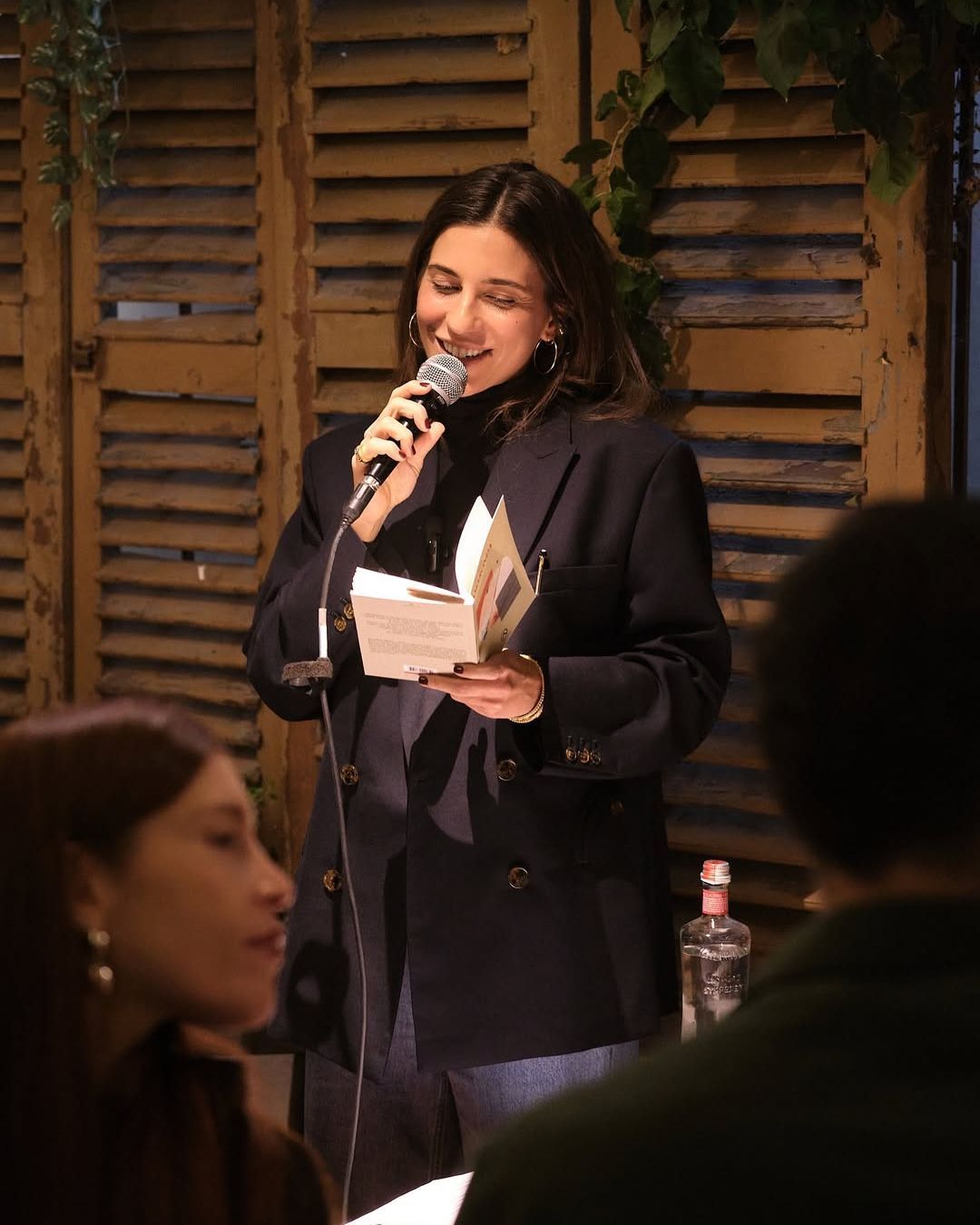
Amaronda tells the story of an invented word: a game, a turn, and a word of love. At its center, there is always a hint of the sea. Within it, it holds poems that, through each number with its deepest meaning, represent a place, a character, a moment, a mirror, helping us embark on that journey toward the soul, tracing a cycle within which many small circles are born in the emotions, fragilities, and strengths of the unconscious. And in the end, they always bring us back to the beginning. They are an attempt to chase - and capture, even if only for a moment - freedom, within the magical chaos and the eternal return that is the game of life. The book can be purchased for 14 euros at Feltrinelli and Mondadori bookstores, as well as on Amazon, IBS, and the publisher's website. The first presentation took place in Milan on February 18, through a poetry workshop organized in collaboration with Succede Studio for Succede Poesia, hosted at Ubarba.
Poetry as escape and awareness, both from and of the city
In Carolina Nizza’s practice, she also curates the Instagram page Slices of Niceness, the connection with the city is undeniable. Partly because she draws inspiration from everyday life, and partly because she seeks to carve moments of pause and reflection out of that same daily reality, despite everything. Because today, poetry is not only escape; it is also an understanding of reality, an invitation to love and joy, to melancholy and reflection, to living a conscious and kind life, wherever we may find ourselves.
