





















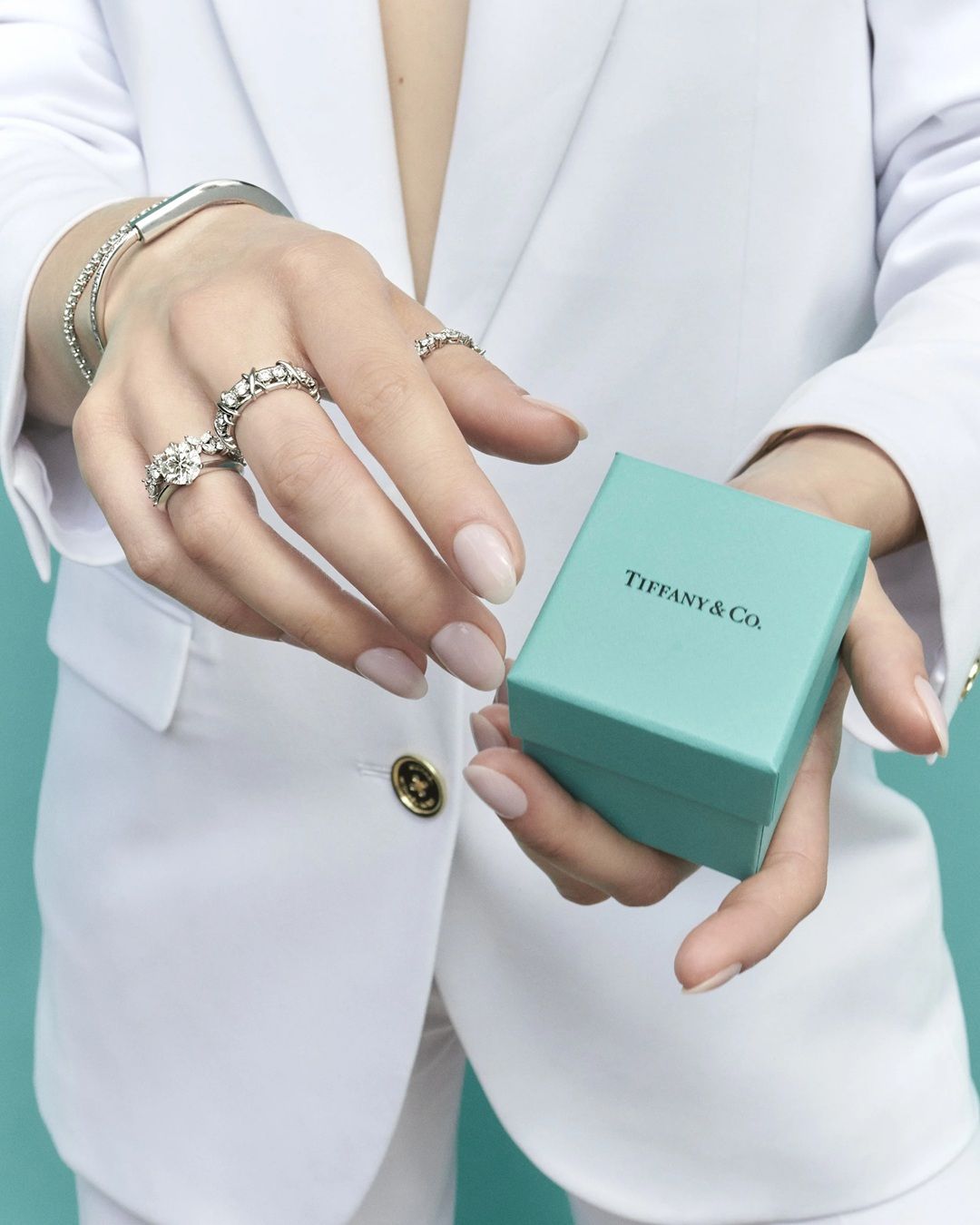
In China, Gen Z buys Tiffany jewelry in groups The phenomenon of group luxury buying challenges the exclusivity of jewelry
In China, where consumer dynamics intertwine with the logics of social media at an astonishing speed, a new practice is overturning the rules of the game. It’s no longer about a single customer stepping into a glittering boutique, ready to leave with their turquoise shopping bag in hand. Today, Chinese Gen Z has invented a radically different ritual: buying Tiffany jewelry in groups, together, like a tribe, splitting the value and at the same time multiplying the meaning. What was once a symbol of individual status now becomes a collective banner, an emblem of a shared identity that thrives and amplifies on platforms like Xiaohongshu and Weibo. Luxury, therefore, is no longer an exclusive monologue but a digital chorus that challenges the very idea of exclusivity. This is the birth of so-called group luxury buying, a phenomenon that not only redefines the rules of consumption but also questions the entire ecosystem of contemporary luxury.
From individual purchase to shared luxury
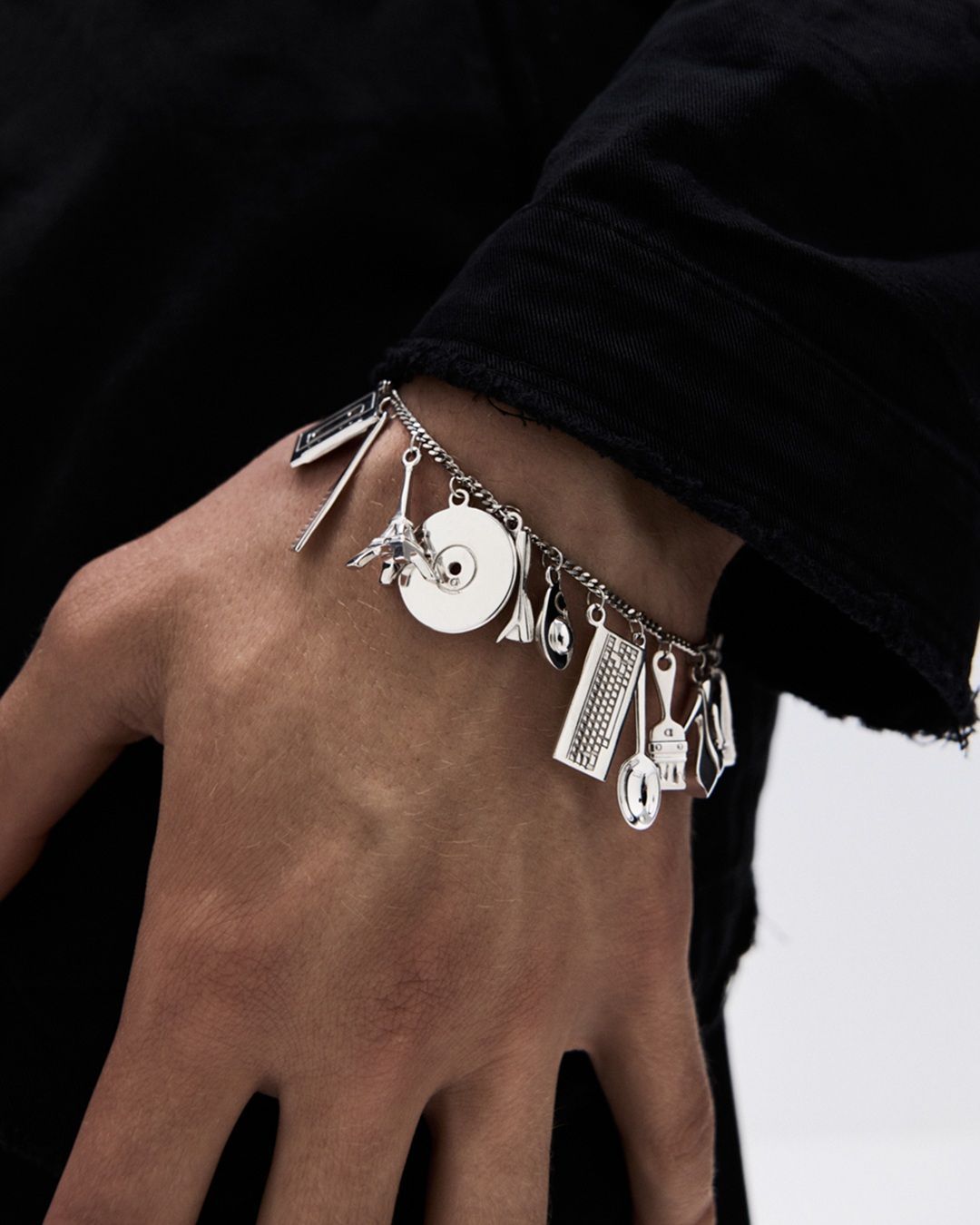
The starting point was almost trivial, and precisely because of this, disruptive. As reported by Jing Daily, a user with an ordinary and innocent nickname, something like “Eat Well Every Day” (@天天好好吃饭), suggested splitting a Tiffany Multi-heart Tag bracelet worth 7,150 RMB ($975) into twenty-three equal parts. What seemed like a game actually dismantled the basic principle of luxury: the solitude of purchase. Each of the 23 participants paid $42 and received a pendant—an authentic fragment of an object that, until yesterday, seemed unattainable. No longer an insurmountable barrier, but a puzzle to be taken apart, a treasure democratically distributed. Within hours, the post had gathered over 22,000 likes, triggering a rush to shared luxury that didn’t stop at Tiffany but sparked a wave of emulations. Van Cleef & Arpels, Bulgari, and other iconic brands saw their jewelry turned into subjects of digital collectives, inaugurating a new way to experience brands without bowing to full price.
@tylr.mxchl Wanted this for soooo long so i bought it for myself #tiffanyandco #tiffanyjewelry #tiffanygirls #jewelrytiktok #jewelrycam #charmbracelets #armcandybracelets #fyp #foryou #foryoupage #gifts original sound - taylor
From boutique to viral post: anatomy of a digital ritual
Consumers’ language is direct, almost disarming. “I can’t afford the full price, but I won’t buy fakes,” writes one user. If counterfeits aren’t an option and the desired jewel is too expensive, spending just over 300 yuan for an authentic pendant feels like a brilliant compromise. Luxury becomes tangible, status remains intact, and the wallet survives. It’s not only a deal or a way to reconcile practical value with the need to maintain recognizable status, but also an act of resistance and ingenuity. Some add more intimate or superstitious dimensions. Tiffany charms become amulets to ward off bad luck, or, ironically, to “keep the boss away.” Here, social anxiety blends with the desire for affirmation. Luxury as protection, as a signal of belonging, as a gesture that tells who you are without words. In this suspended space between reality and symbol, Gen Z reinterprets consumption, transforming it into a practice of collective self-narration.
The right price for a dream: luxury, superstition, and status
For brands, the phenomenon is a double-edged sword. On one hand, they suddenly find themselves at the center of a huge social conversation, with millions of interactions and a visibility that traditional campaigns could hardly buy. Iconic models, such as Tiffany’s heart or Van Cleef’s clover, are celebrated, shared, and replicated, reinforcing their cultural centrality. On the other hand, however, the mechanism risks eroding the very essence of luxury. If a bracelet can be broken up and distributed as if it were a cake among friends, what remains of the aura? If something designed to be rare becomes accessible through a collective logic, scarcity, the cornerstone of luxury positioning, dissolves. It’s not just about defending a premium price, but about that subtle halo of exclusivity that turns an object into a symbol. Without that aura, a jewel risks being reduced to a mere ornament, an item like any other. And for brands, this is the greatest threat.
Resisting the democratization of desire
The response of luxury houses cannot be uniform, because not all brands share the same relationship with their audience. The highest-end brands, built on the myth of inaccessibility, must reinforce their defenses: limit production, focus on exclusive collections, and reiterate the narrative of rarity. By contrast, more contemporary and accessible brands have the chance to turn this challenge into an opportunity. They could create entry-level lines designed specifically for sharing, made to be split, personalized, layered. A kind of modular luxury that embraces sociality without sacrificing quality. However, the balance is delicate, and analysts’ warning is clear: chasing short-term engagement risks undermining long-term value. The maisons know that a single misstep can compromise decades of carefully built brand equity. Luxury is not a product, but a promise, one that must be protected and calibrated with every choice.
The gray zone of ownership
There’s also the legal chapter, often ignored by consumers but crucial for brands. Group buying itself is not illegal. Formally, it is equivalent to a private contract between individuals, where one acts as a representative and the others contribute their shares. But the issue becomes complicated when modifications and resales come into play. If a pendant taken from an original bracelet is altered and resold, the risk of trademark violation emerges. It’s not just a problem of counterfeiting, but a matter of direct competition with the brand itself. In this gray zone, consumers see only the immediate benefit, while maisons see the long-term danger. It’s a slippery ground, where consumer ingenuity can turn into a weapon against the very brand they once wished to own.
Why pay full price? The question that haunts luxury
The question hovering over this entire scenario is brutal yet inevitable: “Why should a Tiffany bracelet cost $975 if I can have an authentic fragment for $42?”. Chinese Gen Z does not reject luxury, but they want it on their own terms. The signature alone no longer suffices, nor does a name engraved on a charm. They demand transparency, craftsmanship, and tangible value, not just an arbitrary price tag. Every brand must now answer to a new tribunal: the conscious, collective consumer, who asks every day why that object is worth its price. This shapes a new reality in which luxury is no longer a legacy to be preserved, but a battlefield to be reconquered daily. Brands no longer dictate undisputed rules, it’s consumers who write them, harnessing the power of the group and the virality of digital platforms. The future will no longer be made of quiet boutiques and solitary customers, but of noisy communities, ready to reinvent the very concept of exclusivity. Luxury must now prove it deserves its price. And only those who rise to this challenge will survive in a market that forgives no hesitation.