

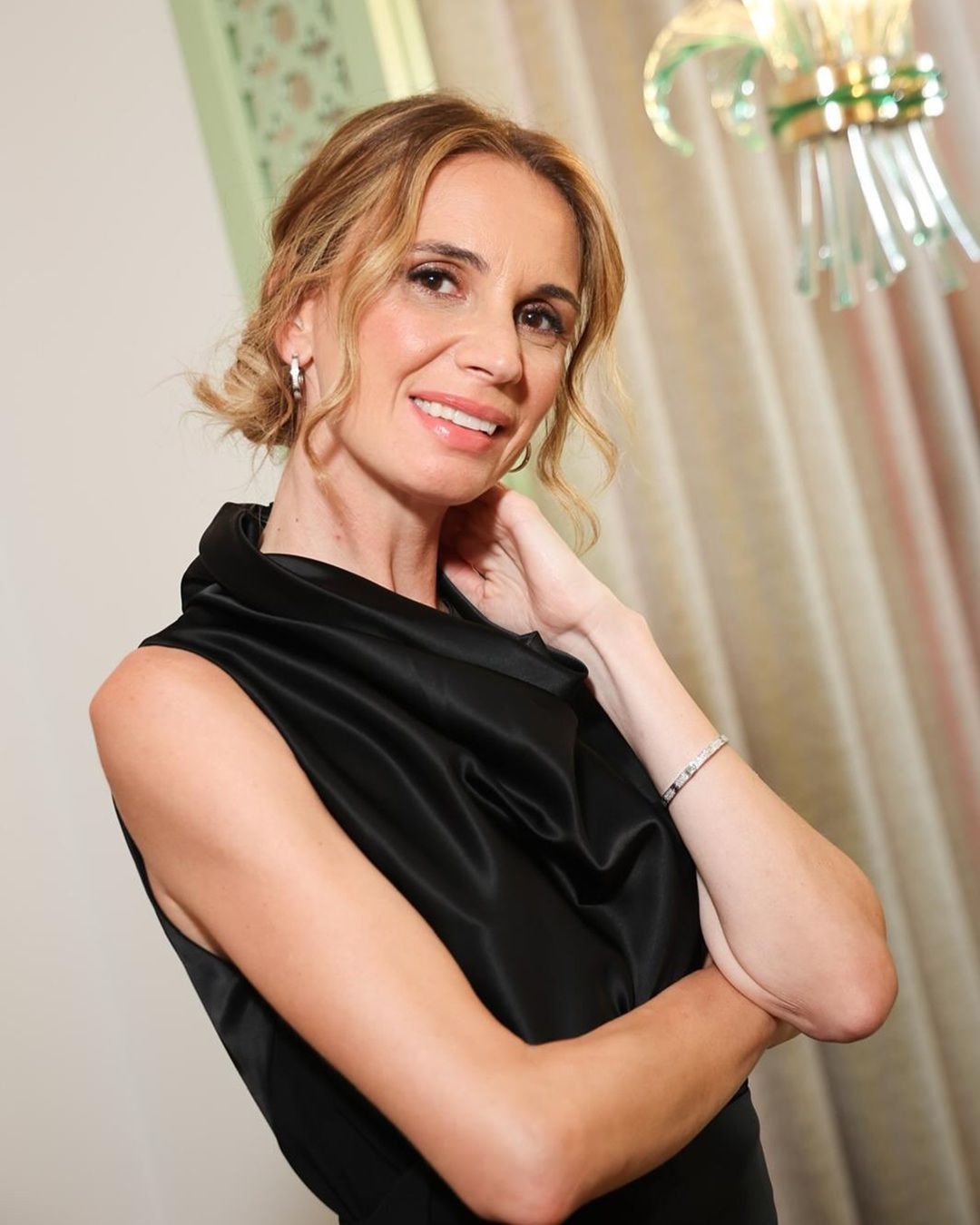
The rise and fall of Emanuela Fanelli, only on HBO Max The mockumentary Peccato premieres on HBO Max on October 2, after its Venice83 debut
Starting October 2, Peccato, the new mockumentary by Emanuela Fanelli, arrives on HBO Max. The series imagines the Italian actress and comedian in the near future, when she has retired from the spotlight and moved to Aosta Valley following a minor incident that brought her career to an abrupt end. “There was a period when I noticed that a lot of documentaries were being made about people who were still alive, even young people, and they were always talked about in a celebratory way. So I thought: why not tell the story of my rise and downfall with irony? The hook was the stumble. In this profession, where any small misstep can put an end to a career, I found it funny to imagine a protagonist who had achieved everything and then suddenly lost it all, while also wondering whether she had ever really wanted it in the first place.”
A surreal story, with a little tenderness
There is plenty of surrealism in Peccato, which premieres at Venice83, but also a desire to make this protagonist, who is ultimately Fanelli herself, inspire not only laughter but also a little tenderness in the audience. The timing could hardly be better for the Italian actress, who is riding the wave of two David di Donatello Awards and has established herself as one of the most recognisable faces in the Italian film and television industry. “What better moment could there be to put my guard up than now? When everything is going well and you constantly have that thought in the back of your mind: what if it suddenly ends here? It’s actually even better this way, because on the one hand it feels like I’ve already exorcised that fear, and on the other people will be able to say: she predicted it!”
Ferzan Özpetek, Sabrina Ferilli and a future Paola Cortellesi
Many familiar faces appear throughout Peccato, taking part in a series of real-but-fictional interviews. Directors such as Ferzan Özpetek and actresses such as Sabrina Ferilli appear aged in exactly the same way as Emanuela Fanelli. “I called the interviewees myself, and I had a hard time explaining the series to them. Not because of anything they did, but because as I tried to make them imagine it, I realised just how absurd it was. Still, I’m happy they agreed and were willing to play these miserable, decaying versions of themselves, softened by a certain tenderness. That’s the same feeling I hope people will have towards my protagonist.” Among the most original ideas, and perhaps not quite as unlikely as they might seem, is a Paola Cortellesi as Prime Minister. “We thought it was funny to have her appear at the end of the first episode. The series is set in 2049, and seeing Paola in a role like that doesn’t seem impossible to me at all. She could absolutely do that too, if she wanted to.”
No limits, only irony
The writing of Peccato is driven by total creative freedom and a kind of humour that looks at the entertainment industry with a critical eye, but never a cruel one. “We didn’t set any limits. We wrote whatever made us laugh. (Peccato was written by Fanelli together with Giulio Somazzi and Valerio Vestoso, ed.) The actors, directors, journalists and everyone involved became part of this atmosphere of complicity. There was never any intention to make fun of anyone, but rather to joke together, perhaps even rehabilitating that famous little inner circle everyone talks about in the industry, showing that it can learn not to take itself too seriously.”
From Venice to HBO Max
While Peccato is hoping for a positive response from audiences, its premiere at the Venice Film Festival already suggests that the project has received a certain level of attention, as has Fanelli herself, who was the festival’s godmother last year. “Now the goal is to stay clear-headed,” concludes the actress, who surprised everyone upon arriving at the Venice Lido by appearing aged just like her character in the series. “I started acting when I was sixteen. Shortly afterwards, I began writing my own material, and then, once my career took off, it happened very quickly. Having done so much of the usual apprenticeship and then experienced success at such speed, I told myself: don’t fall into the trap of believing that what you’re going through defines you. I think I’m managing to do that.”
Keeping success in perspective
“I remember that ten years ago, the mere idea of winning a David di Donatello seemed like everything to me. Now that it has happened, I’m incredibly grateful, but I’m able to put an award into perspective. We work in a profession with too many variables, and many of them don’t even depend on us. For now, then, I’m enjoying the fact that everything is going well, while keeping in mind that there are other values I want to keep at the centre of my life.”