

I tried cupping therapy and I have some thoughts Between bruises and bold claims, I found myself wondering: what actually convinces us that a treatment works?
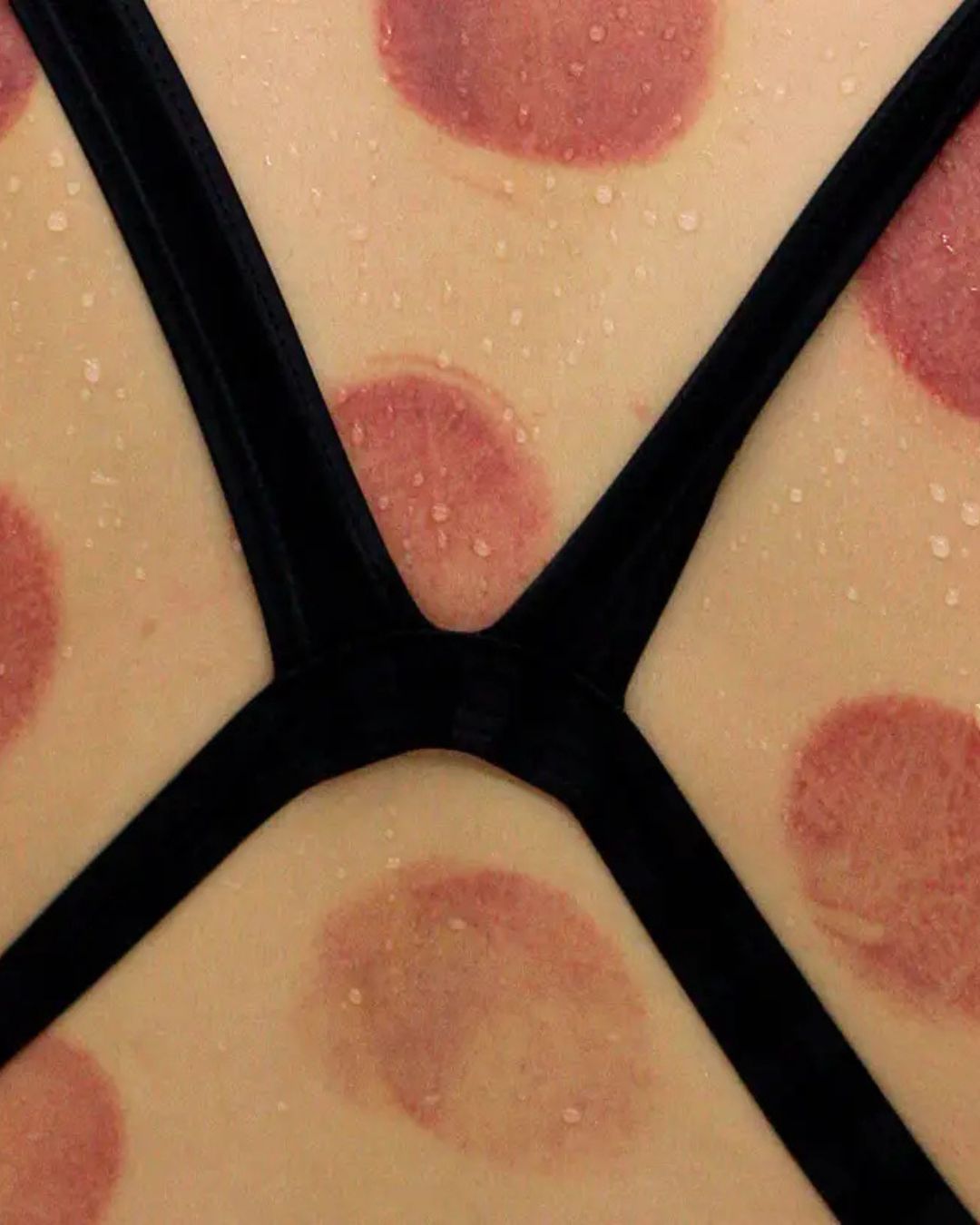
A few weeks ago, I walked into a Chinese wellness center in Milan to try cupping therapy. It was one of those experiences you jump into with genuine curiosity, convinced you’ll walk out fully restored. Instead, I ended up with a back covered in purplish circles, an unexpected amount of soreness, and one burning question: why did I put myself through this? They used bamboo cups, the ones rooted in traditional Chinese medicine, and the feeling throughout the session was anything but pleasant. Does something that leaves such an obvious mark on the skin necessarily mean it works? And why are we so willing to endure pain whenever we’re promised physical benefits? Meanwhile, across social feeds, cupping has found a distinctly more photogenic alter ego. It’s called face cupping: performed with tiny silicone cups, it promises a smoother, more radiant, and depuffed face. Two seemingly worlds-apart experiences sharing the exact same mechanism: using suction on the skin to produce an effect. Here’s what actually sits between a traditional ancient treatment and a thirty-second beauty tutorial.
From traditional chinese medicine to dark circles on your back: what is cupping?
Cupping, or cupping therapy, has been practiced for centuries across various healing traditions, notably Chinese medicine. The premise is simple: cups are placed on the skin to create negative pressure, either through heat or manual suction. The skin is drawn up into the cup, generating localized effects on tissues and superficial circulation. Techniques vary: cups can be left static for several minutes, glided across the skin, used dry, or paired with tiny incisions (wet cupping), each carrying different risks and precautions. The cups themselves range from glass and plastic to silicone and bamboo. The infamous circular marks left in their wake are caused by the rupture of tiny superficial blood vessels triggered by the suction. They are not toxins being purged from the body, despite popular lore. In fact, that’s one of cupping’s most fascinating traits: the sheer visibility of the aftermath. Walking out of the center, my back mapped out precisely where every single cup had landed. Yet those bruises didn’t prove the treatment had drawn out impurities or dissolved deep muscular knots. First and foremost, they simply proved that my skin had reacted to mechanical trauma.
If it leaves a mark, does that mean it works?
Over the past few years, cupping has surged in mainstream visibility, largely thanks to pro athletes flaunting dark red or purple rings across their backs. The visual is striking: a peak-condition body, a slightly esoteric ritual, and bruises that read like badges of an ultra-intense recovery routine. It’s no shock that such a visual therapy has caught fire beyond locker rooms—but where does the science actually land? Select studies suggest that cupping may offer temporary relief for certain types of musculoskeletal discomfort. However, the quality of available clinical evidence remains largely limited, falling short of proving its efficacy across the myriad conditions it’s touted to cure. Furthermore, there is no robust scientific proof that cupping draws out toxins or detoxifies the body. That doesn't mean anyone feeling lighter post-session is making it up. The concept of wellness is nuanced and deeply subjective, frequently intertwined with genuine relief and relaxation. The challenge lies in untangling subjective perception from what can scientifically be attributed to the treatment itself. In my case, the aches and lingering bruises definitely took center stage over any sense of bliss.
Face cupping is the beauty-coded spin on traditional suction
While traditional body cups leave undeniable purple rings on your back, the tools used on the face are marketed through a completely different lens. Face cupping has cemented itself as a staple among the countless facial massage rituals sweeping TikTok and Instagram, rubbing shoulders with gua sha, face yoga, and lymphatic drainage methods. The stars of the show are small, pliable silicone cups designed to glide across the skin with the help of a facial oil or slip agent. The claims sound irresistible: debloating, instantly sculpting, stimulating microcirculation, and serving up an immediate glow. A few fleeting perks tied to blood flow and mechanical drainage are entirely plausible. What’s missing, however, is solid clinical data backing up long-term improvements in fine lines, skin laxity, or collagen production. More crucially, face cupping differs on one non-negotiable rule: you should never, ever bruise the face. Excessive suction, dragging too hard, or using them over compromised barriers can trigger irritation, broken capillaries, and hematomas. If you deal with rosacea, vascular fragility, or active flare-ups, DIY cupping is best avoided without consulting a dermatologist. That’s precisely why face cupping pulls us in: it repackages an ancient modality into something bite-sized, slips it into our evening routine, and turns it into a soothing self-care moment.
Does wellness really need to leave a mark to count?
Looking back at my afternoon with bamboo cups, what surprises me isn’t having tried a treatment I’d never repeat—it’s how automatically I assumed an ancient, renowned practice would inherently do me good. Staying curious is one of the best parts of the beauty and wellness space, especially when it invites us to explore different cultures and ancestral traditions. But curiosity shouldn't stop us from asking questions, nor should it persuade us that a ritual is miraculous purely because it’s ancient, viral, or painful. We can thoroughly enjoy a facial massage without expecting it to reshape our bone structure. We can respect traditional Chinese medicine without assuming every single modality is an automatic fit for our bodies. And we can absolutely walk out of a wellness clinic thinking that, this time around, it just wasn't for us.
What to read next

Vampire fangs are not only for Halloween
What drives someone to alter their smile to look like a fictional creature?