

















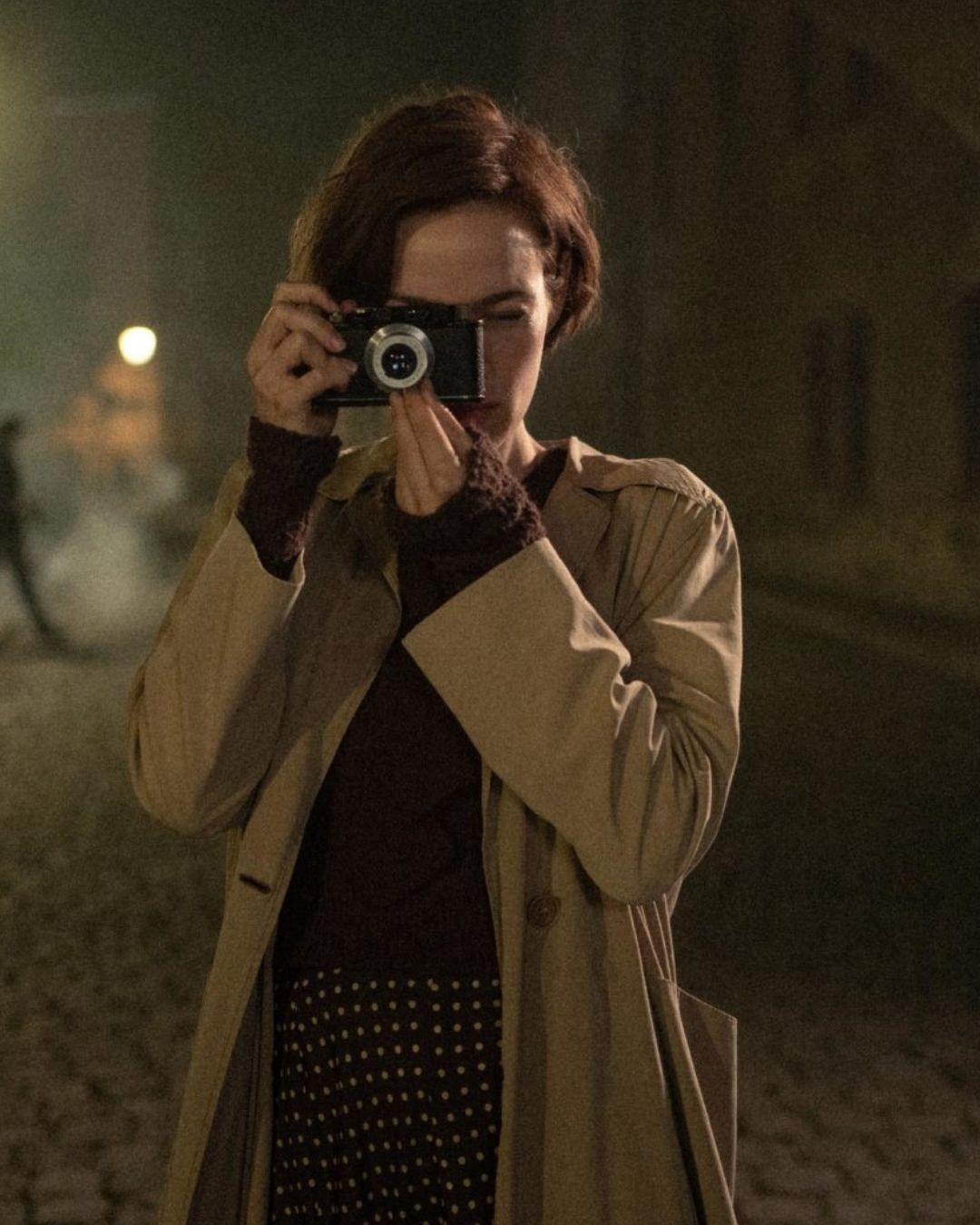
The girl with the Leica is the faded portrait of Gerda Taro Alina Marazzi's film is the opening title of Orizzonti a Venezia 83
The need to testify is strong in many professions. There are those who do it through journalism, those who bring films to the cinema, some by taking photos. This is the case of photojournalist Gerda Taro, whose story is revived by director Alina Marazzi, transporting us back to 1937 Paris, before setting out to tell the events and destinies of people on the Spanish front. Or at least, that's the intent of his film The Girl with the Leica, which premiered at the 83rd Venice Film Festival and the opening title of the Horizons section.
The cinema of reality and the archival work of Alina Marazzi
Marazzi, with a documentary background and the fictional film Tutto Parla Di Te with Charlotte Rampling released in 2013, carries out his raw material with skill: the cinema of reality and archival work. Present and vital factors within the biographical operation of the photographer who gave her life for her profession, a fighter in her positions, as well as convinced of the purpose of the lens as a weapon with which she could play a role in the fight.
Conquering freedom is an act that can pass as a snap and Gerda Taro knows it well. Even the director and screenwriter knows it, writing together with Valia Santella and starting from the novel of the same name by Helena Janeczek. However, this is not enough to transmit it and tell it to the public, with the work that fails when it comes to giving a solid and satisfactory portrait of the professional, not even focusing on it for a second.
The figure of Gerda Taro between personal ties and war photography
Even photography soon becomes marginal, leaving more space for the bonds that the protagonist established in her young life, before she was cut short too soon. An art that should have been in theory the fulcrum of Taro's existence, and therefore of the film's narrative, which instead gradually fades on the screen, becoming an element like the others. The writing puts very little focus on the figure of the young woman as a war photojournalist, an aspect that remains practically foreign in the reconstruction of the events of The Girl with the Leica. The shortcomings of the film create dissonances within the film.
The girl with the Leica, the cast and the missed opportunity
The result, therefore, is altered. There is no homogeneity between the work done by Marazzi with the archive and what is constructed through staging. Even the cast of international faces screeches and is not faithful to the analog air that the film would like to have. The protagonist of Emilia Schüle is a more empty figure than she should have and interpreted superficially. This is also the case with colleagues Aaron Altaras, who plays the photojournalist's work partner and life partner, the photographer Robert Capa, or the actress Luna Wedler, a promising young woman of Swiss origin who won the Marcello Mastroianni prize for young performers at the Venice Film Festival thanks to the beautiful Silent Friend. When The Girl with the Leica ends, the most disappointing thing is that not much more is known about Gerda Taro than when she entered the theater. Of his revolutionary spirit, of his contribution to the work of a photojournalist, of the discovery of his photographic corpus years later. A mythologized courage, however, rendered through an inconsistent film which, just like his work, will perhaps have to wait a little longer for it to be truly (re) discovered in the cinema.
What to read next
Real baddies have found their favorite activewear brand
It's called SWT, it comes from Australia and it has just launched a new capsule collection

"I find beauty in what makes me happy"
Interview with Garance Murru, which you've probably seen on TikTok
Halloween make-up inspired by the most iconic runway shows
From Christian Dior by John Galliano to Matières Fécales