



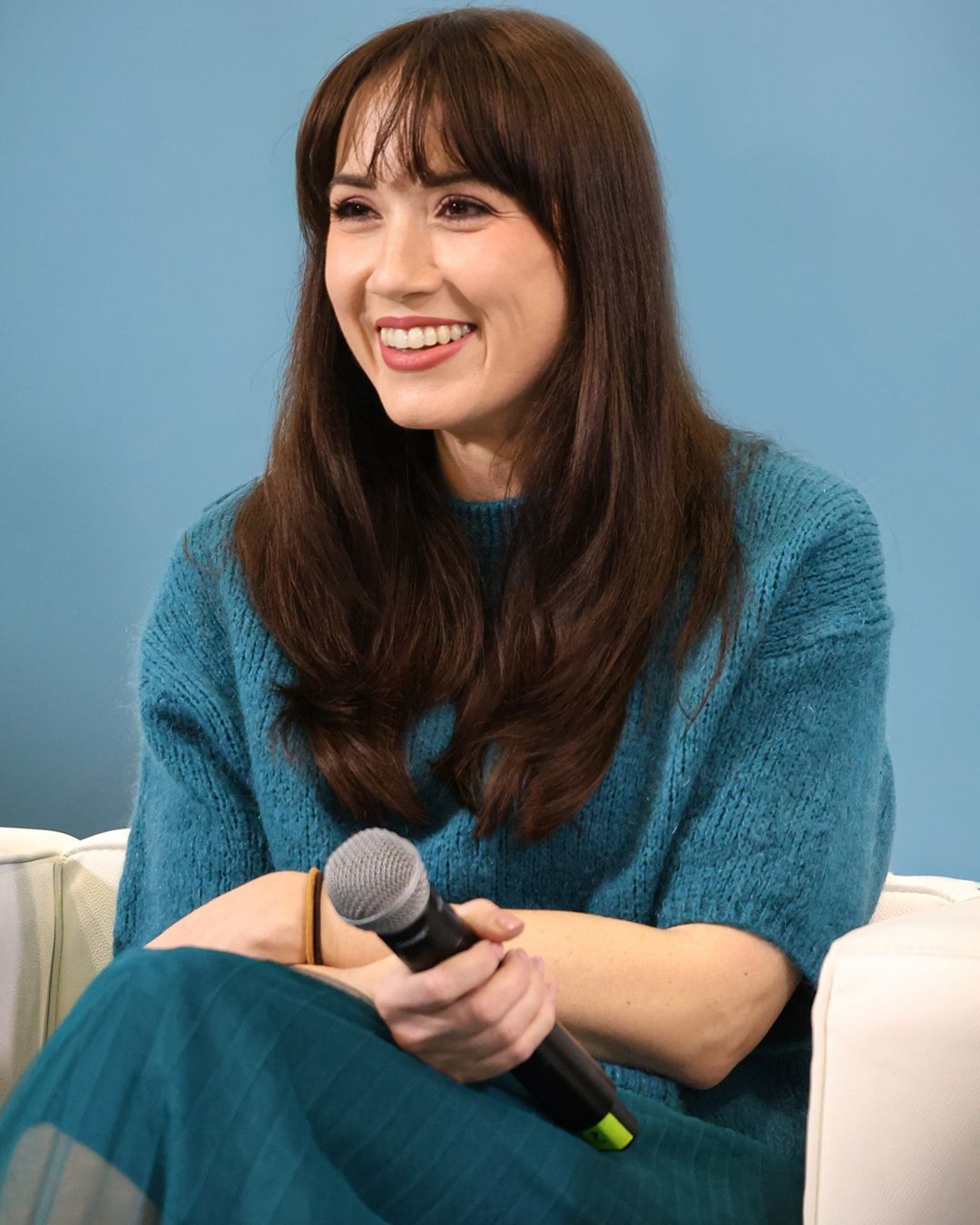
Felicia Kingsley: “Being an author isn’t glamorous for me” The best-selling author talks to us about her creative process, her relationship with her readers, and the lessons she wishes she had learned sooner
Walking through the streets of Taormina, you can glimpse stories coming to life around every corner. One example? Almost every balcony is adorned with a Moor's head, a timeless icon of Sicilian folklore. Behind these ceramic heads lies the legend of a young noblewoman who, upon discovering that her Moorish lover was about to leave her, decapitated him in his sleep and used his head as a vase to grow a basil plant. Speaking of love, though: if there's someone who truly knows how to tell love stories, it's Felicia Kingsley, only with happy endings. She introduced herself to our community as a romance author, a lover of mystery novels and suspense, who has written 18 novels with the goal of "dealing book boyfriends and making us have fun".
The Story of Felicia Kingsley
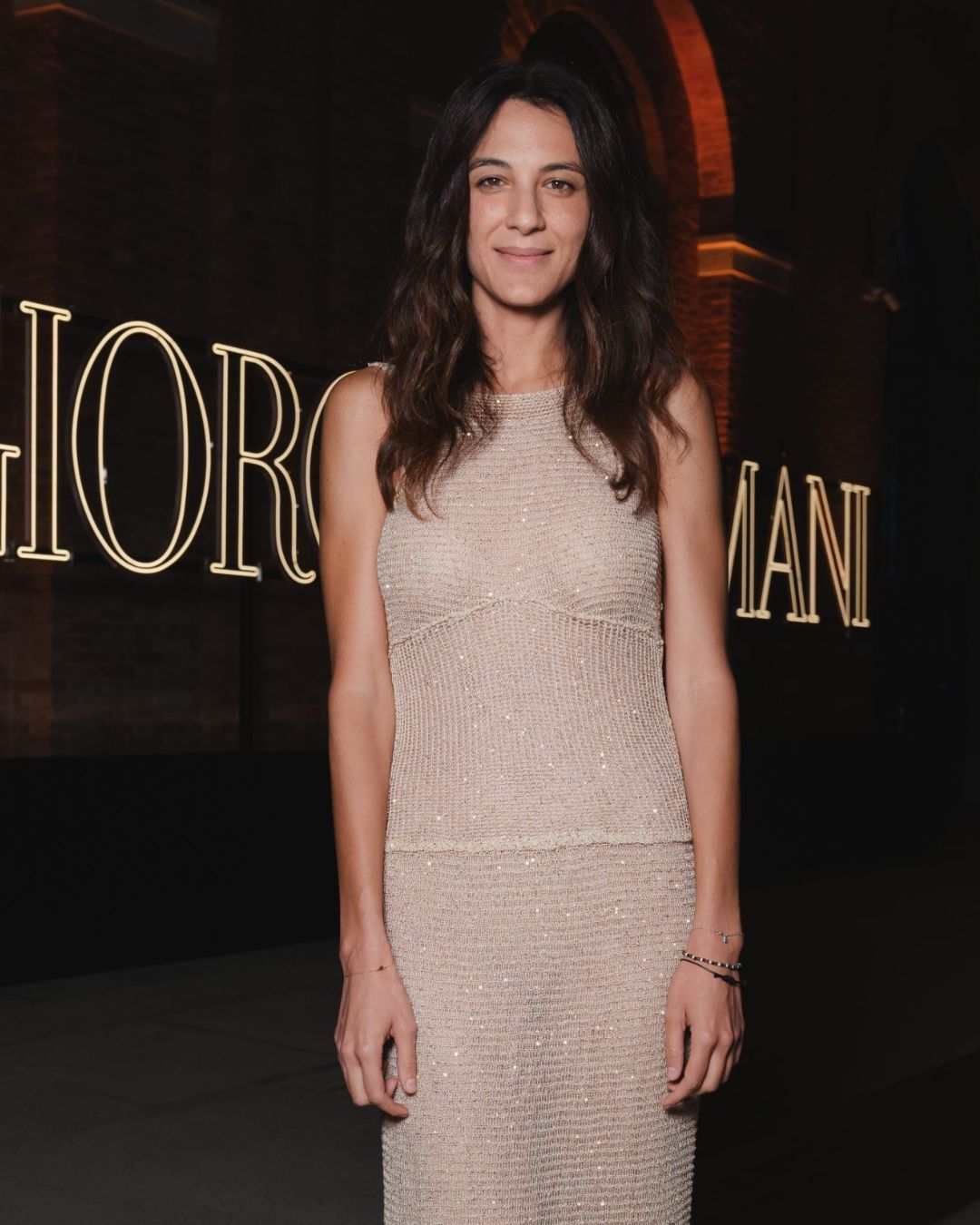
Emilian-born Serena Artioli was still working as an architect when, like in a superhero movie, she decided to put on the mask of Felicia Kingsley, her pen name. Today, she is one of Italy's most widely read romance authors and has produced numerous bestsellers such as Due cuori in affitto and Non è un paese per single, now also adapted into a film on Prime Video. The Taobuk Festival, created by the visionary Antonella Ferrara, brought her to the pearl of the Mediterranean to receive the Premio Sicilia during the evening of June 22. I met her in her natural habitat: a bookstore, more specifically the Ubik bookstore located in Taormina's main square overlooking the panoramic viewpoint. She welcomed me just like an aunt would (which is exactly what her readers call her), ready, for once, to tell me her own story.
Interview with Felicia Kingsley, Italy's Most Read Romance Author
Is this your first time in Sicily? Taormina is a city full of myths and legends, it could be inspiring. Do you think there might be another story after "Midnight in Paris"?
It's not my first time in Sicily, but it is my first time in Taormina. Why not? We don't like to close doors. I've noticed you have plenty of yachts right here in front of us, so there's definitely potential for billionaire romances. We'll see, I'm sure Nick Montecristo would find something interesting here too.
At first, your pen name was also born for professional reasons related to your work as an architect. Now that you're an internationally bestselling author, how have things changed? Do you ever feel a split between Serena and Felicia?
It all started purely because of work-related issues, to avoid bureaucratic complications. Today, I'm still happy with the decision to use a pen name because it allows me to carve out my own personal space and detach myself from the Felicia Kingsley universe.
Like Clark Kent with his glasses?
Yes, more or less. The only difference is that I don't wear my underwear over my trousers.
Following the success of the Off-Campus phenomenon, the debate online about why we love romance novels so much has reignited. While they were once considered simply light, entertaining reads made to help us dream, readers now seem to recognize a new depth in them. Do you agree with this evolution of the genre?
I think every author should write whatever they want, with whatever intention they choose. I write with the intention of entertaining myself and entertaining others. I don't necessarily want to educate readers. If someone finishes one of my books saying, "I had fun," then I've achieved my goal for the day.
What are the most important lessons you hope readers take away from your characters' stories?
There are no lessons. Really, I'm not a teacher and I don't want to be one. I can barely manage my own life, let alone anyone else's. My accountant chases me every month, so I'm definitely not the kind of person who can say, "In this book I'll give you an answer or the meaning of life." What I say is: "Look, I'm telling you this story. If you want to stay here with me for two hours, have fun together, and pretend we're living in this universe, thank you for trusting me."
One of your bestselling novels, Non è un paese per single, became a film on Prime Video. What was it like to see your story come to life on screen?
It's actually difficult to describe the emotions. You go from "Is this really happening to me?" to "This is happening because I'm part of it too." It was an experience that taught me a lot. Beyond the excitement of "Oh my God, they're making a movie based on my novel," I'm taking away a wealth of experience that I hope will be useful in the future.
Can you tell us a funny behind-the-scenes story from the set?
I was playing the pastry chef, and I wanted to taste the pastries. The pastry shop set had been designed to look like a real bakery, so it was filled with cakes, pastries, cupcakes, everything. The problem was that production hadn't ordered everything fresh: many of the items had been made by artisans using foam and resin. I didn't know that, so once the scene was over I thought, "Well, let's try this little cake, who will notice if it disappears?" It was made of resin!
One thing I've noticed in your books is that many of your characters write. There's always someone with a pen in hand. When you make them writers, is there a sort of meta-writing game through which you pour your own joys and frustrations as an author, or does it help you look at your profession from a different perspective?
What a deep question. A psychologist might call it transference? But in some way, writing is a world that I am getting to know more and more deeply, so perhaps it comes naturally to give my protagonists professions connected to writing and publishing, whether they are editors, writers, journalists, or screenwriters. These are experiences and information I know firsthand. It's no coincidence that my first novels, Bugiarde si diventa and Stronze si nasce, featured an architect and an interior designer as protagonists. So there too, I drew directly from my own experience.
Your books are famous for the hidden connections of the Feliciaverse: the New York protagonists who play poker every Wednesday, or the European ones who were classmates in high school. How do you remember all these Easter eggs without getting confused?
Don't worry, I do get confused. I constantly have to go back and check things. There are mistakes and timelines that don't add up.
We don't have to tell anyone, right?
We don't have to say it because I don't think anyone has noticed, but I know they're there. Oh well, because the Feliciaverse wasn't planned from the start. I built it gradually as I kept writing novels, so inevitably some pieces don't fit perfectly. Still, I do my best to make everything fit together.
What does it mean to be a writer in 2026, and what advice would you give to someone who wants to pursue this path?
I'm a bit afraid to answer this because it's the kind of answer that sparks controversy. Today, I would say that an author is no longer just an author, meaning not just the person who writes the novel. You need a particular attitude, a personality willing to engage with readers and build a community, to create a network and talk about your own book. I believe that today the author who writes a book and then disappears no longer works, the one who has no relationship with their community and expects everyone else to do the promotion on their behalf.
So we're talking about personal branding?
Not even personal branding exactly. Readers truly appreciate it if, alongside the book, you also give them something extra to better understand it and to find the author within its pages. Is it mandatory? Absolutely not. I'm not saying everyone has to do it. But if you're asking for advice on which approach is better, I'd say it's better to try than not to.
There are many stereotypes about people who do this job. Think about journalists, people expect them all to embody the Carrie Bradshaw archetype.
I write in my closet at home, because that's where my desk fits. So I'm literally shut inside my wardrobe like a little robot. For me, being an author is not glamorous when I'm actually writing, because I'm not glamorous. I'm usually wearing sweatpants, sometimes even with the hood up. Well, here in Sicily you don't really have temperatures that require that kind of clothing, but yes: wrapped up, bundled up, with no makeup on. I don't spend afternoons drinking cosmopolitans with friends. So no, my life isn't glamorous, except perhaps during events, presentations, or book signings. In those moments I do try to make myself look presentable, because I want people who meet me to think, "Felicia really cared about being here", rather than looking as if I'd just fallen off a garbage truck. So I do make more of an effort on those occasions. But no, I'm not Carrie Bradshaw with $40,000 worth of Manolo Blahniks in my closet, mainly because I buy my clothes on Vinted.
What advice would you give to your younger self?
Finish things, finish them! Because when I started writing my first novel, I abandoned it for a very long time. I picked it up, then put it down, picked it up again, put it down again. Twenty thousand times. If I had truly committed to it from the beginning, I would certainly have finished it sooner. Not that writing is a race, but writing is like sports: the more you practice, the better you become. That's simply a fact. So I would tell myself: instead of wasting time, sit down and focus on your work.