












Valeria Bruni Tedeschi: “I felt the need to tell my vision of life” Her statements at Taobuk 2026
“We're looking for some happiness. [...] In beautiful places, in the tablecloths of Flanders, in good wines, in crystal glasses, in kind people... that's where it is!” : these are the words that Paolo Virzì makes Valeria Bruni Tedeschi say in Crazy Joy, during the daring escape of the two protagonists, Beatrice Morandini Valdirana and Donatella Morelli, played by Micaela Ramazzotti.
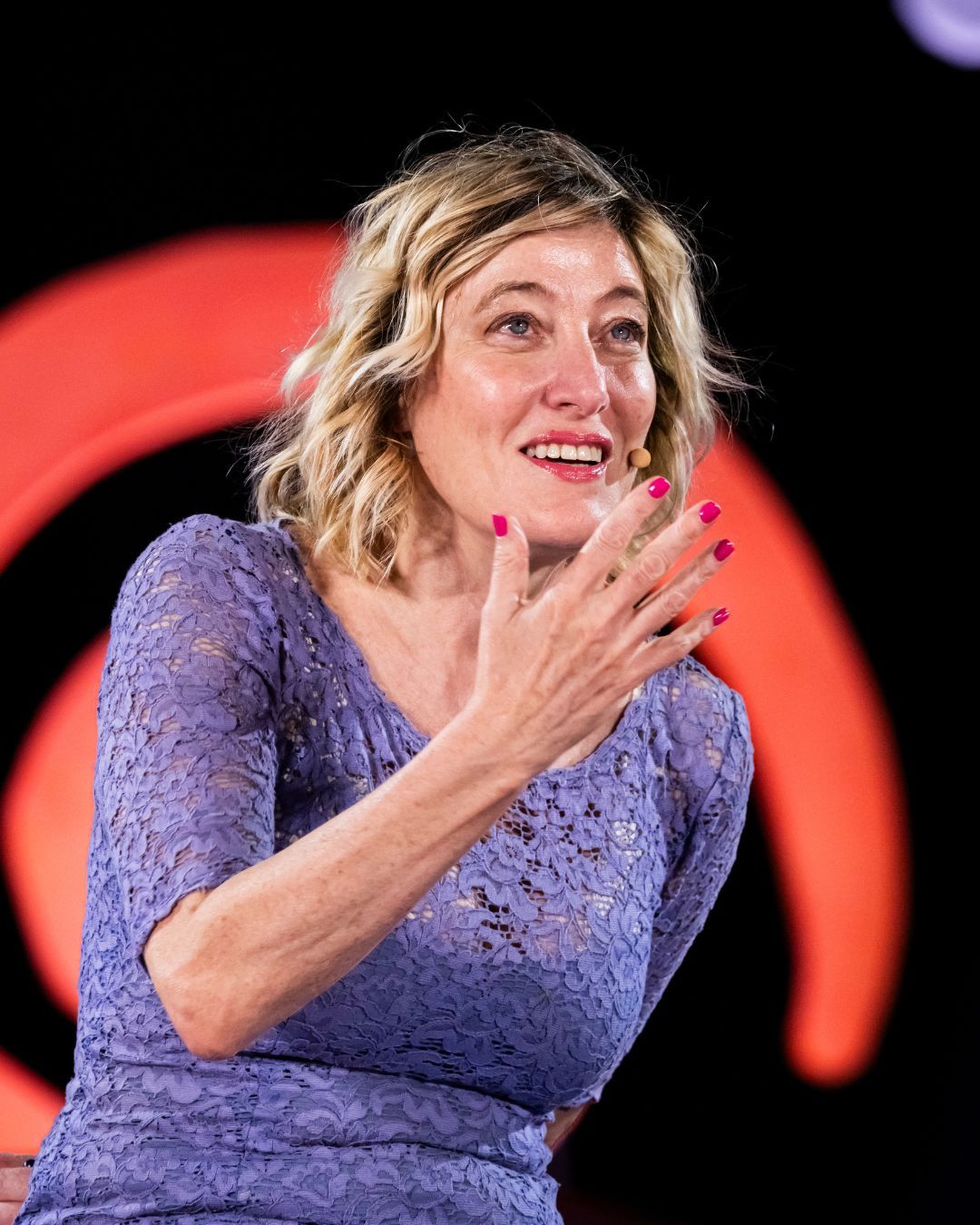
Walking through the alleys of Taormina, perhaps we understand this idea of happiness better. Just like Arianna's thread, an orange trail branches between the roofs and facades of the village, inviting us to rediscover culture and art in all their forms. Saturday, June 20, at Palazzo Corvaja, one of the most anticipated events of the third day of Taobuk took place, the Taormina Book Festival created by Antonella Ferrara: Cinema, Memory and Freedom. The well-known film critic and journalist Paolo Mereghetti accompanied the actress and director Valeria Bruni Tedeschi on a journey along the timeline, retracing the stages of her career and also offering some previews on future projects.
How did the encounter between Valeria Bruni Tedeschi and the cinema come about
The beginning of this story is not about cinema at all. “My first love was literature, more precisely poetry. Then, later, the dance came,” said the actress. Later, theater arrived, a sort of meeting point between these two passions. At this point, Mereghetti couldn't help but ask her why she is so rarely seen on stage today. “I need theater, but for me it's more difficult because it's more dangerous, religious. I only accept projects when there is someone who makes them irresistible.”
The cinema came only at a later date. As is well known, Bruni Tedeschi moved to Paris with her family at the age of nine and made her big screen debut in 1987 with Hôtel de France, directed by Patrice Chéreau. Among the key moments in her film career, the actress recalled her encounter with Mimmo Calopresti, born in 1995 on the set of The Second Time, but also her role in Normal People by Laurence Ferreira Barbosa, who won her the César Award for Best Female Promise in 1993. It's true, France loved it and continues to love it, but Paolo Mereghetti emphasized that Italy has also been particularly generous to him. Valeria Bruni Tedeschi has in fact won four Davids di Donatello for Best Leading Actress for The Second Time (1996), The Word Love Exists (1998), Human Capital (2014) and Crazy Joy (2017), as well as David di Donatello for Best Supporting Actress for The Art of Joy (2025).
Valeria Bruni Tedeschi's directorial debut between autobiography and psychoanalysis
A fundamental turning point was the film The Word Love Exists, in which she plays a complex character, “in a certain sense a victim of her passions and psychoanalysts, but perhaps also saved by love.” The theme of psychoanalysis has often accompanied his artistic career, becoming particularly evident in his directorial debut in 2003 with It's Easier for a Camel... , a partly autobiographical work in which the mother also plays, a recurring presence in almost all of his films. Mereghetti emphasized the constant presence of references to the author's personal life. Just think of Actresses, the second film as a director, which follows the story of an actress exploring the border between reality and fiction. The story of theatrical formation also returns in the most recent Forever Young. Added to these titles is A Castle in Italy, perhaps the most painfully autobiographical work. However, as the critic observed, references to personal experience are always inserted with balance and measure: never in a complacent or excessively melodramatic way, but rather through a self-deprecating look.
The relationship with therapy and the actor's work
To the question “Why did you start being a director?” , Valeria Bruni Tedeschi replied: “I felt the need to tell my vision of life. I wanted to say my words, to sing my songs.” With great sincerity, he then added: “I'm sorry if I hurt someone, if I hurt anyone.” Returning to the topic of psychoanalysis, Mereghetti asked her how important it is for an actor or actress to undertake a therapeutic course. The director explained that she did not consider it indispensable, while recognizing its value: “I think that for an actor, having a place to go and reflect on life can be good for me. It's relaxing to have a place and a personal contact person. I would recommend it, but I have no lessons to give.”