













Full Moon Tourism: why we are starting to plan our vacations around the full moon From moonlight rituals to stargazing, the new luxury is gazing at the sky
Not so long ago, people booked trips based only on the weather forecast, public holiday weekends, or the price of low-cost flights. Today, some travelers check the lunar calendar before they even open Skyscanner. Welcome to the era of Full Moon Tourism, the tourism trend centered around the full moon, one of the most fascinating, aesthetic, spiritual, and vaguely witchy evolutions of modern global wellness travel. After all, it was inevitable. After years spent biohacking sleep, tracking heart rates with NASA-worthy smartwatches, and meditating with apps that even remind us when to breathe, contemporary luxury has decided to take a sideways step. Or perhaps a cosmic one. And so here we are, watching grown adults cross the deserts of Arizona, book retreats in Bali, or organize nighttime hikes in the Dolomites to “release stagnant energy” during the full moon. It sounds like a line from a Gwyneth Paltrow meme. Instead, it’s business. Huge business. According to the Global Wellness Institute, the wellness tourism market will surpass $1.4 trillion by 2027. Inside this increasingly ritualistic and spiritual universe, Lunar Wellness Travel has emerged as a major trend, blending spiritual tourism, astrotourism, holistic practices, astronomical observation, and a new collective obsession with the night sky. In practice, the old “let’s travel in August” has been replaced by “let’s travel during the full moon in Scorpio.” And the surprising thing is that this no longer concerns only Californian yogis, astrology enthusiasts, or Instagram’s digital priestesses. Luxury hotels, spa resorts, astronomical glamping sites, and wellness chains are building entire experiences, skincare included, around lunar cycles. With remarkable seriousness.
What Full Moon Tourism really is
Full Moon Tourism is, quite literally, the phenomenon of traveling or booking experiences during the full moon. But reducing it to a simple astrology craze would be a mistake. This trend combines at least four major contemporary desires: slowing down, reconnecting with nature, seeking emotionally intense experiences, and giving symbolic meaning to travel. The full moon becomes the perfect excuse, a sort of collective cosmic appointment. A night that seems to promise something different from the hyper-rational routine of our LED-lit, Slack-notification-filled lives. The result? Travelers choosing departure dates according to the lunar calendar, booking resorts immersed in deserts or mountains to observe the sky, and participating in emotional release rituals, sound baths, nighttime meditation sessions, and full moon yoga classes. This is the territory of night tourism, also known as noctourism, where the protagonist is no longer the sun but the night itself, and above all, the almost ancestral feeling that darkness can still evoke in overstimulated human beings.
@joelle.nicola So dreamy watching the sun going down and the full moon rising at the sea!!
Seagulls & Sea - Sea Dreams Music Universe
From biochemical wellness to cosmic wellbeing
To understand why Lunar Wellness Travel is exploding right now, we need to observe the evolution of modern wellness culture. For years, wellness was performative and almost clinical, made up of supplements, longevity clinics, intermittent fasting, cryotherapy, vitamin drips, biohacking, and vagus nerve stimulation. Today, however, the cultural pendulum seems to be swinging toward something more symbolic, ritualistic, and spiritual. We are returning to ancient roots, rediscovering old practices, collective experiences, and a more contemplative relationship with nature and the cosmos. It is no coincidence that rituals considered “esoteric” just a few years ago have now entered luxury spas through full moon ceremonies, Tibetan singing bowl sound baths, chakra alignment, guided meditation under the stars, conscious breathing, and energetic cleansing rituals. In this context, the full moon becomes the perfect symbol of emotional reset.
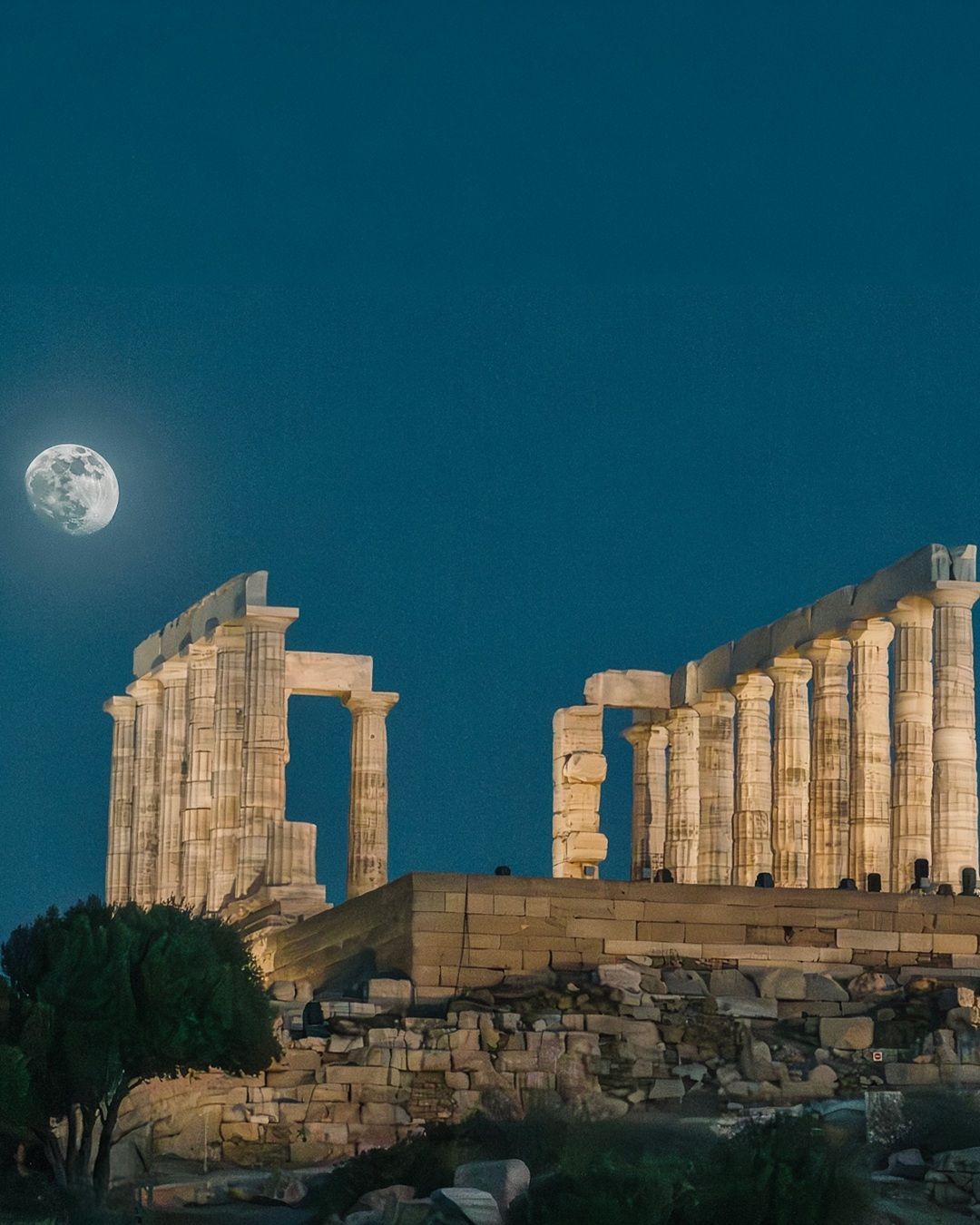
@grecotelresorts As the sun goes down, the full moon rises up, casting its glow upon the Temple οf the Sea God. #Grecotel #CapeSounio #TempleofPoseidon #fullmoon #fullmoonvideos #Sounio #Greece #fy #fypage πρωτότυπος ήχος - Grecotel Hotels & Resorts
Why the full moon has such a powerful appeal
For thousands of years, human beings have attributed enormous symbolic value to the moon. For the Greeks and Romans, it was a deity. In countless cultures, it regulated time, harvests, and tides. Even today, it continues to evoke introspection and transformation. Astrology suggests that traveling during the full moon can amplify clarity and self-awareness because stepping away from routine helps people observe their lives more lucidly. And even those who do not believe in zodiac signs often admit that silently observing the night sky far from cities creates a unique mental effect. There is even a 2016 study linking stargazing to sensations of flow, fascination, and loss of time perception. In other words, star bathing may become the new forest bathing. And perhaps that is exactly the point. In an age of hyperconnectivity and constant overstimulation, the full moon offers something that now feels incredibly rare: an empty mental space where people can slow down, reflect, and feel, even if only for a few hours, part of something infinitely larger.
@shaktisoundbath Feeling Shift ? Join us for our Full Moon Lunar Eclipse Sound Bath overlooking the ocean in Malibu #SoundBath #SoundHealing #VibrationHealing #EnergyHealing #MeditationMusic Spiritual wind bamboo flute healing music(1024346) - Tata Yamashita
What people actually do during a lunar journey
One of the symbolic destinations of this growing obsession with Full Moon Tourism is Mii Amo, a wellness resort nestled among the red rocks of Sedona, Arizona, already famous for its energy vortexes and spiritual atmosphere. As Kristine Thomason recounts in Vogue, the resort’s Spirit of the Full Moon treatment is offered only during the days surrounding the full moon and feels straight out of a cinematic desert ritual. It begins with a sage cleansing ceremony while guests are asked to write down everything they wish to release, fears, toxic relationships, emotional pain, stagnant thoughts. The paper is then burned in a symbolic release ritual, followed by a full-body massage with sage oil that starts at the scalp, to “free the mind,” and ends at the feet, to restore grounding and balance. What is truly interesting, however, is that similar experiences are now spreading everywhere. Modern lunar tourism includes gratitude meditations, energetic rituals, astrological journaling, Tibetan bowl sound baths for chakra balancing, full moon yoga sessions, breathing techniques, mindful movement, guided visualizations, and wellness treatments designed around lunar cycles. In California, the Surf & Sand Resort in Laguna Beach organizes monthly moonlight yoga sessions accompanied by the sound of ocean waves. In Sedona, guests at Enchantment participate in nighttime hikes through Boynton Canyon illuminated only by moonlight. In Greece, Cape Sounio transforms the full moon into an almost theatrical event as the moon rises behind the Temple of Poseidon and lights the Aegean Sea with surreal silver reflections while the resort offers nighttime excursions, sea bathing under the stars, and wellness programs inspired by the thirteen full moons of the year. There are also more playful and celebratory versions of the phenomenon, such as Howl, the monthly event hosted by Hotel Californian in Santa Barbara where every full moon becomes a party featuring vinyl DJ sets, moon-inspired cocktails, and tarot or rune readings. Because modern wellness no longer wants only to heal, it wants to create emotion, connection, and transform travel into a symbolic experience worth remembering.
Astrotourism: when the night sky becomes the destination
Full Moon Tourism is only one branch of the enormous boom in astrotourism. Here, the focus shifts from spiritual energy to the actual cosmic experience of observing stars, planets, galaxies, eclipses, and the Milky Way in places with extremely low light pollution. It is a slow, contemplative, often sustainable form of travel. And incredibly poetic. Astrotourists seek deserts, mountains, forests, remote islands, and certified dark sky reserves. They sleep in transparent domes, astronomical glamping sites, glass igloos, or lodges immersed in total wilderness. Chile’s Atacama Desert has become a kind of mecca for stargazing. Namibia offers some of the clearest night skies on the planet. Finnish Lapland attracts travelers searching for northern lights and Arctic silence. And then there is Joshua Tree, California, where desert aesthetics, cosmic skies, and millennial spirituality seem to have permanently fused together.
Astrological tourism: travel as a birth bhart
If astrotourism looks at the stars, astrological tourism looks at ourselves within the stars. This is where astrologers, birth charts, new moons, planetary transits, and even astrocartography come into play, the discipline claiming that certain places on Earth may be energetically better suited to specific individuals. It sounds like an especially ambitious episode of The White Lotus. But the phenomenon is real. According to Booking.com, a growing percentage of travelers, especially Gen Z and millennials, consider astrological influences when planning vacations. Many choose to travel during solstices, eclipses, or full moons considered energetically significant. In practice, Mercury retrograde now influences more bookings than Ryanair.
The best destinations for Full Moon Tourism around the world
The global capitals of lunar tourism sound like they were pulled from a Spotify ambient playlist. Sedona remains the absolute reference point for spirituality, lunar rituals, and desert wellness. Bali combines local spiritual traditions, tropical jungles, and holistic resorts immersed in nature. The Athenian Riviera offers one of the Mediterranean’s most spectacular lunar landscapes with Cape Sounio and the Temple of Poseidon. Those searching for truly extraordinary skies head toward Atacama, Namibia, Lapland, Iceland, or Jordan’s Wadi Rum, where the landscape feels literally extraterrestrial. Then there are the new frontiers of astronomical luxury focused on panoramic igloos, treehouses for stargazing, astronomical glamping, and resorts with private observatories. Because the new status symbol is no longer just an ocean-view suite. It is a Milky Way-view suite.
@ale_trinchero Nothing more beautiful than the night sky #stargaze #dolomitesitaly #stargazing Originalton - darkvidez
Where to experience lunar tourism and astrotourism in Italy
Surprisingly, Italy is also becoming a perfect destination for Lunar Wellness Travel. Far from urban centers, the country offers incredibly clear skies, astronomical observatories, silent villages, and landscapes ideal for contemplative tourism. Abruzzo, with Campo Imperatore and Gran Sasso, offers some of Europe’s most beautiful skies. Tuscany, especially the Val d’Orcia and Maremma areas, combines cinematic hills with extremely low light pollution. In Trentino, Val di Sole and Val d’Ega are becoming major stargazing destinations. Sicily hosts the Madonie Astronomical Park. Sardinia is investing heavily in astronomical tourism and workshops dedicated to the night sky. In Umbria, spiritual retreats and astrological retreats are becoming increasingly popular. There are also immersive experiences such as San Bartolo: Full Moon from the Sea, an evening excursion in the Marche region among cliffs, the Adriatic Sea, and landscapes illuminated by moonlight. Italy, ultimately, possesses everything this trend desires: slowness, nature, silence, ancient landscapes, and a natural predisposition toward aesthetic contemplation.
@hotgirlantics By far, coolest place I’ve done yoga #atlanta #thingstodoinatlanta #fyp #hotgirlantics #atlantayoga levitation - Aaron Hibell & Felsmann + Tiley
Why Full Moon Tourism perfectly reflects our era
Perhaps the success of Full Moon Tourism is not really about the moon at all. It is about the desperate need to slow down. To step outside the logic of constant performance. To experience moments that feel intimate, symbolic, almost sacred. In a world that keeps us constantly illuminated, productive, and connected, the night is once again becoming a space for imagination. And so millions of people are beginning to do what human beings have always done: raise their eyes toward the sky and search for meaning within that suspended light. With one fundamental difference from the past. Now we book the experience on Booking.com.