




































Randoseru, the Japanese school backpack that spans generations The thousand-year history of Japan's most iconic school companion
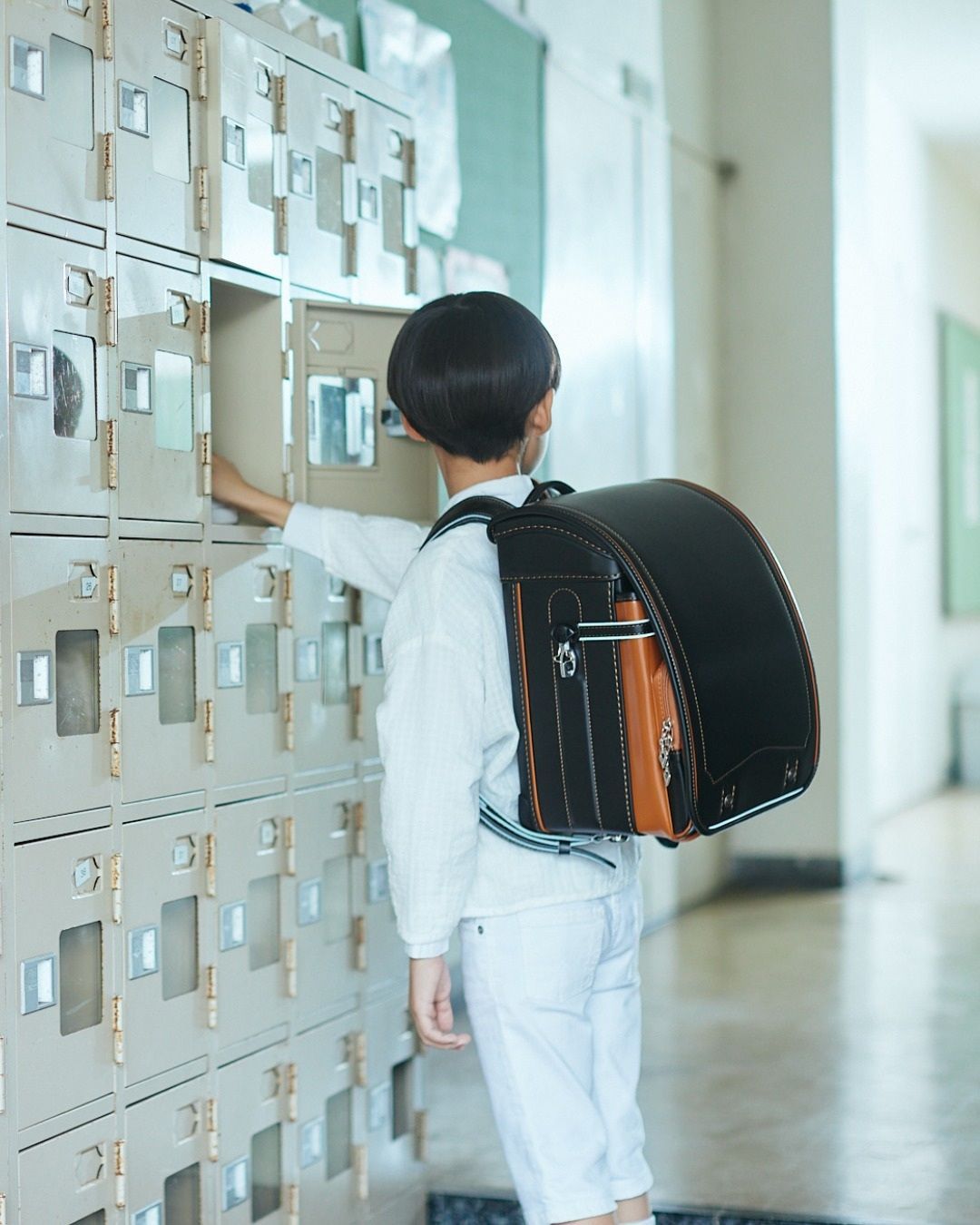
The most beautiful moment before starting a new school year was choosing your pencil case, diary, and backpack. A small ritual that smelled of new beginnings, of fresh paper, and of expectations as crisp as a September morning. A decision that, more than any other, would shape the days ahead in class, because yes, your backpack says a lot about you. It’s an extension of your personality, a calling card. And so, the question became existential: Barbie or dinosaurs? Glitter or eco-friendly materials? Should you already look “teen,” with a sober and mature model, or declare your love for SpongeBob and Rick and Morty to the world without shame? Behind those apparently frivolous choices lay everything: an identity under construction, a sense of belonging, the desire to express yourself through an object you’d carry everywhere, your daily travel companion. And yet, on the other side of the world, in Japan, the scene is completely different. No aesthetic dilemmas, no race for the trendiest model. For millions of children, the choice has already been made, for centuries. Every spring, when cherry trees burst into bloom and the new school year begins, Japanese children all wear the same backpack: the randoseru, a rigid, geometric, almost architectural satchel in its perfection. It isn’t a fashion item. It’s a tradition, a collective ritual that has accompanied generations, becoming part of their emotional memory. A backpack that carries the weight of childhood and, over time, transforms into a symbol of growth, discipline, and sweet nostalgia.
Randoseru, from soldiers’ gear to a backpack of dreams
Like many objects in Japanese culture, the randoseru was born from an unexpected meeting between East and West. In the 19th century, during the period of Westernization that followed the end of the Edo era, Japan was rewriting itself. Dutch soldiers, who had commercial relations with the country, brought with them a type of rigid backpack called ransel. It was functional, durable, made to survive anything. That model inspired the Japanese, who in 1885 adapted it for school use at Gakushūin, the imperial school attended by the children of the elite. When young Prince Yoshihito (the future Emperor Taisho) received his randoseru as an official gift, that military object suddenly became a national symbol. From then on, the message was clear: the backpack wasn’t just for carrying books, it was meant to transmit values. Equality, discipline, sobriety. All students, regardless of family or rank, would carry the same bag on the same shoulders, along the same path. In the Japan of modernization, the randoseru became a small educational manifesto. Every stitch told a story of order and harmony: learning to carry one’s own weight, both physical and symbolic, was part of the journey toward adulthood.
@patrickzhaoo Why does every child in Japan carry this backpack even though it costs up to $1,000? This is the Randoseru, and while it looks simple, it takes over 150 parts and more than 300 steps to make one. But it’s not just about the craftsmanship, it’s built to save a child’s life. Japan ranks third in the world for number of earthquakes and its thick leather shell acts as a shield from falling debris. It can even floatm another safety feature for a country vulnerable to tsunamis. But there’s one other thing that makes it so special. They’re passed down across generations. Parents who once wore them now watch their children do the same This isn’t just a backpack. It’s part of growing up in Japan. If you need help finding the perfect backpack, comment “guide” and I’ll send over my free backpack selection guide to teach you what to look for, what to avoid, and how to pick the right one based on your travel style. It’s also packed with the best recommendations (I’ve reviewed 50+) so you never regret a purchase again! #japan #backpacks original sound - Pat | bag reviews+travel tips
A masterpiece of craftsmanship and patience
Even today, more than a century later, the randoseru is made with a level of dedication that borders on art. Each bag requires over 150 manual steps and between 20 and 30 hours of work, in workshops where silence is broken only by the rhythmic sounds of cutting, stitching, and polishing. Japanese artisans treat each bag like a living creature: they check every stitch, smooth every edge, and finally caress it, as if to bid it farewell before it begins its long adventure on a child’s shoulders. The classic versions are made of natural leather, warm and fragrant, but in recent decades the use of Clarino, an innovative and ultra-light synthetic material, has become common. It’s resistant to rain, falls, and years of wear. Historic brands like Tsuchiya Kaban, Seiban, and Kunio Tsuchiya have become synonymous with excellence. Their work blends tradition and obsessive precision so that a single randoseru can easily last the six years of elementary school without losing its shape. Every detail is intentional: the rigid frame protects books, the thick straps distribute weight evenly, and the magnetic clasp opens with a satisfying click. It’s ergonomic, indestructible, and almost poetic in its functionality. In an era of “use and throw away,” the randoseru remains, faithful, unchanged, and yet transformed each day, because it fills with life.
Price, value, and bonds: when an object becomes an heirloom
The randoseru isn’t cheap: prices start at about $400 and can easily exceed $1,000 for premium leather models. Yet in Japan, it’s never spoken of as an expense. It’s a gift, a blessing, an emotional investment. Many families save for months, and often it’s the grandparents who give it to their grandchildren as a wish for good fortune at the start of school. It’s almost ceremonial: the backpack is unwrapped with reverence, touched, smelled, worn with pride. Some companies, like Sony, maintain the tradition of gifting randoseru to employees’ children, a gesture rooted in the postwar era, when rebuilding meant fostering community ties. This backpack is so deeply ingrained in Japanese culture that, even though it’s not mandatory, almost every child has one. “It’s not a law, but a shared rule,” said Shoko Fukushima, associate professor at the Chiba Institute of Technology, to New York Times. In a country where the collective outweighs the individual, the randoseru has become the visual symbol of a profound message: we all walk together, each carrying our own story on our backs.
Colors, freedom, and small revolutions
For decades, the rule was strict: black for boys, red for girls. But rules, like leather, soften over time. Today, shop windows are an explosion of color: lavender, camel, sky blue, mint, silver, mustard yellow. According to the Randoseru Association, lavender has now surpassed red in popularity among girls, and more and more boys are choosing neutral or pastel shades. The randoseru is no longer a symbol of blind uniformity, but of balance, between discipline and freedom, between personal identity and collective spirit. Many children personalize theirs with kawaii charms, anime keychains, or traditional amulets, turning each backpack into a personal microcosm. It’s as if Japan, while remaining faithful to form, has finally found the courage to color the substance.
@kittenpats bringing back my “cutecore” era ꒰ #aesthetic #kawaii #kawaiicommunity #kawaiiblackgirls #fairykei #fyp #cutecore #cutecore #coquette #randoseru カッチンコールたいりく / Freeze Continent - Soichi Terada
From Tokyo classrooms to the world: the global charm of the Randoseru
In recent years, the charm of the randoseru has conquered the West. You can see it on the shoulders of influencers, designers, and creatives who appreciate its minimalist aesthetic, its sturdiness, and that hint of nostalgia it evokes. In Paris, Milan, New York, the randoseru has become a fashion item, reinterpreted in an urban, unisex key, yet still true to its Japanese soul. Brands like Seiban and Tsuchiya Kaban now export redesigned versions for adults, with laptop compartments and luxury finishes, roomier and lighter, yet faithful to the original shape. Even in this transformation, the randoseru remains a symbol of endurance, of something that grows with you, that ages without losing dignity. It’s tangible proof that the beauty of longevity can coexist with modernity, like a small samurai of design, unafraid of time.
The randoseru and the nostalgia of childhood
Every Japanese child remembers the exact day they received their randoseru. At first, it’s enormous, it seems to swallow them whole. But as the child grows, the backpack seems to adjust, to change shape, to become a second skin. Inside it go books, bento boxes, scented erasers, notes, tears, and laughter. After six years of school, every scratch becomes a fragment of memory. Some keep it as a memento, others transform it into a wallet or an adult bag, while others leave it untouched, a personal relic. In any case, no one forgets it, because the randoseru is the silent witness of a formative time, the first object that teaches responsibility, care, and consistency. At the same time, it’s the perfect example of how an object can tell the story of an entire culture. From military symbol to school icon, from tool of equality to emblem of personal expression, it continues to teach, with the discreet grace so typical of Japan, that the truest beauty is the one that endures over time.