




































Cortisol: the word we’re using to explain many (perhaps too many) things Stress, bloating, and the need to put a name to It
Over the past few months, cortisol has become one of the most frequently used words in the beauty and wellness vocabulary. It’s everywhere: in TikToks about cortisol face, in before-and-after videos, anti-bloating routines, and reels dedicated to water retention, sudden acne, and weight gain. At some point, it seems like everything gets traced back to it. Is your face puffier? High cortisol. Feeling tired? Probably high cortisol. Not sleeping well? It must be cortisol. Experiencing sudden breakouts? Definitely cortisol. The issue isn't that cortisol isn't real... quite the opposite. It's a crucial hormone, closely linked to the body's stress response and survival mechanisms. The real question, as often happens, may be something else entirely: the way we're using this word.
@sciaudone.matteo Se hai questi 3 segnali, non sei grasso: hai il cortisolo ALTO! Mento gonfio, pancia sporgente e ascelle ""paffute"" non sono sempre grasso in eccesso. Potrebbero essere i segnali che il tuo corpo ti sta mandando per dirti che i livelli di cortisolo sono troppo alti. Altri sintomi che potresti riconoscere: Stanchezza cronica anche dopo aver dormito Sonno disturbato e risvegli notturni Annebbiamento mentale e difficoltà di concentrazione Voglie improvvise di zuccheri (soprattutto nel pomeriggio) Ansia e irritabilità costante Il problema? È un circolo vizioso. Quando sei stressato, il tuo corpo consuma il magnesio rimasto. Ma senza magnesio, non riesci a regolare il cortisolo. E senza controllo del cortisolo, lo stress aumenta ancora di più. La soluzione non è comprare integratori a caso (come ti diranno molti ""guru"" online). La vera soluzione è lavorare sulla CAUSA: riequilibrare naturalmente i tuoi livelli di cortisolo attraverso un approccio integrato che considera mente, corpo e stile di vita. Ti riconosci in questi sintomi? Il tuo corpo non è rotto, ha solo bisogno dell'approccio giusto. Non sei tu il problema, è il metodo che hai usato finora. Scrivimi ""NOSTRESS"" SULL'ALTRO SOCIAL e ti invio GRATIS La Bibbia Del Cortisolo, la Prima Guida GRATUITA in Italia per Ridurre naturalmente lo stress e Dimagrire dall'interno! #alimentazione #benesserepsicologico #stiledivitasano #salute #dimagrimento #fitness
suono originale - sciaudone.matteo
When wellness finds a new obsession: the cortisol trend
Every beauty season seems to come with a buzzword that ends up explaining everything. For years, we talked about detoxes, slow metabolism, inflammation, and the microbiome. Now, it's cortisol's turn. The difference is that this word carries an almost reassuring power. It offers an immediate explanation for things we often struggle to interpret. A tired face is no longer just a tired face. Puffiness is no longer simply caused by fatigue, your menstrual cycle, or lack of sleep, it becomes the sign of a body under stress. We're not just looking for solutions; we're searching for a language that can make sense of our discomfort.
The need to understand the body (and simplify it)
In recent years, we've become much more attentive to our body's signals. We monitor our skin, sleep, digestion, and daily energy levels. We look for connections, patterns, and explanations, often with the help of wearable technology and digital devices. On one hand, that's a positive thing because it means we're listening to ourselves more carefully; on the other, we risk turning every physical change into a social-media diagnosis. TikTok and Instagram have accelerated this process. Wellness language today is fast, immediate, and highly shareable. A word like cortisol works because it sounds scientific while remaining easy to understand. It makes you feel part of a collective conversation and part of the trend. This is where the line becomes blurred: are we truly understanding our bodies, or do we simply need a straightforward explanation that makes everything feel more manageable?
How much does cortisol really affect skin, bloating, and weight gain?
To better understand how much truth lies behind this social-media narrative, we spoke with nutrition biologist Sacha Sorrentino. "Cortisol is a hormone that, when chronically altered, promotes water retention and the accumulation of visceral fat, particularly around the abdominal area," he explains. "At the same time, it increases muscle catabolism, leading to a gradual loss of lean mass." According to Dr. Sorrentino, these changes can alter body composition even without a significant increase in scale weight. The skin can also be affected, appearing less firm, more fragile, and more visibly marked by metabolic stress.
Does cortisol face actually exist?
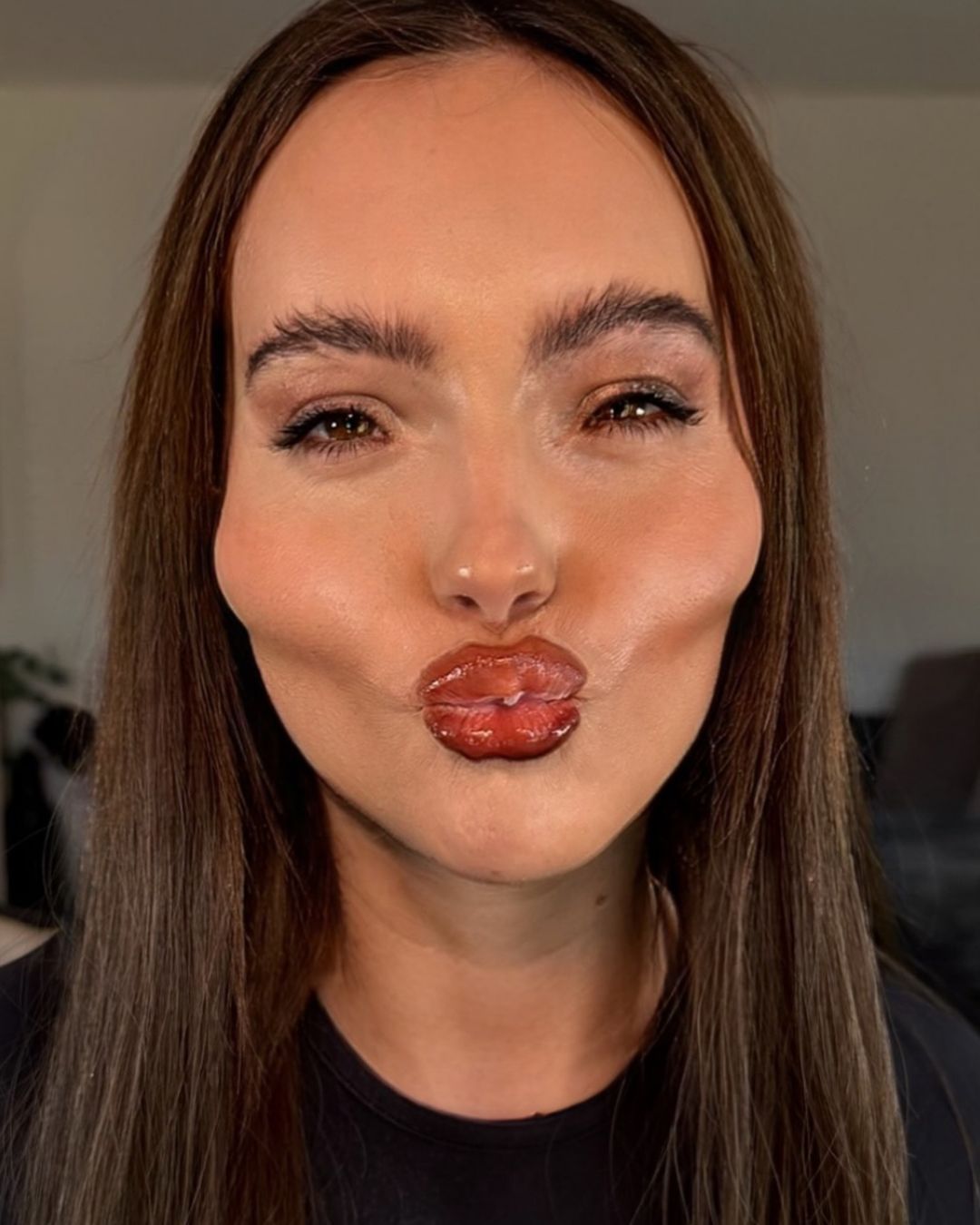
The so-called cortisol face does exist, but the way we discuss it online tends to oversimplify the phenomenon. "An alteration in the cortisol curve can promote fluid retention and inflammation, leading to a puffier face, more pronounced dark circles, heavier-looking cheekbones, and the appearance of a double chin," continues Dr. Sorrentino. "From a metabolic perspective, cortisol also affects hunger, increasing cravings for sugary foods, sweets, and refined carbohydrates." As a result, the issue doesn't only concern facial appearance, but also our relationship with food, sleep, and daily habits. Cortisol is not merely an aesthetic concern—it is one of the ways the body communicates a broader imbalance.
@drbergofficial If your face is round and puffy, try this! #drericberg #cortisol #healthtipstiktok #healthyliving original sound - Dr. Eric Berg - Dr. Eric Berg DC
Beauty joins the conversation
The beauty industry has quickly become part of this narrative. Anti-stress skincare, cortisol support supplements, lymphatic drainage massages, and products designed to reduce facial and body puffiness or improve the skin's appearance during stressful periods are everywhere. Cortisol has become part of a new wellness aesthetic in which the face instantly reflects our emotional state. It's no longer just about glow or anti-aging—it's about balance. Balance. One of the most coveted words of the past few years. The risk, as with every term we begin to overuse without fully understanding it, is that everything becomes too linear. As if every signal from the body needed to be fixed immediately, interpreted instantly, and explained once and for all.
Managing stress without turning it into an obsession
According to Dr. Sorrentino, the goal isn't to fall into a mindset of constant control, but rather to build more sustainable habits over time. "Simple, consistent daily habits can help the body better regulate stress and inflammation without excessive rigidity," he explains. "Maintaining regular sleep schedules, going to bed and waking up at roughly the same time, supports circadian rhythms and hormonal regulation. From a nutritional standpoint, functional snacks and balanced meals that prevent blood sugar spikes can be helpful, including eating vegetables before meals and having a complete breakfast, preferably savory and around 12 hours after dinner. Incorporating foods rich in tryptophan and magnesium may also support the nervous system and the body's physiological response to stress." Not an instant fix, but a more realistic and less performative form of rebalancing.
It's not just stress, it's the way we talk about it
Perhaps the point isn't to determine whether cortisol is "the problem" or not. The real question is why we feel such a strong need to turn emotions and fatigue into something measurable, nameable, and shareable. Contemporary wellness often works this way: it takes complex sensations and translates them into easy-to-recognize buzzwords. The risk is reducing something incredibly complex to a ready-made formula designed for sharing. The opportunity, instead, may be to learn how to listen to our bodies without constantly needing to turn every experience into a trend.
What to read next

Our teenage years were so ugly
Acne, bad hair days, unfiltered photos, and embarrassing moments: maybe it was for the best

Is mycotherapy the new wellness ritual?
Medicinal mushrooms are said to improve everything from concentration to sleep. However, not everything that comes from the forest is miraculous
Get Ready With Me has never gone out of style
A history of the beauty format that, from YouTube to TikTok, has changed form countless times without ever disappearing