





















L'Ozempic has made some content creators even more dangerous Medical procedures do not need to become a trend
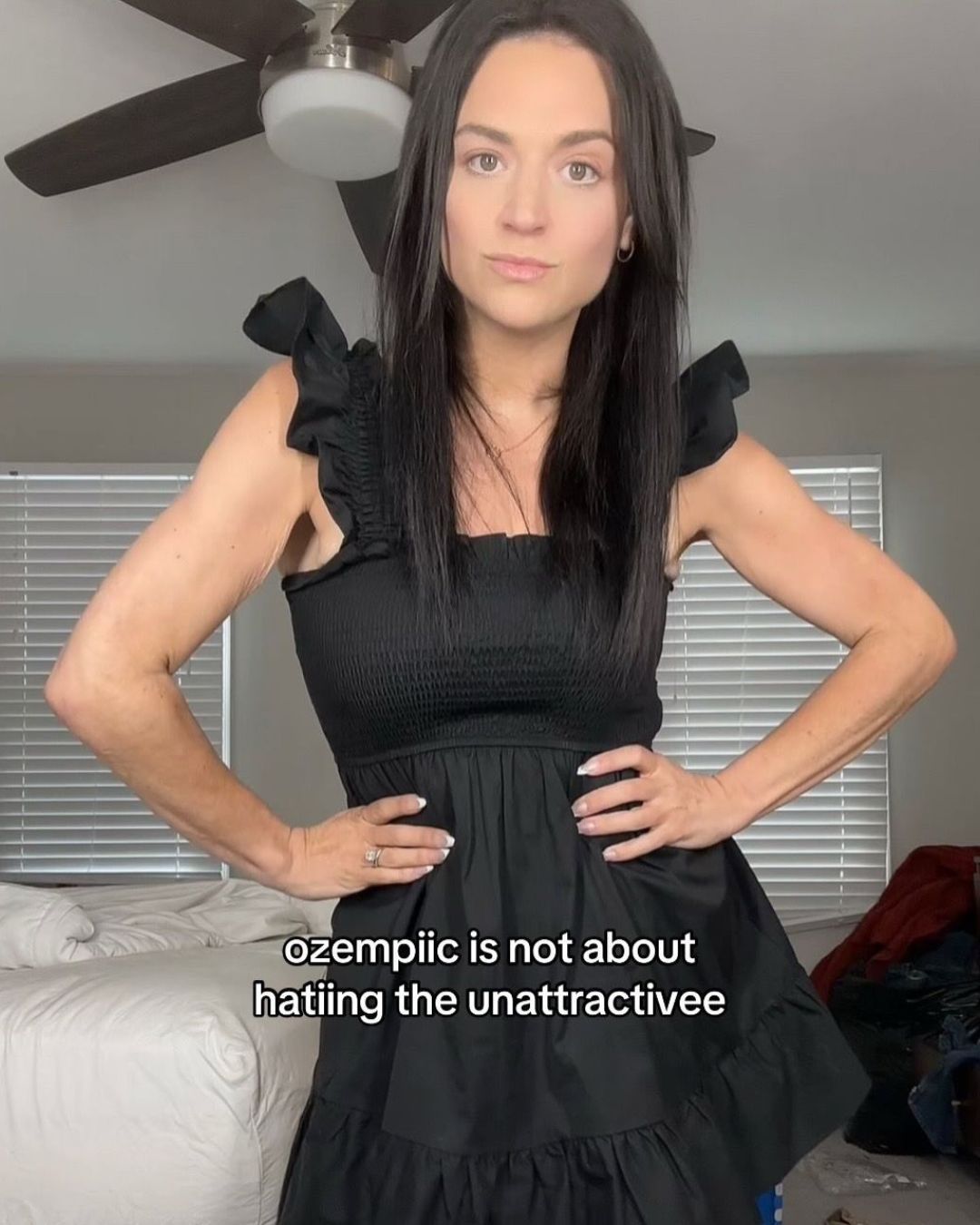
Amy Kane has 222,000 followers on Instagram, 347,000 on TikTok, and the phrases "weight loss" and "food freedom" in her bio. Through her posts, she documents her weight loss journey achieved through Ozempic (though it actually seems to be Mounjaro), which she claims has changed her body, and her life, for the better. She does so with an almost uncomfortable candor, showing, for instance, the skin “left behind” in the process, the surgeries to remove it, her recovery after a “tummy tuck,” and her “Ozempic body.” She shows what she buys, what she eats, where she goes, and how she moves in her new body. She describes herself as a “cheater” and takes pride in it. She boasts about being reborn, about eating unhealthy snacks even though she shouldn’t while on Ozempic. She has essentially become a poster girl for this type of treatment. Her bio features dozens of affiliate links for supplements and diet products from which she earns a commission on purchases. All perfectly legitimate.
Ozempic influencers (and the medical space)
She is far from the only one. We have already addressed the issue of influencer plastic surgeons and “lab coat” content creators who talk about skincare as if they were dermatologists, while clearly not being one. Now, we are also seeing the rise of medical procedure content creators. There are celebrities posting sponsored content with Prenuvo, which offers full-body MRI scans to detect potential issues and critical masses, at exorbitant prices, of course. We’re talking about Kim Kardashian, Paris Hilton, Hilary Swank, Cindy Crawford. Then there’s Bella Hadid, already known for her photo dumps with a medical theme, swallowing countless supplements and pills in front of her iPhone camera. All of this can be traced back, with the necessary distinctions in target audience and scale, to a form of advertising that, while theoretically regulated, often lacks regulation in practice and in ethics, as well as to a type of content creator who amplifies it without hesitation, driven by the desire to profit and to be someone online.
Influencer ethics are, as often, on the edge
You know those content creators who manage to turn everything, literally everything, into material for social media videos? They tell us about their day, what they buy at the supermarket, what they eat, and which medical procedures they undergo. There’s nothing inherently wrong with that, except that a large portion of social media users don’t realize they are passively absorbing a form of promotion. And that’s where the problems begin. While we lose hair, buy more hair clips, and watch celebrities on the red carpet getting thinner by the day, they monetize it one way or another. Even someone like Amy Kane, who technically is “just” sharing her journey, ends up popularizing and normalizing what we cannot truly verify (we only see what she chooses to show us, and our perception of her journey is inevitably filtered) as a medically supervised, controlled, and legitimate process, leading her audience to believe that the same path is accessible to them. One size fits all.
The reality of Ozempic and the harm it is already causing
Ozempic is a drug with clearly defined and limited approved uses (at least in theory), and with a very high number of contraindications. Taking it as if it were a supplement, just because someone else is doing it, or because we feel overweight without actually being so, driven more by psychological than physical reasons, can lead to serious health issues. Cases like that of Layla Taylor, star of The Secrets Lives of Mormon Wives, highlight this: she revealed she is being treated for a severe eating disorder, made even more complex by the use of weight-loss drugs. There is a problem of digital literacy. But there is also a problem of transparency and oversight. How can a patient promote a treatment as if it were an innovative blush or a household product, as if it belonged to their usual content category? And how can we teach vulnerable people to distinguish, and equally vulnerable, but more media-savvy, individuals not to present themselves as experts in something they are not?
