











































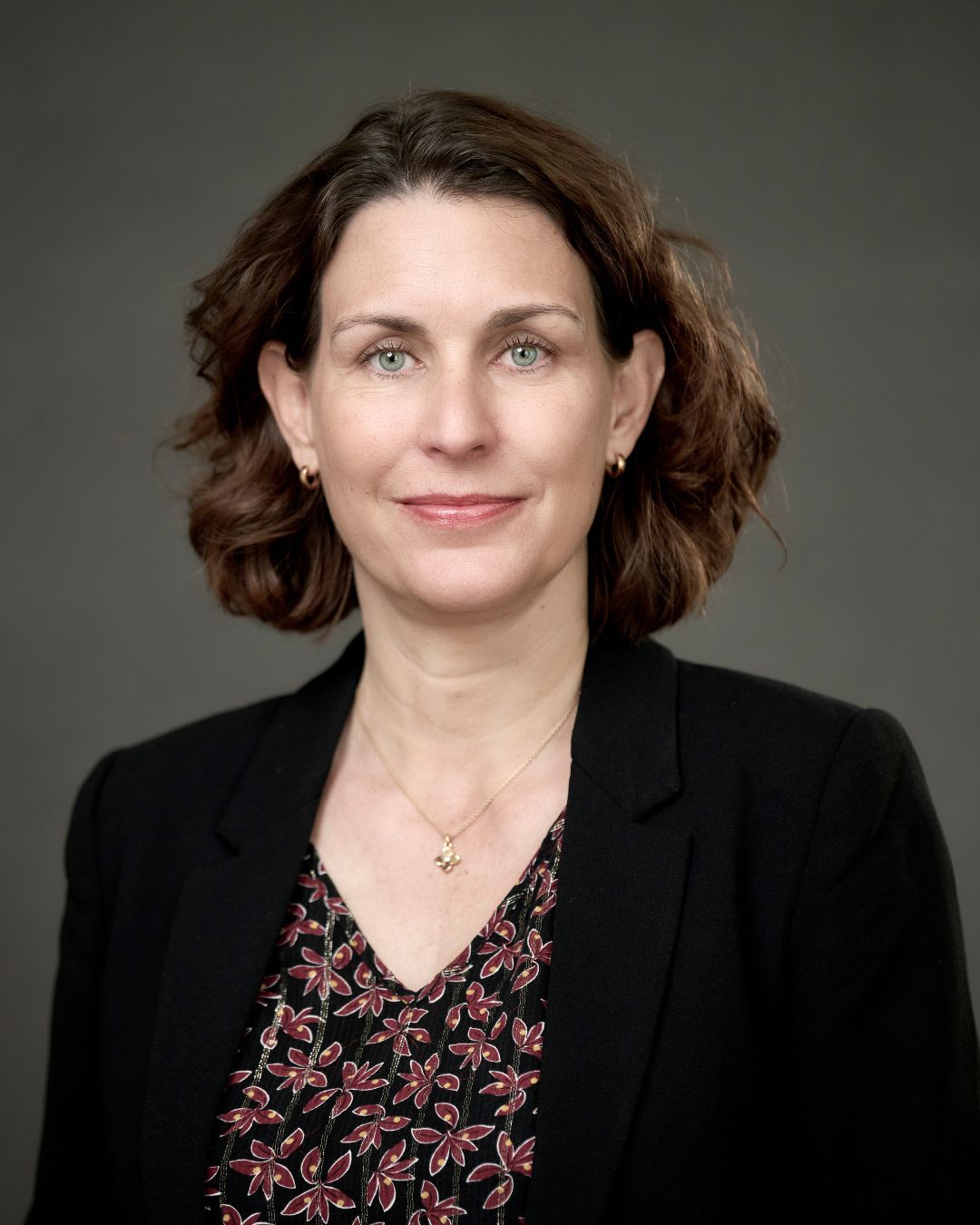
What if we stopped thinking about masculine? Interview with Sandrine Zufferey, French linguist and speaker of the Babel translation festival
Words do things. In a male chauvinist and patriarchal society, for example, even the use of the overextended masculine carries something, even if we wouldn't want it to be. When it comes to translation, the linguistic issue gets even more complicated, as is easy to imagine. As part of Babel, the Bellinzona literature and translation festival, on Saturday 19 September at 3.30 p.m., the dialogue between Sandrine Zufferey and Lorenzo Ciccione will be held at Officina Nephos, entitled “Does the word give shape to thought? What if we stopped thinking about masculine?” Lara Ricci coordinates the meeting. On the eve of the inauguration of Babel, we interviewed Zufferey. This is what he told us.
Interview with Sandrine Zufferey, French linguist and speaker of the Babel translation festival
Introduce yourself to our audience
I teach French linguistics at the University of Bern in Switzerland and I specialize in issues concerning the study of language and society. I also deal with gender categories, how they are represented in French and beyond, analyzing the ways in which languages can lead us to have a distorted representation of reality, to the detriment of gender equality. To this end, I collaborate with experts in psychology to study the mental representations of speakers: how are they formed in the mind? How are they transmitted to others through language? A very topical issue that recently emerged from our research concerns the impact of inclusive language in changing these representations (spoiler: it helps a lot to form fairer representations, compared to the use of only masculine forms!). These studies have also shown that texts written with an inclusive language that respects gender equality are by no means more difficult to read or understand, a classic topic often advanced by those who wish to prohibit their use.
When it comes to gender equality, to what extent does the automatic recourse to the masculine form actually contribute to consolidating our daily prejudices?
The use of masculine forms as a generic representation of all human beings is very detrimental to women (and other social groups that do not identify with masculinity), since it contributes to their invisibility. To prove this, there are numerous studies conducted over the last forty years. For example, if the question: “Cite the names of singers you know” is formulated using the French masculine form (chanteurs) or the double form (chanteuses et chanteurs), the percentage of women mentioned in the answer varies drastically. On average, people say only 20% of women's names in the first case, compared to 40% if both genders are specified in the question. Basically twice as much! In the same way, when people are asked what the percentage of women in a given profession is, for example, among mechanics or nurses, the reported value is always lower when the group is indicated only with the male form, regardless of the stereotype associated with it. All this shows that the use of a masculine form leads people to think specifically about men and not about all human beings, contrary to what the defenders of the overextended masculine claim. But what's worse is that the generic masculine form not only causes people not to think about women, but it causes women themselves not to see themselves represented. Consequently, that opportunities are lost, for example by not applying for a job advertisement formulated with a masculine form or, in the case of girls, not choosing certain fields of study presented in the masculine form.
On the Internet, the words associated with women are always related to physical appearance and sexuality, while those related to men refer to wealth and authority. How deep does this narrative pervade our grammar and how can we eradicate it?
Several studies that have analyzed huge amounts of texts from the Internet have in fact found that the attributes typically associated with the words woman and man differ in a surprising way, even in the current decade. The words most frequently associated with 'man' are: 'rich', 'courageous' and 'honest', while for women these words are: 'beautiful', 'sexy' and 'curvy'... What is perhaps most surprising is a study that compared 45 languages, considering the coding of the genre at the grammatical level. The substantial difference between languages is this: languages that have the grammatical gender, such as French, assign a gender to all nouns, while in other languages, such as Finnish, gender is not part of the grammar. This difference is relevant for the representation of women: in languages that require grammatical gender, words that refer to men, such as him or father, are used more often in positive contexts than words that refer to women, while in languages without gender there have been no equally significant differences. In addition, bilingual people who speak both a language with a grammatical gender and one without, express a greater degree of sexism when they perform a task using the language with a grammatical gender! In summary, we can say that the impact of grammar is profound and difficult to eradicate... so I'm not sure if it's really possible to eliminate it completely. But in any case, the goal of gender-equitable language is to reduce these biases.
Inclusive language and neutral pronouns: a fad or a total revolution?
I don't think that inclusive language represents a total revolution in the way we use language. In many cases, it is simply a matter of using forms that many of us already used frequently, such as double forms in which the masculine is added to the feminine. For example, the greeting formula 'Mesdames, Messieurs' in French was commonly used long before it became a recommendation for inclusive language. In reality, many people who strongly oppose the use of inclusive language hold erroneous opinions. They fear that the language they know will be completely turned upside down for the worse, but, once again, in many cases it's simply a matter of using existing resources. Another good example in French is the use of feminine forms for certain professions, such as “l'avocate”, “the author”, “la juge”. These forms were commonly used until the 17th century, that is, until it was considered inappropriate for women to undertake these careers, and therefore, they were gradually eliminated from the language to make women understand that they were not welcome in these areas. There are those who are shocked by the 'invention of new forms' as an 'author', but in reality we are simply recovering the use of a form that already existed in Latin. Gender-neutral pronouns are indeed new, but the experiences of countries that have been using them for several decades show that they end up being well accepted.
If AI is powered by a sexist internet, how are we going to fix the future?
This is a fundamental issue. AI reflects our prejudices, and studies have shown that, among others, there are also sexist ones. The only possible way is to control the input data we use to train these models. In the near future, this means ensuring that content from the manosphere and other openly sexist sources is not included. But it will not be enough to solve the problem, since sexist materials are often found in unsuspected sources, such as discussion forums. Instructing AI-based chatbots not to participate in conversations on unethical topics is also a step forward, and this aspect is constantly being improved. In the long term, it's about continuing to educate people to make them aware of sexist prejudices and reduce their presence in the texts that we all produce. But there are no simple solutions to the issue.
Babel deals with translation, crossing borders and changing perspectives. But what happens when we translate between gender-thinking languages in totally different ways?
From a linguistic point of view, the translation from a genderless language to one with the grammatical gender and vice versa poses several problems, since languages of the second type attach greater importance to gender representations. In other words, it's a more relevant category for their speakers. In fact, when students who speak a language without gender begin to learn a language that has the grammatical gender, they encounter many difficulties in integrating information related to gender, for example while reading, provided in a text through the use of feminine or masculine pronouns. Not only that. They do so with a higher incidence than students of the same level who, however, speak languages that require the grammatical genre. And this difference begins in early childhood: children exposed to a language with a grammatical gender identify their gender (male or female) on average one year earlier than children who grow up in a genderless linguistic environment. All this shows once again that, for those who speak a language with a grammatical gender, gender is a very important category that must be monitored every time a sentence is produced (remember that all names are assigned to a genre category, even objects). On the contrary, even the translation from a language with a grammatical gender to a genderless one poses problems, because some information is lost. A case in point: the grammatical gender of objects is often confused with the social attributes of biological gender. In French, the sun is masculine (le soleil) and the moon is feminine (la lune). In many cases, this aspect is used to imagine a love story between the two, in which the sun plays the typically male role of seducing the moon, portrayed as a shy woman. It's hard to make all of this in a genderless language!
Is it just a matter of syntax, or are we translating a different vision of patriarchy and gender roles?
Definitely not, it's not just a matter of syntax and the linguistic aspects represent very concrete and often thorny difficulties for translators. But of course, the way in which societies conceive the roles of men and women goes far beyond these linguistic representations, even between people who write in the same language. For example, the novel Les Impatientes, written in French by the Cameroonian author Djaïli Amadou Amal, describes the situation of women living in the Sael, a reality very different from that of other French-speaking communities. The novel won the Prix Goncourt in 2020 awarded by high school students, which shows that discovering the reality of these women was very significant for them. So yes, translation also offers the opportunity to discover other cultures, and sometimes requires the addition of specific notes to ensure a deeper understanding. For me, discovering the world's literatures is certainly one of the most exciting aspects of translation!
Babel is directed by Lara Ricci and Anna Schlossbauer. Program and tickets on www.babelfestival.com.
