








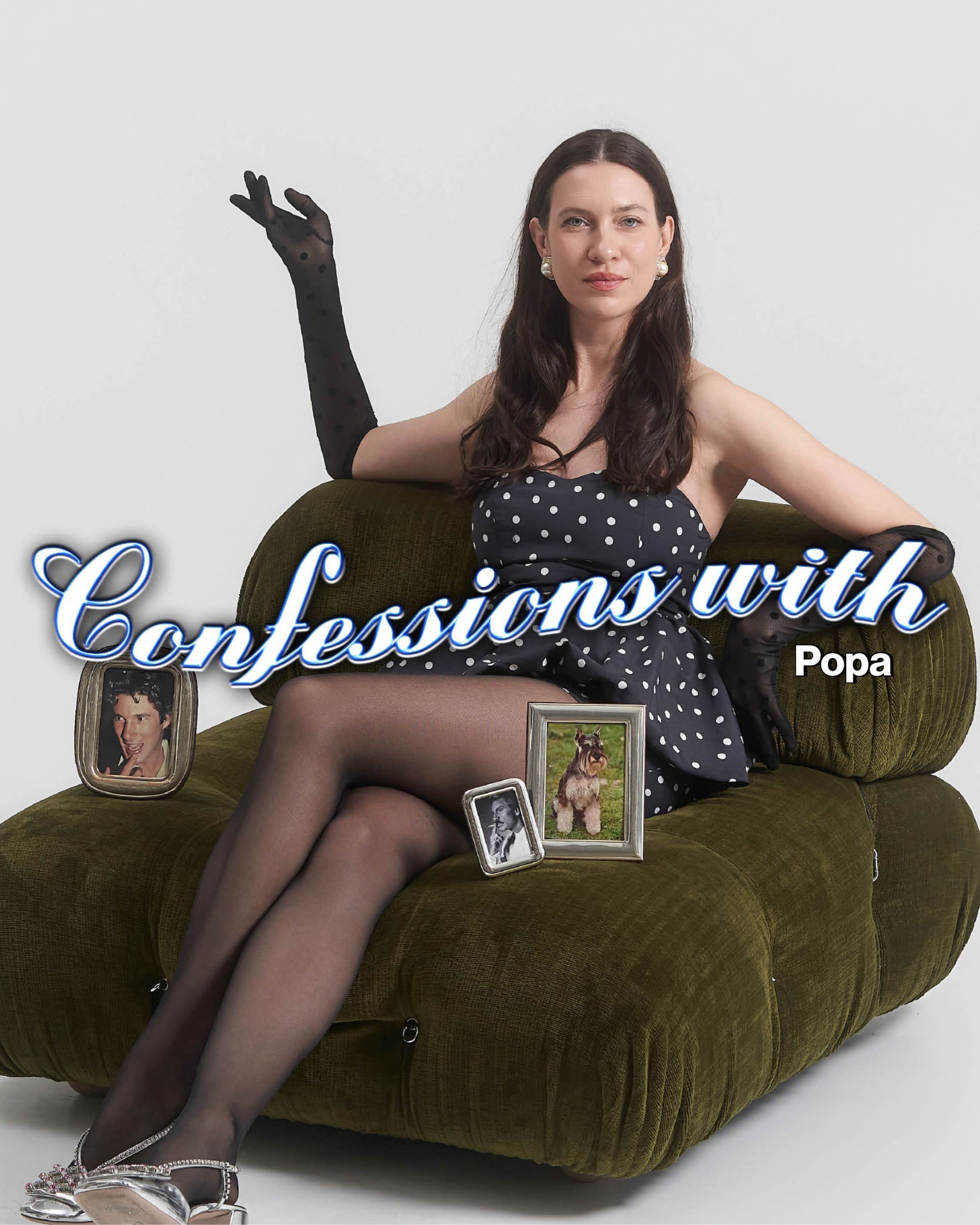
"I create a theatrical and dreamlike universe where anything can happen" Interview with Popa
“Ladies and gentlemen, I’m Popa. I’m Lithuanian, but I sing and write songs in Italian. I come from the Baltic Sea and I also design clothes for chic women.” This is how Popa introduces herself to our microphones, and suddenly a whole series of imaginaries unfolds around us. The imaginaries of Milanese pop, its characters, its ironies - sometimes cruel -and its escape from a difficult world. The story itself is interesting: I discovered Popa thanks to a Dutch friend who, while staying at my place, insisted on playing one of her songs through the living room speakers. It was called (and still is) Sciura milanese, and it marked the beginning of a love affair that brought us straight here, sitting across from each other, chatting.
Interview with Popa, between “Gommage” and “Marzo Beige”
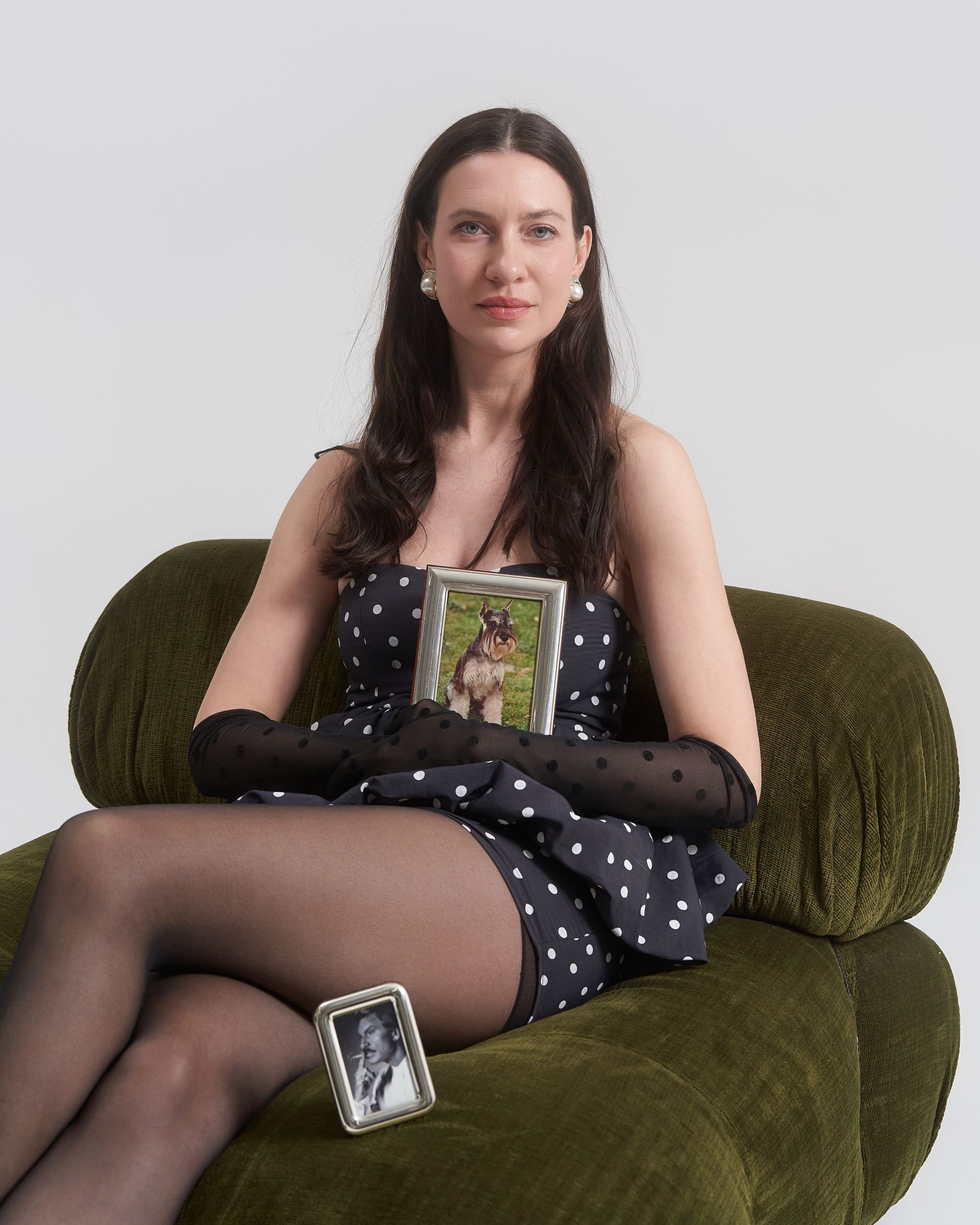
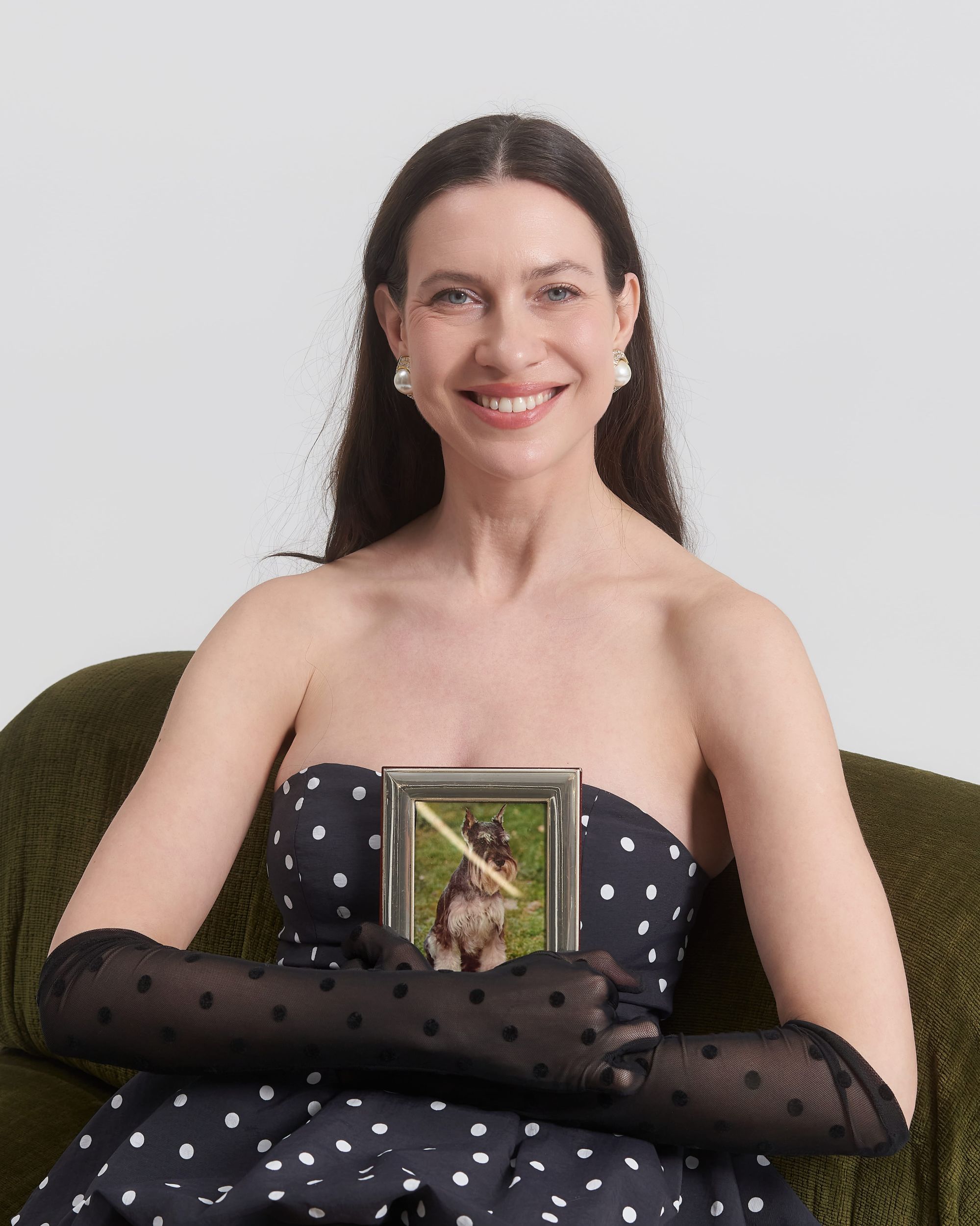
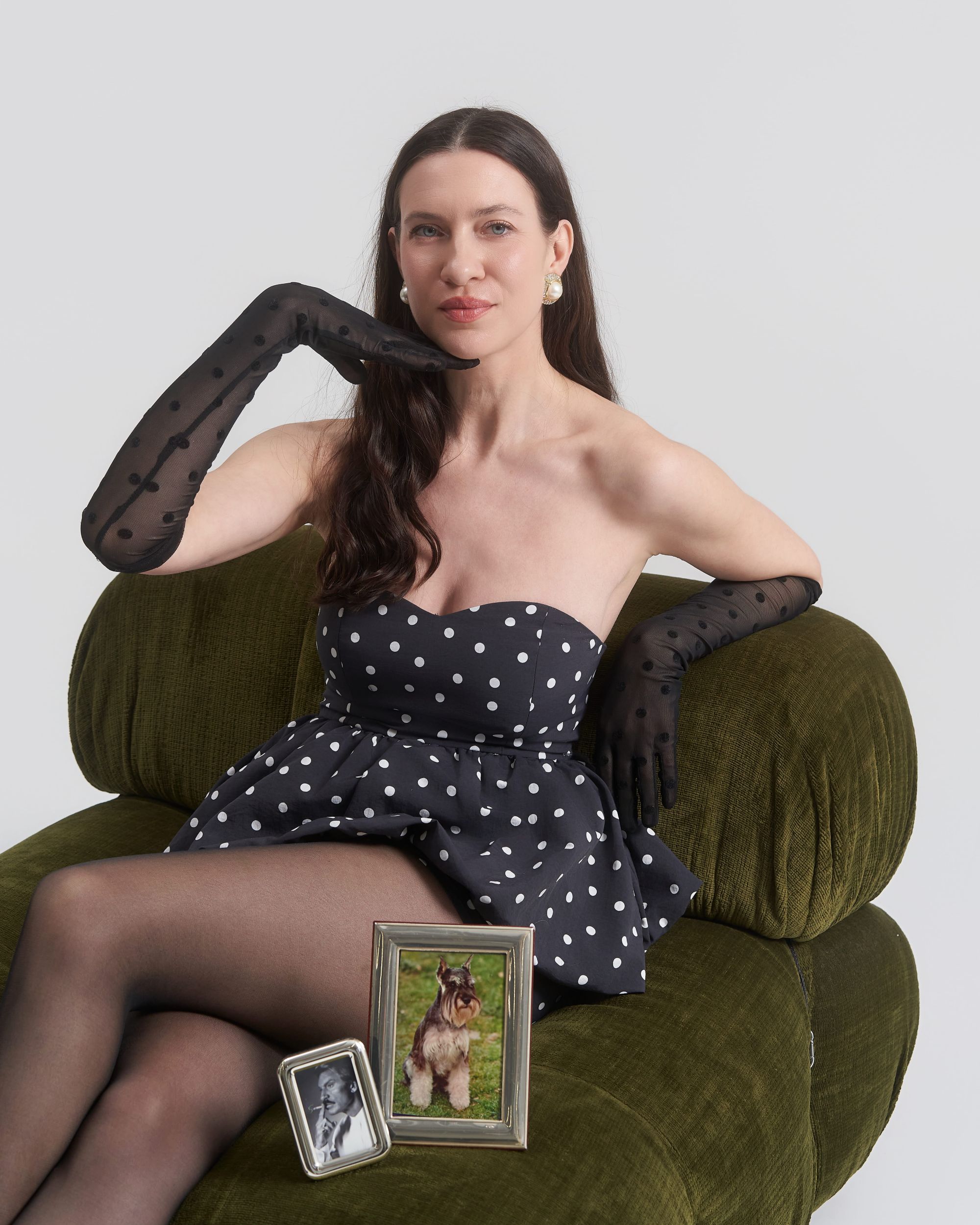
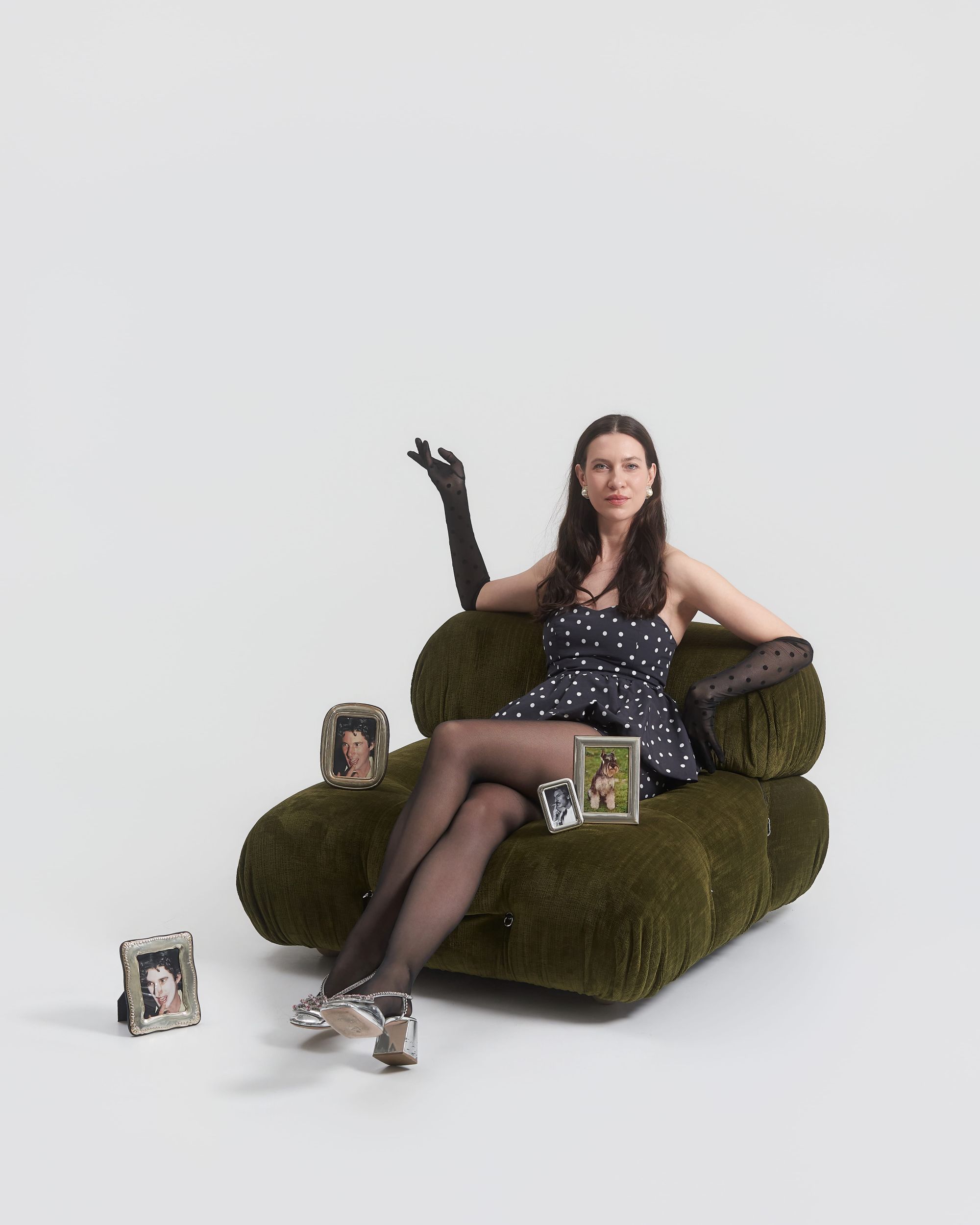
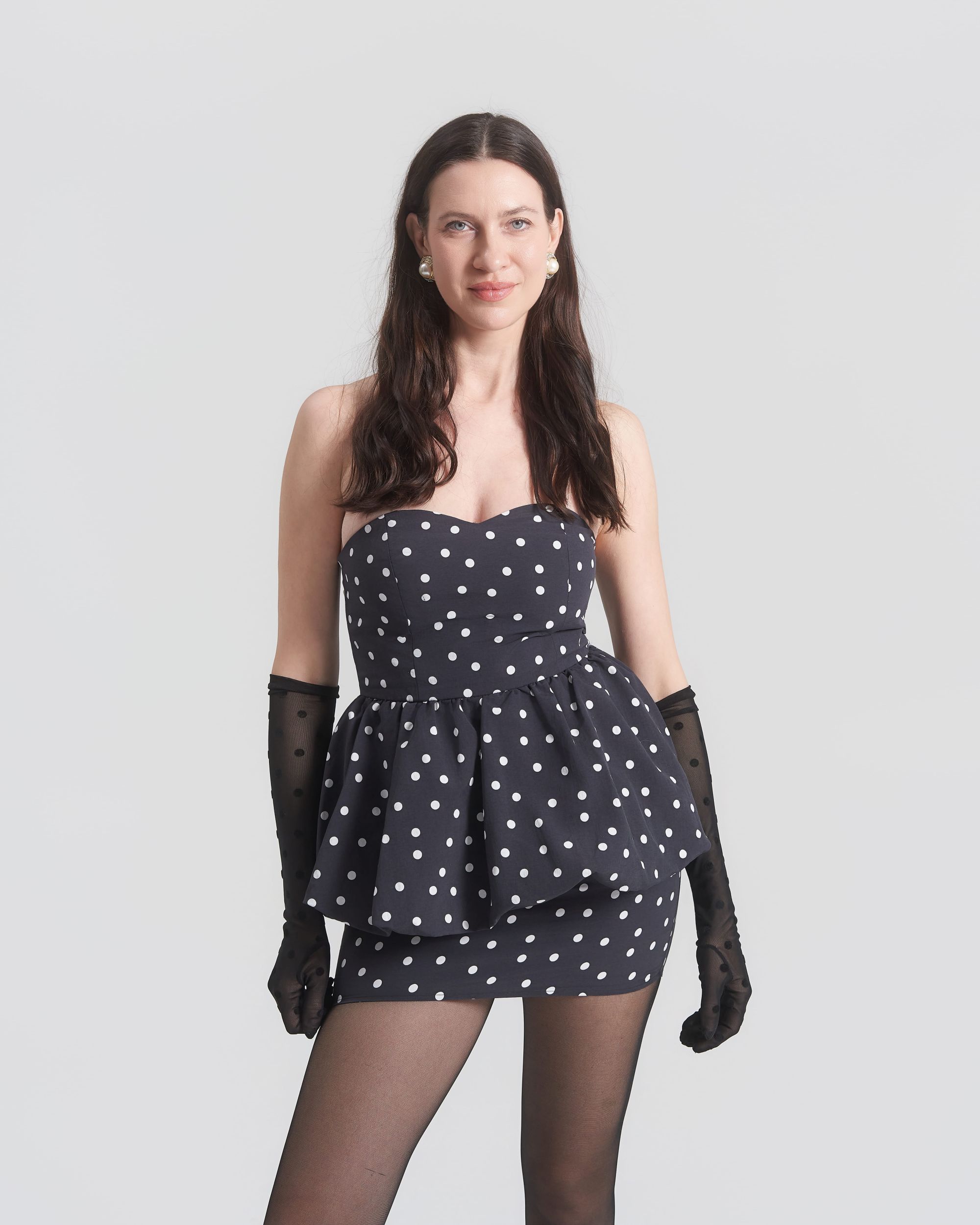
Because Popa, in her polka-dot peplum sheath dress with matching gloves, is a delightful character. Funny, irreverent, light yet deep, extremely pop, all at once. An example? Gommage, one of her latest singles. “It’s a song about an exfoliating and purifying crea. It's magical, the more you use it, the more beautiful you become,” she tells us. “Wanna Marchi would be very proud of me,” she adds, then pulls out carefully framed photos to prove the product’s effects: we see a young Richard Gere with the cream on his face. “The cream was invented by a very talented and eccentric makeup artist and facialist who worked on the skin of Virna Lisi, Liza Minnelli, Ava Gardner. He smokes, but he’s handsome. It’s a song dedicated to men’s skincare.” After Gommage, it’s time for Marzo Beige, her brand-new single, and here the mood shifts. “This song talks about that state of mind you’re in when you don’t want to chase anything or anyone. It’s that time of year when both summer and winter have felt long and boring, so you surrender and patiently wait for days that are less dark, less beige, more smiley. You put on a beige coat, leave the house, have a coffee alone while it’s raining outside. You wake up early, go to work,” but in this story there isn’t too much melancholy. “It’s a romantic song,” she adds, “it talks about Milan, Corso San Gottardo, walks under the Torre Velasca.”
After these two singles, an album is coming as well. “I can’t say the title yet, but it will be out in May,” Popa confirms. “The singles that are coming out now are small episodes of a much larger story that will be told in the album. There will also be a tour. I can’t wait to sing and dance to these songs together with you.” Irony and nostalgia, present, past, and future: Popa’s range is very wide. “It’s the world we live in now,” she says simply when we ask her how she manages to reconcile all these things. “There are so many problems every day, but I use lightness and irony in my lyrics and in my approach, also to avoid going crazy. I always try to find a positive side to things, a bit of sweetness and irony,” she adds. “I come from Lithuania, where it’s always cold and there’s little sun, so you have to be creative to find a ray of sunshine in everyday life. With my music, I try to lighten the air around us and enjoy small moments of joy.”
If we keep digging through the layers that make up Popa and her music, we also find a nuanced female figure, full of surprises. “My songs talk about a woman who is independent, vulnerable yet powerful, romantic, nostalgic, both the star of her own life and its spectator at the same time.” It’s no coincidence, then, that among her inspirations there are so many women. “Figures like Amanda Lear, Catherine Deneuve, Ornella Muti, Dalida, the chansonnières, are hugely inspiring to me. I also do research on TV commercials from the ’60s, ’70s, and ’80s. I watch old Valentino runway shows. I like observing Italian life, chic women walking down the streets of Milan.” In the end, Popa has become something of an icon of Italianness around the world, and even if she doesn’t consider herself one, she confides: “I like to think that people who aren’t Italian, when they listen to my songs, are reminded of Italian moments, like dinners and walks through the streets of Rome.”
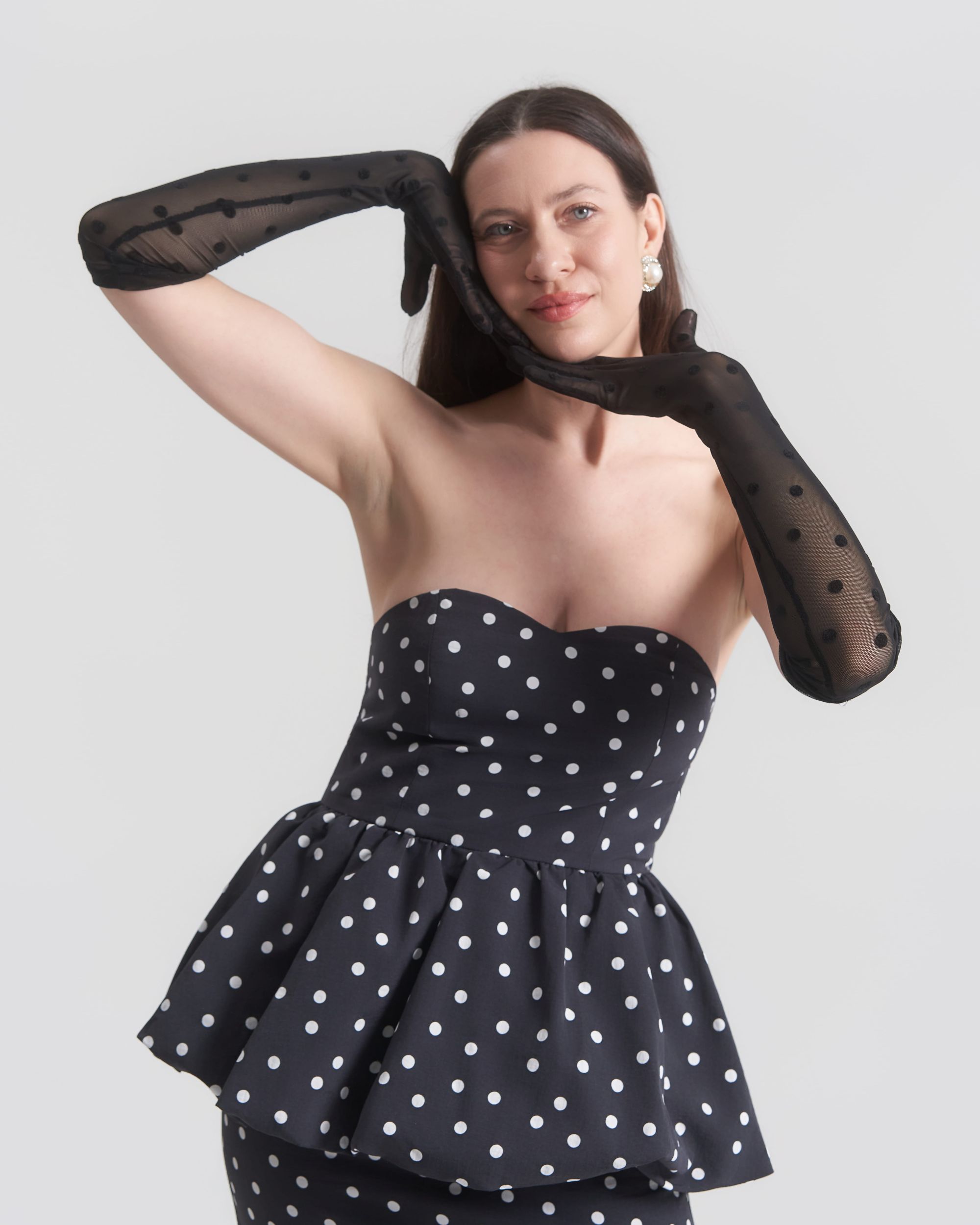
Now, though, let’s talk about looks and make-up and how, for Popa, they help build something. “Every song is a story. Make-up and looks help tell it better. Aesthetics are fundamental, I visualize stories as if they were a film or an ’80s TV commercial. I create a theatrical, dreamlike universe where anything can happen, suspended between dream and reality, escaping the gray asphalt of the city.” One product she can’t live without? “A peach-colored lipstick can save you in any situation.”
Finally, we ask her for a piece of advice for those who want to enter the music world. “Always be yourself, even if it feels out of fashion,” she says with a smile. “Observe, listen. Talent is important, but even more important is having imagination and creativity.”
