




















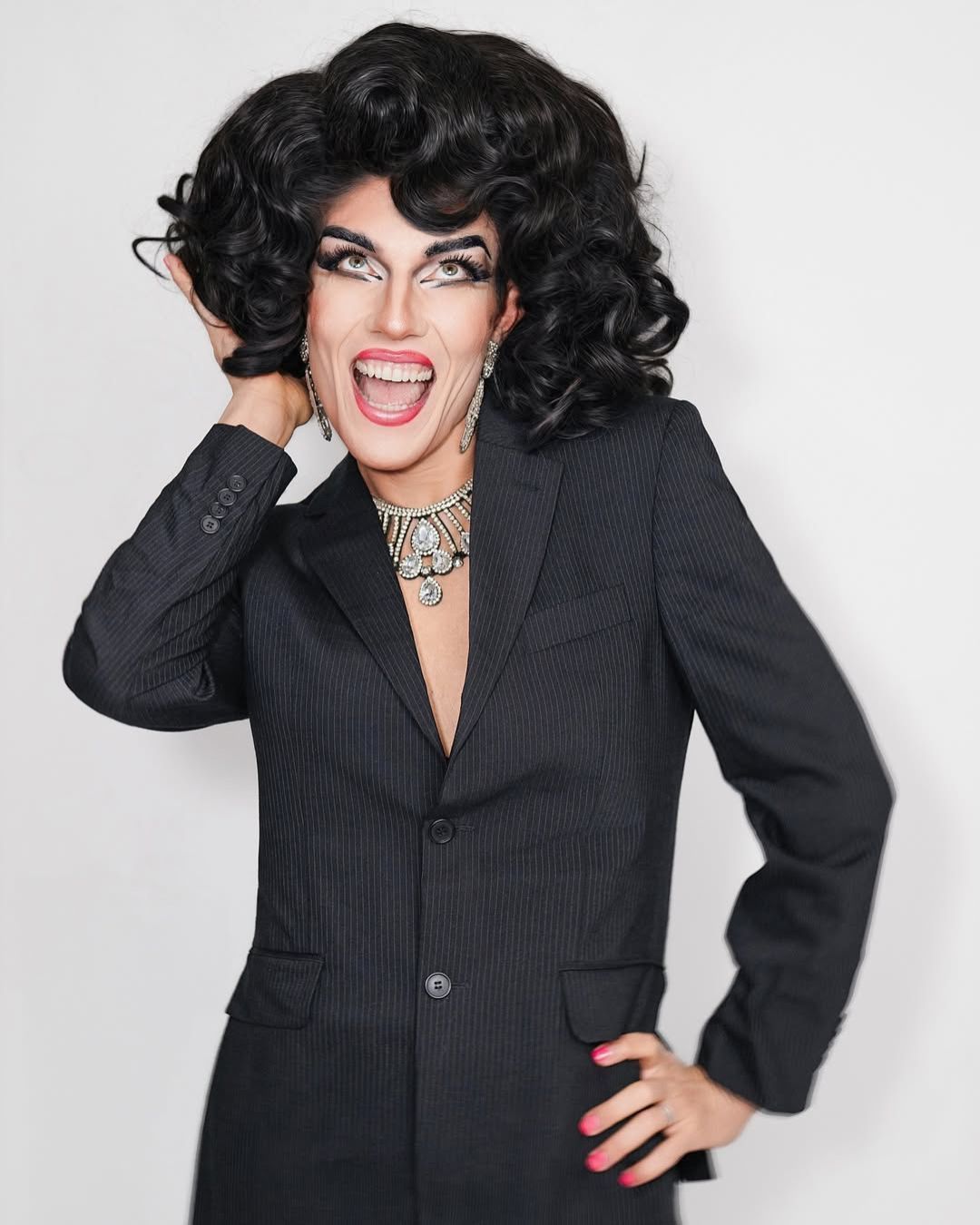
The performers of the transfeminist community to know To follow them all year round, not just during Pride month
Every year, in June, cities fill up with rainbow flags and slogans. Pride becomes the most visible moment of the LGBTQIAPK+ community's demands, but also the time when media and institutions suddenly seem to remember its existence. Then, after June, attention fades. In reality, queer and transfeminist culture does not only live in parades, but unfolds in independent bookstores, galleries, small festivals, artistic collectives, clubs, and self-productions. It thrives above all in the daily work of artists who create new imaginaries, challenge stereotypes, and tell often invisible experiences. That’s why I want to introduce you to some community performers to follow all year round. Because art is not just entertainment; it can become a space for political expression and community building.
Transfeminist community performers in Italy to know and follow
Cristina Prenestina
Cristina Prenestina is a drag queen and LGBTQIA+ activist from Rome who uses performance as an educational and political tool. She believes children have the power to change the world and brought Drag Queen Story Hour to Italy, a project born in San Francisco that promotes inclusion and respect through reading fairy tales. Her work challenges traditional gender stereotypes in storytelling, presenting stories that convey diversity, equality, and equity. The character was born in Rome in 2014 and takes the name from Christina of Sweden, a 17th-century queen symbolizing freedom and independence. The surname Prenestina refers to the Roman street she comes from; on Rome’s stages, she performs stand-up comedy, lip-sync, and impersonator shows. In 2023 she published the illustrated book Nino the T-Rex (Settenove) and in 2025 contributed to writing the Gender Dictionary for the same publisher.
Annalisa Cinelli
Italian singer-songwriter and musician (from Rome, born 2003). She plays guitar and drums, and her indie-pop music focuses on emotions, introspection, and social advocacy. An activist of the transfeminist community, she uses her artistic language as a political space to tell experiences and give voice to those who don’t have one. Music for her is an integral part of activism and cultural transformation. She says: "I firmly believe in the power of music as a political act. Activism is often thought of only in traditional contexts like marches or assemblies, but I’m convinced real change happens in seemingly non-political spaces, like clubs, where attention is fully on the artists and their words. Through my lyrics, I try to advance political and social battles I live every day, both for personal expression and to give voice to everyone’s struggles. In my latest song, 'so little', I denounce homophobia through my personal lens, but with a message that belongs to the entire LGBTQIA+ community: 'love who you want and be yourself.' Music not only creates community; music is a space of resistance."
Karma B
Karma B are among the most iconic drag queens of the Italian scene, performed by Mauro Leonardi and Carmelo Pappalardo, Sicilian artists who define themselves as "mythical creatures, half human and half Raffaella Carrà." Active since the 1990s, they have built a career across clubs, theater, TV, music videos, and live shows. Their style mixes irony, glamour, and pop culture, becoming a reference point for the Italian drag scene. Over time, they helped bring drag art from the underground circuit to mainstream television, appearing on shows like Propaganda Live, All Together Now, and Ciao Maschio. Today they are also recognized voices in the LGBTQIA+ community, advocating for rights and queer visibility.
Leonardo Masti
Leo Masti is a stand-up comedian from Rome, who jokingly admits he can’t make the best carbonara in Rome and is bad at soccer. He performs ironic and self-deprecating comedy, based on everyday observations and quick-witted jokes. In addition to performing, he organizes stand-up nights with his format One Stand Up, helping grow the independent comedy scene. His style blends sarcasm, improvisation, and a talent for not taking himself too seriously. He is also what you could call an ally: someone who chooses to stand on the right side when it comes to rights and community. If you see him on the street, don’t worry: you probably won’t recognize him.
Liliana Fiorelli
Liliana Fiorelli (1990) is an actress and writer from Rome, with a degree in Performing Arts. Called a "cross-media artist" for her work across cinema, TV, and the web, she has collaborated with directors such as Sergio Castellitto (Fortunata), Paolo Virzì (Siccità, Un altro Ferragosto), and Pietro Castellitto (I Predatori). On TV, she appeared in series like Non ci resta che il crimine and the Italian remake of This Is Us, as well as shows like Mai dire Talk and Quelli che il calcio. She also develops theater and original writing projects. A convinced transfeminist, she brings reflections on rights, equality, and gender representation into her work.
Alessandra Flamini
Alessandra Flamini is an actress, writer, and stand-up comedian, founder of C’è Figa, a transfeminist and intersectional comedy collective. In her shows, she uses laughter as a political tool to discuss bodies, desire, stereotypes, and power. Her career began in civic theater, tackling memory, Argentine desaparecidos, and anti-mafia struggles. Since 2010, she has focused on gender issues, violence, discrimination, and the right to female pleasure. Since 2022, she brings this research into stand-up comedy, developing a direct, political, and unfiltered humor. With C’è Figa, she creates shows centered on a transfeminist and intersectional perspective, showing that laughing can be an act of freedom and, sometimes, a small revolution.
Giorgia Mazzucato
She is an actress, writer, and director, born in 1990, trained by Dario Fo, Franca Rame, and Andrea Pennacchi. She tours with satirical monologues on current events like Papessa – a transfeminist show – and Komorebi – a queer show, finalist at the Criminal Queerness Festival of the National Queer Theater in Brooklyn and later published as a book by People. In 2025, she debuted with Stomaco, a show revisiting the G8 in Genoa to comment on the present, also published by People. She is the author and voice of podcasts Il calcio visto da Venere for storielibere.fm and Conversazioni di coppia sul mondo che scoppia. She runs the SB Teatro school and production house and has won several awards, including the Off Prize at the Roma Fringe Festival and Best International Artist at the San Diego Fringe Festival.
Dani Martiri
Dani Martiri (she/they/he) is a curator, independent researcher, and performer. In art, they express themselves through drag under the pseudonym Kiara Vaggio, reinterpreting historical, literary, and theatrical figures—a path begun under the guidance of drag artist Senith. Between 2022 and 2023, they worked at the Victoria and Albert Museum, conducting LGBTQ+ themed guided tours of the museum’s collection. In 2021, they founded the project Queering Rome, aimed at sharing stories about the city of Rome from a queer feminist perspective. They are part of the Working Group "Gender and LGBTQ+ Rights" at ICOM Italy and contributed to the volume Museums, Genders and Queerness (Nomos Edizioni, 2026), the first Italian book on queer museology.
Le recensioni non richieste
Le Recensioni non richieste was founded in 2018 as a satirical writing project with a simple rule: express opinions on any human product, even when nobody asked for them. Author of satire, psychologist, and gay transfeminist activist, they are also co-founder of the queer comedy project Fraciche. Since 2022, they have been producing the Rassegna Stampa non Richiesta on Instagram, a satirical news broadcast that reinterprets current events from a militant perspective, overturning mainstream narratives. From this experience came the monologue La Rassegna Stampa non Richiesta Live, toured in various Italian cities. In 2025, they debuted with Salento Blues – The Story of How I Became Fr*o*, a sharp account on the construction and deconstruction of masculinity.
Lucas Mustard
Lucas Mustard is a Brazilian singer, naturalized Italian, and independent artist, member of the LGBTQ+ community. He lives in Rome, where he develops a musical path intertwining queer identity, body, and self-determination, engaging with the causes of the transfeminist movement. His first album merges contemporary R&B, Brazilian and Latin music, and soul, narrating queer relationships, vulnerability, and desire in English, Italian, Portuguese, and Spanish. The title track My Skin, inspired by his vitiligo, becomes an anthem for skin as a place of memory, identity, and resistance. In Rome, he continues to build spaces for artistic and community expression, opposing prejudice and claiming the freedom to exist and create.
Sylvia Cry Her
Sylvia Cry Her is a singer, writer, and visual artist whose musical journey began in 2016, making her now an independent artist with a decade of activity. She has self-produced five albums, performing at music events in Rome, Turin, and abroad, including Edinburgh. Her work combines music and identity, using her voice to explore herself and connect with others. From 2024 to 2026, she has been featured in interviews, articles, radio, and TV appearances. Her mission is to create dialogue and break prejudices about psyche and identity through art and music.
Sara Flamment
Sara Flamment is a comedian in the Roman scene. And her day job? "Here we are, the usual Italians who don’t recognize the seriousness of art. Anyway, a teacher," she told me. She takes the stage "on one hand to fight her natural shyness, on the other for the urge to tell stories and express herself," in her own words. In her free time, "she sometimes remembers to go to the bathroom."
Fratta
Fratta, born in 1998, graduated in Physics at Sapienza University. After two years of research, he left academia to focus on scientific outreach, especially in schools. For the past year and a half, he has been performing stand-up and has appeared with the transfeminist collective C’è Figa. In his sets, he addresses themes such as gender identity and environmental issues. Since April 2025, he has been an activist with Ultima Generazione.
