

















From aura to intelligence gap: today's relationships are measured by differences and disparities We live in the era of "gaps"
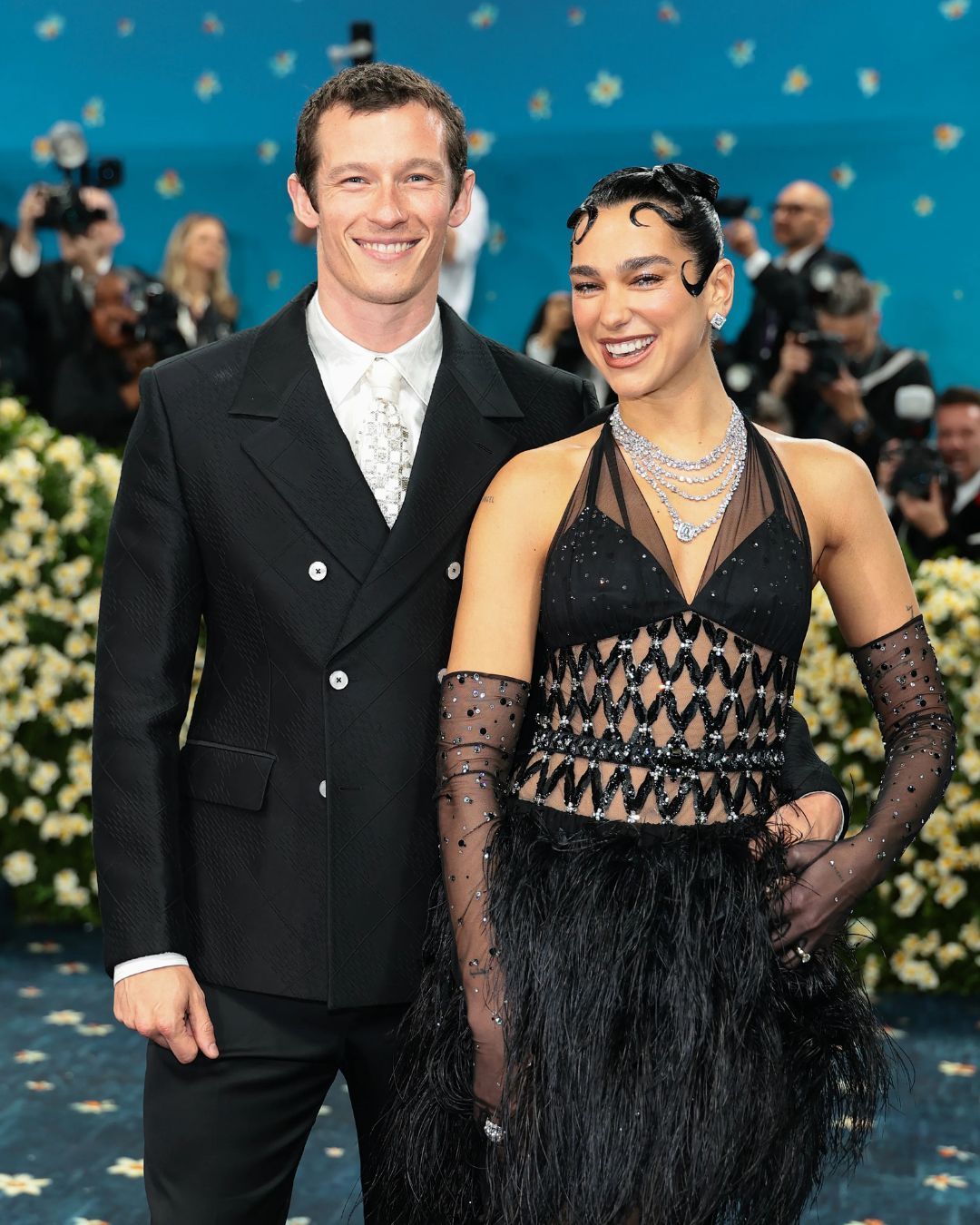
When Dua Lipa shared the story of her first (or rather, second) encounter with her current boyfriend Callum Turner, many probably thought it could be the perfect start for a romantic comedy. Both in a Los Angeles venue, after having first met the previous year in a London restaurant, they realized they were reading the same book (Trust by Hernan Diaz) and were even at the same page (the end of the first chapter). "We’re on the same page, then," he said to her. And who wouldn’t fall for that? It’s the perfect metaphor for contemporary connection: not just two people who like each other, but two minds moving in the same space, captivated by the same story. In a world that is fast-paced, inconsistent, and often misaligned, the idea of being "on the same page" feels extremely comforting.
Relationship gap: the new grammar of relationships
Yet, while we celebrate moments so perfectly - albeit casually - choreographed, the romantic language around us is changing. We no longer just ask if we are compatible, but how different we are: on social media, people talk about swag gap, aura gap, intelligence gap, party gap. Gaps have become the new grammar for decoding relationships, an ironic and visual language that Gen Z uses to describe the micro-imbalances that used to be simply called "we’re not made for each other."
@hotmysteriousgiirl Heavy on hairline gap
original sound - Ibiza Records
The age gap is just the starting point: now discrepancies are no longer only about numbers or objective data, but about vibe, energy, and charisma. There’s the swag gap, for example, which refers to style and stage presence. It’s the dynamic where one person shines while the other struggles to keep up, as if living in a slightly less vivid dimension. Then there’s the aura gap, perhaps the most poetic and elusive: it’s about charisma but also personal narrative, those intangible differences that make someone magnetic while another appears more neutral or less intriguing. There are also gaps linked to lifestyle: the party gap, when one wants to go out five nights a week and the other dreams of a quiet Sunday afternoon reading or playing video games. Then there’s the career gap, relating to ambition, pace, and outlook: some move fast, others slower. And there’s the much-talked-about intelligence gap, the intellectual and cultural disparity. Different interests, educational backgrounds, and inclinations toward more intellectual or pragmatic activities. The meme couple in this case is Travis Kelce and Taylor Swift: "What will they talk about at dinner?" asks the online crowd. Meanwhile, relationships can fail because one can’t tell Jonathan Franzen from Sally Rooney.
Labeling couple differences
At first glance, this may seem excessive: gaps as a relational taxonomy, as if we became analysts of our own love life. And in part, it is. Growing up with social media, used to sharing, observing, commenting, and performing, we developed a special sensitivity: the ability to notice micro-differences, label them, and turn them into a story. It’s no coincidence that gaps went viral on TikTok, where a few seconds can convey a couple’s dynamic, highlighting frictions and balances through short sketches and ironic confessions.
@nadiatries potential is not real. #datingadviceforwomen #emotionalintelligence #potential original sound - Nadia Tries
More than scientific descriptions, gaps are cultural tools. They allow us to explore the nuances of relationships without necessarily pathologizing them. In the past, compatibility was binary: together or not together. Today it’s about shades of gray. And gaps, sometimes ironic, help us better understand not just the other, but also ourselves. The goal isn’t to eliminate differences or judge them, but to recognize them. To understand if they are an incentive or an obstacle, fertile ground or a structural wall. The risk, of course, is that taxonomy becomes a filter: we see only the gap and not the person. That a too-bright aura or a too-evident intelligence gap becomes a reason to walk away before even trying.
Being (or not) on the same page
Here comes the key question: are we using gaps to describe relationships or to avoid them? A gap isn’t necessarily a flaw or a sign of incompatibility. It’s a distance to explore, and sometimes - as with many iconic couples - alchemy happens precisely in the differences. For every Dua Lipa and Callum Turner meeting "on the same page," there are stories that work because the pages don’t align and the rhythm isn’t symmetrical. Think of Lana Del Rey, happily married to alligator hunter Jeremy Dufrene, or Bella Hadid and her cowboy Adan Banuelos. Today more than ever we are learning that perfect alignment is rare and magical; but above all, relationships are built in the empty spaces, in the differences, in the imperfect folds. Perhaps it’s not necessary to be on the same page, but to read it with the same curiosity.
