














































Harassment and violence in Indian sport are nothing new The case involving the Australian women's cricket team is just the latest example
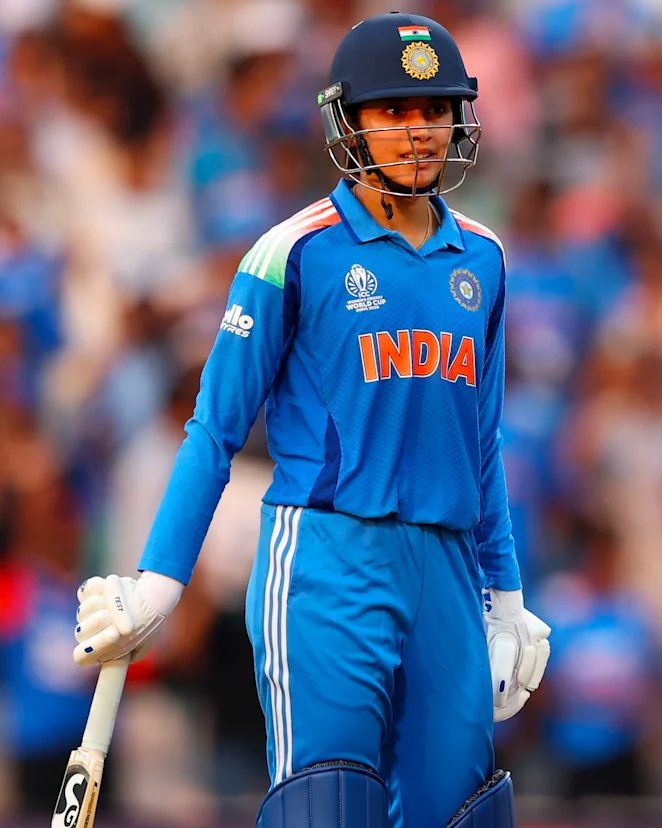
In recent weeks the thirteenth edition of the Women's Cricket World Cup has been taking place, for which the ICC has appointed five venues across India and Sri Lanka. The World Cup's journey resumed here after the 2022 tour in New Zealand, where Australia prevailed and which in the coming days will defend the title in a semi-final against India. The tournament — and the reigning champions themselves — however, made international headlines for what happened last week in Indore, a city in Madhya Pradesh, where two players were victims of sexual harassment on the street.
The incident occurred on Thursday, October 23, while two Australian athletes were walking the short route between their hotel and a café in the neighbourhood, when a motorcyclist chased and approached them, and then touched one of the two in an inappropriate and obviously non-consensual way. Once authorities were informed, the response was swift: within a few hours the events were reconstructed using surveillance cameras, which led to the identification and arrest of a man with a criminal record. The case was framed under the new charges of the recently restructured penal code, such as violation of arts. 74 (outrage to modesty) and 78 (stalking). An episode that once again brought to the surface the dramatic everyday reality of women in India.
Reactions
The news quickly spread around the world, from Australian bulletins to headlines on every continent, and reactions were not slow to arrive. Some athletes have asked organisers for greater protection and more effective campaigns to prevent and combat the phenomenon; an appeal that does not limit itself to Indore or to Indian women's sport, but extends on a much wider scale. If these are in fact contexts in which male domination is widespread and normalized, the argument also applies to other social and geographical contexts.
In the hours following the incident, the politicians and law enforcement of Madhya Pradesh promptly condemned the episode and pledged a crackdown on athlete protection. At the same time, however, it was repeatedly stated that it was an isolated case that "risks tarnishing the reputation" of Indore, "a safe place". This narrative, however, clashes with the reality of the area on various levels. First of all because the issue of violence and harassment in Indian sport is by no means new — quite the opposite. In 2023, a group of local wrestlers — including Sakshi Malik, Vinesh Phogat and Bajrang Punia — fiercely protested against the then-president of the Wrestling Federation of India (WFI), Brij Bhushan Sharan Singh, who was accused of abuses by several athletes, including a minor. The controversy attracted international attention and caused an earthquake within the movement, while United World Wrestling (UWW) suspended the WFI. Institutional and judicial leniency in the case, however, highlighted a much deeper social scourge.
Rape culture
According to NCRB data, in the city of Indore alone (about three million inhabitants) there were 1,919 male violence offences in 2023. That figure rises to 32,342, including 2,979 rapes, when the focus is extended to the state of Madhya Pradesh, which according to those reports ranks fifth among the twenty-eight federated states for the number of gender crimes per year. A number that approaches half a million (448,211) at the national level, again over a twelve-month period; therefore an average of over 1,200 cases per day, more than fifty every hour, almost one per minute. The episode involving the two Australian players, in short, is not an outlier, not even in "safe" Indore. According to a survey published by the National Commission for Women, 30% of local residents disagree with the label "safe", and more than half (52%) report feeling in danger on the street after dark.
If those figures did not already paint an alarming picture, it should be noted that police and official reports do not capture the whole phenomenon — far from it. India actually shows a very low reporting rate: according to NFHS (National Family Health Survey) data, only 14% of victims of partner violence seek help, and less than 2% file a formal complaint for abuse by strangers. The previous numbers should therefore be read as the tip of a huge iceberg, built on regulatory backwardness and, before that, on cultural factors. A 2018 documentary, Rape is consensual, showed global audiences how victim-blaming is deeply rooted and internalised in India, especially among lower castes; and at the same time how the risk of "tarnishing the honour" of more protected castes has produced substantial impunity. All this is reflected in the conclusions of a study from a few years ago by the Thomson Reuters Foundation, which described India as "the most dangerous country in the world for women".
Global picture
Calling it an isolated case is misleading in the specific context — and it is equally misleading to treat it as something that does not concern us closely. World Health Organization estimates indicate that more than one in four women worldwide have experienced episodes of male violence in their lifetimes. Averages in Asia and Africa (30–35%) certainly drive that figure, but in Europe and North America it still does not drop below 20%.
There is no doubt that the sporting environment is, everywhere, a repository of a misogynistic and violent culture. Some long-running media cases have recently peeled back the topic, for example the Yates Report on systemic abuse in the NWSL (North American women's soccer), the scandals in British gymnastics and Canadian hockey, and also the Rubiales–Hermoso affair in the Spanish football federation. But the dynamic appears more frequently in youth and amateur sport. In a study by Dr. Tine Vertommen conducted in Belgium and the Netherlands, for example, 40% of adult women who practised sport as minors report having experienced psychological violence, and between 10% and 15% physical violence. These data are in line with those emerging from a pan-European study (CASES) from 2023.
Italian sport itself has been hit in recent years by several scandals, among rhythmic gymnastics (Desio), football (Trieste) and youth basketball (Stella Azzurra). To the forms of violence are added those of discrimination, as can be seen in the most frequented place in Italian sporting life: football stadiums. There, incidents of open-air sexism — three flyers from the ultras advising women not to sit in the front rows, harassment of female journalists, discriminatory chants or directed at women working in the stadium — are the rule, not the exception. And a cultural barometer, not folklore. European investigations into the treatment of female fans at matches are, in any case, quite revealing. Kick It Out and Women at the Match (Football Supporters' Association) testify that in the UK one woman in three or four receives explicit unwanted physical attention at the stadium, with physical contacts not uncommon (7%).
No case is isolated, just as in India — and also in Europe and worldwide. Inside and outside locker rooms, sports facilities, workplaces, homes and streets. And while incidence and dynamics can vary by context, what does not change with latitude is the importance of properly sizing the phenomenon. Not minimising it is the starting point, if only for a more conscious debate.